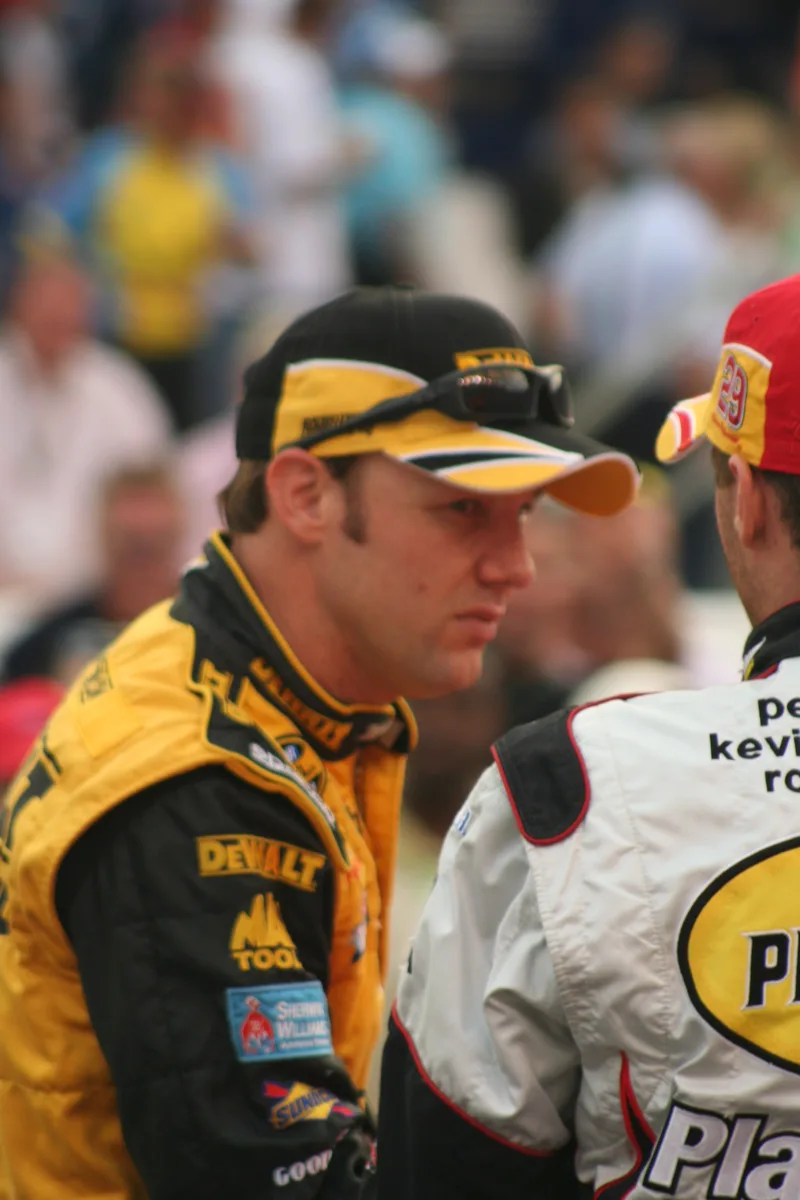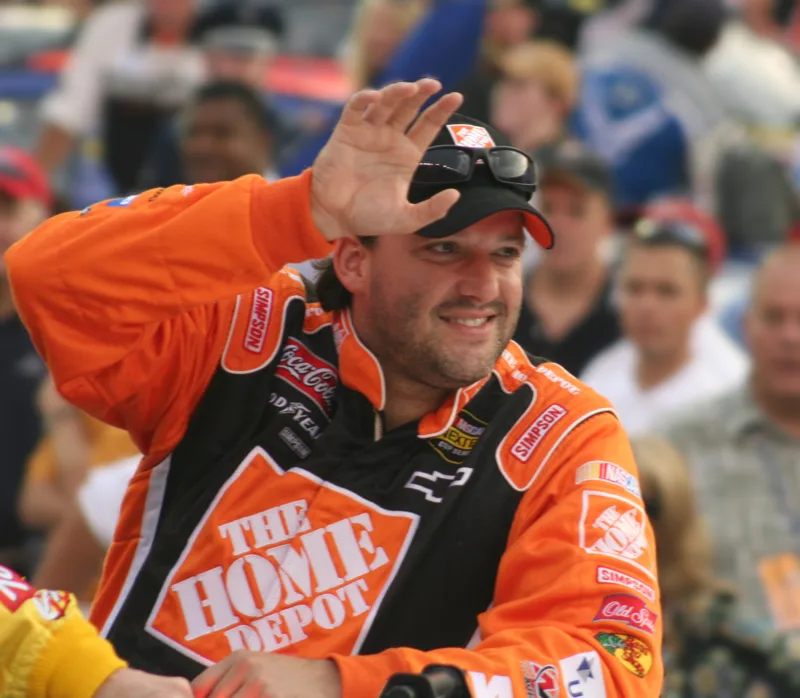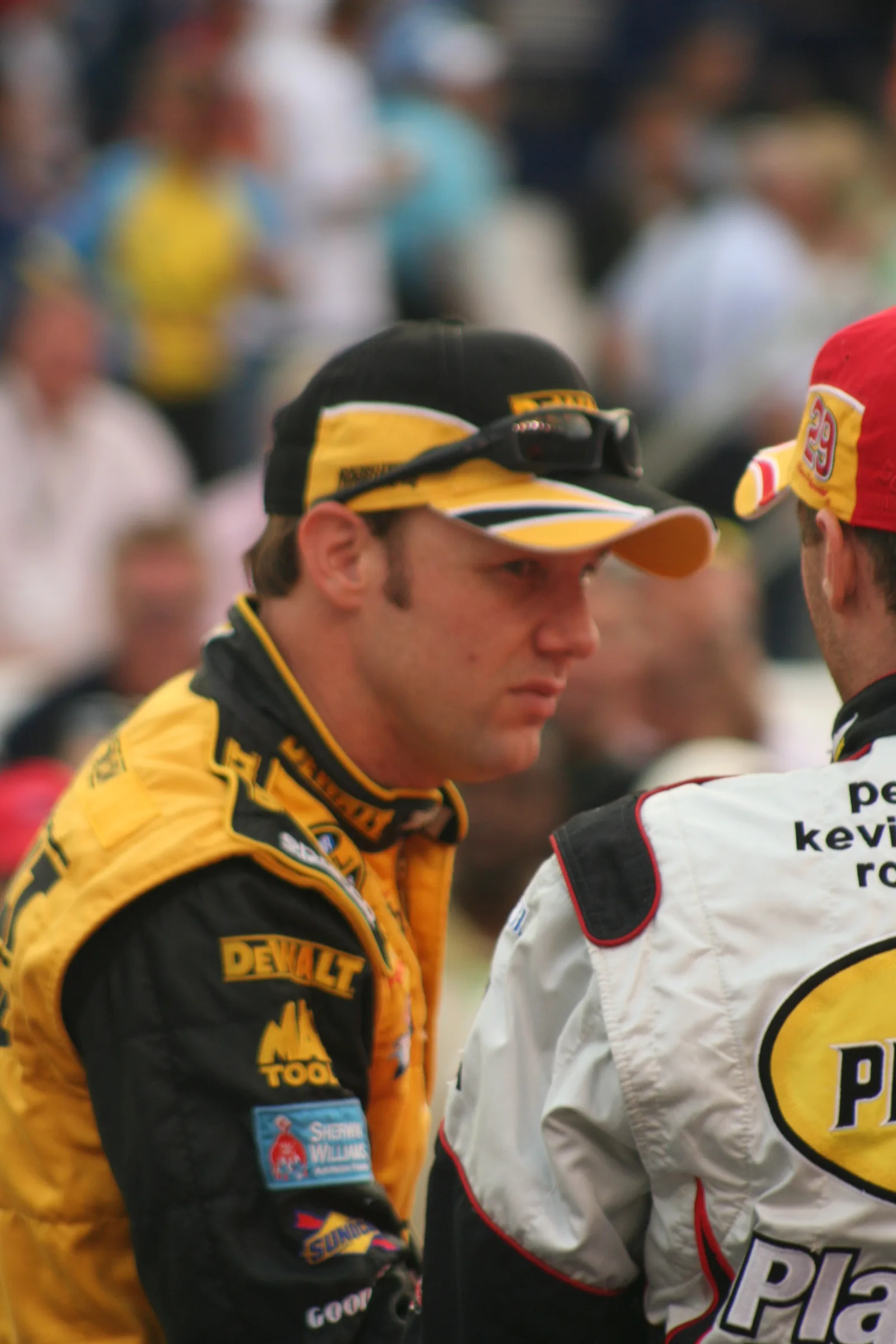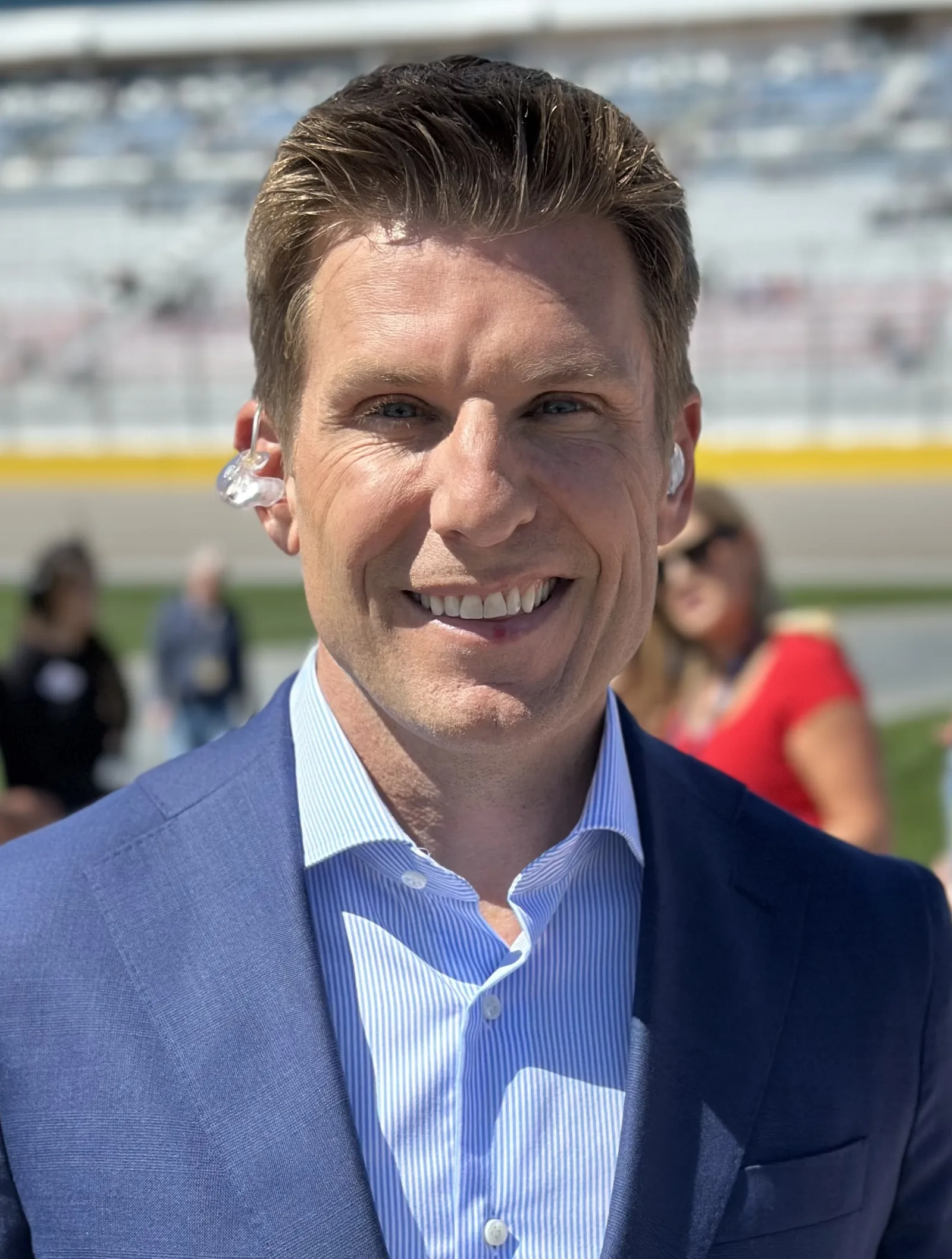
A Joplin-born driver who won in only his second Cup start, returned to Chip Ganassi Racing and took the Daytona 500 and Brickyard 400 in the same season.
Jamie McMurray, born in Joplin, Missouri, in 1976, raced full time in NASCAR's Cup Series from 2003 to 2018. He won the 2010 Daytona 500 and Brickyard 400 in the same season, and he now works as a broadcaster for Fox and The CW.
Jamie McMurray is an American semi-retired stock car driver best known for winning the 2010 Daytona 500 for Chip Ganassi Racing. He raced full time in the NASCAR Cup Series from 2003 to 2018, and he is one of only three drivers to take the Daytona 500 and Brickyard 400 in a single season. Since leaving full-time competition he has become a fixture on NASCAR broadcasts.
How did McMurray start his racing career?
McMurray was born on June 3, 1976, in Joplin, Missouri, and grew up racing go-karts. He competed in nearly every form of karting around the country before he moved on to late model stock cars. That background gave him a busy schedule of short-track racing long before he reached NASCAR's national series.
He made five starts in the Craftsman Truck Series in 1999 and sixteen Truck races in 2000, when he posted one top-five and four top-ten finishes. In 2001 and 2002 he raced full time in the Busch Series for Brewco Motorsports, driving the No. 27 Williams Travel Centers Chevrolet Monte Carlo. The second of those seasons was far better, with two wins and a sixth-place finish in the points.
A Charlotte upset in only his second Cup start, a Daytona 500 victory after leading only two laps and a second career as a broadcaster.
How did McMurray win in his first Cup starts?
McMurray's first Cup start came at Talladega, where he drove a Chip Ganassi Racing Dodge as an interim replacement for the injured Sterling Marlin. One week later at Charlotte, he got past Bobby Labonte and Tony Stewart, both in Joe Gibbs Racing Pontiacs, to take the UAW-GM Quality 500. He had been consistent all night, and he led 96 of the final one hundred laps to take the win.
The Charlotte victory came in only his second Cup start and was his first non-restrictor-plate race, and it is widely considered one of the biggest upsets in NASCAR history. It set a modern-era record for the fewest starts before a win, a mark later tied by Trevor Bayne at the 2011 Daytona 500 and surpassed by Shane van Gisbergen in 2023. It was also the first time a driver had won in his first start at a 1.5-mile track.
Earlier that October he had taken his first Busch Series win at Atlanta Motor Speedway, winning on fuel mileage over Joe Nemechek and Michael Waltrip. That made him the one-hundredth separate driver to take a Grand National win. The following week he added a second win at North Carolina Motor Speedway, and he finished the Busch season sixth in points.
What were McMurray's early full-time Cup years like?
McMurray joined the Cup Series full time in 2003 and won Rookie of the Year by 37 points over Greg Biffle. That season he recorded five top-five finishes and thirteen top-tens, finishing thirteenth in the standings, and he ran part-time in the Busch Series at the same time.
The 2004 season was marked by a costly penalty. After the Food City 500, the team lost 25 points for an incorrect x-measurement, a comparison between the centre of the roof and the centre of the chassis. He missed the Chase for the Cup by fifteen points, despite a strong run in the final races. The same weekend NASCAR fined him $15,000 for intentionally causing a wreck after the race. He still finished eleventh in points, which earned him a $1 million bonus, and he also won a Truck Series race that year.
In 2005 he finished twelfth in points after a close battle with Ryan Newman for the last Chase spot, and he was taken out by Tony Raines late in the race that ended his hopes. He left Chip Ganassi Racing after that season to drive for Roush Racing. Ganassi was initially adamant that McMurray should honour his contract, but he released him in November 2005 after learning that McMurray had already signed with Roush before the season ended.
| Season | Team | Points or result |
|---|---|---|
| 2002 | Chip Ganassi Racing, Cup debut | Charlotte win in his second start |
| 2003 | Chip Ganassi Racing | Rookie of the Year, 13th in points |
| 2004 | Chip Ganassi Racing | 11th in points, $1 million bonus |
| 2006 | Roush Racing, No. 26 | 25th in points |
| 2007 | Roush Racing | Pepsi 400 win, 17th in points |
| 2009 | Roush Fenway Racing | AMP Energy 500 win at Talladega |
| 2010 | Earnhardt Ganassi Racing | Daytona 500 and Brickyard 400 wins |
| 2013 | Earnhardt Ganassi Racing | Talladega win, ending a 108-race winless run |
| 2014 | Earnhardt Ganassi Racing | Sprint All-Star Race win |
| 2016 | Earnhardt Ganassi Racing | Sixteenth Chase spot, 12th in points |
| 2021 | Spire Motorsports | Daytona 500 eighth |
How did McMurray's stint at Roush go?
At Roush Fenway Racing he took over the No. 97 Ford that Kurt Busch had driven, which was renumbered No. 26, after Mark Martin decided to race another year. His 2006 season was hard, and he finished 25th in points after a second-place run at Dover. The team moved Jimmy Fennig to head its Busch operation during the year and Bob Osborne took over the crew.
His best Roush season was 2007. He won the pole at Toyota Save Mart 350 on June 22, then won the Pepsi 400 by 0.005 of a second over Kyle Busch. That finish was the closest in Daytona International Speedway history at the time and tied for second closest since electronic scoring began in 1993. He finished the year 17th in points.
The 2008 season started badly. He was 36th in points and had to qualify for the Martinsville race, but he took the fifth spot and went on to finish eighth. He climbed back into the top twenty over the season and ended 16th. In 2009 he dominated the final stages of the Budweiser Shootout but lost the lead on the last lap. Later that year he won the AMP Energy 500 at Talladega, his second restrictor-plate victory, before Roush released him and the No. 26 team as part of a four-team limit.
How did the 2010 season change his career?
McMurray returned to Chip Ganassi for 2010 in the No. 1 car, replacing Martin Truex Jr. at the merged Earnhardt Ganassi Racing. He had reunited with Ganassi at the 2010 24 Hours of Daytona, the first time he had worked with the team since 2005. The Daytona 500 win came in his first start for Ganassi since that year.
On February 14, 2010, he won the Daytona 500 despite leading for only two laps, the fewest laps led by a Daytona 500 winner at the time. He got by Kevin Harvick with two laps remaining and fended off Greg Biffle and Dale Earnhardt Jr., who was closing quickly. In victory lane McMurray wept and credited Ganassi and his new backers for a second opportunity.
The season continued strongly. He lost the Aaron's 499 to Harvick by a .011-second margin, and he finished second to Kurt Busch in the Coca-Cola 600. In July he held off Harvick to win the Brickyard 400, placing him alongside Jimmie Johnson and Dale Jarrett in that elite pair of doubles. Ganassi became the first owner to win both races and the Indianapolis 500 in the same season, with Dario Franchitti taking Indy. He later won the Bank of America 500 at Charlotte, the site of his first Cup win.
What happened in the years after 2010?
McMurray signed a multi-year extension with Earnhardt Ganassi Racing in January 2011. He finished 27th in points that year and the next was similarly difficult, with a crash at the 2012 Daytona 500 and no wins. He contended at Talladega that fall, but Harvick spun him in the closing laps.
The 2013 season turned around late in the year. He won the Sprint Showdown at Charlotte, leading all forty laps of that non-points event, and then won at Talladega in October. That victory snapped a 108-race winless streak and was his seventh career win and fourth on a restrictor-plate track.
In 2014 he won the Sprint All-Star Race, which paid $1,370,400, after passing Carl Edwards on the final restart and holding off Kevin Harvick. He finished eighteenth in the standings that year, seventy-three points behind teammate Kyle Larson. A late-race chunk of concrete caused an 8 in. x 10 in. pothole at the FedEx 400, leading to a red flag that lasted 22 minutes and 22 seconds.
How did the 2015 and 2016 seasons compare?
The 2015 season was McMurray's best run in years. After ten races he was seventh in the standings, the highest he had been since 2010. He finished second at Phoenix and at Martinsville behind Jeff Gordon, but a late-season push fell short when he missed the Chase on a tiebreak with Dale Earnhardt Jr.
In 2016 he moved into the top ten at Fontana and later earned his first top five at Talladega. He clinched the sixteenth and final Chase spot with a seventh at Richmond, then had an engine explode at Dover that ended his title hopes. He finished twelfth in the standings with seventeen top-tens and three top-fives.
How did McMurray's final full-time seasons go?
The 2018 season was his weakest since 2011 and 2012. He recorded top-five finishes at Texas and at the Charlotte Roval, along with eight top tens, but he missed the playoffs and finished twentieth. During practice for the GEICO 500 at Talladega he suffered a seven-flip rollover, which led NASCAR to change the restrictor plates for the race.
He had already decided to leave full-time racing and to step into a leadership role at Chip Ganassi Racing. He returned for the Daytona 500 in 2019 with Spire Motorsports, finishing 22nd, and again in 2021, when he started 19th and finished eighth. That eighth-place finish was only his second top-ten in the Daytona 500.
What else did McMurray win?
McMurray is also a major figure in endurance racing. He won the 2015 24 Hours of Daytona in the No. 02 car with Tony Kanaan, Scott Dixon and his teammate Kyle Larson. That victory made him one of the few drivers to win both the Daytona 500 and the 24 Hours of Daytona, alongside A. J. Foyt and Mario Andretti. Jeff Gordon achieved the same double two years later.
He drove for the team in the 2014 and 2016 editions of the 24 Hours of Daytona as well. His Daytona record across both formats has made him one of the most recognised names in the endurance paddock.
What has McMurray done since leaving full-time racing?
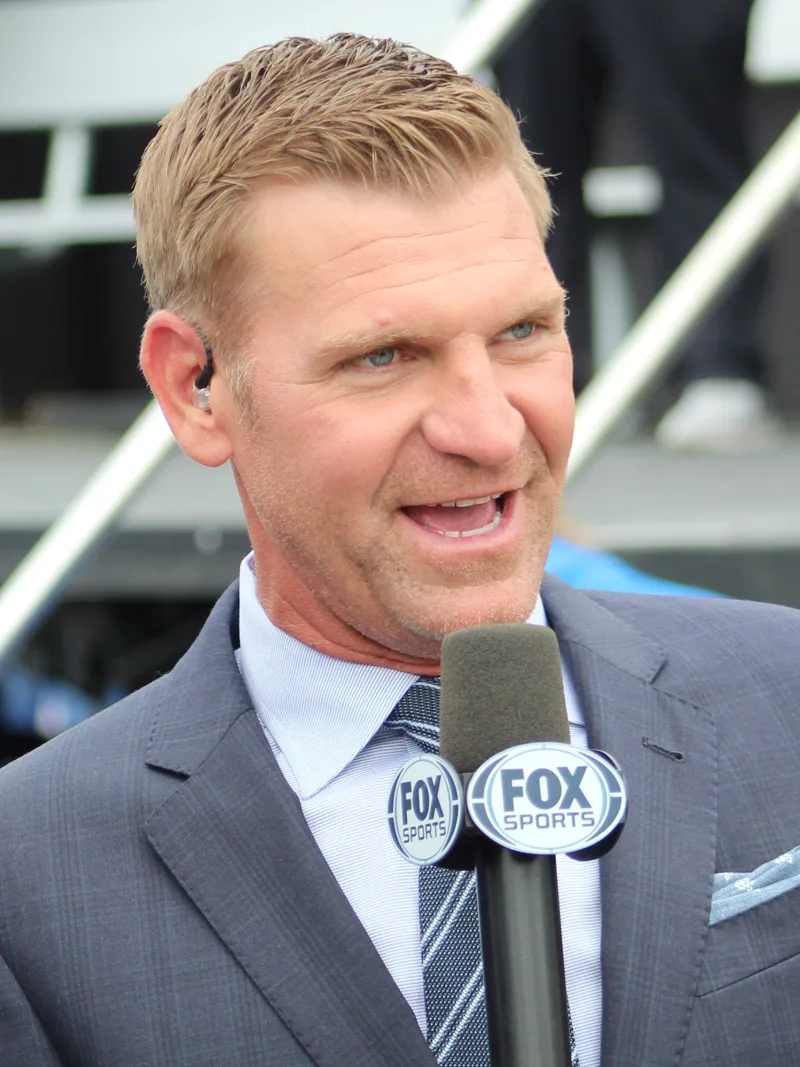
After leaving Chip Ganassi Racing at the end of 2018, McMurray signed with Fox Sports as an analyst for its NASCAR coverage starting in 2019. He appears on the NASCAR RaceDay pre-race show and the midweek news programme. In 2025 he joined CW Sports as a colour commentator for its NASCAR on The CW broadcast team.
Away from the track he married Christy Futrell in July 2009. They have two children, Carter and Hazel. Carter races full time in the SMART Modified Tour. McMurray has also run and cycled with other drivers and completed a marathon in December 2017, and he has spoken publicly about how faith helped him through hard seasons.