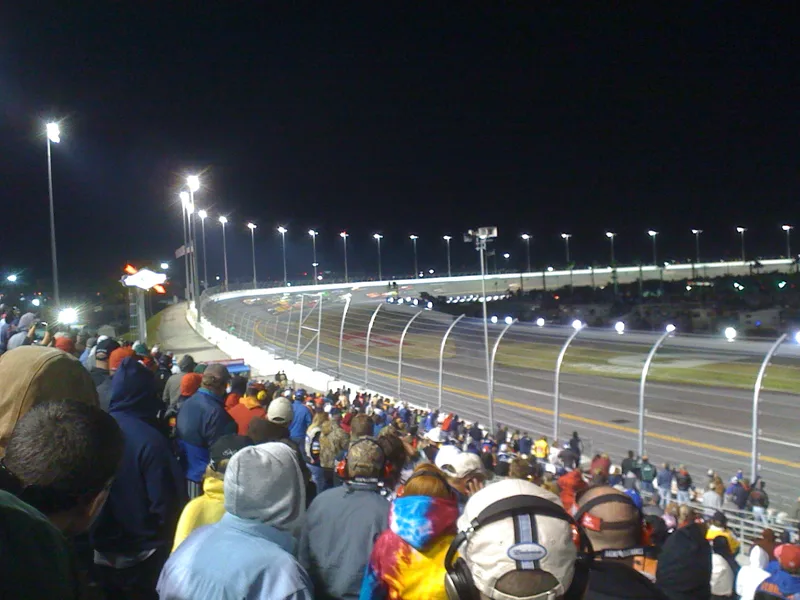
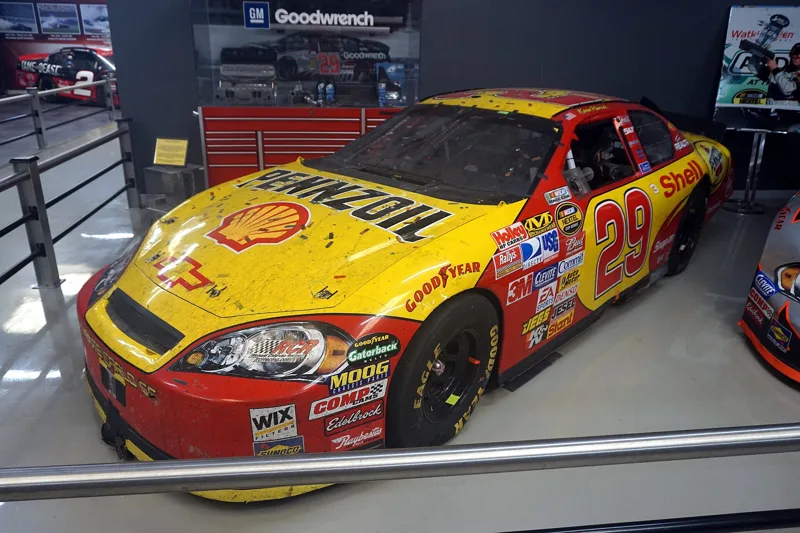
Kevin Harvick came from 27th on the grid to pass Jamie McMurray on the final lap of the season-opening exhibition at Daytona International Speedway.
Kevin Harvick won the 2009 Budweiser Shootout from 27th on the grid, taking his first Cup victory since 2007. The race set an event record with 23 lead changes among 14 drivers, and its green-white-checkered finish stretched the event to 78 laps before a final caution froze the order.
The 2009 Budweiser Shootout opened the 2009 season of Cup racing with an exhibition event. It was held on February 7, 2009 at Daytona International Speedway before a crowd of 80,000, and Kevin Harvick won it from 27th on the grid. The race set an event record of 23 lead changes among 14 drivers, and it ended under caution with no official margin of victory.
What is the Budweiser Shootout and why does it matter?
The Budweiser Shootout began in 1979 as the Busch Clash, created by Busch Beer brand manager Monty Roberts to promote the brand. It invites the fastest drivers from the previous season to race, and it is treated as a warm-up for the Daytona 500. The 2009 edition was its 31st annual running.
The race has changed its title more than once. It became the Bud Shootout in 1998 and the Budweiser Shootout in 2001. Later names were Sprint Unlimited, adopted in 2013, and Advance Auto Parts Clash, adopted in 2017. Dale Earnhardt Jr. was the defending champion going into the 2009 event.
The 2009 race was the first of two exhibition events on the Cup calendar that year. The Daytona track is a four-turn superspeedway of 2.5 miles (4.0 km), with turns banked at 31 degrees and a front stretch banked at 18 degrees, which is where the finish line sits.
A record 23 lead changes and a last-lap pass from 27th on the grid decided the first exhibition of the 2009 season.
Which cars were eligible and how was the race set up?
Twenty-eight cars were eligible. They came from the top six teams of each of the four manufacturers, Chevrolet, Dodge, Ford and Toyota, ranked on 2008 owners' points. Each manufacturer also received one wild-card berth for a car or driver not already qualified, including previous Cup champions and past Shootout winners.
The 2009 race was 75 laps, up from 70 in 2008. It was split into two segments of 25 and 50 laps, with a ten-minute pit stop between them. Teams could change tires, add fuel and make regular chassis adjustments during that stop, but they could not change springs, shock absorbers or rear-ends.
Restarts came one lap behind the pace car, and both caution and green-flag laps counted toward the total. That meant the race was decided on the track and in the pits, with no shortcuts for teams that were caught out by a caution.
How did practice go and what went wrong?
Two practice sessions took place on the afternoon of February 6, the first lasting 45 minutes and the second 60. Kyle Busch was fastest in the first session at 47.009 seconds, and Jimmie Johnson was next, more than 0.070 seconds slower. Johnson was still recovering from a cut finger he had suffered at the 2009 24 Hours of Daytona while altering his racing uniform.
In the second session Johnson set the fastest time at 46.724 seconds, ahead of Allmendinger, Earnhardt and Kasey Kahne. The session also produced a costly incident for Paul Menard. His right-rear tire deflated in the first turn and sent his car spinning, and Scott Speed collided with the right-front quarter panel of Menard's car as both cars came to rest in the infield grass.
Menard was taken to the infield care center and released after treatment, and his car was repaired. Reed Sorenson also hit the right-rear corner of Kyle Busch's car, and Kasey Kahne damaged his car against the outside barrier at the first turn. Burton's engine let go on the third lap of his second session, and his team changed engines.
How was the starting grid decided?
The 28 drivers drew their starting positions by lot, a method unique to the event. Paul Menard drew the pole, ahead of Elliott Sadler, Reed Sorenson, Scott Speed and Denny Hamlin. Tony Stewart drew sixth, Brian Vickers seventh, Bobby Labonte eighth, Dale Earnhardt Jr. ninth and Kyle Busch tenth.
Carl Edwards, Kurt Busch, Robby Gordon, Kasey Kahne and Jamie McMurray drew the next five places, and David Ragan took 16th. Michael Waltrip, A. J. Allmendinger, Joey Logano and David Stremme filled the spots up to 20. Jimmie Johnson, David Reutimann, Jeff Burton, Casey Mears, Matt Kenseth, Greg Biffle, Kevin Harvick and Jeff Gordon chose the final eight positions.
Menard said he had felt he had a good chance, because when his turn came there were four numbers still left at the front of the draw and three at the back near the middle of the grid. Harvick's draw left him 27th, next to last on the grid.
How did the first half of the race unfold?
Menard led the first lap, but Sadler helped Hamlin pass him for the lead on the third lap. Earnhardt went around Hamlin for the lead on lap four, and that same lap Robby Gordon hit David Ragan's rear, sending Ragan into the right-hand barrier. Speed, Logano and Mears were caught up in the crash, and the first caution came out.
Logano and Speed retired with significant car damage. The race restarted on lap nine with Earnhardt in front, and Sadler passed him two laps later. On lap 17 Hamlin briefly took the lead from Stewart, but Edwards was ahead at the end of the lap.
Hamlin collided with David Reutimann on lap 23, and Reutimann clipped the front-right quarter of Stremme's car. Both drivers were spun into the grass, and that brought out the second caution. Every team used the caution to make its ten-minute pit stop before the restart.
McMurray passed his teammate Edwards on lap 26, and Kahne took the lead on the 27th lap. Kyle Busch passed him later on that lap. McMurray led on lap 29, Jeff Gordon passed him on the following lap, and McMurray took the lead back on lap 31.
What happened in the middle laps?
On the next lap Gordon dropped back in the middle lane, and Vickers hit the back of his car. Gordon then clipped the rear of Biffle's car and sent it into Johnson's path, which collected Mears, Burton and Allmendinger. That brought out a third caution, during which most of the leaders pitted for fuel and tires.
Kyle Busch led the restart on lap 36. The next lap, Sorenson's engine failed and ended his race, and oil on the track brought out a fourth caution. Jeff Gordon helped Earnhardt pass Kyle Busch for the lead at the lap 41 restart, and Earnhardt led the next eight laps with Gordon behind him.
Kenseth passed Earnhardt on lap 50, but Earnhardt took the lead back the following lap. A three-car crash involving Reutimann, Stremme and Sadler in the first turn then brought out a fifth caution, and every driver made a fuel and tire stop during it. Edwards and Kyle Busch ran into the infield grass during the pit stops.
Kyle Busch took the lead from Earnhardt during the stops and held it at the lap 59 restart. Jeff Gordon took over on lap 61, before an oversteer problem dropped Earnhardt to the back of the pack. Vickers passed Johnson for the lead on the 64th lap, but that same lap Menard lost control exiting turn four, hitting Earnhardt, who collided with Labonte on his way into the wall. That crash brought out a sixth caution.
How did the 23-lead-change finish come together?
McMurray led the field to the lap 69 restart, with Johnson and Kyle Busch behind him. A seventh caution came out on lap 73, when Stremme slid into the back of Biffle and sent him into the right-hand barrier. The race was then extended to a green-white-checkered finish, restarting on the 77th lap with McMurray leading Jeff Gordon, Johnson and Harvick.
Bump drafting was heavy as the field came out of the first turn. On the final lap, Hamlin gave Harvick a push on the right to keep his momentum down the backstretch, and Harvick passed McMurray for the lead. Johnson was bumped by Stewart and went into the side of Hamlin and Mears between turns three and four.
Kahne then collided with the rear of Kyle Busch's car, and the two crashed. Vickers could not steer clear and was collected too. The eighth and final caution then froze the field, so the finishing order was set by where the drivers were when that caution began.
The race had an event-record 23 lead changes among a record 14 different drivers. Earnhardt led four times for a total of 23 laps, more than any other driver, while Harvick led a single lap.
Final classification
| Position | Driver | Notes |
|---|---|---|
| 1 | Kevin Harvick | Started 27th; first Cup win since the 2007 Nextel All-Star Challenge; $200,000 |
| 2 | Jamie McMurray | Led the field on the final restart before Harvick's pass |
| 3 | Tony Stewart | Third in his first race as a team owner |
| 4 | Jeff Gordon | Took the lead on lap 61 and helped Earnhardt in the middle laps |
| 5 | A. J. Allmendinger | Caught in the third-caution incident |
| 6 | Kasey Kahne | Collided with Kyle Busch on the final lap |
| 7 | Carl Edwards | Ran into the infield grass during pit stops |
| 8 | Matt Kenseth | Passed Earnhardt on lap 50 |
| 9 | Kurt Busch | Top ten finish |
| 10 | Kyle Busch | Led at the lap 59 restart, then caught in the final wreck |
What did the drivers say after the race?
Harvick celebrated in victory lane in front of the 80,000 crowd, and the win earned him $200,000. He said the finish reminded him of his final-lap pass on Mark Martin in the 2007 Daytona 500, and he admitted the team had lost the draft early on. He also said he had been squeezed into the wall and knocked off his left-front fender.
McMurray was disappointed to lose the lead on the last lap. He said he had moved up to block Harvick but did not think there was room between him and the wall. Stewart was pleased with third place in his first race as a team owner, and he said the confidence of his new crew chief, Darian Grubb, helped him through the night.
Ragan blamed Robby Gordon for losing focus on lap five, and he said that sort of thing happens at Daytona and Talladega when someone is checked up. Logano said he was clipped and sent back into the wall, while Scott Speed called his part in the crash being in the wrong place at the wrong time.
Did the Car of Tomorrow cause problems at Daytona?
Some drivers and crew chiefs questioned how the Car of Tomorrow handled on Daytona's variable track surface. Kyle Busch argued that the car was unsuitable for the circuit because of balance issues, and Labonte called its handling pretty erratic.
McMurray said he had felt no loss of car control. Todd Parrott, Labonte's crew chief, believed there had been few handling changes from earlier editions of the race, and Reutimann agreed, saying the car was a handful in the way it usually is.
How did the race perform on television?
The race drew 8.3 million television viewers, and Fox broadcast it live with Mike Joy calling the action. It recorded a final Nielsen rating of 4.9 with a 9 share, and it took one hour, 31 minutes and 57 seconds to complete.
The pre-race ceremonies included an invocation from L. Ronald Durham, a national anthem by Catina Mack and a command to start engines from country singer Dierks Bentley. Darrell Waltrip and Larry McReynolds provided analysis for the broadcast.