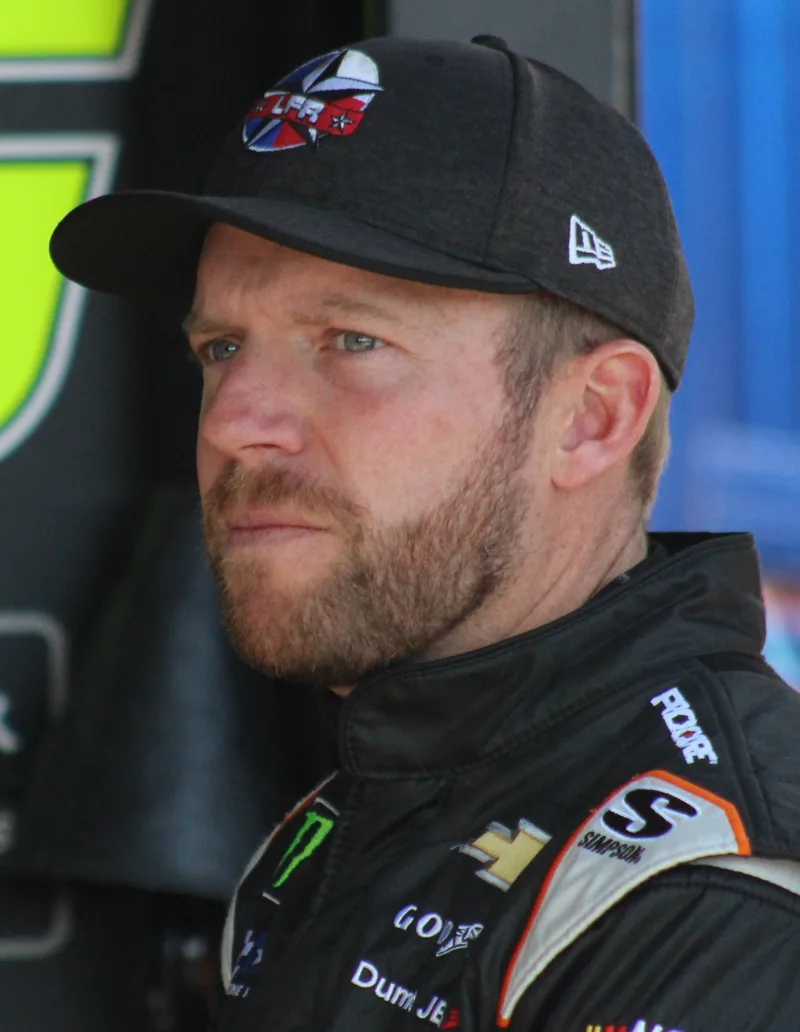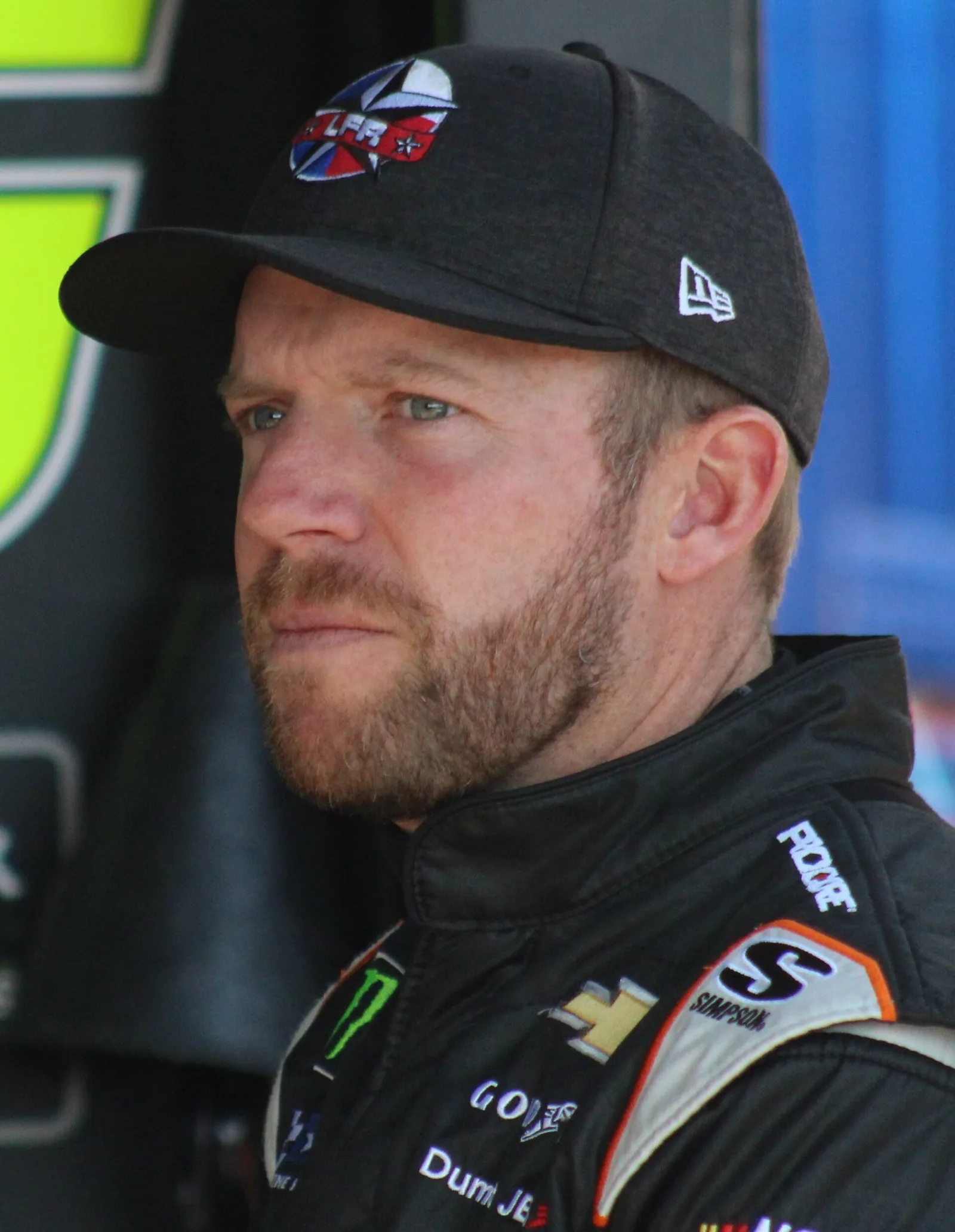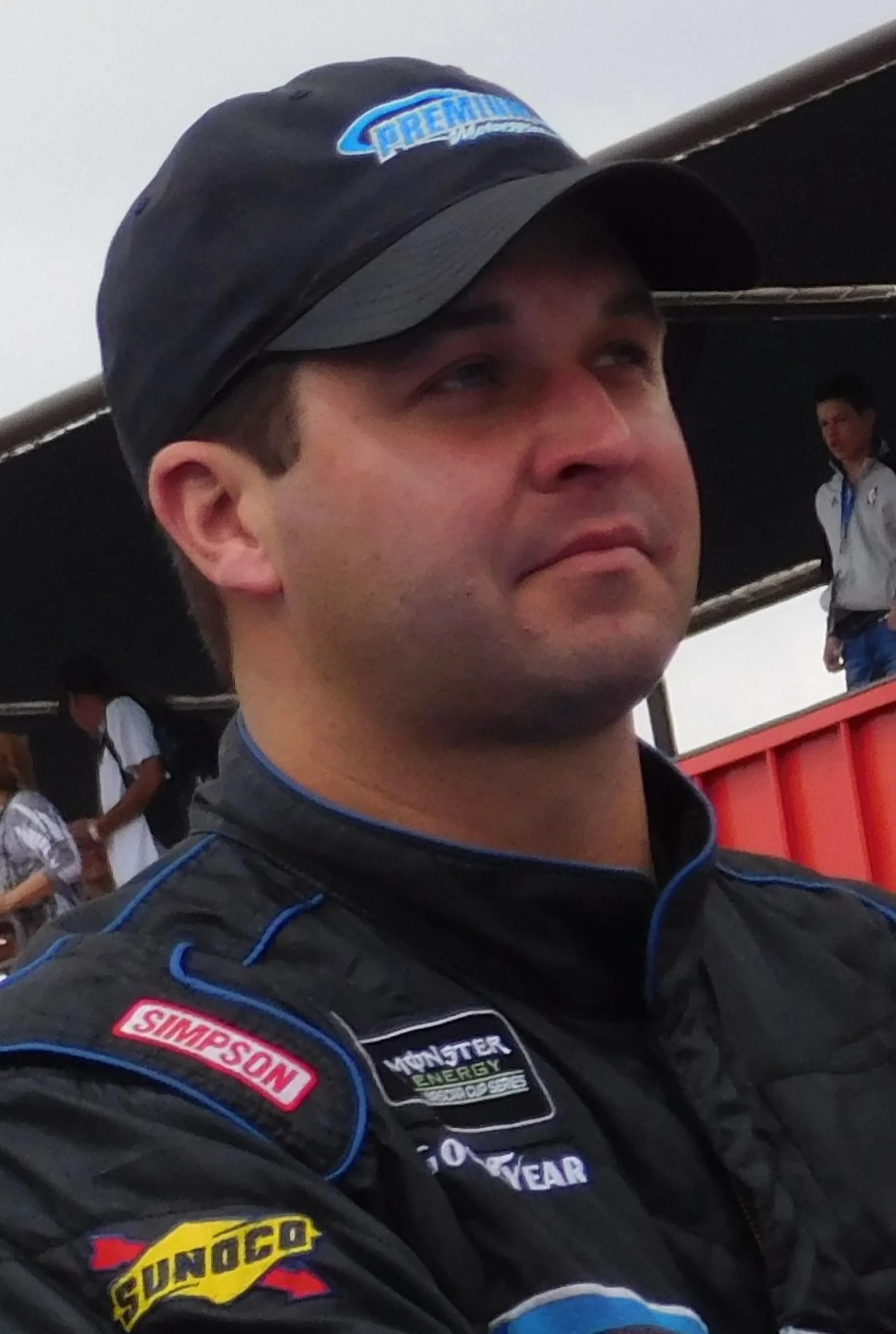
A quarter-midget champion who won four Busch Series races, raced for several Cup teams and later moved to the pit box as a spotter.
Reed Sorenson was an American driver who competed in NASCAR's Busch and Cup series for a variety of teams from 2004 onward. He won four Busch races, and his best Cup finish was fourth at the 2006 Coca-Cola 600. He has worked as a spotter since 2021.
Reed Sorenson is an American former stock car driver who later became a spotter. He raced in the Busch and Cup series for several teams, including Richard Petty Motorsports, Tommy Baldwin Racing and Premium Motorsports, and he won four Busch Series races. Since 2021 he has spotted for Josh Williams in the Xfinity Series.
How did Sorenson's racing career begin?
Sorenson started racing at age six in quarter-midgets and won the national quarter-midget championship in 1997. He moved to legends cars the following year and won thirteen of 25 races that season. By 1999 he had won thirty of the fifty races he entered.
Over the following two seasons in legends he collected 84 wins. In 2002 he began competing in the American Speed Association, finishing in the top ten in seven of his eight starts. Full-time in 2003, he earned the ASA Pat Schauer Memorial Rookie of the Year award at seventeen, and he signed a development deal with Chip Ganassi Racing.
A quarter-midget champion who became a Cup regular and later found a second career in the spotter's stand.
What did his early NASCAR starts look like?
Sorenson made his NASCAR debut in the Busch Series in 2004. He won the ARCA race at Michigan International Speedway that year in the No. 77 Sherwin-Williams Dodge, and all three of his ARCA starts ended in the top five.
He ran five Busch events that season for Ganassi, with three top-tens and a fourth at Homestead. The results were enough to earn him a full-time seat for the following year.
How did the 2005 Busch season go?
In 2005 Sorenson became Ganassi's full-time Busch driver in the No. 41 Discount Tire Dodge Intrepid. He won at Nashville Superspeedway by more than 14 seconds after starting from pole and leading 197 of 225 laps. It was a strong start to the series career.
That season he also won at Gateway and finished fourth in the series standings. He was second in the rookie race, behind Carl Edwards, and he had established himself as one of the most promising young drivers of the year.
How did his first Cup seasons begin?
Sorenson's first Cup race was the 2005 Bass Pro Shops MBNA 500, where he ran as the No. 39 and a crash left him 41st. He failed to qualify for the Dickies 500, then ran the Ford 400 for Phoenix Racing and finished 28th.
2006 was his first full Cup season. He finished 24th in points with five top-tens, and his best finish that year was fourth at the Coca-Cola 600. In the Raybestos Rookie of the Year standings he was fourth, with 198 points, and he finished behind three other drivers in the rookie race.
He also won his first Cup pole at the Allstate 400. At Indianapolis that season he became the youngest pole winner in the track's history, at 21 years 173 days, breaking a record held since 1935. He led 16 laps in the race and finished fifth, behind Tony Stewart.
How did his teams change after 2008?
Sorenson spent 2008 with Ganassi before signing a multi-year deal with Gillett Evernham Motorsports for 2009. That team joined forces with Petty Holdings, and the new operation became Richard Petty Motorsports, which ran the No. 43 car for him. The year was disappointing, with one top-ten and a 29th-place finish in points.
In 2008 he also ran a limited Nationwide schedule, competing in the Aaron's 312 at Talladega for Fitz Motorsports. At Gateway he tried to defend his 2007 win, but a mid-race wreck ended his chance.
When Richard Petty Motorsports merged with Yates Racing, Sorenson was not retained. He returned in 2010 to Braun Racing for a part-time Nationwide schedule, and he later substituted for Brian Vickers at Team Red Bull. He finished eighth at Daytona in the No. 83, the team's first top-ten since Vickers had been sidelined.
Braun's 2010 Cup plans were modest. Once the Daytona attempt fell through, the team weighed Atlanta but chose Texas instead, where he qualified 43rd and finished 39th.
What happened in 2011?
In 2011 Braun Racing was bought by Turner Motorsports and switched from Toyota to Chevrolet. Sorenson took his first road course win at Road America, his first win since 2007. In October, however, Turner removed him from the No. 32 car, even though he was third in points at the time.
He ended the year with MacDonald Motorsports' No. 82 car, a last-minute ride that filled the gap. His 2011 was a season of two halves, first strong and then unsettled.
How did his part-time years from 2012 to 2014 go?
Sorenson split 2012 across several rides, including the Nationwide opener at Daytona for Jimmy Means and Cup races at Bristol and California for Turn One Racing. He also drove for FAS Lane Racing and Humphrey Smith Racing in the Cup Series.
In 2013 he drove full-time in the Nationwide Series for The Motorsports Group, in the No. 40 Chevrolet. He returned to Cup in September, replacing Scott Speed at Leavine Family Racing in the No. 95 Ford, but he did not keep that seat for 2014.
In 2014 Tommy Baldwin Racing gave him his first full Cup schedule since 2009, in the No. 36 Chevrolet, replacing J. J. Yeley. Todd Parrott joined as crew chief. Sponsorship was thin early on, but the team posted five top-25s and ten top-30s in the final sixteen events. His best finish was fourteenth at Talladega, and his average finish for the year was 29th.
Where did he race in 2015 to 2017?
In 2015 Team Xtreme Racing signed him for the Daytona 500 with Golden Corral sponsorship, driving the No. 44. He also joined RAB Racing for the Atlanta race, and Premium Motorsports signed him after lack of sponsorship had ended his earlier teams.
In 2016 he attempted a Camping World Truck debut at Daytona in the No. 63 for MB Motorsports, and he missed the Daytona 500 with Hillman Racing. He made his Truck debut at Pocono in a No. 49 Silverado for Premium, finishing 18th.
In 2017 he failed to qualify after a Can-Am Duel 1 incident with Corey LaJoie, which may have been deliberate. Premium then moved him through several entries that year, including the No. 15 and No. 55.
What is he doing now?
From 2018 he mainly drove Premium's No. 7 and No. 55 entries. In 2019 he joined Spire Motorsports' No. 77 at Las Vegas, and in 2020 he started the Daytona 500 after finishing 18th in Duel 1. In 2021 he moved into spotting for Xfinity driver Josh Williams.
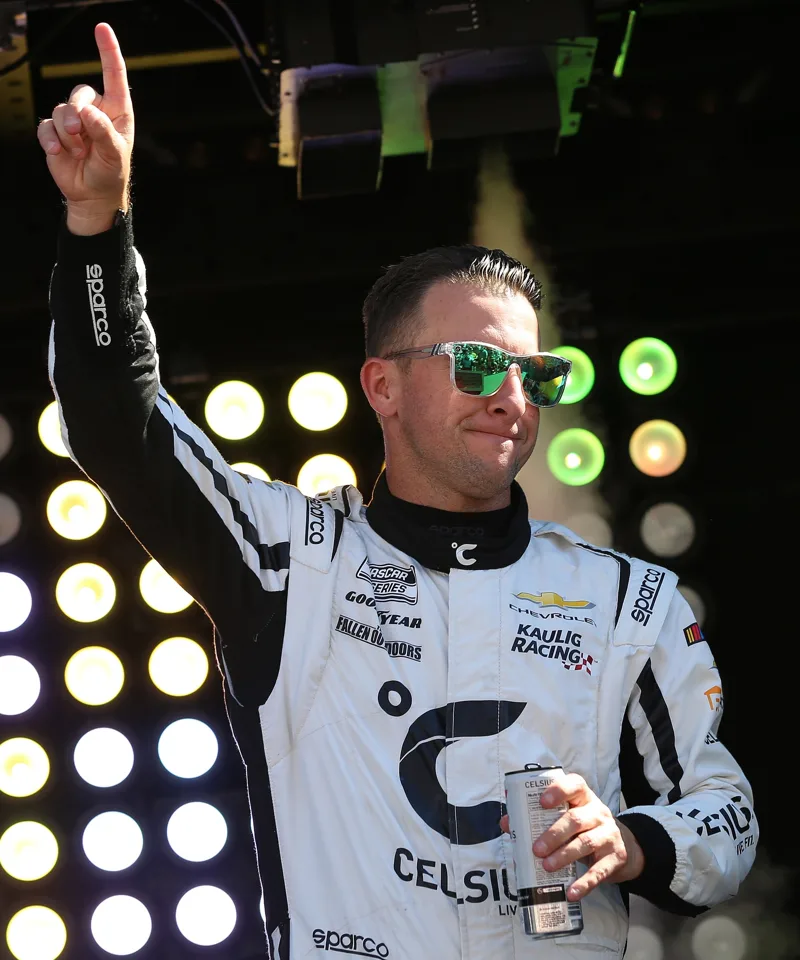
In 2026 he still spots for Josh Williams, who drives Kaulig Racing's No. 11. His last part-time Cup starts came with Premium, Spire and Tommy Baldwin Racing, and his career now runs through the spotter's stand. A spotter watches the race from high above the track and relays what the driver cannot see.
Key early results at a glance
| Year | Series | Track | Result |
|---|---|---|---|
| 2004 | ARCA | Michigan International Speedway | First ARCA win, No. 77 Dodge |
| 2005 | Busch | Nashville Superspeedway | First Busch win, by more than 14 seconds |
| 2006 | Cup | Allstate 400 | First Cup pole |
| 2011 | Nationwide | Road America | First road course win, first win since 2007 |