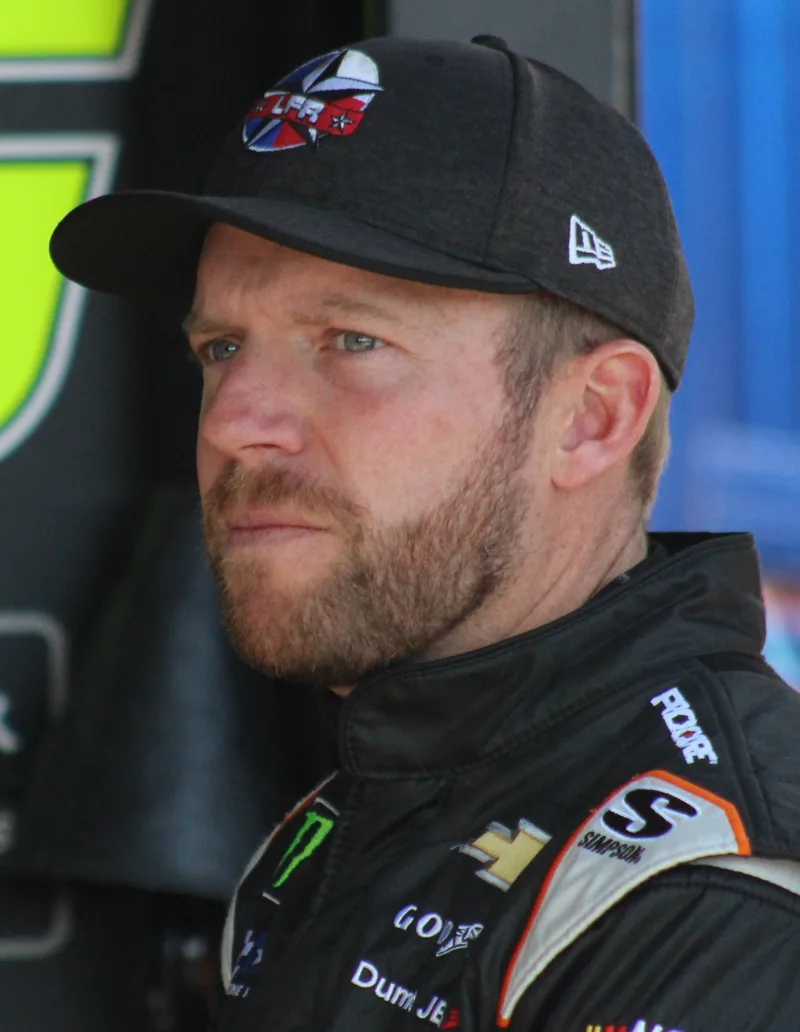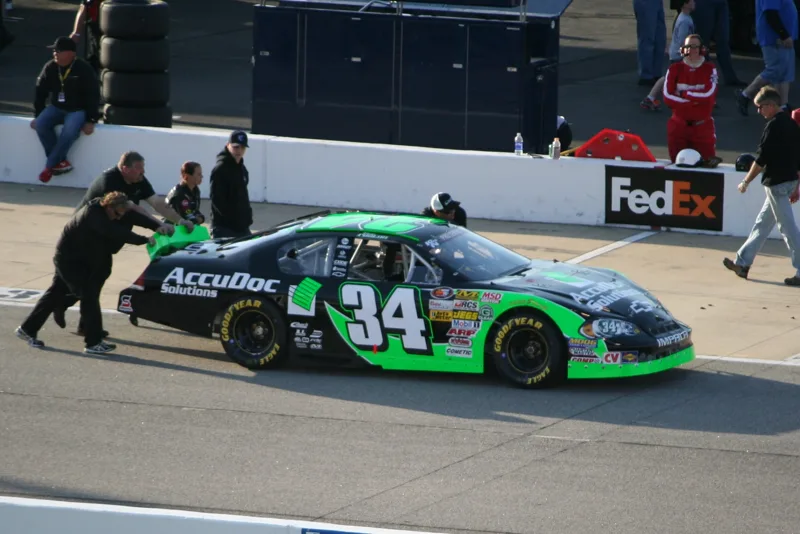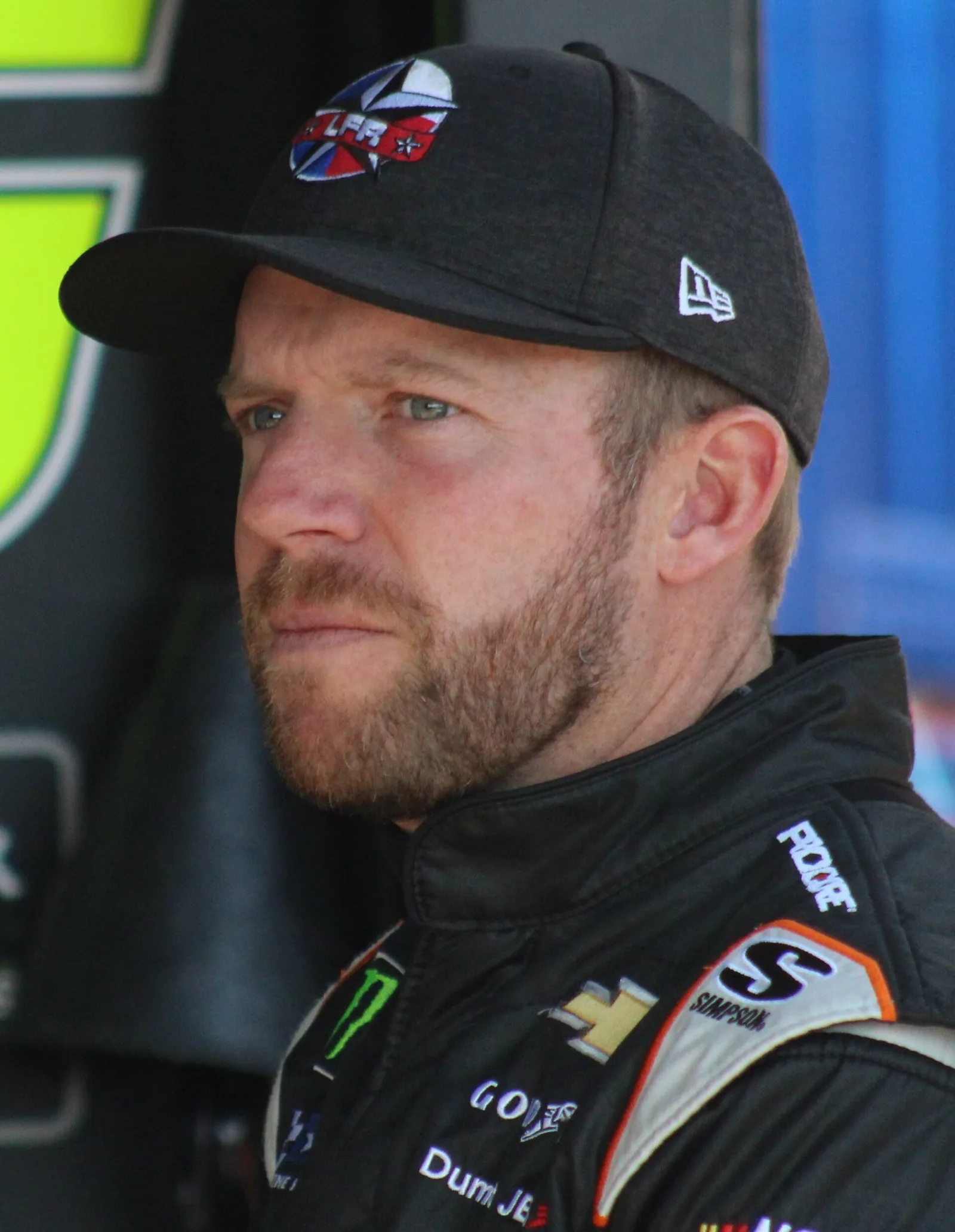
From a 1990 Cup debut with a Plasti-Kote Chevrolet to a first Cup win in 2009, the Finch-owned team raced in three national series before a 2013 sale.
Phoenix Racing is a motorsports team owned by James Finch that competed in NASCAR's top three series from 1989 to 2013. It won one Cup race, the 2009 Aaron's 499, after 19 years in the series, and was sold to Harry Scott Jr. in 2013.
Phoenix Racing is a motorsports operation owned by James Finch, a businessman from Florida. Between 1989 and 2013 it entered NASCAR events in all three national series, and in the Cup Series it managed one victory in 251 starts. Finch's son Jake later revived the name to begin his own career.
When did Phoenix Racing begin competing in NASCAR?
Phoenix first entered the Cup Series in 1990, running a Plasti-Kote-sponsored Chevrolet Lumina for Jeff Purvis in its opening effort. Purvis did not finish any of his four starts that year, and his strongest result was 31st at North Wilkesboro Speedway.
Ambitions outran money in the early 1990s. The team planned a full schedule in 1991 but scaled back to six starts, and a lack of funding limited it to two races in 1992. Finch's Panama City company, Phoenix Construction, then stepped in as the principal backer.
In 1993 the squad entered every restrictor-plate race except the Daytona 500, which it could not qualify for. For 1994 it had planned a part-season with Neil Bonnett, but Bonnett was killed in a practice crash before the Daytona 500, and Purvis took over the car.
The car was renumbered 44 in 1995, and MCA Records came on as a sponsor in 1996. That year the team could not finish higher than twelfth, despite two top-ten qualifying runs.
Nineteen years of waiting ended with a win that few in the garage expected from a small Florida team.
How did the Cup program change in the 2000s?
After a quiet stretch, Finch bought a batch of Ford Tauruses from Bill Elliott Racing for 2001 and ran the restrictor-plate events again. In 2002 Miccosukee Gaming became the sponsor and the car was renumbered No. 09. Geoffrey Bodine finished third in that year's Daytona 500.
Those years show a team trying to hold together a Cup operation on limited income. The 2004 season was a shambles. Johnny Benson, who had raced for the team in the Busch Series, shared the seat with Joe Ruttman, who had not run full-time in Cup since the early 1990s. At Rockingham the crew was not in place when the car needed it, and NASCAR ordered the car parked.
Ruttman had qualified 40th and earned $54,196 for a last-place finish. Mike Wallace later finished fourth in the 2007 Daytona 500, and in 2008 Sterling Marlin ran between 10 and 12 races for the team.
The middle years were patchy. In 2005 Johnny Sauter ran ten races in the No. 09, and his best result was ninth at Phoenix International Raceway. In 2006 Mike Wallace ran three races with a best finish of seventeenth, and Mayfield's season-ending Ford 400 ended early with an oil leak. The team struggled to qualify, and its sponsor base was thin in every season.
Key periods at a glance
| Period | Car and backer | Notable result |
|---|---|---|
| 1990 to 1996 | No. 51, with Plasti-Kote, Country Time and MCA Records | Best finish 21st in 1994, twelfth in 1996 |
| 2002 to 2008 | No. 09, with Miccosukee Gaming | Bodine third in the 2002 Daytona 500 |
| 2009 | Ganassi Dodges and Hendrick Chevrolets | First Cup win, the Aaron's 499 |
| 2010 to 2013 | No. 51, with Almirola, Busch and Regan Smith | Regan Smith seventh in the 2013 Daytona 500 |
How did Phoenix win its first Cup race?
In 2009 Phoenix ran two makes of car: Ganassi Dodges for Sterling Marlin and Mike Bliss, and Hendrick Chevrolets for Brad Keselowski and Ron Fellows. Keselowski, then a Hendrick development driver, took the Aaron's 499, the team's first Cup victory after 19 years in the series.
The finish was dramatic. Carl Edwards tried a second block on the same passing move, wrecked, and Keselowski held his line to the flag. The team's competitiveness had been questioned for years, which made the result all the more striking. Phoenix had never celebrated a Cup win before that afternoon, and the victory came on a day when the team was not expected to contend.
Why did the team struggle in 2010 and 2011?
Aric Almirola, who had driven for Earnhardt Ganassi Racing, joined for 2010. Miccosukee left at the start of that season, and Almirola failed to qualify for three of the first seven races, including the Daytona 500. He stepped away after the Phoenix race to focus on his Truck Series program.
Other drivers filled the seat, including Mike Bliss, Landon Cassill, Jan Magnussen and Bobby Labonte. Phoenix nonetheless returned for 2011 despite rumours that Finch wanted to sell. Bill Elliott drove the first four races, and Cassill then took over with Security Benefit as sponsor.
In June 2011 the car became the No. 51 again, the number the team had used when it first raced in the Winston Cup. Cassill's best career finish came at Michigan, where he was ninth.
What happened when Kurt Busch and Regan Smith drove for Phoenix?
Kurt Busch, the 2004 Cup champion, joined for 2012 after Penske released him over on-track incidents and his temperament. The team ran most of the season without a major sponsor, and Busch's best finish came at Sonoma, where he took third.
The team sat Busch out of the June Pocono event after a profanity-laced outburst at a reporter, and David Reutimann took the seat. Busch left for Furniture Row Racing once the fall Talladega race was over. Regan Smith was set to take over, but a concussion for Dale Earnhardt Jr. meant Smith was needed as a substitute for the Chase races instead.
Did Phoenix run full-time again in 2013, and why was it sold?
Phoenix ran a full schedule again in 2013 with several drivers and a new backer, Guy Roofing of Spartanburg, South Carolina. Regan Smith finished seventh in the Daytona 500, but a lack of long-term funding kept undermining the team, and Finch decided to close it and then sell it.
The team was ninth in owner points after five races. Even so, Finch announced in May 2013 that the team would close after the Brickyard 400. He found a buyer in July, and on 28 August it was announced that Harry Scott Jr., who co-owned Turner Scott Motorsports, had acquired the operation. That purchase began a three-year chapter under the HScott banner.
Finch's final race as owner was Atlanta's Labor Day event, where Mike Bliss crossed the line 33rd, six laps down.
How did the Nationwide and Truck programs perform?
Phoenix started in the Nationwide Series in 1989 and ran full-time from 1996. Its strongest periods came with Chip Ganassi Racing as a partner in 2003 and in 2012, when Kurt Busch won at Daytona for the No. 1 car.
The No. 49 Buick made its debut at Charlotte in 1989 with Jeff Purvis. In 1996 Purvis won two races and a pole. The 2003 car carried Jamie McMurray, who won twice at Rockingham, while David Stremme earned Rookie of the Year honours.
Johnny Sauter won at Milwaukee for the team in 2005, and Mike Bliss took the No. 1 to victory at Lowe's Motor Speedway in 2009. Busch's Daytona win on 6 July 2012 gave the No. 1 its 13th victory in the series.
The truck program was much smaller. In 2004 Jimmy Spencer ran a No. 09 Dodge truck at Richmond, but his engine failed with 12 laps remaining and he finished 28th. Truck entries were seldom seen after the mid-2000s, and the only other notable start came in the 2020 restart.
Did Phoenix Racing return after 2013?
Yes. The name came back in 2020 to launch Jake Finch's career in Outlaw Late Models, then Super Late Models in 2021, and the ARCA Menards Series East in 2022. Jake made his East debut at Pensacola in an unbadged Toyota.
At Nashville in 2022 Finch started from pole, led 44 laps and finished second. Both of his East starts for the team were made in an unbadged Toyota.
The modern operation is therefore a family project, with James Finch backing his son as he climbed through the local ranks. The family connection has been central to the revival from the start.
How did the Xfinity side of the team develop?
Phoenix's Xfinity history began in 1989, and its car numbers changed often, with several sponsor and number combinations before the team settled on one main car. The No. 1 became that car, and it carried 13 victories over the years.
Purvis drove the team's first full-time season in 1996 and won two races. After a stint with Lance Snacks as sponsor, Randy LaJoie took the No. 1 the following season and won the season-opening NAPA Auto Parts 300. He finished tenth in points that year, then took seventh in 2000.
P. J. Jones started 2001 in the No. 1 with Yellow Freight backing, but after four starts Jimmy Spencer took over and ran eighteen events, winning three of them.
What happened to the team's second Xfinity entries?
In 2000 Phoenix began running two cars, with Matt Hutter driving the No. 51 at Daytona and Talladega. The second car became a full-time operation in 2007, when Mike Wallace drove a GEICO-sponsored No. 7 Chevrolet and finished 11th in points.
In 2008 the team switched that entry to the No. 4 and leased its owner points to Jay Robinson Racing, which ran the car full-time.
Did Phoenix return to the Truck Series in 2020?
In March 2020 Phoenix announced a joint restart in the Truck Series alongside two former teams, with the No. 5 entered for Erik Jones at Homestead. Jones was chasing a $100,000 bounty set by Kyle Busch, but the race was postponed because of COVID-19, and when the rescheduled qualifying runs were cancelled he could not make the field.
The Truck entry was effectively a one-off, and the team did not return to the series after that.
What did the HScott period mean for the team?
Harry Scott Jr. renamed the operation HScott Motorsports in 2014, and it ran under that name for three years. It then remained dormant until James Finch restarted the Phoenix name in 2020 for his son. The 2014 change was a rebrand rather than a new start, since Scott had already acquired the operation in 2013.