Felix Sabates started the team in 1989, Chip Ganassi took it over in 2001, and a 2009 merger with Dale Earnhardt Inc. and a 2021 sale to Trackhouse Racing shaped its last decade.
The NASCAR operation was founded in 1989 by Felix Sabates as SABCO Racing. Chip Ganassi took most of it over in 2001, merged it with Dale Earnhardt Inc. in 2009, and sold its Cup assets to Trackhouse after 2021.
The NASCAR operation of Chip Ganassi Racing began in 1989 as SABCO Racing, the team of Cuban-American businessman Felix Sabates. It later became Team SABCO, then Chip Ganassi Racing after Ganassi bought most of the ownership in 2001. Over three decades the operation has run many drivers, merged with Dale Earnhardt Inc., and sold its Cup assets to Trackhouse Racing once its last era of ownership ended.
How did SABCO Racing begin?
Felix Sabates established the NASCAR operation in 1989. It was built after Sabates bought an R&D team from Hendrick Motorsports, and it was first known as SABCO Racing. The team was renamed Team SABCO in 1996, and it ran Pontiacs and later Chevrolets before a larger ownership change came in 2001.
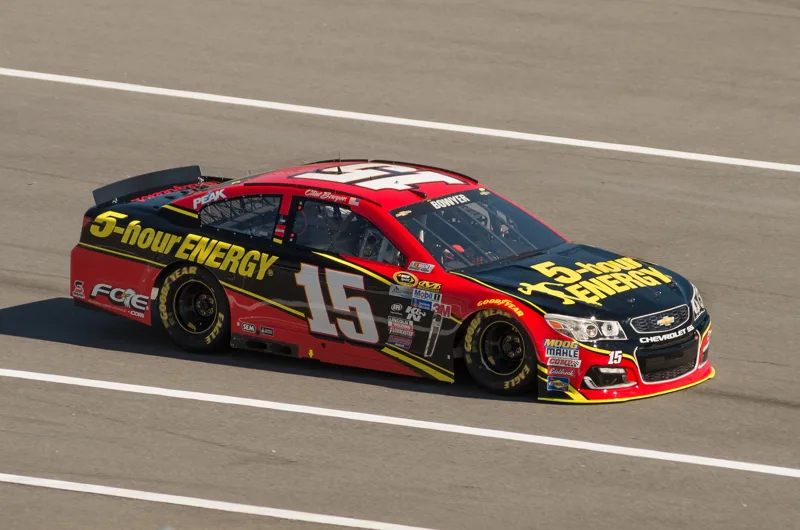
The first full-time driver was Kyle Petty, who drove the No. 42 PEAK Pontiac for SABCO from 1989 to 1996. Petty scored one victory and finished 11th in points in 1990. He won four races and finished fifth in points in both 1992 and 1993. His final win came at Dover in 1995, the first year that Coors Light sponsored the car.
A team founded as SABCO Racing that won its Daytona 500 with Jamie McMurray in 2010 and sold its Cup assets to Trackhouse after 2021.
How did Chip Ganassi take control of the team?
In 2001 Ganassi took an 80 percent stake in the two-car team, which then became Chip Ganassi Racing with Sabates still involved. The same year the team switched from Chevrolet to Dodge, which was then owned by DaimlerChrysler, and it received a partnership arrangement similar to those of Penske Racing, Evernham Motorsports, Bill Davis Racing, Melling Racing and Petty Enterprises.
In 2009 Ganassi merged the operation with Dale Earnhardt, Inc., under the owner Teresa Earnhardt, widow of the seven-time champion. The combined team ran as Earnhardt Ganassi Racing with a Felix Sabates banner, and it returned to Chevrolet equipment. The name was dropped in 2014, when Ganassi revealed that Teresa had never been truly involved with the team.
In 2015 Rob Kauffman, chairman of the Race Team Alliance, bought a stake in the team. Sabates later announced that he would retire as a co-owner after the 2019 season.
What did the Earnhardt Ganassi merger bring to the Cup team?
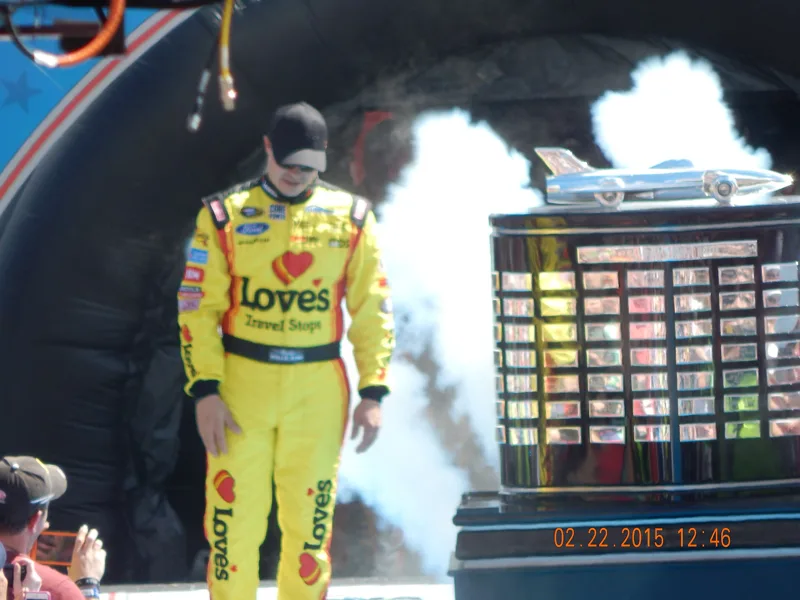
On 12 November 2008 Ganassi and Teresa Earnhardt announced that the two teams would combine for 2009. The move reduced six entries between the two organisations to three Cup teams: the No. 1 Bass Pro Shops car driven by Martin Truex Jr., the No. 8 car of Aric Almirola, and the No. 42 car of Juan Pablo Montoya. The No. 01 and No. 15 Dale Earnhardt Inc. cars were disbanded.
The No. 41 Ganassi car was planned to continue, but it was shut down when driver Reed Sorenson left for Gillett Evernham Motorsports. The No. 8 was also shut down early in the 2009 season, after seven races, when Ganassi suspended its operation for lack of sponsorship. Almirola later sued for breach of contract, which he said promised him a full-season ride. The dispute was settled out of court.
How did the No. 1 car become a winning car?
Martin Truex Jr. drove the No. 1 in 2009 and never won in the car, leaving for Michael Waltrip Racing after the season. Jamie McMurray, who had driven for Ganassi from 2002 to 2005, replaced him. He had won his first Cup race with the team as a substitute driver, and in 2010 he won the Daytona 500 on his first start in the No. 1.
That Daytona 500 was the first win for a Ganassi car since Juan Pablo Montoya won the 2007 Toyota Save Mart 350. McMurray also won the 2010 Brickyard 400 at Indianapolis. A third victory came in the Bank of America 500 at Charlotte during the Chase, a race he had won for the No. 40 team in 2002. He finished 14th in points.
McMurray's team struggled in 2011 and 2012. It switched to Hendrick engines for 2013, and McDonald's became the main sponsor. McMurray broke back into victory lane at the fall Talladega race, his first win in three seasons. He won the Sprint All-Star Race in 2014, and he finished 13th in points in both 2015 and 2016.
In 2017 McMurray scored 17 top 10s, his best number since 2004, and he advanced past the first round of the playoffs. He finished 12th in points that season. He finished 20th in 2018 and left the team at the end of the year.
What did Kurt Busch bring to the No. 1?
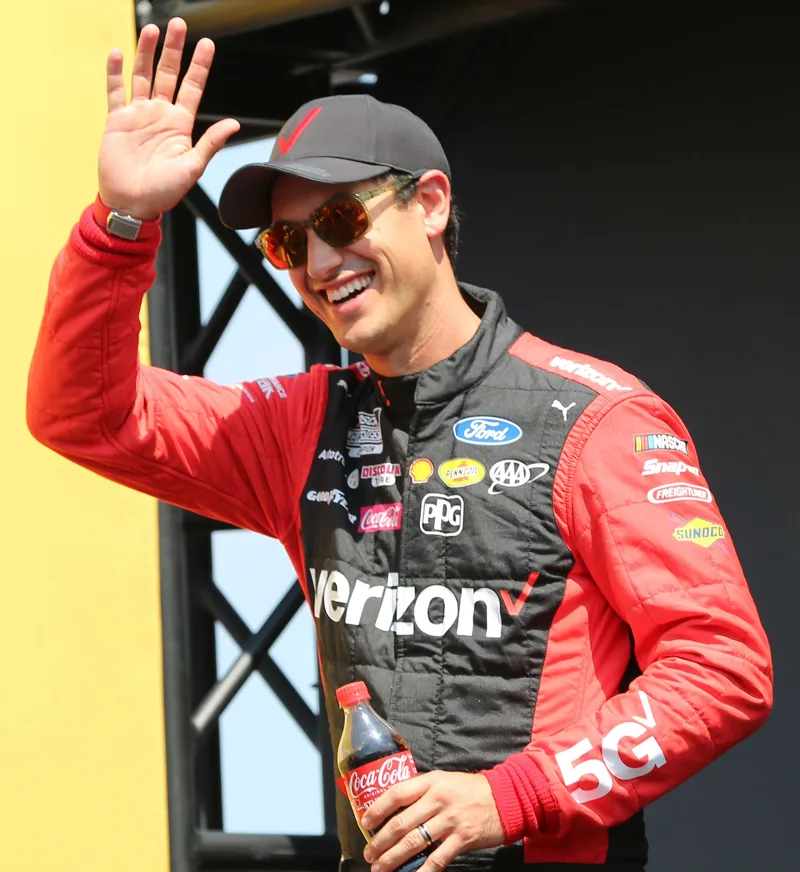
Kurt Busch joined the No. 1 for 2019 with Monster Energy sponsoring, after leaving Stewart-Haas Racing. He won at Kentucky in his first season with the team. In 2020 he made the playoffs with four top fives and 14 top 10s, won at Las Vegas, and finished tenth in points.
In 2021 Busch won the Quaker State 400 on 11 July, holding off his younger brother Kyle. He was eliminated after the Round of 16 at Bristol, which also ended the team's last chance at a Cup championship as an owner. Trackhouse bought the Cup assets after that season, and the team's No. 1 later ran under the Trackhouse name.
How did Juan Pablo Montoya's years shape the No. 42?
Montoya made his Cup debut in a Texaco Havoline car numbered No. 30 at the 2006 Ford 400 at Homestead, qualifying 29th before a crash ended his race. He was then announced to drive the No. 42 full-time for 2007, which was a notable move for a former Indianapolis 500 winner and Formula One driver.
Montoya won his first Cup race at Sonoma in the Toyota Save Mart 350, ending a nearly five-year winless run for the Chip Ganassi organisation. He finished 20th in points and won Rookie of the Year. In 2009 he had seven top fives and 18 top 10s, and he finished eighth in points, the team's best season-ending position since Sterling Marlin's third place in 2001.
In 2010 Montoya won at Watkins Glen, and he finished 17th in points. The 2011 season started well with sixth at Daytona and third at Las Vegas, but crashes at Talladega, Richmond and Dover hurt the year. In 2013 he finished second at Dover after being passed by Tony Stewart in the closing laps. His contract was not renewed for 2014, and he left for Team Penske's IndyCar operation.
How did Kyle Larson reshape the No. 42?
Kyle Larson took over the No. 42 for 2014 after winning the 2013 Nationwide Rookie of the Year title. He won the Nationwide race at Fontana, finished second to Kyle Busch in the Cup race there, and had a steady run of top 10s in the first half of the year.
Larson won his first Cup race at the 2016 Pure Michigan 400. In 2017 he won at Fontana after taking the pole, completing his first weekend sweep. He swept both Michigan races that year and won the last race before the playoffs at Richmond. He stayed in the top three in points for most of the season, but an engine failure at Kansas ended his title hopes and he finished eighth.
In 2019 Larson became only the third driver to win both the Monster Energy Open and the Monster Energy NASCAR All-Star Race. He broke a 75-race winless streak at Dover later that year.
In April 2020 NASCAR and iRacing suspended Larson after he used a racial slur during an iRacing event. Chip Ganassi Racing fired him the following day, and several sponsors ended their deals with him.
Who drove the No. 42 after Larson?
Matt Kenseth filled in for the rest of 2020 and finished 28th in points, with a second at the Brickyard 400 as the season's best result. Ross Chastain replaced him in 2021, and he ended his first full-time Cup season 20th in the standings. He finished third at the Southern 500 and second at the inaugural Ally 400 at Nashville.
After the 2021 season Ganassi sold the team's assets to Justin Marks and Trackhouse Racing. The whole 42 team, including Chastain and crew chief Phil Surgen, moved over, but the number was not included, as the 42 was taken by Petty GMS Racing for its second car.
What happened to the No. 8 and No. 41?
After the DEI merger Ganassi gained owner points from the former DEI No. 8, which Mark Martin and Aric Almirola had driven in 2008. Almirola was signed for the full 2009 season, pending sponsorship, and Guitar Hero sponsored four races, including the Daytona 500. After seven races, with the team 37th in owner points, Ganassi suspended the No. 8 for lack of sponsorship.
The No. 41 was a different story. Reed Sorenson drove it full-time from 2006 and won at Gateway in 2007. Scott Pruett ran the road courses, and Bryan Clauson later drove some races. Sorenson left in 2008 for Richard Petty Motorsports, and the team was shut down after the spring Talladega race in 2008.
What did the SABCO-era No. 40 and No. 42 look like?
Sabates chose Sterling Marlin, a two-time Daytona 500 winner, to drive the No. 40 car in 1998. That year the car received a fresh paint scheme and moved to Dodge, with Lee McCall as crew chief and Ganassi as owner. Marlin won his qualifying race for the 2001 Daytona 500, and he gave Dodge its first win since its return to NASCAR at Michigan.
Marlin finished third in points in 2001 and led the standings for much of 2002, winning two races before a fractured vertebra at Kansas ended his season. Jamie McMurray filled in for six races, and at Charlotte he won his first race in only his second Winston Cup start. Marlin went winless over the next three seasons and was released after 2005.
Dario Franchitti drove the No. 40 in 2008 with a patchwork of one-race sponsors. He missed races after an ankle injury, and the team was shut down in July 2008 because of lack of funding, with about 70 employees laid off.
How did the Xfinity side of the team operate?
SABCO began in the Busch Series in 1995, running nine races with Kyle Petty, Bobby Hamilton and Dennis Setzer. It returned in 2000 with several cars, including a No. 42 BellSouth Chevrolet driven mostly by Kenny Irwin Jr. Irwin was killed in a practice accident at New Hampshire that year.
The Busch program was restarted by CGR from 2004 to 2008 to develop drivers including Reed Sorenson, David Stremme, Dario Franchitti and Bryan Clauson, and the team won eight races in that five-year stretch. After the merger with Dale Earnhardt Inc. the program was shut down.
At the end of 2014 CGR acquired Steve Turner's interest in Turner Scott Motorsports' Xfinity operations, and the car ran under Harry Scott's HScott Motorsports banner with Chip Ganassi. On 4 January 2019 CGR announced the closure of its Xfinity program because of a lack of sponsorship. The announcement came after the FBI raided the home of the chief executive of DC Solar, the team's primary sponsor, on 18 December 2018.