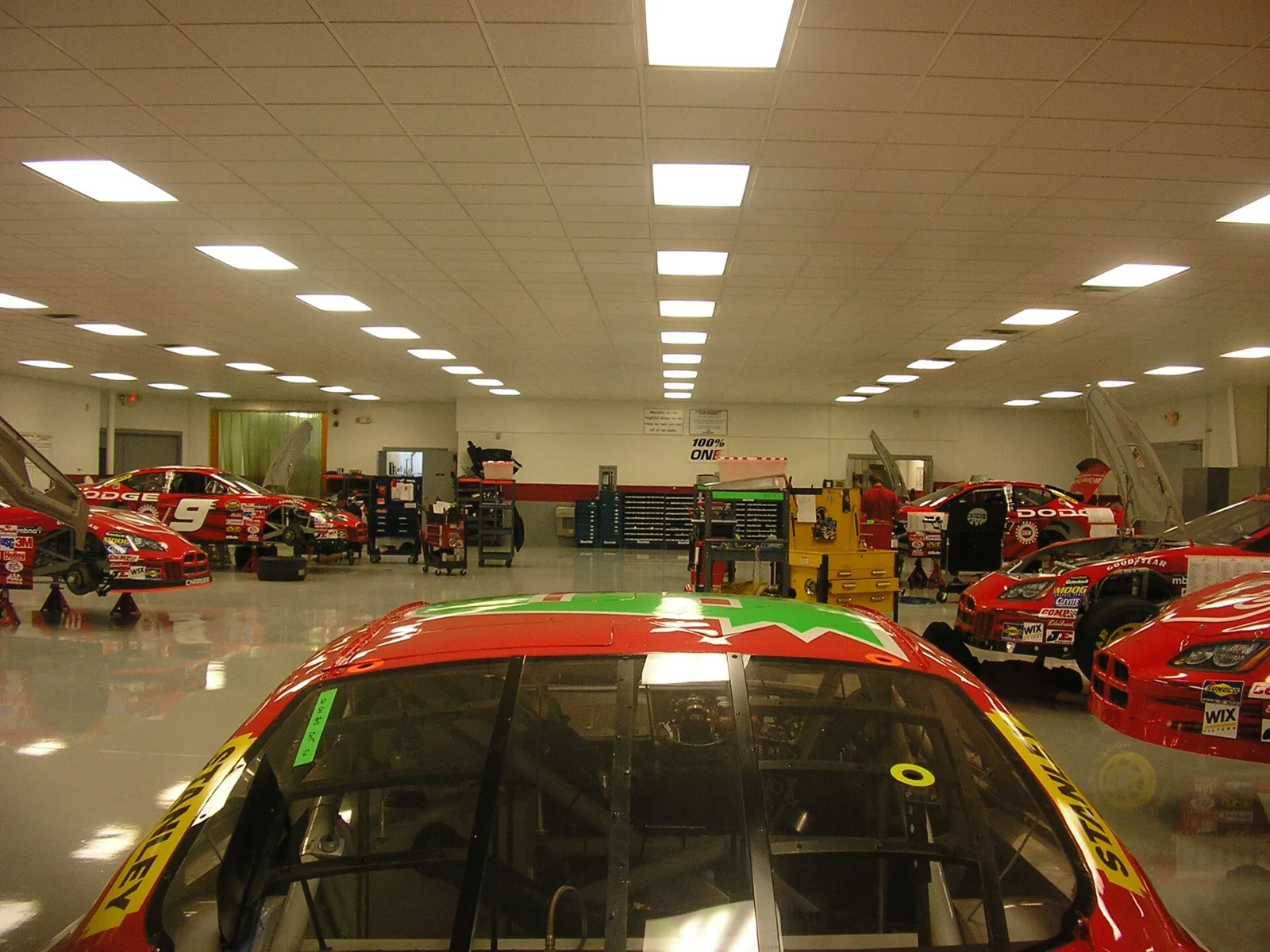
Founded in 2000 with Dodge backing, the team ran Cup cars for Bill Elliott and Kasey Kahne, changed hands in 2007 and was merged out of existence in 2009.
Evernham Motorsports was a NASCAR Cup Series team founded in 2000 by former Hendrick Motorsports crew chief Ray Evernham. It raced Dodges with drivers including Bill Elliott and Kasey Kahne, was renamed Gillett Evernham Motorsports in 2007 and merged with Petty Enterprises in 2009.
Evernham Motorsports was an American stock car team that raced in the NASCAR Cup Series. Ray Evernham founded it in 2000, ran a two-car Dodge operation from 2001 and sold a majority stake in 2007. The team was merged into Richard Petty Motorsports in 2009, which ended its life as an independent organisation.
When and how was Evernham Motorsports founded?
Ray Evernham started the team in 2000 after winning three championships as Jeff Gordon's crew chief at Hendrick Motorsports. When Dodge returned to NASCAR's top level, he became the team manager and owner, and the brand provided direct factory backing and sponsorship for the operation.
The Intrepid R/T was the car the organisation built around, and it made its debut in 2001. The team began in the former premises of Bill Elliott Racing, and by its first full season it was running two full-time entries.
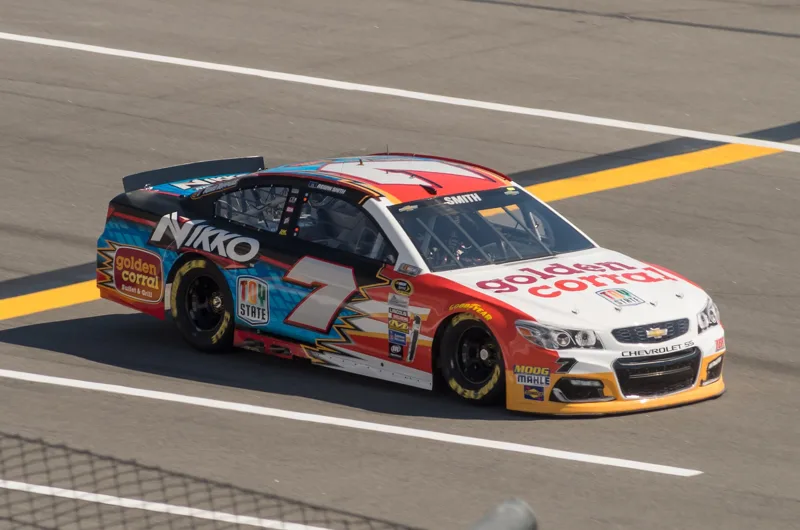
A joint venture with Ultra Motorsports, agreed in November 2001, put Ultra's Dodge entry in the No. 7 car under Casey Atwood. Ultra's owner Jim Smith ran day-to-day operations, while Evernham handled the technical and competition side. Evernham described the arrangement as running two and a half teams.
A team built on a crew chief's reputation, funded by Dodge and sponsors, and absorbed by a merger in under a decade.
Who owned Evernham Motorsports and how did ownership change?
Ray Evernham held a substantial stake when George N. Gillett Jr., the former owner of the Montreal Canadiens and Liverpool F.C., bought a majority interest in August 2007. The organisation was then renamed Gillett Evernham Motorsports, and Evernham kept his stake and his role as chief executive.
The Gillett family took over the business side, while Evernham said he could concentrate on racing operations and team performance. The new owners hired finance executives to support corporate marketing, and Tom Reddin, a former LendingTree chairman, replaced Evernham as chief executive.
The 2008 season brought a deal that never completed. A technical and marketing agreement with the independent driver Robby Gordon aimed to absorb his single-car operation for $23.5 million, with Gordon then signed to a four-year, $12 million contract. The merger fell apart, and the team sued Gordon over the broken terms.
Turmoil followed when the team signed A. J. Allmendinger and Reed Sorenson for 2009 and Elliott Sadler was released from the No. 19 ride. In January 2009 the team merged with the fellow Dodge operation Petty Enterprises, which had lost its sponsors. The combined organisation became Richard Petty Motorsports with four cars, and Evernham was not involved in the talks. He and Richard Petty held only minority shares afterwards.
Which Cup cars did Evernham Motorsports field?
The team ran Cup cars numbered 7, 9, 10 and 19, plus a research and development entry. Bill Elliott, Kasey Kahne, Jeremy Mayfield and Elliott Sadler were its most prominent drivers, and Kahne won nine Cup races in the No. 9 car between 2005 and 2008.
The No. 19 made its first Cup start at the 2000 race at Richmond, with 20-year-old Casey Atwood at the wheel of a Motorola-sponsored Ford. Atwood finished 19th there and 10th at Homestead that year. For the full-time 2001 season the car became a Dodge, and Atwood won the pole at Phoenix. He barely missed out on rookie honours, which went to Kevin Harvick, who finished ninth in points and won twice.
In 2002 Evernham swapped Atwood for Jeremy Mayfield, a three-time Cup race winner who had lost his ride at Team Penske late in 2001. Mayfield managed only four top-10s in his first year and finished 26th in points. He improved to 19th in 2003, won at Richmond in 2004 and claimed another win in 2005.
In 2006 an early crash at the Brickyard pushed the No. 19 below 35th in owner points, meaning it had to qualify for every race on time, so Evernham put Bill Elliott in the car for one race. Elliott Sadler arrived in August 2006 after leaving Robert Yates Racing and finished 22nd in driver points that year. His contract was extended, but the team later announced Allmendinger as his replacement, which led to a dispute that ended in a settlement.
The No. 9 debuted at the 2001 Daytona 500 with Bill Elliott, the 1988 Winston Cup champion, who started on pole and finished fifth. He won at Homestead that season, finished 15th in points, added two wins in 2002 and ended his full-time run with a final victory at North Carolina in fall 2003.
Kasey Kahne replaced Elliott in 2004. The rookie picked up four poles and 14 top-10 results, finished 13th in points and took Rookie of the Year honours. He won the spring Richmond race in 2005, but a late-season crew swap between his team and Mayfield's, made because both cars were struggling, gave him most of Mayfield's crew, and he still ended that season 23rd in the standings. In 2006 he won six races, including the Coca-Cola 600 at Lowe's Motor Speedway, and finished eighth in points.
Budweiser began sponsoring the No. 9 in 2008, after Dodge Dealers, Mopar and the UAW had backed the team from 2001. Kahne won two races that year and finished 14th.
The No. 10 ran with Scott Riggs and Valvoline sponsorship in 2006. Valvoline had come over from MB2 Motorsports and held an ownership stake through a senior vice president. Riggs came close to winning at Charlotte, Talladega and Texas, but finished 20th in the standings. In 2007 he failed to qualify for six races and was released with two events left.
Patrick Carpentier, who was 36 when he took the seat, drove the No. 10 full-time in 2008. He was one of several open-wheel veterans in a rookie class that included Dario Franchitti and Sam Hornish Jr., and he won the pole at Loudon. The team let him go once he missed the Talladega field. A. J. Allmendinger then posted three top-15s in five races for the team.
| Car | Years | Drivers | Notable result |
|---|---|---|---|
| No. 7 | 2002 to 2003 | Casey Atwood, Jason Leffler, Jimmy Spencer | Atwood's best finish was 11th |
| No. 9 | 2001 to 2008 | Bill Elliott, Kasey Kahne | Kahne won six races in 2006 |
| No. 10 | 2006 to 2008 | Scott Riggs, Patrick Carpentier, A. J. Allmendinger | Carpentier won the pole at Loudon |
| No. 19 | 2000 to 2008 | Casey Atwood, Jeremy Mayfield, Elliott Sadler | Mayfield won in 2004 and again in 2005 |
What was the research and development car?
The research and development car began life as the No. 91 in 2002 and later ran as the No. 98, and the team used it for development running. Several drivers shared it, and Bill Elliott ran it part-time in 2004 and 2005.
Dick Trickle failed to qualify for the 2002 Talladega race in the car. Hank Parker Jr. drove it at Rockingham with USG Corporation sponsorship, and Casey Atwood ran it at Homestead-Miami with Mountain Dew after leaving the No. 7 ride.
In 2004 Elliott made three starts in a Dodge numbered 98, entered through his own company, with Evernham equipment and crew. That arrangement avoided a clash with Coca-Cola, whereas the team's own No. 9 and No. 19 cars carried Mountain Dew.
Elliott returned to the No. 91 part-time in 2005 for nine races, including visits to Fontana, Atlanta, Texas, Charlotte and Michigan. Sponsors that year included UAW, Coca-Cola, McDonald's, Stanley Tools and Visteon.
How did the Nationwide Series program develop?
The team's Nationwide program began as Tommy Baldwin Racing's Pepsi-sponsored No. 6 Dodge in 2002. Evernham bought that operation in October 2004, along with its Hungry Drivers development scheme, and Kasey Kahne won the team's first race at Kansas that October.
In 2006 Unilever's sponsorship expanded and the team, now called Ultimate Chargers, moved to the No. 9. Kahne won twice at Las Vegas and once at Fontana that season, and in 2007 he added wins at Charlotte and Bristol.
The 2008 season was the first without a Nationwide win for the team, although its best results were two second-place finishes. When Unilever moved to the No. 5 of JR Motorsports at the end of the year, Evernham scaled the team back to part-time for 2009 and let about 65 staff go.
Smaller Nationwide entries also appeared. A No. 79 Dodge ran in 2003 with Jeremy Mayfield and again in 2005 with Kahne and Mayfield, and a No. 19 car was fielded in the 2007 finale at Homestead and in 2008 with Chase Miller as a second GEM driver.
Did Evernham Motorsports compete in ARCA or the Truck Series?
Yes, on a smaller scale. Casey Atwood won the 2002 ARCA Racing Series race at Pocono from pole in a Dodge-sponsored No. 19. Erin Crocker debuted in ARCA cars in 2005 and moved into the Craftsman Truck Series full-time in 2006, with General Mills backing her effort.
Crocker won the pole at Nashville Superspeedway on her ARCA debut and finished 12th after leading 28 laps. She won further poles and top-five finishes in the series before her truck career began.
Her Truck Series results were less successful. Her best finish was 16th, achieved twice, and she ended the truck championship standings 25th. General Mills left at the end of that season, and the truck team closed.
How did Evernham Motorsports end, and what was its legacy?
Evernham Motorsports ended in January 2009, when it merged with Petty Enterprises and became Richard Petty Motorsports. Its legacy lies in the drivers who passed through its cars, from Atwood and Elliott to Kahne, Sadler and Carpentier, and in the Dodge programme it helped sustain in the Cup Series.
Sponsorship was the team's recurring problem. Dodge Dealers, Valvoline, Budweiser and Best Buy all appeared on its cars at different points, and several sponsors threatened to leave during the turmoil of 2008.
Ray Evernham, who had built the team on his reputation as a crew chief, stepped back from management as the Gillett family took charge. His later involvement with the merged organisation was limited to a minority share.