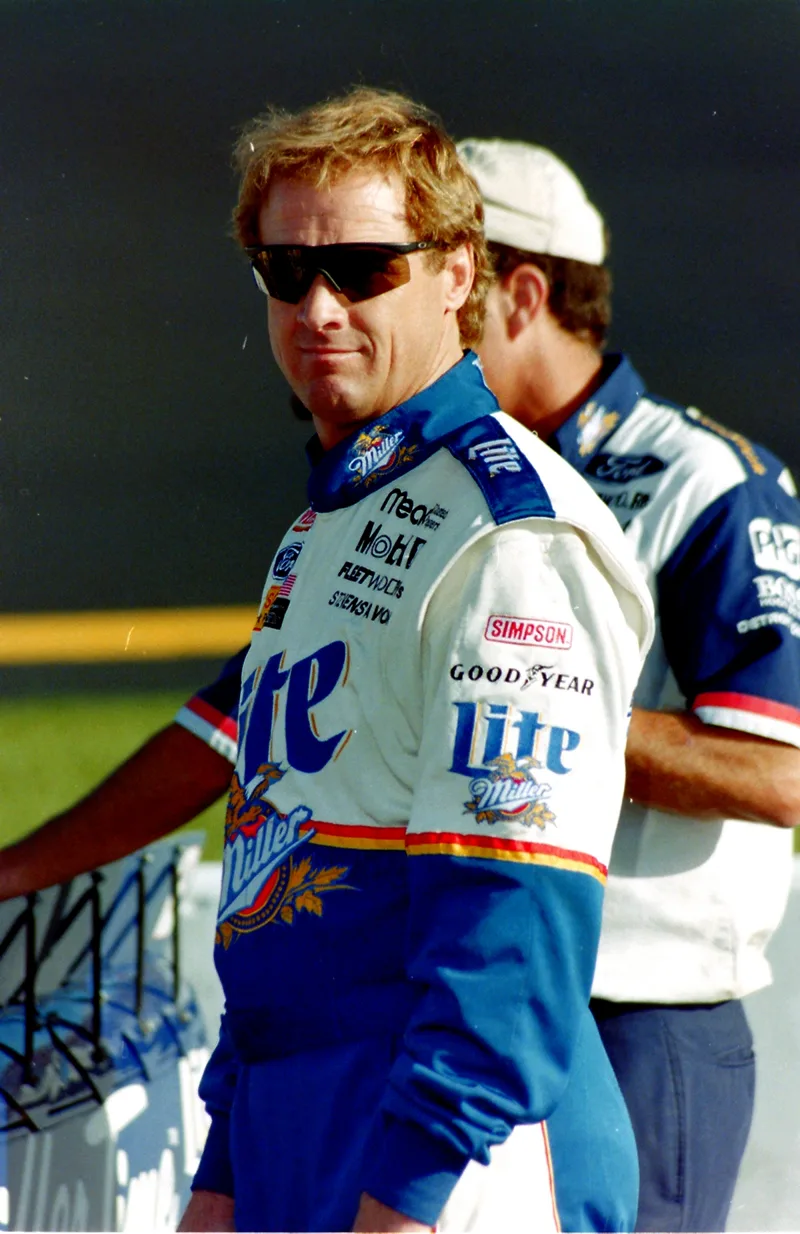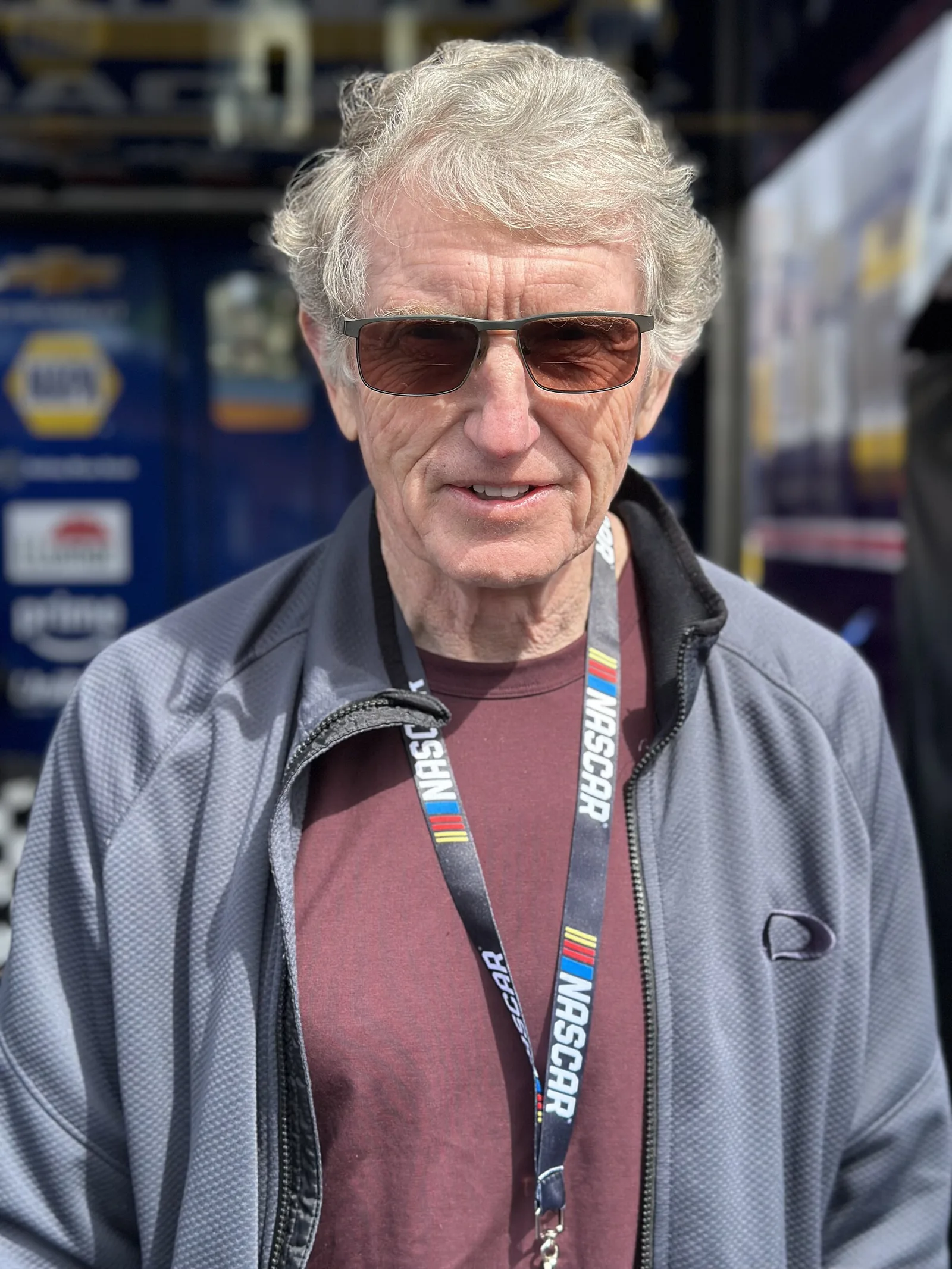
A 44-win Cup career, a record 16 Most Popular Driver awards and qualifying marks from 1987 that still stand.
Bill Elliott, born in Dawsonville, Georgia on 8 October 1955, is a former NASCAR driver whose Cup career ran from 1976 to 2012. He won the 1988 Winston Cup title and 44 Cup races, and in 1985 he became the first driver to earn the Winston Million.
Bill Elliott is one of the most decorated stock car drivers in NASCAR history. He won the 1988 Winston Cup Championship, collected 44 Cup victories and set two qualifying speed records in 1987 that still stand. He also won NASCAR's Most Popular Driver award a record 16 times.
Known as Awesome Bill from Dawsonville and Million Dollar Bill, Elliott raced from his first Cup start in 1976 to a final part-time outing in 2012. Much of his success came with Melling Racing during the 1980s, and his career later passed through his own team, Junior Johnson's operation and Ray Evernham's organisation.
Who is Bill Elliott?
Bill Elliott is a retired American stock car driver born on 8 October 1955 in Dawsonville, Georgia. He won the 1988 Winston Cup Championship, 44 Cup races and seven crown jewel events, and he was the first driver to collect the 1985 Winston Million bonus. He entered two rounds of the Superstar Racing Experience in 2022.
Elliott came from a motorsport family. His father George ran a lumber company and had a love of racing, and later opened a Ford dealership in an area that had none. Bill was the youngest of three boys, and his brothers Ernie and Dan worked in the speed shop their father set up, Ernie as crew chief and engine builder and Dan as a transmission specialist.
A 1985 bonus, a 1987 speed record and a 1988 title: Elliott built a career on the biggest days of the season.
How did Elliott get his start in NASCAR?
Elliott made his first Winston Cup start at Rockingham in 1976, driving a car owned by his father George. He qualified 34th of 36 cars and finished 33rd, after an oil pump failure ended his day after 32 laps. He then spent five years in the series without corporate backing.
In mid-1977 he bought a Mercury Montego from Bobby Allison, and the switch paid off. He earned his first top-ten finish that year, finishing tenth in the Southern 500. Two years later he finished second in the same race behind David Pearson, the driver he had idolised as a boy.
His first major sponsor arrived in the fall of 1980, when Harry Melling put up $500 for the 1980 National 500 at Charlotte. Melling later bought the team from George Elliott on 1 December 1981. Elliott's first win came at the end of the 1983 season, at Riverside, after 115 starts and eight second-place finishes since 1979.
What was the 1985 Winston Million?
The Winston Million was a promotion launched before the 1985 season by R. J. Reynolds Tobacco Company and its Winston brand. It offered US$1 million to any driver who could win three of NASCAR's four crown jewel races in one season. Elliott became the first driver to claim it, at the Southern 500 at Darlington.
Elliott's 1985 season was the best of his career. He won 11 of 28 races and 11 poles, and he began the campaign with a Daytona 500 pole and victory, leading 136 of 200 laps. At Talladega he had pitted with a broken oil fitting and dropped two laps, then fought back under green-flag conditions to win the Winston 500 and claim the second leg of the bonus. The World 600 ended 18th after mechanical failures, which left Darlington as the final chance.
At Darlington, Harry Gant led 84 laps before his engine failed, and Dale Earnhardt led 147 of the 367 laps before crashing out. Elliott led 100 laps and crossed the line first, capturing the million-dollar purse. The bonus was the largest single race payday in motorsports history at that time, and it gave him the nicknames Million Dollar Bill and Awesome Bill from Dawsonville. Sports Illustrated put him on its cover, making him only the second NASCAR driver to appear there after Cale Yarborough.
Despite the bonus, Elliott finished second in the championship. He had led the standings by 206 points with eight races to go, but a run of poor results let Darrell Waltrip take over. A 31st-place finish at Riverside ended his hopes, and he finished 101 points behind Waltrip.
Why do Elliott's 1987 qualifying records still stand?
Elliott set the fastest qualifying speed at Daytona International Speedway in 1987, at 338.548 km/h (210.364 mph). He then broke his own mark at Talladega Superspeedway that year, posting 342.483 km/h (212.809 mph) for the Winston 500. The Talladega figure is the fastest qualifying speed ever recorded in a NASCAR race.
Both runs used a Ford Thunderbird with an engine built by his brother Ernie. The previous Talladega record, set in 1986, stood at 336.969 km/h (209.383 mph). Bobby Allison's crash into the catch fence at Talladega later that year injured fans, and NASCAR responded by mandating restrictor plates at Daytona and Talladega from 1988. Those plates make a repeat of Elliott's speeds very unlikely.
How did Elliott win the 1988 Winston Cup title?
Elliott won his only Winston Cup championship in 1988, taking six wins and six poles in 29 races. He ran a string of 16 consecutive top-ten finishes and did not finish a race outside the top twenty all season. The title came down to the final race, where he finished 24 points ahead of Rusty Wallace.
The season began with a win at Bristol, where Geoff Bodine had spun him late in the race. He pitted, rejoined and charged back through the field in the last four laps. Elliott then took the points lead after a second-place finish at Bristol in the fall, won his second Southern 500 leading 154 of 367 laps, and swept both Dover races with 392 of 500 laps led in the fall race.
Elliott started the Atlanta finale 29th and needed to finish 18th or better to clinch the title. Wallace started on pole, led 166 of 325 laps and won the race. Elliott drove conservatively to 11th place, which was enough. He finished the season with 15 top-five and 22 top-ten finishes and an average finish of 6.6.
What happened in the 1992 championship battle?
In 1992 Elliott joined Junior Johnson & Associates and won five races, but he lost the Winston Cup title to Alan Kulwicki by only 10 points in the Hooters 500 at Atlanta. Kulwicki's margin came from one extra lap led, which earned him the five bonus points that decided the championship.
Elliott had started strongly with four consecutive wins at Rockingham, Richmond, Atlanta and Darlington. After the fall race at Dover he held a 154-point lead with six races remaining, but a string of mechanical problems dropped him to third with one race to go. Davey Allison crashed out of the finale, which left Kulwicki and Elliott running first and second for most of the day.
Elliott won the race leading 102 of 325 laps, but Kulwicki led 103 and took the bonus. That gave him the title by 10 points, which remained the closest margin in NASCAR history until 2004. Elliott finished the year with five wins, three poles and 14 top-five finishes, and he was runner-up in the standings for the third time in his career.
How did Elliott perform as an owner-driver?
From 1995 to 2000 Elliott ran his own Cup team and did not win a race. He still finished eighth in the points in both 1995 and 1997. The team carried the No. 94 to honour his nephew Casey Elliott, who was battling cancer when the team was formed and died in 1996.
His partnership with Hardy was dissolved in July 1996, after which the operation became Bill Elliott Racing. In the 1997 Daytona 500 he led with fewer than ten laps to go before a late caution, and he went on to finish fourth. He came second at Michigan that year and led 181 of the 367 laps at Darlington, but finished fourth behind Jeff Gordon.
In 1998 Elliott teamed with Dan Marino to form Elliott-Marino Motorsports, and he missed the fall Dover race to attend his father's funeral. He sold his equipment to Ray Evernham in 2000, which ended the owner-driver period. Fans voted him NASCAR's Most Popular Driver in each year from 1991 to 2000, even though he won no races in his six years as an owner-driver.
What did the Evernham years produce?
Elliott drove for Ray Evernham from 2001 to 2003. He won the 2001 Pennzoil Freedom 400 at Homestead-Miami, ending a 226-race winless streak, and he added two more wins in 2002. His final win as a full-time driver came at Rockingham in 2003. Those were the last victories of his full-time career.
He began 2001 with the pole for the Daytona 500, his 50th career pole, and finished fifth. At Homestead he passed teammate Casey Atwood with five laps to go, giving the Evernham team its first win. He finished 15th in the points that year and withdrew his name from the Most Popular Driver ballot so fans could vote for Dale Earnhardt.
In 2002 he won the Pennsylvania 500 at Pocono, which made him the winningest driver at that track with five wins at the time. A week later he dominated the Brickyard 400 from the outside pole, leading 93 of 160 laps and passing Rusty Wallace with 12 laps to go. He finished 13th in the points that season, and it was his 16th and final Most Popular Driver award.
In 2003 Elliott sat 16th after 26 races, then finished ninth in the points after a strong finish. At Rockingham he started last after an engine change, then led 140 of the 393 laps to beat Jimmie Johnson. The Homestead finale was another near miss: he led 189 of 267 laps before a cut tire in the final lap allowed Bobby Labonte to win. Elliott then handed the No. 9 to Kasey Kahne and moved to a part-time schedule.
How did Elliott's later career unfold?
After 2003 Elliott raced part-time for several teams. His best finishes came with the Wood Brothers, who ran him in the No. 21 car across 2007 to 2009. He made his 800th Cup start at Lowe's Motor Speedway on 25 May 2009, joining a small group of drivers who reached that number.
In 2004 he drove three events for Evernham and finished ninth at Indianapolis, which was the 320th and final top-ten of his career. He later drove for MB2 Motorsports, Michael Waltrip Racing and R&J Racing. In 2007 he qualified for ten races with the Wood Brothers, with a best finish of 20th at Pocono, and in 2008 he set his best finish at 12th at Homestead.
Elliott made his last Cup start in July 2012 at Daytona, driving the No. 50 Chevrolet for Turner Motorsports. He qualified fifth, but he was involved in an accident and finished 37th. It was his 828th and final start. He returned to NASCAR for the Road America Xfinity race in 2018, finishing 20th on the lead lap, and he drove full-time in the Superstar Racing Experience in 2021, finishing third at Nashville Fairgrounds Speedway.
What records and honours does Elliott hold?
Elliott finished with 44 Cup wins and 55 poles, and when he retired from full-time racing he ranked eighth on the all-time pole list. He is a member of the NASCAR Hall of Fame, Class of 2015, and was named one of NASCAR's 50 Greatest Drivers in 1998. The table lists the main milestones of his career.
| Milestone | Detail |
|---|---|
| Born | 8 October 1955, Dawsonville, Georgia |
| Cup championship | 1988 Winston Cup, by 24 points over Rusty Wallace |
| Cup wins | 44, ranked 19th all-time as of 2025 |
| Crown jewel wins | 7: Daytona 500 (2), Southern 500 (3), Winston 500, Brickyard 400 |
| Cup poles | 55, eighth all-time at his semi-retirement |
| Qualifying records | 338.548 km/h (210.364 mph) at Daytona and 342.483 km/h (212.809 mph) at Talladega, both 1987 |
| Most Popular Driver | 16 times, a NASCAR record |
| Longest winless streak | 226 races, from the 1994 Southern 500 to the 2001 Homestead race |
| Hall of Fame | NASCAR Hall of Fame, Class of 2015 |
Why does Elliott's legacy still matter?
Elliott's records are a large part of his legacy. His eleven superspeedway wins in 1985 remain a modern-era single-season record, and his four consecutive wins at Michigan in 1985 and 1986 are a record for one superspeedway that is shared with another driver.
Georgia honoured him in several ways. The state legislature declared 8 October Bill Elliott Day in 2005, a stretch of State Route 183 became the Elliott Family Parkway, and the Dawsonville Pool Room sits on Bill Elliott Street. His son Chase won the 2020 Cup championship, which made the Elliotts the third father-son NASCAR champions after the Pettys and the Jarretts.