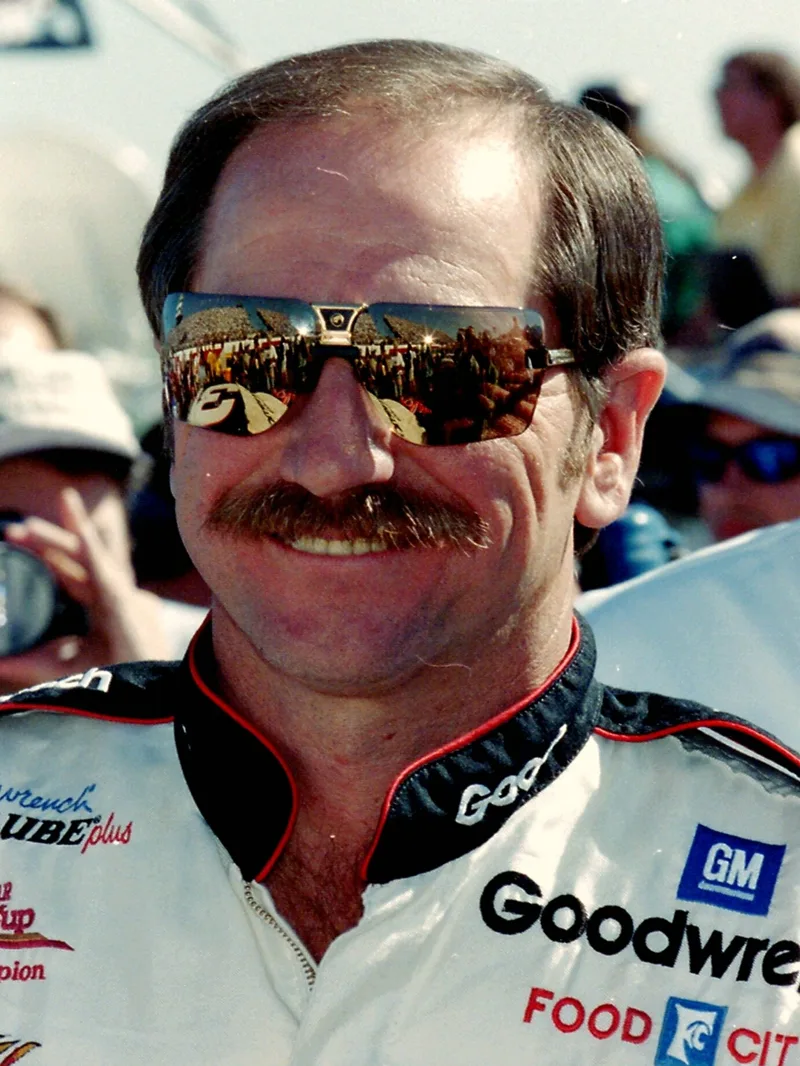
A 46-point penalty at Richmond, a cut tyre at Daytona and a fatal pit road accident in Atlanta shaped the year that gave Dale Earnhardt his fourth title.
The 1990 NASCAR Winston Cup season ran from February 11 to November 18 and gave Dale Earnhardt his fourth title. He beat Mark Martin by 26 points after a 46-point penalty at Richmond reshaped the standings, and a pit road death in Atlanta led to new rules.
The 1990 NASCAR Winston Cup Series ran from February 11 to November 18 and ended with Dale Earnhardt of Richard Childress Racing as champion for the fourth time. He beat Mark Martin by 26 points, and the margin depended on a 46-point penalty that NASCAR imposed early in the year. The season also produced an unlikely Daytona 500 winner, a record single-race payday and a fatal accident on pit road.
What made the 1990 season unusual?
The title was not settled until the final Sunday at Atlanta, where Dale Earnhardt finished third to beat Mark Martin by 26 points. A February penalty had shaped the standings all year, and a fatal pit road accident in November pushed NASCAR into a new set of rules.
The schedule opened at Daytona on February 11 with the Busch Clash, an exhibition for drivers who had won a pole the year before or had already won the event. Jimmy Hensley drew pole position for that race. Two Gatorade Twin 125s followed on February 15, and Earnhardt won the second one, the first of ten consecutive Daytona Duel victories that ran through 1999.
The main calendar mixed superspeedways, short tracks and two road courses at Sears Point and Watkins Glen. Restrictor-plate racing at Daytona and Talladega set the tone for the year's biggest headlines, while the Motorcraft Quality Parts 500 at Atlanta and the TranSouth 500 at Darlington carried the 500 name.
A February penalty and a pit road death in November framed Dale Earnhardt's fourth title and its 26-point margin.
Why did the Richmond penalty decide the title?
A 46-point deduction, imposed after Mark Martin won the Pontiac Excitement 400 at Richmond on February 25, decided the championship. Without it, Martin would have finished 20 points ahead of Earnhardt, so the penalty became a key factor in determining the championship.
Richmond may have been the chilliest race the series has run, with winds gusting and a wind chill of about 5 degrees. NASCAR officials found a somewhat oversized carburettor spacer plate on Martin's car after the race, and the penalty followed from that finding.
The plate had been bolted on rather than welded, which put it in a grey area of the rules. It was later admitted that the plate was not oversized and was not technically illegal. Earnhardt, who finished second, and his owner Richard Childress protested the result. NASCAR let the victory stand but removed the 46 points.
This was only the second event of the year, leaving 27 races still to run, so nobody could have known the penalty would decide the points title. Speculation that NASCAR was biased toward Earnhardt followed for many years afterwards, although NASCAR's ruling stood.
How did the points battle develop?
Martin and Earnhardt traded the points lead through the summer. Martin held a 16-point advantage after the North Wilkesboro race at the end of September, and Earnhardt narrowed the gap through the autumn. The final weeks were decided by a few points at a time.
Morgan Shepherd briefly took the points lead at Dover in June, the only time in his career that he led the standings. The lead came from Shepherd's consistency and Earnhardt's engine problems. Shepherd finished 29th at Sears Point with a blown engine and lost the lead to Martin there.
On October 21 at North Carolina Speedway, Earnhardt gained five points on Martin, who still led by 45 points with two races remaining. Earnhardt's win at Phoenix on November 4 put him back in front by six points and set up the final race at Atlanta.
At Atlanta, Earnhardt finished third, which was enough to take the championship by 26 points. Morgan Shepherd won that race, and Martin finished sixth. The final 26-point margin was the one the February penalty had helped to create.
Which races shaped the summer?
The summer was built around the superspeedways and Earnhardt's wins at Daytona and Talladega. His first points race victory at Daytona came on July 7, and his DieHard 500 win at Talladega three weeks later was one of the strongest runs of the year.
Late May and June brought a run of different winners. Rusty Wallace won the Coca-Cola 600 on May 27 after Ken Schrader had taken the pole. At Dover on June 3, Derrike Cope won the Budweiser 500 for his second and last Cup victory, even though Dale Earnhardt's engine blew on lap 23. His crew repaired the car, but the engine failed again later and he finished 31st. Harry Gant won the Miller Genuine Draft 500 at Pocono on June 17, a race in which a record 22 cars finished on the lead lap, and a week later Earnhardt won the Miller Genuine Draft 400 at Michigan.
The Pepsi 400 at Daytona opened with the Big One, a 24-car crash on the first lap that put 11 cars out at once. Earnhardt led 127 laps on his way to the win.
Practice at Daytona had already injured Darrell Waltrip, who lost control on oil and was hit by Dave Marcis on the driver's door. Waltrip's injuries included several leg fractures, an arm break, nine broken ribs and a concussion, and he missed the next six races. Jimmy Horton filled in for him at Daytona and was his relief driver two weeks later at Pocono.
At Talladega, Earnhardt won the pole, led a record-breaking 134 laps and took the win, which made it three straight restrictor-plate victories. As of 2022 that remains the only time a driver has won three straight restrictor-plate races. Jimmy Spencer flipped on the last lap and still finished 24th, two laps down.
The Budweiser at The Glen on August 12 went to Ricky Rudd, while Alan Kulwicki's Ford caught fire after he finished 11th and he climbed out just beyond the timing line. Mark Martin won at Michigan on August 19, and Ernie Irvan won at Bristol on August 25 in his first Cup victory and the first for Morgan-McClure Motorsports.
Earnhardt closed the Darlington race on September 2 by winning from a lost lap, collecting $200,000 and becoming the first driver to pass $11,000,000 in career winnings. It was the last time he won from the pole.
How did pit road change after Atlanta?
Pit road rules changed after Ricky Rudd's car spun on pit road at the Atlanta finale and struck Bill Elliott's pit stall, killing tyre changer Mike Ritch. Before the change, pit road had no speed limit, and cars raced down it to save time. NASCAR then banned tyre changes under caution, a move that many drivers disliked.
The old system had a signboard man standing in the middle of the pit lane to wave cars into their stalls. The new rules kept those men off the lane, and lollipop signs were dangled over the stall from the far side of the pit wall instead. Crews had to stay on that far side until their car was one stall away.
Each car also received a blue or orange sticker. Odd-numbered cars carried blue and even-numbered cars carried orange, so that only one group could pit on each restart. That sticker procedure lasted only a few races before NASCAR replaced it with pit road speed limits, and the pit road closing procedure that followed also began with this change.
Selected race results
| Date | Race | Track | Winner | Notable detail |
|---|---|---|---|---|
| February 18 | Daytona 500 | Daytona International Speedway | Derrike Cope | First career Cup victory |
| February 25 | Pontiac Excitement 400 | Richmond International Raceway | Mark Martin | Later docked 46 points |
| April 8 | Valleydale Meats 500 | Bristol International Raceway | Davey Allison | Won by about 8 inches over Martin |
| April 22 | First Union 400 | North Wilkesboro Speedway | Brett Bodine | Only Cup victory |
| May 20 | The Winston | Charlotte Motor Speedway | Dale Earnhardt | Led all 70 laps, $325,000 |
| June 3 | Budweiser 500 | Dover Downs International Speedway | Derrike Cope | Second and last Cup victory |
| July 7 | Pepsi 400 | Daytona International Speedway | Dale Earnhardt | First points race win at Daytona |
| July 29 | DieHard 500 | Talladega Superspeedway | Dale Earnhardt | Led a record 134 laps |
| September 2 | Heinz Southern 500 | Darlington Raceway | Dale Earnhardt | First to pass $11,000,000 in career winnings |
| November 4 | Checker 500 | Phoenix International Raceway | Dale Earnhardt | Retook the points lead by 6 points |
| November 18 | Atlanta Journal 500 | Atlanta Motor Speedway | Morgan Shepherd | Earnhardt third, title by 26 points |
Rookie and team stories
The rookie field was thin in 1990. Rob Moroso, the 1989 Busch Series champion, qualified for every race, and his only points-race top ten came at Daytona, where he ran ninth and was the final car on the lead lap. He finished 21st at North Wilkesboro and was killed in a highway accident hours later. Police reports said he was above the legal alcohol limit.
Moroso was awarded the rookie title after his death. Jack Pennington, a former late-model dirt champion, finished as the runner-up with 16 starts and no top-ten finishes in an unsponsored car. Jerry O'Neil and Jeff Purvis declared for the award but did not run enough races to be fully eligible.
Blue Max Racing recorded its final victory at Sears Point in June, with Rusty Wallace driving, and the team folded when Wallace left at the end of the year. Rich Vogler lost his life in a sprint car event at Salem Speedway the evening before the AC Spark Plug 500 at Pocono, where he had qualified 32nd and was due to make his Cup debut.