A driver who raced for more than 50 years, won four Winston Cup races and later set age records as one of NASCAR's oldest starters.
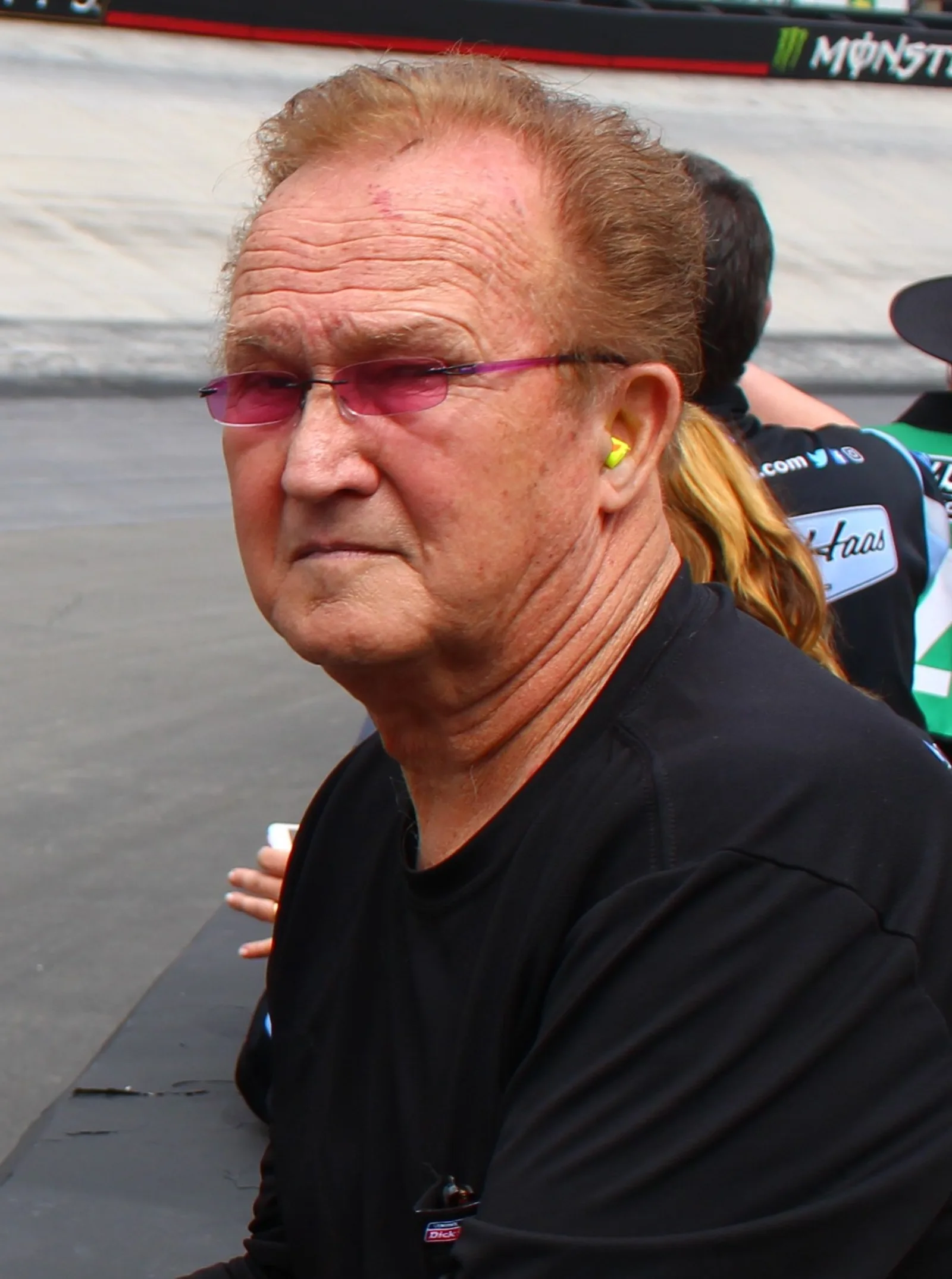
Morgan Shepherd is an American former stock car driver and team owner who raced in NASCAR for more than 50 years. He won four Winston Cup races, including a spring Atlanta win in 1993 at age 51, and later set age records as the oldest driver to start a race in NASCAR's top three series.
Clay Morgan Shepherd spent more than 50 years in stock car racing, from the short tracks around Hickory to the Cup and Xfinity series. He won four Winston Cup races and later became one of the oldest drivers ever to start in NASCAR's top three series. He now serves racers as a lay minister.
Where did Shepherd's racing career begin?
Shepherd started competing in late models at Hickory Motor Speedway in 1967, close to his home. He was fast but crashed often at first. In 1968 he ran full-time in the Hobby division there in a 1955 Chevy, and in 1969 he won 21 of 29 races.
He built his own cars in 1970 and raced at several Southeast tracks, though personal problems during the 1970s slowed things down. A religious experience helped him get his life back on track. He accepted Christ as his personal savior, and his career revived in 1975, when he drove for seventeen different owners.
That same year he finished second to L. D. Ottinger in the NASCAR Sportsman national championship, a result that signalled his return to form.
Four Winston Cup wins, a fifth-place points finish and age records that stood up to the end of a long career.
How did he reach the top level of the sport?
In 1978 he met Cliff Stewart, who owned a furniture factory in western North Carolina. With Stewart backing him, Shepherd won the 1980 NASCAR Sportsman Series title, with nine wins and 21 second-place finishes. The pair then moved up to Winston Cup for 1981.
His Cup debut had come much earlier, in 1970 at Hickory, in the No. 93 Chevy that Bill Flowers ran. He started tenth and finished nineteenth after a rear-end failure, and two more starts that season ended early.
A few years later he recorded his first Cup top-ten at Dover in 1977, driving a Mercury for Jim Makar, an important step after years of stop-start racing. In 1978 he qualified for the Daytona 500, but his engine failed after eight laps and he finished 40th.
How did his first full-time Winston Cup season go in 1981?
In 1981 Shepherd took his first Winston Cup victory, at Martinsville, in the No. 5 Pontiac. The victory ended eighteen years without a Pontiac win, and he led 203 laps in that race. He finished the season 13th in points with ten top-tens.
He left Stewart's team after the Talladega race, following a falling out, and then drove for other owners. By 1982 he had settled into a regular ride with Ron Benfield's Buick, and that year brought a more stable run of finishes.
What did the 1982 season look like?
In 1982 Shepherd drove Ron Benfield's Buick full-time and scored six top-fives, with a third at Bristol as his top result. He finished tenth in points with thirteen top-tens. He also took poles at Nashville and Atlanta, but both of those races ended early with engine trouble.
How did the 1986 Atlanta win come about?
Shepherd joined Jack Beebe's team part-time in 1986 and started the season with a fourth-place finish at the Goodwrench 500. At Atlanta he paced 97 laps out front and fended off Dale Earnhardt for his second career Winston Cup win. It came after a stretch in which his place in the sport had been uncertain.
He became emotional on the final laps. Looking back, he said he had been fighting to keep his composure, having come close to losing his career only a year earlier. The win was a major milestone for him, and it came when he had few expectations left.
How did Shepherd fare with King Racing, Mach 1 and RahMoc?
In 1987 he joined King Racing in a Quaker State Buick owned by drag racing figure Kenny Bernstein. He competed in every scheduled race that year, scored eleven top-tens and seven top-fives, and finished second to Kyle Petty at the Coca-Cola 600.
The 1988 season was messy. He moved from Tom Winkle's team to his own team and then to Mach 1 Racing, where he replaced the injured Harry Gant. At Dover he led 110 laps before finishing second to Bill Elliott.
In 1989 he drove for RahMoc Enterprises and scored thirteen top-tens. His final career pole came at Watkins Glen, where a lead was lost after contact with Geoff Bodine.
What did the Bud Moore and Wood Brothers years produce?
Shepherd moved to Bud Moore Engineering in 1990 and drove the No. 15 Ford. He was a top-ten runner in every one of his first eleven races and took the championship lead for the only time in his career. He finished fifth in points, his best season in the standings.
That season ended with a third career win at Atlanta, a fitting finish to the year that produced his best points result. In 1991 he had more ups and downs, but still managed fourteen top-tens, and at North Wilkesboro he led 41 laps before missing the win.
In 1992 he joined the Wood Brothers in the No. 21 Citgo Ford. He finished second to Davey Allison in the Daytona 500 and scored eleven top-tens, though he dropped to fourteenth in points.
The 1993 season was his best with the Wood Brothers. He finished seventh in points with fifteen top-tens, and he was 51 years, four months and 27 days old when he won the spring Atlanta race. That made him the second-oldest winner in series history, behind Harry Gant, and it was his final Winston Cup victory.
The Wood Brothers' next win came when Elliott Sadler took the Food City 500 in 2001.
How did his 1994 and 1995 seasons go?
In 1994 he matched his career-best sixteen top-tens, nine of them top-fives, and finished sixth in points with a career-best 4029 points. He was second at Atlanta to Ernie Irvan, and his best Cup year was among the strongest of his later career.
In 1995 he slipped to eleventh in points with ten top-tens. His best run came at Loudon, where he finished second to Jeff Gordon. Citgo wanted a younger driver, so Michael Waltrip replaced him, and Shepherd was 53 at that point.
How did his career wind down from 1996 onward?
In 1996 he drove Butch Mock Motorsports' No. 75 Ford, sponsored by Remington Arms, and scored five top-tens. His best finish was fifth at the Brickyard 400, and he ended the year nineteenth in points. It was the last season in which he entered every scheduled race.
In 1997 he drove for Precision Products Racing. His last Cup top-five was third at Atlanta, and his last top-ten came ninth at the Coca-Cola 600. He then moved to Jasper Motorsports, qualified for only five of eleven races there, and later rejoined Precision Products, which had new R+L Carriers sponsorship.
In 1998 he had no ride at the start of the season. His own car failed to qualify at Rockingham, Atlanta and Darlington, and he later drove for SABCO, Stavola Brothers and LJ Racing. His best result that year was fifteenth at the Brickyard 400.
How did his own-team Cup years from 2002 to 2006 go?
From 2002 Shepherd ran part-time for his own team in the No. 89 Ford, which had almost no sponsorship money. He often parked early to save money, and his best finish that year was 40th at Kansas. That season was one of the leanest of his career.
In 2004 the team switched to Dodge and attempted 32 of the 36 races. Shepherd made his 500th Cup start at New Hampshire, qualifying 41st and finishing 40th after completing 192 of 300 laps. The season ended 42nd in points.
The money problems continued. He qualified for four of 21 races in 2005 and finished 63rd in points. In 2006 he entered fifteen races, failed to qualify for the first nine, and finished 66th before closing the team down.
What age records did he set later in his career?
Shepherd made his first Sprint Cup start since 2006 at New Hampshire in 2014, driving for Brian Keselowski Motorsports. At 71 years, nine months and two days, he was the oldest person to race in that series at the time, passing Jim Fitzgerald's record from Riverside in 1987.
Later that year he failed to qualify for the 2014 Daytona 500 with BK Racing. Had he made that field, he would have become the oldest driver in the race's history. He then drove Joe Nemechek's Toyota at Phoenix, and he also started the 2014 Camping World RV Sales 301 with Circle Sport.
At the finish of that Camping World race he was the last car still running, 27 laps down. Joey Logano complained after an accident involving Shepherd, saying drivers should pass a test before racing Cup cars. NASCAR replied that his speed had been monitored and that he ran a reasonable pace.
The age records continued. In 2012 he became the eldest driver to lead a Nationwide race, leading three laps at Richmond at age 70. He extended the mark in 2016 at Talladega and Daytona, and again in 2017 at Darlington, at age 75.
What did his Busch and Xfinity years look like?
His Busch Series debut came at Hickory in 1982, in the series' first season, winning his first race in his second start. He drove twelve races that year for Ed Whitaker and finished eleventh in points. He also won at Indianapolis Raceway Park later that year.
He won at Bristol and Richmond in 1983, and in 1986 he took four races, all for Whitaker, at Martinsville, Bristol, Dover and Rockingham. In 1987 he drove his own No. 97 Buick and won at Bristol, Road Atlanta and Rockingham. The Road Atlanta victory was his only road course win in the series.
His final Busch win came in 1988 at Indianapolis Raceway Park. In 2003 he drove for Davis Motorsports and qualified for ten of twelve races, with an eleventh at Talladega as his best finish.
Key milestones at a glance
| Year | Event | Milestone |
|---|---|---|
| 1981 | Martinsville | First Winston Cup win, 203 laps led |
| 1986 | Atlanta | Second Winston Cup win, 97 laps led |
| 1990 | Atlanta season finale | Third Winston Cup win |
| 1993 | Spring Atlanta race | Fourth Winston Cup win, aged 51 |
| 2014 | New Hampshire | Oldest Sprint Cup starter, 71 years old |
These entries capture the highs of his career and the age records that followed.