Fifteen Winston Cup wins, a 1991 Daytona 500 victory and a return to racing after a crash that left him with a 10 per cent chance of surviving the night.
Ernie Irvan was an American NASCAR driver who won fifteen Winston Cup races and the 1991 Daytona 500. A 1994 practice crash at Michigan left him with life-threatening injuries, but he returned to Winston Cup racing in 1995 and retired for good in 1999.
Ernie Irvan was an American stock car driver whose racing life ran from his first Winston Cup start in 1987 to his retirement in 1999. He won the Daytona 500 in 1991 and collected fifteen Winston Cup victories, and a crash at Michigan in 1994 reshaped the second half of his career.
Who was Ernie Irvan?
Ernie Irvan was an American stock car racer born on 13 January 1959. He competed in NASCAR's top series and became known for a comeback from a severe head injury suffered in practice at Michigan International Speedway in 1994. He retired in 1999 with fifteen career victories, 22 poles and over eleven million dollars in earnings.
Born Virgil Earnest Irvan, he was called Swervin' Irvan by fans and rivals, a nickname that came from a driving style other competitors thought too aggressive. He spent most of his career in NASCAR's premier division, then known as the Winston Cup Series, and drove for several teams across the years of his Winston Cup career.
Several of his moves came when a sponsor collapsed or a contract was disputed. Across his Winston Cup starts he recorded 22 poles, 68 top-five finishes and 124 top-ten finishes, and he also won three races in the Busch Series.
A driver whose crash at Michigan could have ended his life, and who was back in Winston Cup racing the following September.
How did Irvan start racing?
Irvan started in karts in California in 1968, when he was nine, and won the California Championship at fifteen. He moved to stock cars at sixteen, racing most weekends at Madera and Stockton until 1981. A 1982 move east to North Carolina followed, where he worked odd jobs and raced in the late model series.
His early karting years were not free of loss. In 1974 he placed second in his category at the national karting finals, but he also lost a close friend, Tim Williamson, after a crash at Riverside. The accident came months before Irvan was due to test for the Winston Cup.
In 1982 he set off east with $700 in cash, and all of his possessions were packed into a pickup and a homemade trailer. He stopped in Las Vegas, picked up another $200 and drove on to Charlotte, North Carolina. There he welded grandstand seats, unloaded a moving van belonging to Ken Schrader and built race cars to pay his way.
How did his Winston Cup career begin?
Irvan made his Winston Cup debut on 13 September 1987 at Richmond Fairgrounds Raceway in a No. 56 Chevrolet built with Marc Reno. Qualifying twentieth, he retired after 35 laps when the engine overheated, finishing 29th and earning $860. Dale Earnhardt Chevrolet sponsored the car.
His first Winston Cup start came in October 1987 at Charlotte. He began 36th, led lap 128 and finished eighth, a result that attracted the attention of D.K. Ulrich, a long-time owner and driver. Ulrich gave him most of the 1988 schedule, when Irvan competed in 25 of the 29 events in Ulrich's Kroger-sponsored Chevrolets and Pontiacs.
He lost the 1988 rookie title to Ken Bouchard by three points, 242 to 239, in what was then the closest rookie battle in Winston Cup history. He finished 26th in the standings that year with $96,370 in winnings. In 1989 he started all 29 races for Ulrich's U.S. Racing Pontiac, finished 22nd and took home $155,239.
Did Irvan win the Daytona 500?
Yes. Irvan won the Daytona 500 in February 1991, driving a Chevrolet for Morgan-McClure Motorsports, a team he had joined the year before. The race was then stock car racing's most prestigious and most lucrative event, and the victory was the highlight of a strong season.
Four years earlier he had watched the same race on a borrowed black and white television while washing cars, one of the odd jobs that paid for his family and his stalled career. Winning it himself gave that memory a different ending.
The season brought more than one headline. He won at Watkins Glen later in the year, and his first Busch Grand National victory came at Rockingham in the AC-Delco 200. He finished fifth in the Winston Cup driver standings with $1,079,017 in winnings, from 29 starts, which brought eleven top-fives and nineteen top-tens.
How did Irvan move to Robert Yates Racing?
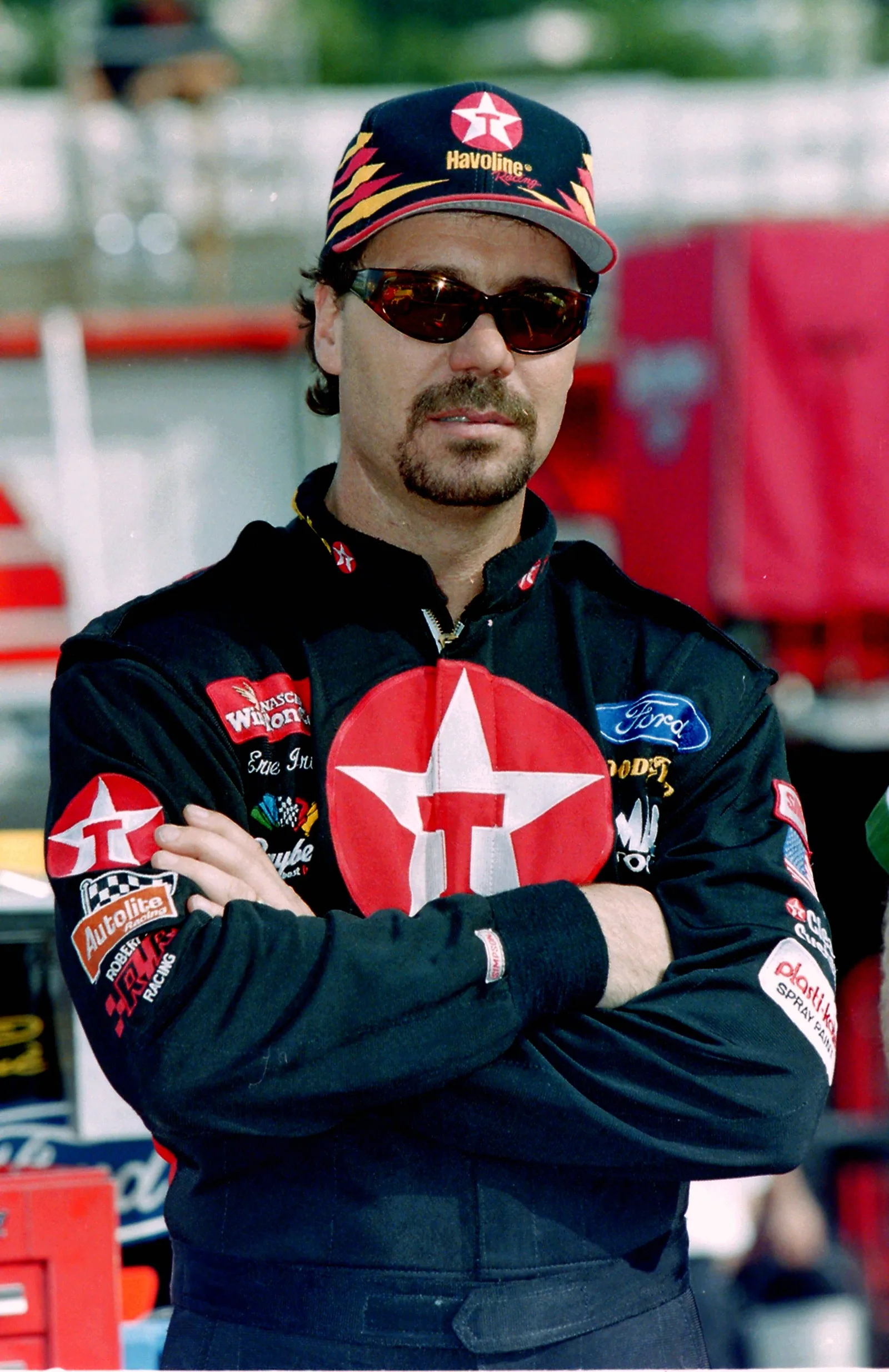
Irvan moved to Robert Yates Racing in 1993 after a close friend's death left a seat empty. Davey Allison died on 12 July 1993 from injuries in a helicopter crash outside Talladega, and Robert Yates, the owner of Allison's team, asked Irvan to take over the No. 28 Texaco/Havoline Ford.
Morgan-McClure initially refused to release him from his contract, and a lawsuit followed. Once the Bristol night race ended in August, he was out of the No. 4 and into the No. 28 for the Southern 500 at Darlington. He started tenth and finished fifth. His first Robert Yates win came at Martinsville, his fourth start with the team, and he followed it two weeks later with a Charlotte win, leading every lap but six.
Across his time at Morgan-McClure he had won nine poles, seven races and 51 top-ten finishes from 105 starts. His nine starts with Robert Yates that season added five front-row positions, two poles and two victories, and he finished sixth in the final standings.
What happened at Michigan in 1994?
In August 1994 Irvan blew a tyre during a practice session at Michigan International Speedway and hit the concrete wall at about 273 km/h (170 mph). Doctors found a basilar skull fracture plus lung injuries, and they gave him a 10 per cent chance of surviving the night. The crash came while he was a serious championship contender.
Entering the GM Goodwrench Dealer 400 on 21 August, he had won three races, the same total as Dale Earnhardt, and led in top-five finishes and winnings. He trailed Earnhardt by 27 points after leading the standings for most of the season. Irvan had run only 20 of the 31 races that year, yet he led the field in miles led.
Track medical staff treated him at the scene, and a local trauma doctor performed an emergency tracheotomy so he could breathe. He was airlifted to St Joseph's Hospital in Ann Arbor. By early September he had been listed in fair condition and taken off ventilator support, and a few weeks later he moved to the Charlotte Institute of Rehabilitation. He addressed fans at Charlotte Motor Speedway before the Mello Yello 500 that autumn.
How did Irvan return to racing?
NASCAR cleared Irvan to race again on 16 September 1995, after months of rehabilitation and strength training. He had also worked as a broadcaster for TNN while he recovered. His first attempt at qualifying came in the Craftsman Truck Series at Martinsville, where rain set the field by points.
The following weekend at North Wilkesboro Speedway he started from the outside pole in the Truck race. Six laps into the race he overtook Mike Skinner, the pole sitter, to lead, and then led 23 laps before mechanical trouble ended his run. That same weekend he made his first Winston Cup start since the accident, driving the No. 88 Texaco Havoline Ford as a teammate of Dale Jarrett.
Starting seventh, he had climbed to third by lap 47, then went into the lead on lap 125. He held it for 31 laps and finished sixth on the lead lap. A few weeks later at Phoenix an engine failure ended his race, and he finished seventh in the season finale at Atlanta. He moved back into the No. 28 Ford for 1996, with Jarrett becoming his full-time teammate in the No. 88.
Career summary by season
| Season | Team and car | Notable result |
|---|---|---|
| 1987 | No. 56 Chevrolet, Irvan and Reno | Debut at Richmond, 29th; eighth at Charlotte in October |
| 1988 | Ulrich, No. 2 Kroger cars | Lost rookie title by 242 to 239 points; 26th, $96,370 |
| 1989 | Ulrich, U.S. Racing Pontiac | All 29 races; 22nd, $155,239 |
| 1990 | Morgan-McClure, No. 4 Oldsmobile | First win at Bristol; ninth, $535,280 |
| 1991 | Morgan-McClure Chevrolet | Daytona 500 winner; fifth, $1,079,017 |
| 1992 | Morgan-McClure | Three wins; eleventh, $996,885 |
| 1993 | Morgan-McClure, then Robert Yates No. 28 | Sixth in the final standings with Robert Yates |
| 1995 | Robert Yates No. 88 ride | Return race at North Wilkesboro; sixth |
| 1996 | Robert Yates No. 28 | Top ten in points; $1,670,113, career best |
| 1997 | Robert Yates No. 28 | Fifteenth career win at Michigan; $1,614,281 |
| 1998 | MB2 Motorsports No. 36 | Nineteenth, $1,476,141 |
| 1999 | Irvan-Simo No. 84, then retirement | Retired after a crash at Michigan in August |
What did Irvan do after he retired?
After retiring in 1999 Irvan stayed connected to the sport, most visibly as an advocate for head-injury awareness through the Race2safety foundation. He also helped his son Jared in youth racing, serving as crew chief on a quarter midget and later planning his move into late model cars.
Just before his final NASCAR seasons, Irvan had co-owned a Truck Series team with Mark Simo and the No Fear brand. Its most notable driver, Boris Said, won at Sonoma in 1998. A house fire in March 2000 destroyed Irvan's trophies, and NASCAR later presented him with replicas of the lost pieces.
He took on advocacy work as well. In 2006 he attended five NASCAR races to promote Race2safety, a foundation he formed to raise awareness of head injuries and their prevention, especially among children. He was also one of the 24 grand marshals who gave the start command at the 50th Daytona 500.
In June 2016 Sonoma Raceway added Irvan to its Wall of Fame. He has continued to help his son Jared, who won the 2012 Quarter Midget Racing Championship. As of 2007 Irvan was crew chief on Jared's quarter midget, and the family has spent its time on a farm and on its racing projects.