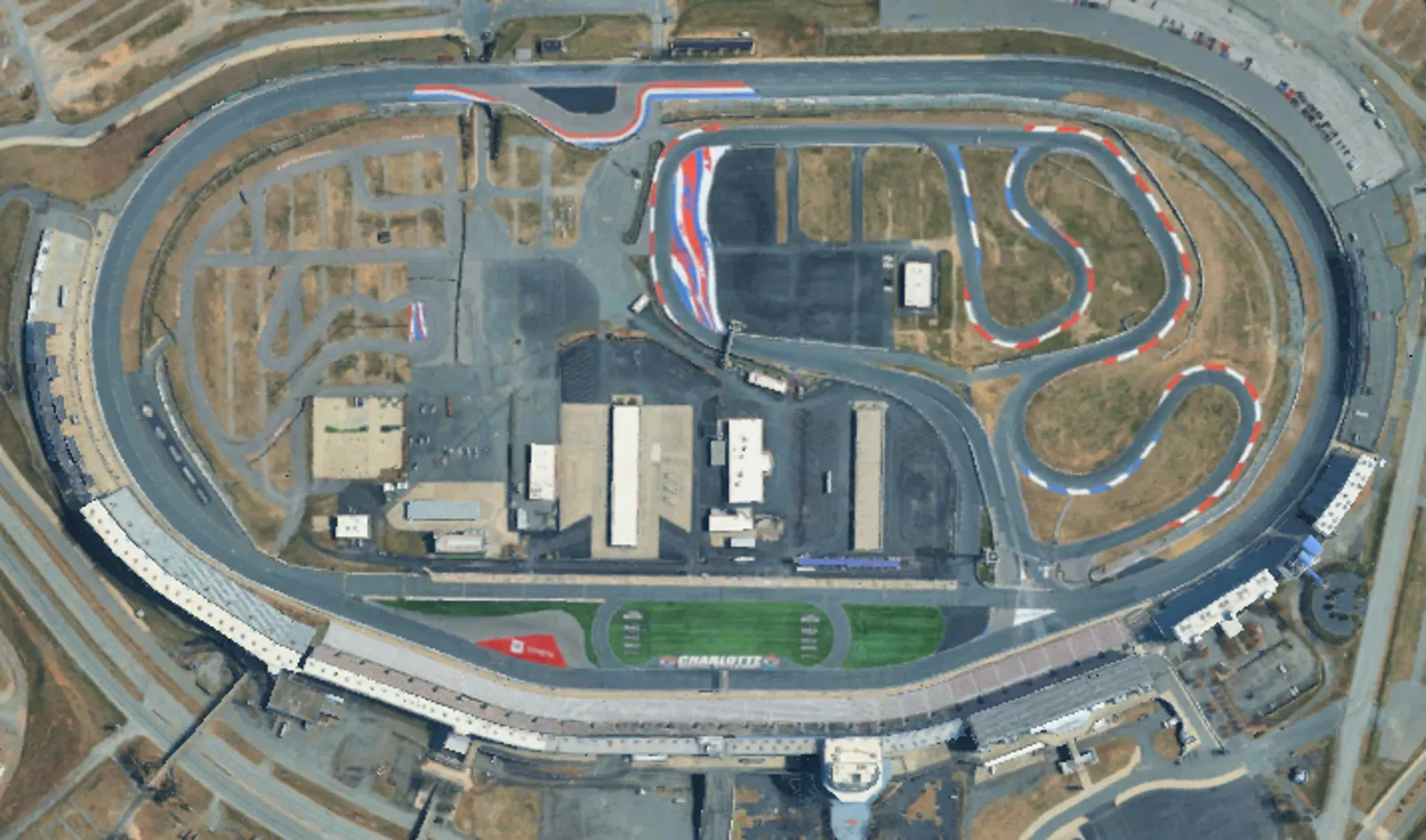
A 1.500-mile quad-oval in Concord, North Carolina, that nearly collapsed into federal court within a year of opening, then grew under Bruton Smith and Humpy Wheeler into one of motorsport's biggest venues.
Charlotte Motor Speedway is a 1.500 mi quad-oval in Concord, North Carolina, that opened in 1960. The track came close to collapse within a year before a federal court reorganised it. It later became a major NASCAR venue owned by Speedway Motorsports.
Charlotte Motor Speedway is a 1.500 mi (2.414 km) quad-oval in Concord, North Carolina, that has hosted NASCAR, IndyCar and sports car racing since its inaugural season in 1960. It was built by promoter Bruton Smith and driver Curtis Turner, and it has been owned by Speedway Motorsports since 1976. Its early years were a financial crisis, but it became one of the largest sports venues in the United States.
Where did Charlotte Motor Speedway come from?
Stock car racing had grown rapidly across the American Southeast during the 1940s and 1950s, and promoter Bruton Smith wanted a state-of-the-art facility. Driver and businessman Curtis Turner was pursuing a track of his own. After initially refusing, Turner agreed to partner with Smith once the two agreed to sell the shares needed to fund construction.
The relationship started badly. Smith announced his own speedway on 22 April 1959, the same day Turner announced his track plans. Turner struggled to sell the 300,000 shares needed for his project, while Smith sold 100,000, and Turner eventually agreed to join Smith, who became vice president of the project.
A 1960 oval that went into federal court within a year, then grew into a NASCAR Crown Jewel venue.
How was the speedway built so quickly?
Groundbreaking took place on 28 July 1959, two months later than planned because of legal issues over the land purchase. The speedway was then built in less than 11 months, which was fast for a facility of its size, but the pace brought problems of its own.
Crews found large granite veins shortly after breaking ground, and grading contractor W. Owen Flowe used dynamite to clear them. Aggressive hornets led several workers to quit, and three snowstorms in March 1960 added to the delay. The first major race, the 1960 World 600, was postponed from 29 May to 19 June.
Financing was patchy. James L. McIlvaine lent $300,000 to the project, and he later put the total cost at about two million dollars. Smith said he lost $150,000 during construction. Longtime NASCAR mechanic Smokey Yunick criticised the location, calling it a giant mistake.
| Date | Milestone |
|---|---|
| 22 April 1959 | Smith and Turner announce competing tracks |
| 28 July 1959 | Groundbreaking |
| 15 June 1960 | Track opens to cars for practice |
| 19 June 1960 | First World 600 run |
| 3 November 1961 | Federal court takes over management |
| February 1962 | Shareholders meet and the $300,000 goal is met |
| April 1963 | Private ownership returns under a new board |
| 1976 | Smith and Humpy Wheeler complete the takeover |
| 1999 | Lowe's buys naming rights, the first such deal for a speedway |
| October 2024 | Ten Tenths Motor Club road course opens |
What went wrong in the first season?
The track officially opened to cars for a practice session on 15 June 1960, and problems appeared at once. Holes formed in the asphalt as cars reached about 130 mph (210 km/h), and officials ordered a hasty repaving that mostly held up. A former advertising salesman sued for $10,000 on 18 June after being fired, and the track faced a series of other claims.
During the 1960 World 600 the surface problems returned. Drivers including Tom Pistone, Doug Yates and Ned Jarrett reported mechanical failures, and the asphalt broke apart in several places. The Charlotte News criticised the surface, arguing that drivers spent more time dodging track blemishes than racing.
Debt grew through 1960. Claims surfaced against Smith and Turner for large sums, and the track had defaulted on its initial mortgage. By 22 November 1960 the speedway was reported to have accumulated about $1 million in debt, and in January 1961 two more lawsuits were filed by excavating companies.
Why did a federal judge take over the track?
On 3 November 1961, U.S. District Judge James Braxton Craven Jr. ruled that the court would take over the management of Charlotte Motor Speedway. The track was placed under court-supervised reorganisation, and its officers and directors were removed. Robert Nelson Robinson, a Charlotte lawyer, was appointed to run the facility.
The reorganisation depended on raising money from shareholders. A committee led by A. C. Goines asked nearly 2,300 shareholders to buy trustee certificates, aiming to raise $300,000, half of the $600,000 needed for reorganisation. The target was met after a stockholder meeting in February 1962. A preliminary investigation into mismanagement and possible fraud brought the FBI into the case, and a new $345,000 loan from McIlvaine was guaranteed in October 1962.
The plan was approved in stages, and in mid-April 1963 Craven approved private ownership under an 11-person board of directors led by Goines. Smith had already left his position that year after being found guilty of failing to file tax returns for 1955 and 1956.
How did Richard Howard steady the track?
Goines announced a 10% stock dividend in December 1963, and by February 1964 the track reported its first profit. Richard Howard, a leading stockholder and furniture store owner, took over after Goines's mandatory one-year period. Howard was conservative with spending but invested in renovations and capacity, and he paid off the mortgage three years early.
The mid-1960s were marked by deaths. Veteran driver Fireball Roberts died on 2 July 1964 from complications after a fiery crash at the 1964 World 600. Harold Kite, a World War II veteran, was killed on 17 October 1965 in a crash on the first lap of the National 400.
Howard's track was profitable, but its direction changed in the mid-1970s. In 1970 management announced plans for a new road course and more grandstands. R. J. Reynolds and its subsidiary Winston sponsored the NASCAR Cup Series from 1970, and by 1973 Smith had bought nearly 500,000 shares, far more than his original 40,000.
How did Smith and Humpy Wheeler take control?
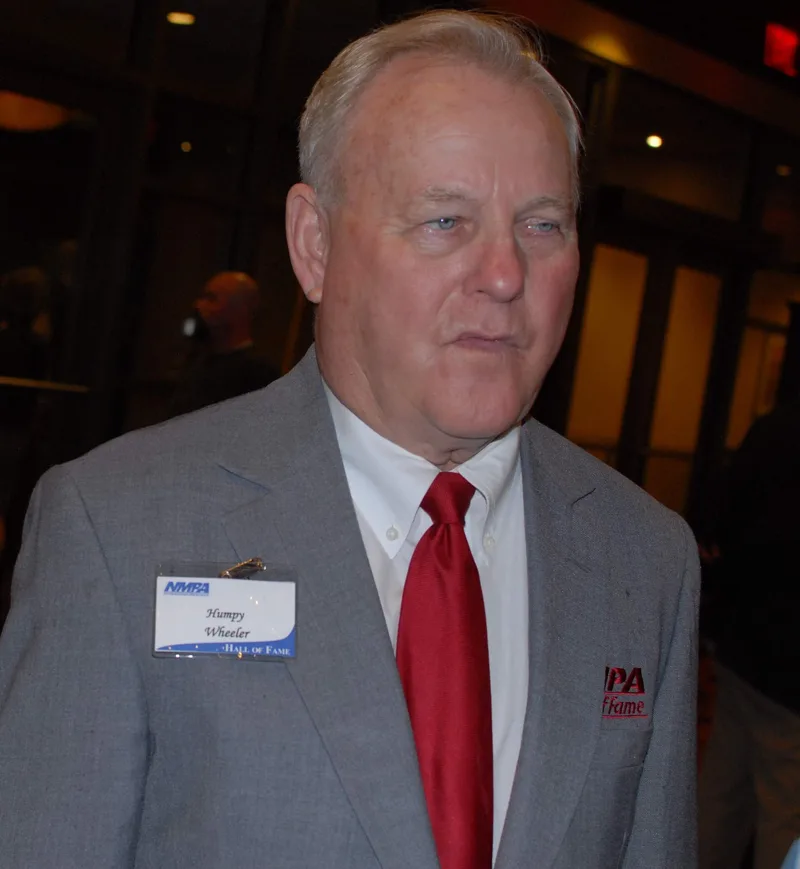
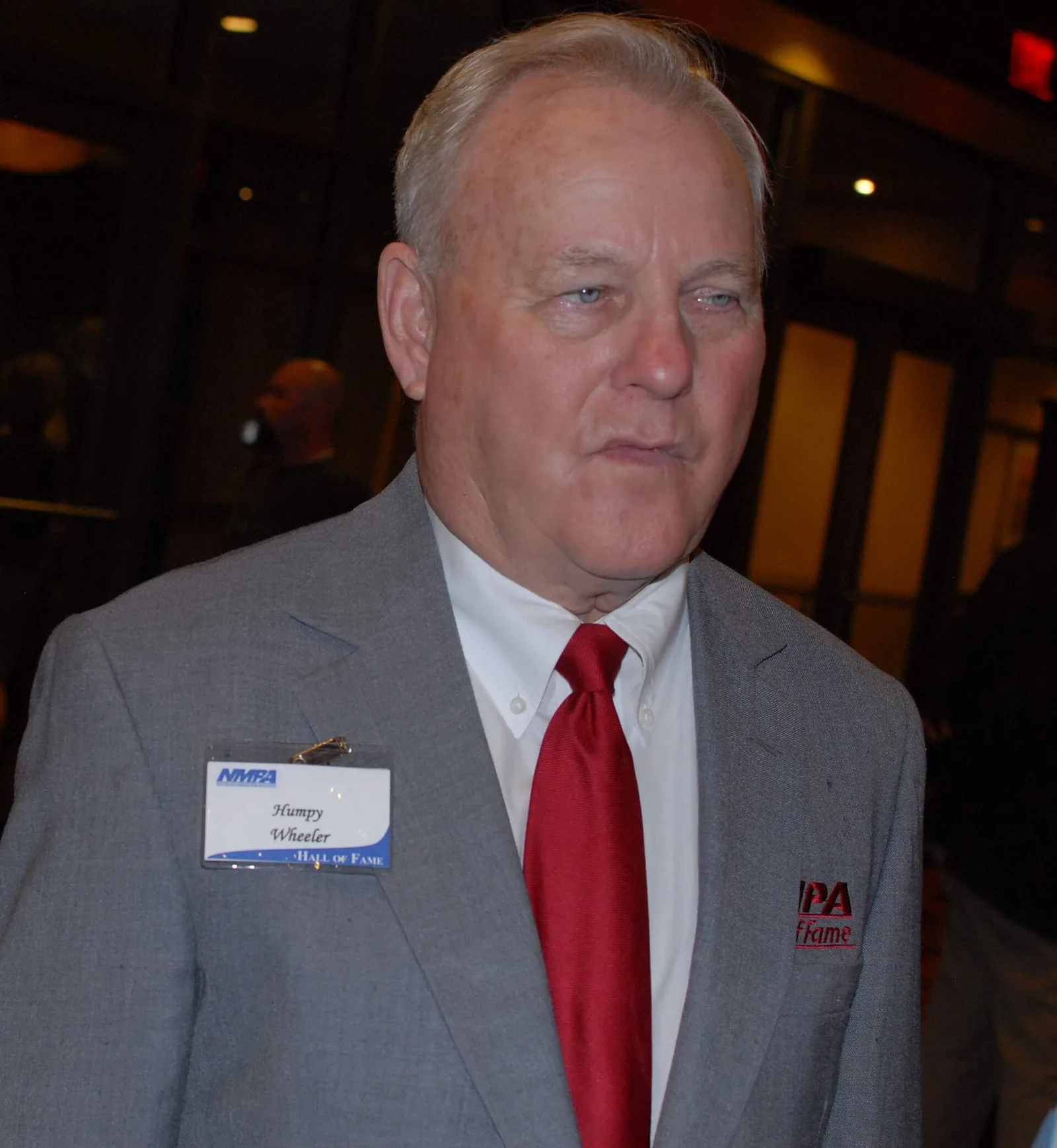
Smith was elected chairman of the board in early 1974, and Howard became president. A battle for control followed through 1975, with sharp criticisms exchanged in the media. In July 1975 Smith bought about 80,000 shares from Howard's relatives, and in August he hired H. A. "Humpy" Wheeler, a former public relations executive, as development director.
Howard announced his resignation at the stockholders' meeting on 30 January 1976, giving Smith full control. Wheeler became president, and under the pair the track underwent a period of promotion, expansion and modernisation that lasted for decades.
How did Wheeler promote the track?
Wheeler became known for elaborate promotions. In 1976 he persuaded Janet Guthrie to enter the World 600. The following year he fuelled the rivalry between Cale Yarborough and Darrell Waltrip, using Waltrip's nickname and Yarborough's sponsor Holly Farms Poultry in a stunt before the 1977 National 500 qualifying.
Expansion followed. Wheeler announced a $3 to $5 million renovation for completion in 1981, and by 1980 renovations worth $16 million aimed to lift capacity to 150,000. In 1983 the track announced 36 condominiums overlooking the first turn, which were later expanded to 40 and sold out by the end of that year.
Did Charlotte almost get an NFL stadium?
In 1985 Smith announced plans for a 76,000-seat stadium on the frontstretch of the track, with temporary endzone grandstands and retractable seating behind the pit road. Smith said he would proceed only if the local government or private investors contributed $10 million. The city declined to provide financial support, and the plans were abandoned by the end of the year.
The stadium idea was not the first attempt to bring big football to the venue. In February 1961 officials had hoped to host a National Football League exhibition game between the Washington Redskins and the Philadelphia Eagles, but the deal fell through over terms.
What road courses and tracks surround the oval?
The infield road course first raced on 22 May 1971, during the World 600 weekend. It was reconfigured to 2.250 mi (3.621 km) by August 1974. The course was modified in 2018 with a backstretch chicane for NASCAR racing, and the 2019 and 2024 changes altered further chicanes.
The track's complex also includes a 0.200 mi (0.322 km) clay short track, a 0.400 mi (0.644 km) dirt track that first raced in May 2000 and a 0.250 mi (0.402 km) drag strip. In August 2007 Smith announced plans for the drag strip, which the Concord City Council voted to block on 2 October. Smith threatened to shut the speedway, and the council reversed course with an $80 million incentive package. The strip, known as ZMax Dragway, cost $60 million and held its first races in September 2008.
The Ten Tenths Motor Club road course opened in October 2024 as a dedicated course, and a purpose-built go-kart track was built in the infield in 2020.
What races take place there?
The speedway hosts two NASCAR Cup weekends: the Coca-Cola 600, introduced in 1960 and now a Crown Jewel event, and the Bank of America 400, first run in 1960 as the National 500. The Bank of America 400 moved to a Roval course in 2018 and returned to the traditional oval in 2026.
The Winston, introduced in 1985 by Wheeler and R. J. Reynolds, is now the NASCAR All-Star Race. It was held annually at Charlotte from 1987 to 2020, and in 2021 it moved to Texas Motor Speedway. IndyCar raced there for three years from 1997, and a sports car Grand Prix of Charlotte was run under various sanctioning bodies, with the last race in 2020.
How has safety been handled?
The NASCAR Sportsman Division was created in 1989 to give short-track drivers experience on bigger circuits. The series developed a reputation for danger, with fatal crashes involving David Gaines in 1990, Gary Batson in 1992 and Russell Phillips in 1995. NASCAR took the series over in late 1995 and shut it in 1996.
Other incidents were grave. In 1999 a crash in an Indy Racing League race sent debris into the grandstands, killing three spectators and injuring eight. In 2000 a pedestrian bridge collapsed after the Winston, injuring 107 people, a failure blamed on an improper additive used in construction. ARCA drivers Blaise Alexander in 2001 and Eric Martin in 2002 died in separate accidents.
The track also worked on the surface. In 2015 the SAFER barriers were upgraded after Kyle Busch's injury at Daytona, and a 2005 repave using levigation caused problems in that season's NASCAR weekends, which led to another repave in 2006.
Which festivals were held at the track?
The August Jam festival on 10 August 1974 drew more than 200,000 people, more than double the expected figure because of a security breach. It became the largest music festival in North Carolina history by accident, and it gained a reputation for violence.
Later events included the Carolina Rebellion festival from 2013 to 2018 and a branch of the touring Breakaway Festival from 2021. The track has also staged a Christmas drive-thru lights show since 2010, and during the COVID-19 pandemic it hosted high school graduations for 10 schools in Cabarrus County.
What has happened in recent years?
Wheeler retired on 21 May 2008 after the Coca-Cola 600, and Smith's son Marcus took over. Lowe's ended its sponsorship in 2009, and the track returned to the name Charlotte Motor Speedway. The 2010s brought steady attendance declines, and in 2014 the track removed 41,000 seats, with more removed in 2017.
Marcus stepped down in 2018 to focus on his role as SMI chief executive, and Greg Walter took over. In July 2026 Walter became president of the track, and Jessica Fickenscher, who had been acting general manager since April 2025, took over as general manager.