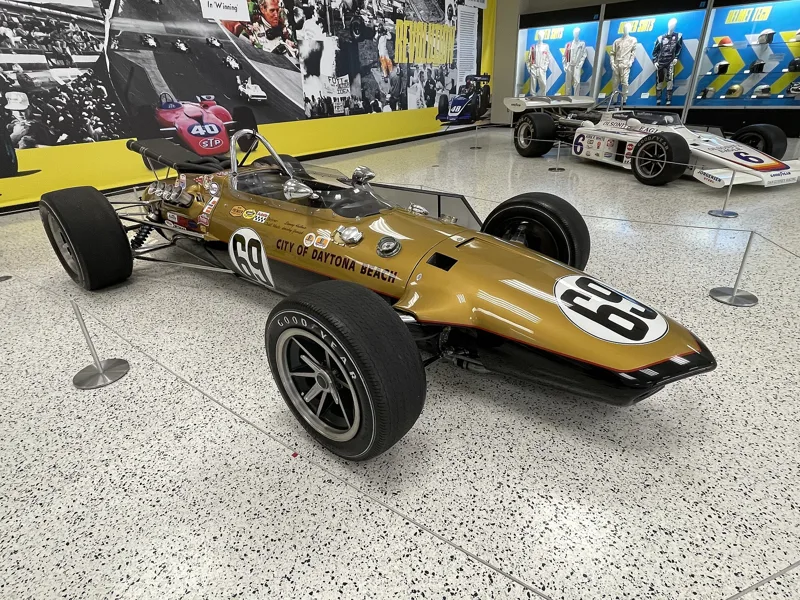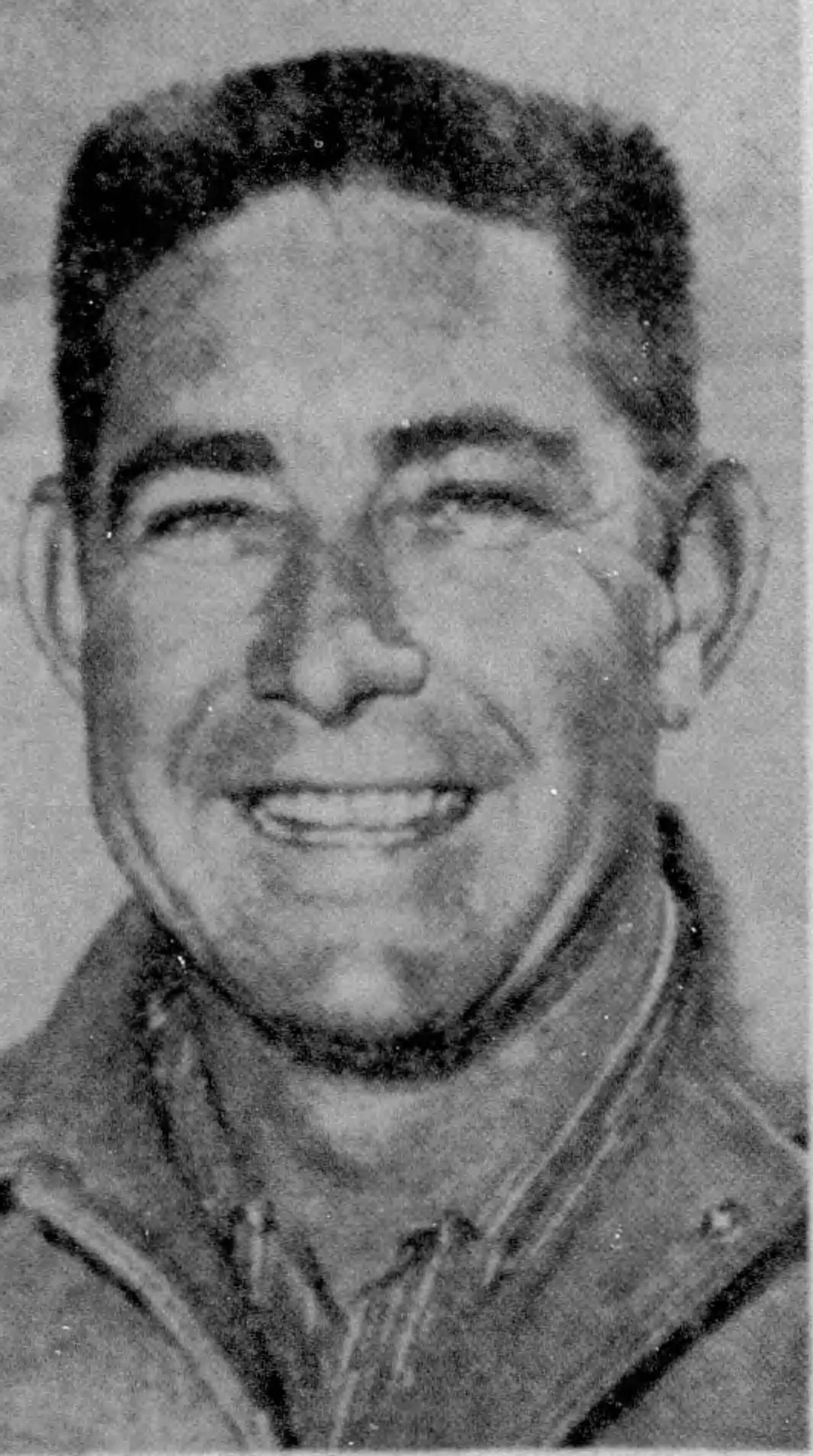
A Hudson Hornet champion who inspired a cartoon car, NASCAR's first back-to-back champion, a speedway builder banned over a union and a star whose death changed racing safety.
Herb Thomas won NASCAR's 1951 and 1953 titles in a Hudson Hornet, Buck Baker was the first back-to-back champion, Curtis Turner built Charlotte Motor Speedway and was banned over a drivers' union, and Fireball Roberts won the 1962 Daytona 500 before a fatal 1964 crash that brought in new safety gear.
Doc Hudson, the old champion in Pixar's Cars films, was based in part on a real man. Herb Thomas, a farmer and sawmill worker from Olivia, North Carolina, won 48 times in 228 starts. That 21.05 percent is the highest win percentage in NASCAR history among drivers with at least 100 starts, and his Fabulous Hudson Hornet gave the film its look.
Thomas was one of four drivers who made the first decades of NASCAR. Buck Baker won back-to-back titles. Curtis Turner built a speedway and tried to organise the drivers. Fireball Roberts took the Daytona 500, and his death changed how stock cars are built.
Herb Thomas: the real Fabulous Hudson Hornet driver
Thomas started in NASCAR's first Strictly Stock race in 1949 and made four starts that first year. In 1950 the division was renamed Grand National, and he made thirteen appearances and won at Martinsville in a privateer Plymouth.
His breakthrough came in 1951. At the suggestion of fellow driver Marshall Teague he switched to a Hudson Hornet, and the car became known as the Fabulous Hudson Hornet. He won the Southern 500 in it, the first of six wins in two months, and narrowly beat Fonty Flock to the Grand National championship. With Smokey Yunick as crew chief, he became the first owner/driver to win the title.
In 1952 Fonty's younger brother Tim Flock beat him to the title, even though each man won eight races in their Hudsons. Thomas came back in 1953 and dominated, taking twelve wins and becoming the first two-time champion. He won twelve again in 1954, including a second Southern 500 that made him the first to win twice at Darlington, but Lee Petty's consistency took the title.
Four Hudson years gave way to Chevrolets and Buicks in 1955. A heavy Buick crash at Charlotte kept him out for three months, but he returned to win a third Southern 500 in his Motoramic Chevy and finished fifth in the standings. In 1956 he drove for other owners, winning once for Yunick and then three straight races in Chryslers for Carl Kiekhaefer, whose team was the first professional one. He returned to owning his car at the end of the season and was second behind Petty in the standings when a severe accident at Shelby, North Carolina, effectively ended his career. He started twice in 1957 and once in 1962.
His younger brother Donald made 79 Grand National starts between 1950 and 1956, and won at Atlanta's Lakewood Speedway in 1952. Donald held the record as the youngest winner until Kyle Busch beat it in 2005.
Thomas joined the International Motorsports Hall of Fame in 1994, made the list of NASCAR's 50 Greatest Drivers in 1998 and was inducted into the NASCAR Hall of Fame on 8 February 2013. A mural of him and the Hornet was commissioned by the City of Sanford in 2016. He died of a heart attack in Sanford on 9 August 2000.
Thomas won 21.05 percent of his starts, the highest rate of any driver with 100 or more.
Buck Baker: the first back-to-back champion
Elzie Wylie Baker, known as Buck, was born in Richburg, South Carolina, in 1919. He entered his first race in Greenville in 1939 and his first NASCAR race at Charlotte Speedway in 1949. His first victory arrived three years later at Columbia Speedway, and he kept racing until the 1976 National 500.
By then he had two championships, 46 wins and 372 top-tens, and he ranks third all-time with 682 starts. The pole position total is given as 45 in one tally and 44 in another. The title run came in 1956 and 1957, which made him the first driver to win consecutive Grand National championships. He was second in 1955 and 1958 and added four more top-five finishes in the standings. He won the Southern 500 at Darlington in 1953, 1960 and 1964.
The 1963 ruling
A less happy chapter came in 1963. Baker was given credit for a win that he clearly did not take; the driver who actually won was Wendell Scott. NASCAR later reversed the ruling, but Scott did not receive the trophy.
Promoter and teacher
Baker was also a businessman. With Roby Combs and Ike Kiser he leased tracks and promoted races early in the 1950s. They leased Charlotte Speedway in 1950 before selling the lease to Bruton Smith, and in September 1951 leased Air Base Speedway near Greenville. In retirement Baker founded a driving school under his own name, and Jeff Gordon took the wheel of his first stock car there. His son Buddy raced in Winston Cup for 34 years and won the 1980 Daytona 500 at 177.602 mph (285.809 km/h), still the record speed for the race, then became a television broadcaster. Another son, Randy, raced in Winston Cup and runs SpeedTech Auto Racing Schools.
Baker was honoured by the International Motorsports Hall of Fame in 1990, and in 1998 by the Motorsports Hall of Fame of America and the list of NASCAR's 50 Greatest Drivers. He entered the NASCAR Hall of Fame on 8 February 2013, and died in Charlotte on 14 April 2002.
Curtis Turner: moonshine runner and speedway builder
Curtis Turner was born in Floyd, Virginia, in 1924. His father was in the moonshine business, and young Turner delivered it, learning to drive by outrunning the law through the mountains. Locals spoke of his ability to spin a car through 180 degrees in a tiny space.
He began racing in 1946 and finished 18th in a field of 18 at Mount Airy, North Carolina, then won his next race. He was among the group that met at the Streamline Hotel in Daytona Beach to talk about founding NASCAR. Over his career he won 360 races across several series, including 17 in the Grand National Series and 38 in the Convertible Division, 22 of those in 1956. From 1950 to 1954 he drove an Oldsmobile and was billed as the Blond Blizzard of Virginia, and he later picked up the nickname Pops.
Records that no one else has
Turner's list of firsts is long:
- In July 1950 he took back-to-back Grand National wins from pole at Rochester, New York, and Charlotte, leading every lap each time.
- In 1956 he won 25 major races in the same car, 22 as the number 26 convertible and three, including the Southern 500, with a hard top welded on.
- At Asheville-Weaverville on 30 September 1956 he won a race that was red-flagged because his was the only car still running.
- In 1962 he was the first to climb Pikes Peak in less than 15 minutes, taking 14 minutes 37 seconds in a Ralph Moody Ford.
- In 1967 he was the first Grand National driver to qualify above 180 mph, at the Daytona 500, in a Smokey Yunick Chevrolet. NASCAR banned that car, and it later inspired the Reese Bobby character in Talladega Nights.
Charlotte and the drivers' union
Turner dreamed up Charlotte Motor Speedway, raised the money and built it in 1960, only to be pushed out by his partners. Needing money to support it, he and his partner Bruton Smith turned in 1961 to the Teamsters Union to organise the Federation of Professional Athletes, aiming at better purses, a share of broadcast rights and retirement benefits for drivers.
Bill France Sr., NASCAR's founder, refused to let union drivers race. All the drivers except Turner and Tim Flock sided with France, and the pair were banned for life. Fireball Roberts, who had helped organise the union, returned to the fold soon afterwards. Charlotte Motor Speedway went bankrupt before its board saved it. Turner and Flock sued NASCAR and France for 200,000 dollars in punitive damages each.
During the ban Turner tried USAC Championship Cars, failing to qualify at the Illinois State Fairgrounds in 1962, finishing 12th at Trenton in 1963, and missing the 1963 Indianapolis 500. In 1965 the ban was lifted after four years. Joe Weatherly had been killed in January 1964 and Roberts had died after his crash, and the track owners wanted a star back. On 31 October 1965, aged 41, Turner won the inaugural American 500 at Rockingham in a Ford, for a purse of 13,090 dollars. When Ford withdrew from NASCAR in 1966 over a ruling on overhead cam engines, he moved to a Chevrolet from Yunick. In 1968 he became the first NASCAR driver on the cover of Sports Illustrated.
Turner died on 4 October 1970 when his plane crashed near Punxsutawney, Pennsylvania, with the golfer Clarence King also killed. He had been due to compete in a special race at Charlotte that week. Virginia's Sports Hall of Fame took him in 1999, followed by the national motorsports hall in 2006 and the NASCAR Hall of Fame in 2016.
Fireball Roberts: the first superstar of the superspeedways
Edward Glenn Roberts Jr. was born in Daytona Beach and raised in Apopka, Florida. He pitched for an American Legion baseball team, the Zellwood Mud Hens, and his fastball gave him the nickname Fireball. He tried to enlist in the Army Air Corps in 1945, but asthma saw him sent home after basic training.
He raced on dirt at weekends while attending the University of Florida, first took part at Daytona Beach Road Course in 1947 at 18, and won a 150-mile race there a year later. While NASCAR moved from short dirt tracks to superspeedways over two decades, he kept winning. His first Southern 500 came in 1958 in a Chevrolet prepared by Paul McDuffie. In 206 Grand National races he won 33 times, took 32 poles and finished in the top five 45 percent of the time. In 1962 he won both the Daytona 500 and the Firecracker 250 in a black and gold Pontiac built by Smokey Yunick. That year he also won his class at the 24 Hours of Le Mans in a Ferrari 250 GTO from the North American Racing Team. He designed Augusta International Raceway, where he won for the last time.
The 1964 World 600
At the 1964 World 600 in Charlotte, Roberts qualified 11th. At lap seven Junior Johnson and Ned Jarrett tangled, and Roberts crashed trying to avoid them. His Ford hit the inside wall backwards, flipped and caught fire. Jarrett rushed to help. Roberts suffered second- and third-degree burns over 80 percent of his body and was flown to hospital in a critical state. He survived for several weeks, seemingly improving, but took a turn for the worse on 30 June, developed pneumonia and sepsis, and died on 2 July 1964. The flame-retardant chemicals used on him were thought to have caused an allergic reaction, but he was secretly an asthmatic, and they affected his breathing. Reports said he was planning to retire, having taken a public-relations job at Falstaff Brewing.
What changed
The loss of Roberts, and then of Eddie Sachs and Dave MacDonald at Indianapolis six days after his crash, pushed researchers towards fire-retardant uniforms and produced the Firestone RaceSafe fuel cell. Today's cars carry foam-filled fuel cells so that fuel cannot spill on that scale. Fully fire-retardant coveralls were phased in and led to mandatory Nomex racing suits. After his death NASCAR required all drivers to wear flame-retardant coveralls, and also made five-point harnesses and contoured seats compulsory.
He never won a Grand National title, yet he is counted among NASCAR's 50 Greatest Drivers. The International Motorsports Hall of Fame inducted him in 1990, the Motorsports Hall of Fame of America followed in 1995, and his place in NASCAR's own hall came with the 2014 class. A street near Charlotte Motor Speedway in Concord, North Carolina, has carried his name since 2000, and the Fireball Run, a charity event for missing children that began in 2007, is named for him.
Early NASCAR drivers compared
| Driver | Lived | Career wins | Championships | Known for |
|---|---|---|---|---|
| Herb Thomas | 1923 to 2000 | 48 | Champion in 1951 and 1953 | Fabulous Hudson Hornet; basis for Doc Hudson |
| Buck Baker | 1919 to 2002 | 46 | Champion in 1956 and 1957 | First back-to-back champion; racing school |
| Curtis Turner | 1924 to 1970 | 17 Grand National and 38 Convertible | None among his honours | Built Charlotte Motor Speedway; drivers' union |
| Fireball Roberts | 1929 to 1964 | 33 | Never won a Grand National title | 1962 Daytona 500; safety changes after his crash |
What they left behind
All four are in the NASCAR Hall of Fame: Thomas and Baker in 2013, Roberts in 2014 and Turner in 2016. Each left a mark that is still visible: Thomas in a cartoon car and a win percentage no one has beaten, Baker in a racing school and a Daytona 500 speed record held by his son, Turner in the Charlotte Motor Speedway and a fight for driver rights, and Roberts in the safety gear every driver now wears.