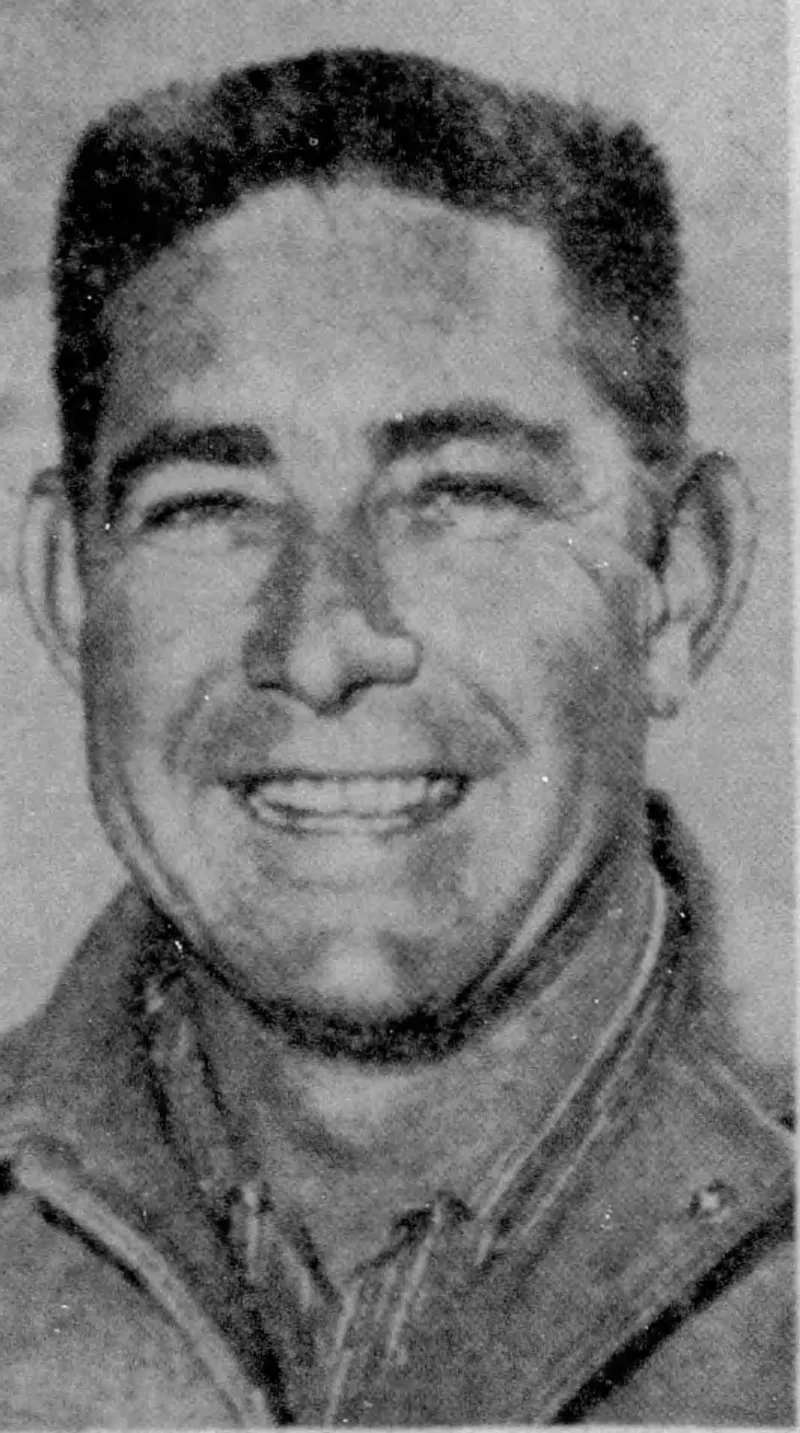
The sixth Southern 500 at Darlington, a 336-lap race for stock cars where Herb Thomas came through a field of sixty-nine entries to win.
The 1955 Southern 500 was a NASCAR Grand National Series race run on 5 September 1955 at Darlington Raceway in South Carolina. Herb Thomas won the 500-mile event in a Chevrolet after more than five hours of racing. It was the sixth running of the race and came near the end of that season's programme.
What was the 1955 Southern 500?
The 1955 Southern 500 was the sixth running of the event and a NASCAR Grand National Series race. It was held on 5 September 1955 on the Darlington Raceway oval in South Carolina, and it covered 500 miles on a paved track.
It came at the thirty-fifth stage of the 1955 campaign, with ten more races to follow. Observers regard it as the major race of any NASCAR season before the first Daytona 500 was run.
A highlight film of the day exists, released in 2008 as part of a collector's set of stock car footage. A local radio station, WJMX, broadcast the entire race, which made it available to listeners who could not attend.
A 500-mile race on a track nicknamed The Lady in Black, won by a Chevrolet that needed fewer pit stops than its rivals.
Why is Darlington Raceway so distinctive?
Fans and drivers knew Darlington Raceway as The Lady in Black and The Track Too Tough to Tame, and the speedway was advertised as a NASCAR tradition. It is a four-turn oval of 1.366 miles (2.198 km), with an egg-shaped design whose two ends differ sharply.
The opening pair of turns is banked at twenty-five degrees, and the closing pair at twenty-three degrees. The front and back straights are banked at six degrees, and the track can seat up to 60,000 people. The shape is often linked to a minnow pond beside one end that the owner would not move.
The Lady in Black nickname is said to date from the early years, when the track crew covered the whole circuit with fresh sealant the night before a race, leaving the surface dark. The layout makes it hard for crews to set up a car that works at both ends.
Darlington also carries a reputation for speed. It was the first venue where many fans saw how fast stock cars could run on a long track. Drivers who hit the wall there earned a Darlington Stripe, a mark of missing paint along the car.
Why did the race finish before dusk?
The race was run without artificial lighting, so the event had to finish before dusk. Lights did not arrive at the track until after the 1999 NASCAR Winston Cup season, and their first use came at the 2000 Mall.com 400. Radio and television came later, since the Motor Racing Network was not established until 1970.
The race was therefore a daylight event, timed around the available light. That constraint shaped the schedule of a long race on a demanding track.
How did qualifying and the build-up go?
Every car was inspected to confirm it was stock, meaning it could be bought from a regular automobile shop. Only roll bars were added for safety over the 500 miles. Cars that passed received a certification ticket on the dash, which let the driver race with NASCAR's full approval.
Intermittent rain hampered qualifying and left the track wet. When the sessions finished, Fireball Roberts had the pole.
The night before the race a beauty pageant was held, with Fonty Flock among the judges, and the tradition was repeated at the 1956 race and later Southern 500s. Miss Martha Williams, from Myrtle Beach, was chosen as Miss Southern 500 and held the ceremonial role during the race.
The pre-race programme also included a marching band. The Star-Spangled Banner, the national anthem since 1931, was sung before the start, although the highlight film does not show it. Qualifying used a four-lap run in the first two sessions and a two-lap run in the next three.
Qualifying was a test of nerve as much as speed, because a bad lap could leave a car well down the grid. The track was still damp in places, so drivers had to choose their lines with care.
Six drivers failed to qualify, including Maurice Thompson, Harvey Eakin, Homer Newland, Leland Sewell, Jack Smith and Ted Wright.
Who was in the field?
Sixty-nine cars entered, and the machinery reflected a wide range of budgets. The cars ranged from 1953 models run by the less affluent teams to 1955 models fielded by wealthier outfits such as Petty Enterprises. More than half of the entries were Chevrolets, while Nash Motors had one car in the race, alongside a Studebaker.
Junior Johnson, Ned Jarrett and Lee Petty were among the notable Grand National drivers taking part. Every driver in the race was American. The race also marked the swan song of Cadillac in the Cup Series, and it was Dick Beaty's Grand National debut.
Most entrants ran their own cars rather than working inside multi-car teams, so owner and driver were often the same person. Lloyd Moore announced his retirement from NASCAR after this event. Smokey Yunick, Carl Kiekhaefer and Red Vogt stood out among the crew chiefs present.
The rules of the era were much looser than those that came later. Regulations made decades afterwards standardised the field at forty-three cars, a far cry from the largely unregulated NASCAR of the 1950s and 1960s.
How did the race unfold?
Fireball Roberts started from the pole, but Tim Flock took the lead on lap five and Fonty Flock took it from him on lap 11. Pop McGinnis crashed terminally on lap 18, and Roberts's own race ended on lap 30 with a terminal crash of his own.
Mechanical trouble removed many contenders. Ed Cole's hopes ended on lap 12 when a rod bearing failed, and Gordon Smith had the same problem on lap 39. Tommy Thompson was out on lap 41 with fuel pump trouble, and Dick Rathmann's transmission went on lap 50.
Curtis Turner took the lead on lap 110, but Tim Flock got it back on lap 124. A tie rod problem then dropped Turner to 58th on lap 133. Jimmy Roland's rear end came off on lap 137, ending his weekend early.
On lap 150 Joe Weatherly took the lead from Bill Widenhouse. Dick Beaty and Jim Thompson both crashed out on lap 184, and Fonty Flock had a terminal crash on lap 190. Further retirements followed, including Clarence DeZalia's rear end on lap 210 and Doug Cox's transmission on lap 225.
Herb Thomas took the lead from Weatherly on lap 279, lost it on lap 307 and then regained it on lap 319. The timeline shows how often the lead changed hands and how many cars fell out before the finish.
What did the lead changes show?
Tim Flock, Fonty Flock, Curtis Turner, Joe Weatherly and Herb Thomas all held the lead at various points. The lead changed hands repeatedly on the timeline, and Thomas took it for good on lap 319. That made the front of the race the most changeable part of the day.
Tim Flock was the first to lead after Roberts, and he returned to the front on lap 124 after Turner's spell in charge. Weatherly's run from lap 150 was the most sustained, until his crash on lap 317 handed the lead back to Thomas. The lead changes give a clear view of how the race was decided in its closing hours.
Why did Joe Weatherly's race end on lap 317?
Joe Weatherly was making only his third career start, and he led most of the laps in the race before he crashed out on lap 317. His run was one of the standout performances of the day, and the crash ended it.
The race report describes him putting on quite a show. With him out, the lead came back to Herb Thomas on lap 319, and Thomas went on to take the win.
How did Herb Thomas win the race?
Herb Thomas crossed the line after just over five hours of racing, and he finished more than a lap clear of Jim Reed. He drove a pale green 1955 Chevrolet 150 in a race that tested the endurance of the newest passenger cars.
His car used an SBC Chevy V8 engine. The Chevrolets of the 1955 season were lighter than their rivals, which gave them better fuel economy and fewer pit stops. Tyre changes were also relatively infrequent on the Chevrolets, another reason behind their dominance.
Thomas received $7,480 for the win, from total race winnings of $28,270. The fate of his winning car is not known, though it was likely raced hard in later events and no longer survives.
Tim Flock went on to win the 1955 championship with 18 season wins, the figure that defined his title.
Which accidents shaped the race?
Several incidents stand out. Russ Graham spun twice, once to avoid Fireball Roberts, who had blown a tyre and crashed, and once on his own a couple of laps later. Graham still finished 29th after qualifying 19th. His finish was recorded as 29th, from a 19th-place start.
Arden Mounts ran into the stalled car of Don Duckworth. Bill Champion had swerved past Duckworth, but Mounts saw the stalled car too late. The proper use of seat belts is credited with protecting both drivers.
Van Van Wey made four spins during the race, and a terminal crash on lap 247 ended his run. Those incidents reflected a track that punished mistakes at both of its ends. All of them happened during the 500 miles of racing, and each one is noted in the race timeline.
What were the key figures for the race?
| Measure | Figure |
|---|---|
| Pole speed | 110.682 mph (178.125 km/h), Fireball Roberts |
| Average race speed | 92.281 mph (148.512 km/h) |
| Laps | 336, with eight yellow flag periods covering 51 laps |
| Cars entered | Sixty-nine, fewer than half finishing |
| Attendance | Fifty thousand |
| Winner's time | Five hours, twenty-five minutes, twenty-five seconds |
| Winner's prize | $7,480 |
| Total winnings | $28,270 |
The gap between pole and average speed reflects the reality of racing in heavy traffic and during caution periods. Across the day the race spent 51 laps under yellow flags.
What is the race's legacy?
The 1955 Southern 500 is remembered as a major event in the early NASCAR calendar at Darlington. It was the big race of its season before the first Daytona 500, and the track's reputation for demanding racing was already established.
The record shows a race of endurance, with many retirements and a winner whose Chevrolet was built to last the distance. It also closed Cadillac's Cup Series chapter and marked the debut of Dick Beaty in the Grand National ranks.