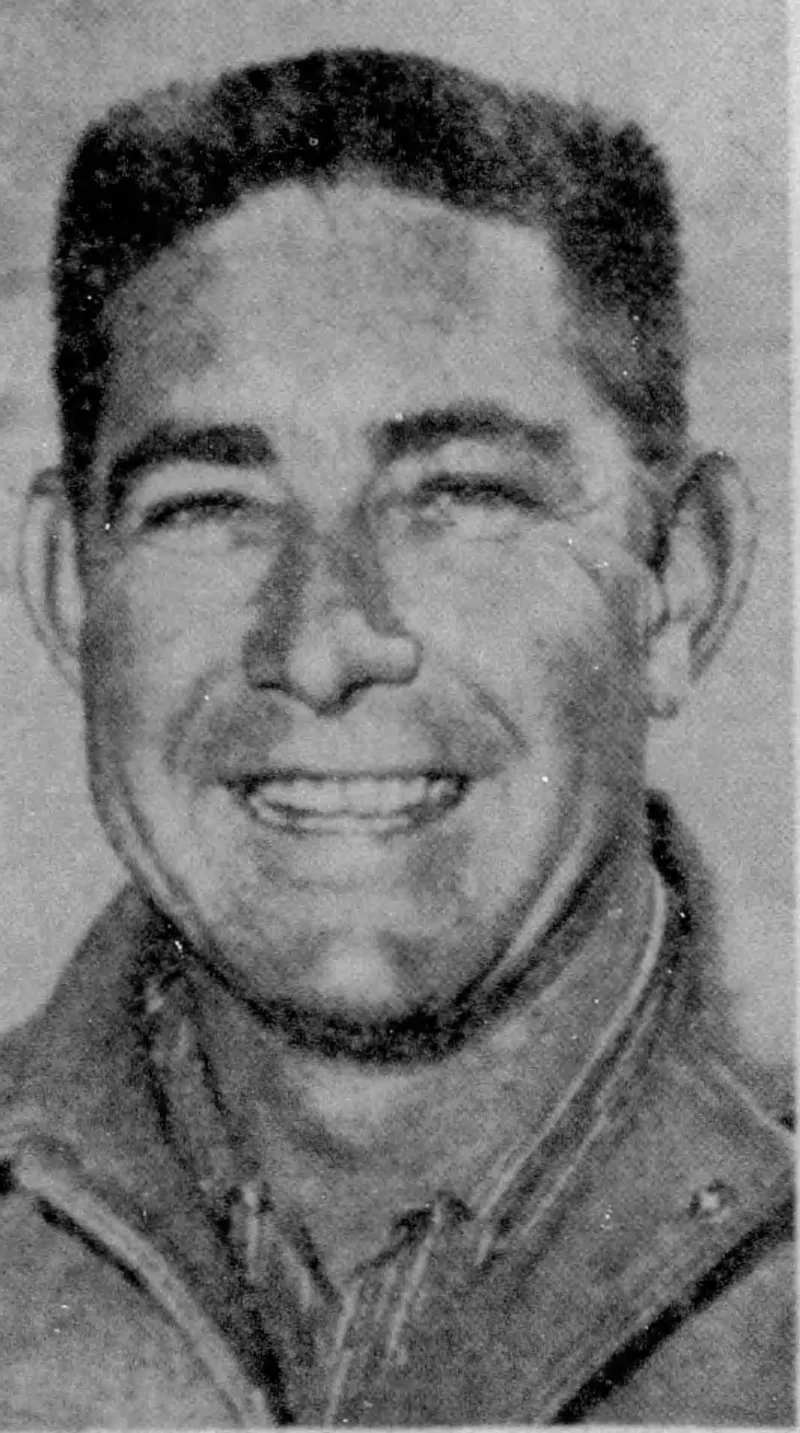
One team won 16 races in a row through the summer, yet the championship went to Buck Baker, who had joined that team for the season.
The 1956 NASCAR Grand National Series ran from 13 November 1955 to 18 November 1956 over 56 races. The Carl Kiekhaefer team won 16 races in a row during the summer, while Buck Baker, who had joined that team for the year, took the championship.
The 1956 NASCAR Grand National Series title went to Buck Baker, but the year belonged to Carl Kiekhaefer's Chrysler team. The 56-race calendar opened at Hickory Speedway in November 1955 and closed at Wilson Speedway in November 1956. Chevrolet and Ford both invested heavily in their cars, yet Kiekhaefer's Chryslers and Dodges set the pace for most of the year.
The season began on a sombre note. Buddy Shuman, a former driver who had been put in charge of Ford's factory effort, died in a hotel fire in Hickory on the night before the opening race. The season also unfolded against a wider contest over who would govern American stock car racing.
The American Automobile Association had long held that role through the AAA Contest Board, but it withdrew from automobile racing after the 1955 Le Mans disaster. NASCAR, the United States Auto Club and the Sports Car Club of America all hoped to take its place as the leading United States sanctioning body.
Baker had been climbing the standings for several years, finishing fourth in 1953, third in 1954 and runner-up in 1955. For 1956 he joined the Kiekhaefer team, which already included Speedy Thompson and Tim Flock.
When did the 1956 NASCAR season run?
The season ran from 13 November 1955 at Hickory Speedway to 18 November 1956 at Wilson Speedway, over 56 races. Its schedule crossed the calendar year, which is why the first race was in 1955 and the last in 1956, both of them in November.
More than 300 drivers competed in at least one race during the season, and more than 430,000 spectators attended the events. Most of the programme ran on dirt, but the calendar also included road courses, superspeedways and a paved half-mile track at Martinsville.
Sixteen straight wins for one team, and a champion who had only joined that team for 1956.
Who won the 1956 championship?
Buck Baker won the 1956 championship with 14 wins, finishing more than 400 points ahead of his closest rival. Speedy Thompson was second in the points and Herb Thomas third, while Tim Flock, who had won the 1955 title, finished ninth.
Baker's season was built on consistency as much as victories. He finished in the top five 31 times and in the top ten 39 times, and he claimed 12 poles. He also collected $34,076.35 in prize money, and he and Thompson each started 48 of the 56 races.
Why did the Kiekhaefer team dominate?
Carl Kiekhaefer's team won 16 consecutive races during the summer months, with Chrysler and Dodge cars dominating the field. Speedy Thompson, Buck Baker, Herb Thomas and Tim Flock all drove for the squad at some point during the year.
Kiekhaefer also ran a tight team. He set the rules on living arrangements, and husbands and wives, as well as drivers and their girlfriends, were not allowed to share quarters on the night before a race. Those rules sat alongside a team that produced a steady stream of one-two and one-two-three finishes.
The streak was broken on 10 June, when Ralph Moody won at Memphis-Arkansas Speedway in a DePaolo Engineering Ford. Until then the team's cars had kept finishing near the front in race after race.
Why did Tim Flock leave the Kiekhaefer team?
Flock left the team after the Wilkes County 160 at North Wilkesboro on 8 April, citing worsening ulcers and his unhappiness with Kiekhaefer's attitude. Kiekhaefer tried to keep him, but Flock wanted to drive for a Chevrolet team instead.
Flock later said he could no longer put up with Kiekhaefer's hard-driving style and that he had to quit to protect his health. Herb Thomas was hired to take his place, and he too did not stay with the team for the whole season.
Flock made only four starts for Kiekhaefer yet still finished ninth in the points. His Road America win that August was the last of his 39 career wins in the premier division.
How did the Road America race go?
The International Stock Car Road Race was run on 12 August 1956 at Road America near Elkhart Lake, Wisconsin, in rainy weather. Flock won for Bill Stroppe, while Kiekhaefer's cars struggled, with Buck Baker eighth and Speedy Thompson eighteenth.
Thompson led between laps 36 and 53 before engine failure ended his race. Flock took over from there and beat fellow Stroppe driver Billy Myers by a margin recorded as 17 seconds. Fireball Roberts, Paul Goldsmith and Joe Eubanks completed the top five.
The event was considered the first time NASCAR had run a race in the rain. The Federation Internationale de l'Automobile supported it, foreign cars were allowed to enter, and a Jaguar Mark VII joined a field of 25 American cars. Executives present included Jim Kimberly of the Sports Car Club of America, Duane Carter of the United States Auto Club and Bill France Sr. of NASCAR.
Road America had opened the previous year and was regarded as the nation's finest road course at the time, with tight corners and sharp changes in grade. NASCAR's premier division did not return to the circuit until the 2021 season.
How were the races split by track type?
The races were held on 40 dirt tracks, three road courses and two superspeedways. Many venues were fairgrounds, including the Arizona State Fairgrounds in Phoenix, the Atlantic Rural Fairgrounds in Richmond, the Monroe County Fairgrounds in Rochester, New York, and the Southern States Fairgrounds in Charlotte.
Paved surfaces were less common. Martinsville hosted the half-mile paved Virginia 500, and Portland Speedway in Oregon ran on a paved half-mile track, but most of the season stayed on dirt.
Which races defined the 1956 season?
Several races shaped the year, from Tim Flock's opener at Hickory and Herb Thomas's win at Merced to Fireball Roberts's victory at Soldier Field and Curtis Turner's win in the Southern 500. The table below lists eight of the key winners across the calendar.
| Race | Date | Track | Winner |
|---|---|---|---|
| 1 | 13 November 1955 | Hickory Speedway | Tim Flock |
| 10 | 8 April | Wilkes County 160, North Wilkesboro | Tim Flock |
| 15 | 10 May | Greenville-Pickens Speedway | Buck Baker |
| 24 | 3 June | Merced Fairgrounds | Herb Thomas |
| 33 | 21 July | Soldier Field, Chicago | Fireball Roberts |
| 37 | 12 August | Road America | Tim Flock |
| 44 | 3 September | Southern 500, Darlington Raceway | Curtis Turner |
| 56 | 18 November | Wilson Speedway | Buck Baker |
The season opened at Hickory Speedway before 7,500 people, where Flock started from pole and led the first 121 laps of the 200-lap event. He spun in turn three, and Lee Petty took the lead before Flock passed him again and finished first. Curtis Turner was second, and Dink Widenhouse and Jim Paschal completed the top five.
Tim's brother Fonty Flock drove for Kiekhaefer too, and at Charlotte Speedway on 20 November he led from start to finish, beating Tim by half a car length. Chuck Stevenson had already won a 200-mile road race at Willow Springs Raceway in California, driving a Ford.
The December race at Palm Beach Speedway produced one of the season's most unusual results. Joe Weatherly and Jim Reed crossed the line first and second, but NASCAR found their cars were not stock. Weatherly had a special cam and Reed had modified valves, so both lost their positions and Herb Thomas was awarded the win. Bill France Sr. warned that any future cheat would lose the finishing position, prize money and all season points.
The new year brought Baker's first win for Kiekhaefer, at the Arizona State Fairgrounds in Phoenix on 22 January. Billy Myers and Ralph Moody finished second and third. Kiekhaefer was so impressed by Baker's driving that he reportedly said he had to hire him. At Daytona Beach and Road Course, Tim Flock won again, and the race was flagged to a stop two laps early because of a high tide.
Herb Thomas won at Wilson Speedway on 18 March, when rain cut the 200-lap race to 106 laps, and Lakewood Speedway in Atlanta on 25 March was overshadowed by the death of Lou Moore, a well-known Indianapolis 500 driver, builder and owner, who suffered a brain haemorrhage at the track. At Langhorne Speedway on 22 April, young driver John McVitty died after being thrown from his car in qualifying the day before.
The Greenville-Pickens race on 10 May was contested by protest. Baker's win gave Kiekhaefer his seventh victory in a row, but Schwam Motor Co. protested after Baker ran all 200 laps without a pit stop. Kiekhaefer filed a counter-protest against the Schwam Fords. Technical inspector Jim Ross ruled both sides legal, and Baker's win gave him a 100-point lead in the standings.
The Virginia 500 at Martinsville Speedway on 20 May ran 500 laps with seven cautions in front of 20,000 spectators. Speedy Thompson led 259 laps, but Baker passed him on lap 382 and went on to deliver the team's tenth victory of the season.
Herb Thomas won the first NASCAR race at Portland Speedway on 27 May, and then took the 3 June race at Merced Fairgrounds, his sixteenth consecutive win for the Kiekhaefer team. The winning run stopped the following week.
The Raleigh 250 on 4 July was a 250-mile race at Raleigh Speedway. Fireball Roberts won it, and it was his first win on a superspeedway. Kiekhaefer protested that Roberts's flywheel weight was illegal, but NASCAR did not have scales at the track, so the flywheel was taken to a fish market to be weighed. The win stood.
Roberts won again on 21 July at Soldier Field in Chicago, beating Jim Paschal by one car length on the short track. Paschal had led until late in the race. The race drew 14,402 spectators and was contested by 25 drivers, and ten cars failed to finish, many because of brake problems.
The race at Tulsa Fairgrounds on 4 August was cancelled after 34 laps. Lee Petty stopped his car near the finish line and waved a flag to halt the race because of excessive dust and poor lighting. NASCAR does not count the event as official, so it awarded no points or money.
The late summer schedule was busy. Ralph Moody won at Old Bridge Stadium in New Jersey on 17 August, Eddie Pagan won at Bay Meadows in California on 19 August, and Billy Myers took the Norfolk race on 22 August. Fireball Roberts won at Coastal Speedway in Myrtle Beach on 25 August, and Royce Haggerty won at Portland on 26 August.
The Southern 500 at Darlington Raceway on 3 September drew 70,000 spectators, and Curtis Turner won. Buck Baker won at Chisholm Speedway in Montgomery, Alabama on 9 September, which was the only NASCAR race ever held at that track.
The autumn races continued the pattern. Paul Goldsmith won at Langhorne before 31,000 spectators on 23 September, Lloyd Dane won at Portland the same day, and Baker won at Columbia Speedway on 29 September. Fireball Roberts took the Orange Speedway race on 30 September and the Newport Speedway race in Tennessee on 7 October.
The final weeks brought Baker a win at Charlotte Speedway, Jack Smith's win in the Old Dominion 400 at Martinsville on 28 October, and Speedy Thompson's victory in the Buddy Shuman 250 at Hickory on 11 November before 3,500 spectators. The season ended on 18 November at Wilson Speedway, where Baker won the 56th race.
What did the 1956 season leave behind?
The season showed how one team could reshape the results of an entire year. The Kiekhaefer squad won 16 consecutive races, yet the title went to a driver who had joined it that season, and the programme still spread across dirt ovals, fairgrounds and a handful of road courses.
The Road America event also looked forward. It was the first premier-series race held at the circuit, and it drew executives from the rival bodies competing for control of American racing. The circuit did not host the premier series again until 2021.