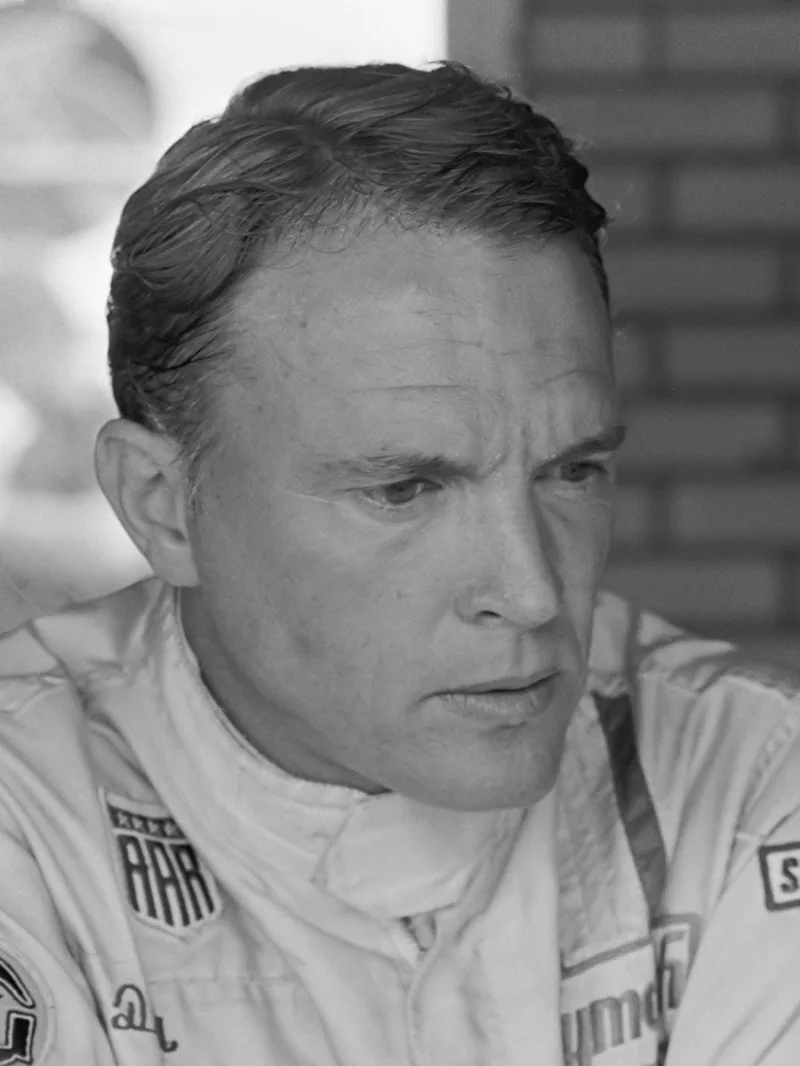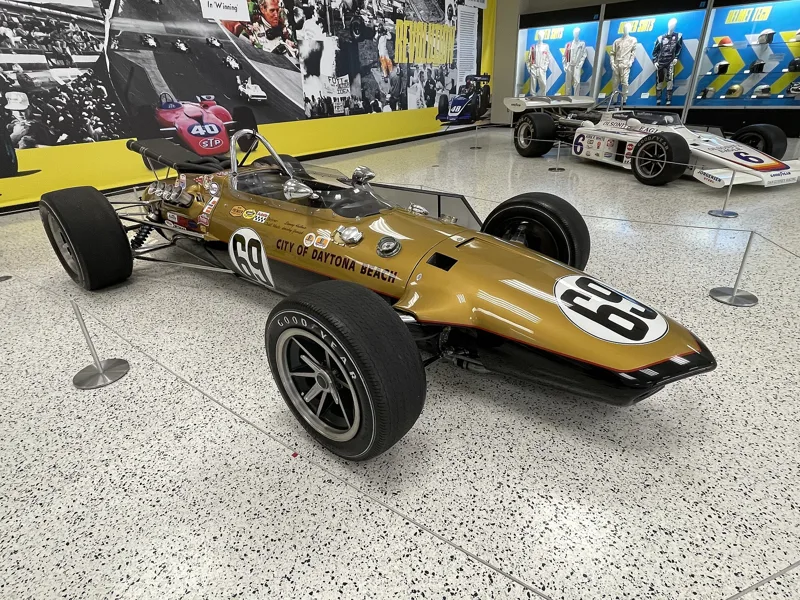
A 1953 Daytona 200 win on a Harley-Davidson, two USAC Stock Car titles and a 1963 suspension that shaped the rest of his racing life.
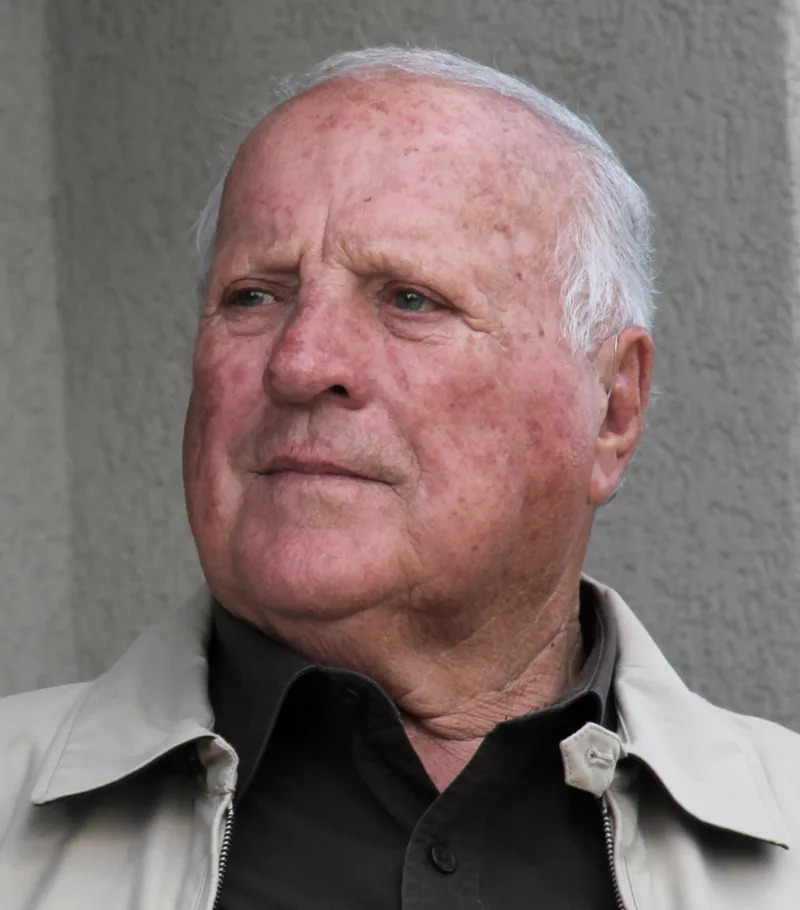
Goldsmith (1925 to 2024) was a West Virginia-born driver who raced motorcycles, NASCAR stock cars and USAC open-wheel cars. His best-known results are a 1953 Daytona 200 victory and back-to-back USAC Stock Car championships. He lived to 98.
Paul Goldsmith was an American racer who won in three disciplines: motorcycles, stock cars and the USAC Championship Car series. He took the 1953 Daytona 200 on a Harley-Davidson, took two USAC Stock Car titles, in 1961 and 1962, and drove in six Indianapolis 500 races.
He died in Munster, Indiana, on 6 September 2024 at the age of 98. When he died he was the oldest surviving former competitor in the World Drivers' Championship, and the oldest living Indianapolis 500 veteran.
Who was Paul Goldsmith?
Paul Goldsmith was an American racer from Parkersburg, West Virginia who won in motorcycles, stock cars and Indianapolis-style cars. He is remembered for a 1953 Daytona 200 win and two USAC Stock Car titles. He was born on 2 October 1925 and grew up in Detroit, Michigan, after his family moved there.
After serving in the United States Merchant Marine during the Second World War, Goldsmith held a full-time job at a Chrysler factory in Detroit and co-owned a petrol station in Royal Oak, Michigan, until 1952, and racing took over his working life from then on.
From a 1953 Daytona motorcycle win to two USAC Stock Car titles, Goldsmith raced three disciplines and won in each.
How did Goldsmith start racing motorcycles?
Goldsmith's racing career began almost by accident in 1946. He was invited to ride at an event at Partington Pastures in Sterling Heights, Michigan, because fewer riders had turned up than expected, and he finished third. He began competing locally every weekend after that.
He rode Harley-Davidsons throughout his motorcycle career. In 1947 the Detroit dealer Earl Robinson backed him, and Robinson's chief mechanic, Boots Carnegie, helped him tour the county fair circuit of the Midwest. By 1948 he had an AMA Expert rating, and in March of that year he rode his first Daytona 200, finishing fifth.
Results improved steadily. In 1950 he scored his first Class C podium at Strawberry Hill Raceway in Virginia, and in 1951 he finished second at the Iowa State Fairgrounds, his best result to that point. In 1952 he won his first race at the Milwaukee Mile, a 15-mile event that was extended by four laps after a caution.
Why was the 1953 Daytona 200 a turning point?
Goldsmith won the 1953 Daytona 200 on the Harley-Davidson KR-TT road racer, setting a record average of 94.45 mph. It was Harley-Davidson's first win at the event since 1940, and the victory helped him take the AMA Most Popular Rider title that year.
The race ran 48 laps on a 4.1-mile course. Goldsmith started from the second row, lost the lead briefly on the first lap and then settled into a consistent pace. Once a serious accident bunched the field on lap ten, he moved up behind the leaders and took the lead on lap 21 near the midpoint, then ran the rest of the race unchallenged.
His victory was followed by a third at Ohio State Fairgrounds, and later in 1953 he won a 100-mile event at the cinder track at Langhorne Speedway. In 1954 he again led the Daytona 200 early on, but he was caught in the surf after inheriting the lead, which ended his race. That season he finished second in the AMA points behind his former pupil Joe Leonard.
Why did Goldsmith give up motorcycles for cars?
Goldsmith left motorcycle racing after the 1956 Daytona 200 because General Motors pressed him to focus on stock cars. He later said he hated giving up bikes, but he judged that auto racing was far bigger than the Harley-Davidson side of his career. His final bike race was that Daytona event.
His last motorcycle win had come in 1955, at Illiana Speedway in Schererville, Indiana, in an 8-mile event. He finished that season eighth in the AMA standings, and his last national podium was a third place at the Milwaukee Mile on 27 August 1955. Stock car races had already become a bigger part of his schedule by then.
How did Goldsmith's early NASCAR career go?
Goldsmith joined Smokey Yunick's Chevrolet team for the 1956 NASCAR Grand National season, after the pair met at Daytona in 1953. Yunick ran a reflex test that involved catching a piece of candy from a can, and Goldsmith passed it with ease, which helped him earn a ride.
His first Grand National race was at Lakewood Speedway on March 25, 1956, where he finished 23rd after an accident. He then finished in the top five at the Southern 500 that year. At Langhorne he led 182 of 300 laps, in a 300-mile race, and beat Lee Petty by seven laps. That season he also recorded three other top-five finishes in nine races.
In 1957 Yunick switched to Ford, but the factory backing ended after the Automobile Manufacturers Association banned factory racing programmes in June. At the Southern 500 on 2 September 1957 Goldsmith was seriously injured in a crash that killed Bobby Myers and injured Fonty Flock. Even so, he finished the season with four wins and six other top-five finishes in 25 events.
The most notable of his 1957 wins was the Raleigh 250, run on July 4. It came while Yunick had moved his team to Ford, and it showed Goldsmith could still win after the factory backing disappeared.
In 1958 he won the final Grand National race held on the Daytona Beach road course. Driving a Pontiac, he led from start to finish, which made him the only racer to win that course both in a stock car and on a motorcycle. A few weeks later he left NASCAR to chase the Indianapolis 500 under the United States Auto Club (USAC).
How did Goldsmith build his USAC career?
Goldsmith won the USAC Stock Car national championship in 1961 and 1962 while driving a Pontiac for Ray Nichels. In 1961 he took seven poles and ten wins from 19 races, and in 1962 he won six poles and eight wins from 20 races, with 15 top-five finishes.
The partnership with Nichels began after Semon Knudsen, the general manager of GM's Pontiac division, hired Nichels to build a performance image for the brand. Nichels then hired Goldsmith as his Pontiac development driver and Firestone test driver. Goldsmith spent thousands of miles testing at Indianapolis and at Southwestern track before his racing schedule picked up.
His 1958 and 1959 seasons were quieter. He competed in only a handful of ARCA stock car events in the Midwest, because he was working to break into the Indianapolis scene and because of his business ties with Nichels.
His first USAC season, in 1960, brought four poles, and he won his first race on his 33rd birthday at Dayton. He finished second in the points behind Norm Nelson. In 1961 he opened with a win at the Jimmy Bryan Memorial in Phoenix, and he clinched the title at Trenton by winning the race ahead of Nelson, who finished fourth.
The 1962 season opened with a Riverside heat win after Dan Gurney was disqualified from the first heat. Goldsmith then won the Peterborough Invitational Trophy at Circuit Mont-Tremblant in Canada. Those results gave him the 1962 USAC title with six poles, eight wins and 15 top-five finishes.
What led to Goldsmith's 1963 USAC suspension?
USAC barred its drivers from the Golden State 400 at Riverside in November 1963, because the race had FIA affiliation, and most of the drivers withdrew. Goldsmith raced anyway. He said his obligations as an employee of his team and Plymouth required him to compete, and he set a track record in last-chance qualifying on 3 November.
Despite being the quickest driver, he started mid-field, and his race ended on the 42nd lap after contact with Bob Bondurant. USAC official Henry Banks announced the following day that Goldsmith would be suspended for one year and stripped of the points he had earned in 1963. Goldsmith threatened to move to Mexico, but USAC said that would change nothing.
Soon afterwards, reports suggested that he and Nichels might run NASCAR races in 1964.
He returned to Indianapolis for reinstatement on 23 March 1965, receiving his driver's card directly from Banks. At the Yankee 300 at Indianapolis Raceway Park, he took pole and then finished second to Norm Nelson. Two races later he won a 150-mile oval race without pitting, and he added three more wins before losing the 1965 championship to Nelson in the final race.
Did Goldsmith race at Indianapolis?
Yes. Goldsmith made eight USAC Championship Car starts between 1958 and 1963, and six of them were in the Indianapolis 500. He finished in the top five at Indianapolis twice, fifth in 1959 and third in 1960.
He also took part in three World Drivers' Championship races at Indianapolis, which counted toward that championship from 1950 to 1960. He finished in the top three in one of them and scored six World Drivers' Championship points in total.
From 1950 to 1960 the Indianapolis 500 counted toward the World Drivers' Championship, so drivers who raced there could score points for both that title and the national championship. Goldsmith's six points came from that arrangement.
| Discipline | Period | Notable result |
|---|---|---|
| Motorcycles (AMA) | 1946 to 1956 | Daytona 200 winner in 1953; AMA Most Popular Rider 1953 |
| NASCAR Grand National | 1956 to 1958 | Langhorne win in 1956; final Daytona Beach road course race in 1958 |
| USAC Stock Car | 1960 to 1965 | National champion in 1961 and 1962 |
| USAC Championship Car | 1958 to 1963 | Eight starts, six at Indianapolis, top five in 1959 and 1960 |
| World Drivers' Championship | Indianapolis races | Three races, six points |
How is Goldsmith remembered?
Goldsmith is remembered as a racer who worked across motorcycles, stock cars and open-wheel machinery. He was inducted into the Michigan Motorsports Hall of Fame in 1986, the Motorcycle Hall of Fame in 1999, the Motorsports Hall of Fame of America in 2008, the Indianapolis Motor Speedway Hall of Fame in 2016 and the USAC Hall of Fame in 2018.
Away from the track he became one of the early drivers to fly his own aircraft to races. In retirement he flew a Cessna 421 to move engines and parts, owned a series of ranches and restaurants, and ran the Griffith-Merrillville Airport in Griffith, Indiana. He died in Munster, Indiana, aged 98.