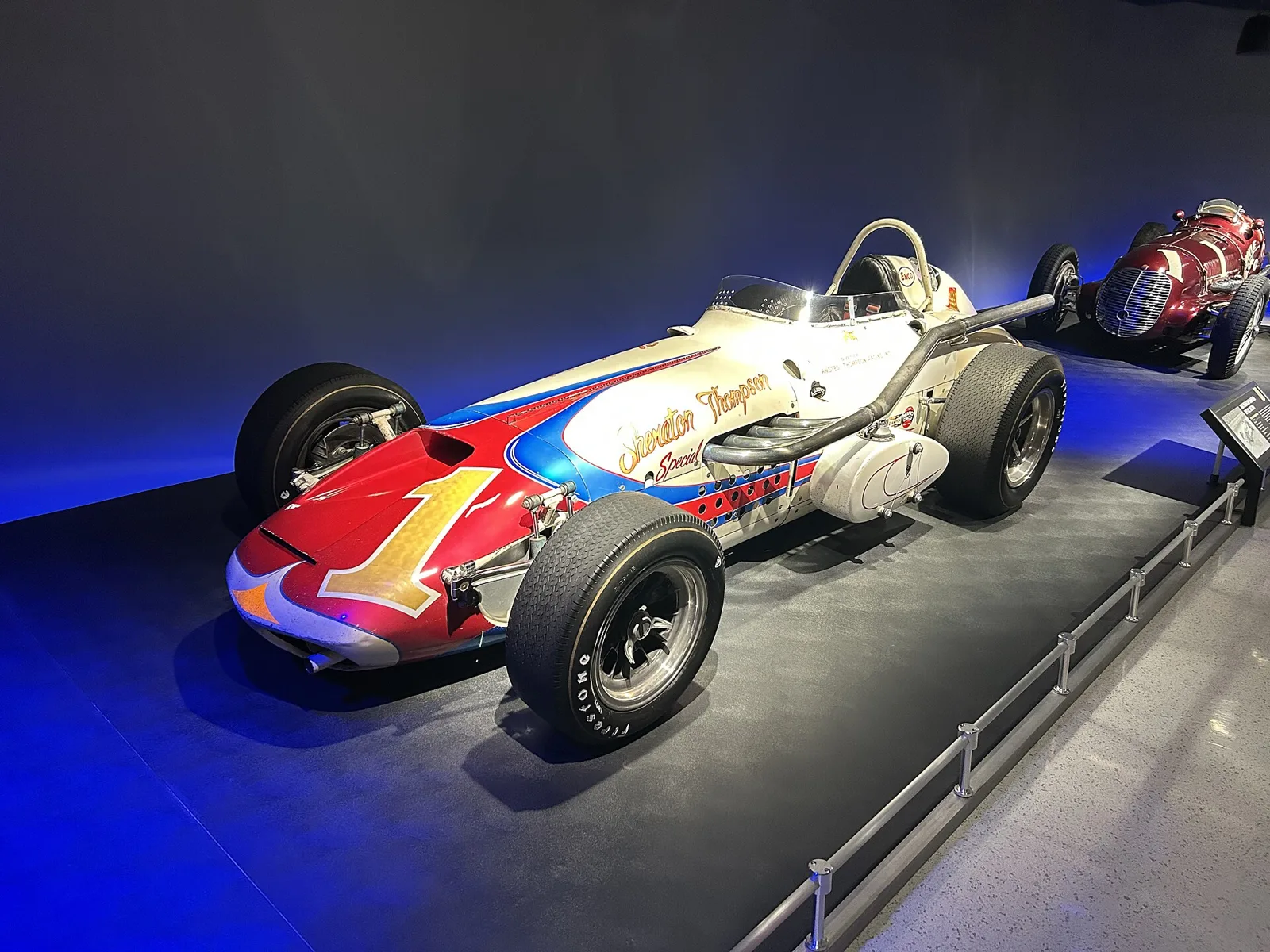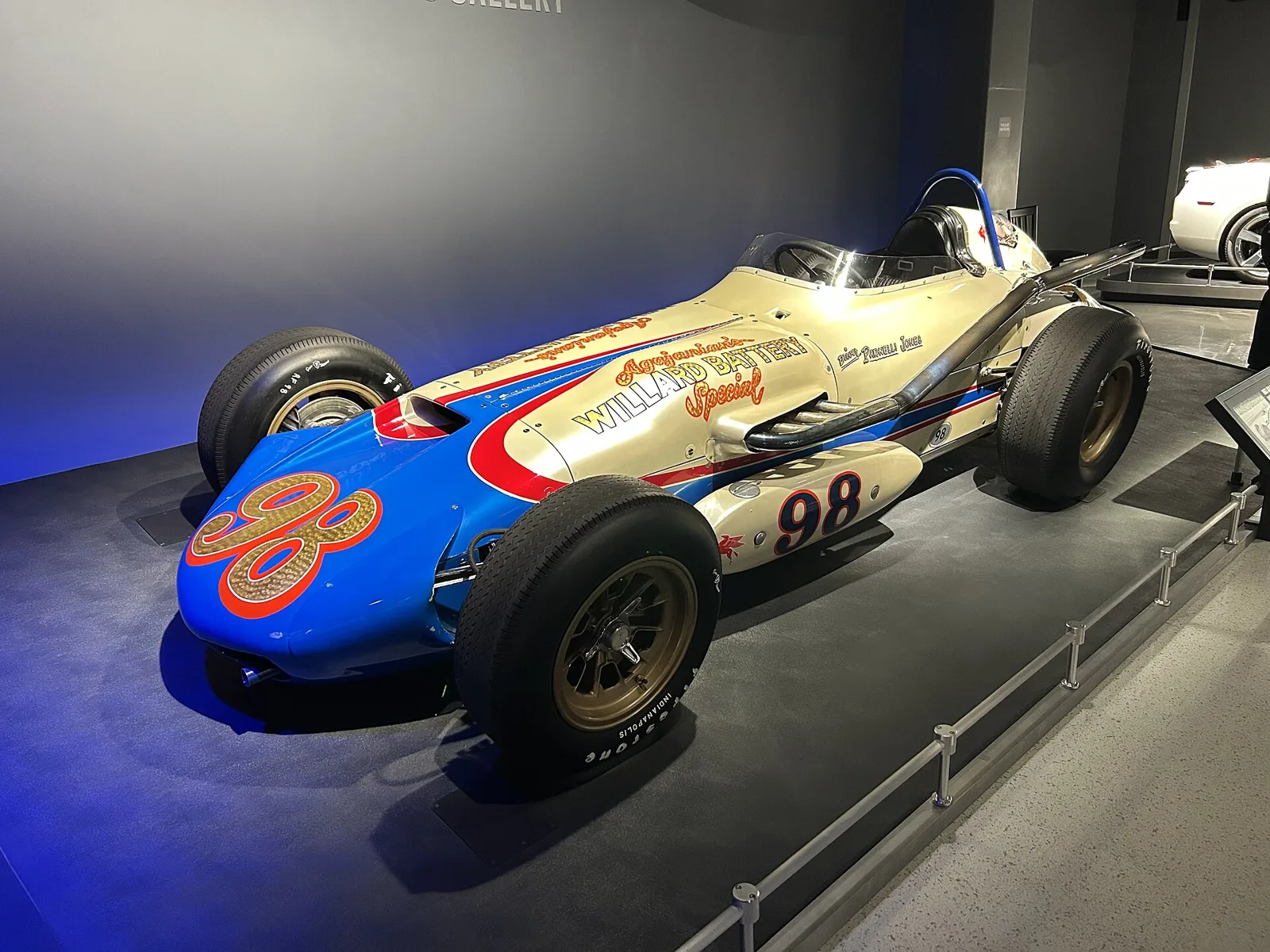
A cracked oil tank, a black flag that was never shown and a rear-engined Lotus chasing the win made the 47th International 500-Mile Sweepstakes one of the most argued results in the race's history.
The 1963 Indianapolis 500 was held on Thursday 30 May 1963 and won by Parnelli Jones in a car nicknamed Calhoun. Jim Clark finished second in a rear-engined Lotus-Ford, and the result was controversial because Jones's car had been leaking oil for many laps.
The 1963 Indianapolis 500 was the 47th International 500-Mile Sweepstakes, held on Thursday 30 May 1963 at the Indianapolis Motor Speedway. Parnelli Jones won in a car nicknamed Calhoun, his only Indianapolis 500 victory, but the result is still argued over. The car had been leaking oil for much of the race, and officials chose not to stop it.
Why was the 1963 race so controversial?
The win was controversial because Jones's car was losing oil from a split in its overflow tank over a long stretch of the race. At least one driver was said to have crashed on the slick track. Lotus owner Colin Chapman, whose rear-engined Lotus-Ford finished second with Jim Clark, accused officials of favouring the American driver and car.
The fault sat in the outer tank mounted at the back of the car. Smoke was heaviest in the corners, and dripping oil made the surface slippery.
Car owner J. C. Agajanian maintained the seepage was slight and ceased once it fell beneath the crack line. He also noted that rival machines were dripping too. Many, including Chapman and the writer Brock Yates, later believed officials would have stopped Jones had an American driver and car been in second place.
The race was won on pace, but the oil leak it was won with has never stopped being argued about.
Did Goodyear take part in the race?
Goodyear sent tyres to the track and supplied some entries, but it took part only in practice. No car used Goodyear tyres in time trials or in the race itself, which made it the first attempt by the company to compete at Indianapolis since about 1921. The company's last victory at Indianapolis had come back in 1919.
Its brief return gave the event a notable footnote. The tyre supply that teams used in competition was therefore a different one, and the Goodyear name was absent from the results.
What happened on Pole Day?
Pole Day, Saturday 18 May, drew a huge crowd. Some expected speeds above 152 mph, but gusty wind kept the times down. Parnelli Jones was third out and led the early times, posting a track mark of 151.153 mph before a one-lap figure of 151.847 mph a one-lap figure of 151.847 mph that proved enough for the pole.
Jim McElreath was the first qualifier, and several wave-offs followed. Hurtubise, in a well-liked Novi, lined up beside Don Branson on the front row after runs above 150 mph. Dan Gurney crashed in practice, which forced the Lotus team to qualify and race its spare car with him.
Clark was fifth quickest in a Lotus-Ford. The 1962 winner, Rodger Ward, was fourth fastest by the close of the day. Seven cars had qualified by the end of the day.
How was the rest of the field filled?
The field was completed over three more days, with 18 cars qualified by the end of Sunday 19 May and 33 in place by the close of Saturday 25 May. The final Sunday brought a run of bumps that decided the last few places.
Conditions were better on Sunday 19 May, and more cars took to the track. Jack Turner crashed badly in morning practice and suffered third-degree burns, and he announced his retirement later that day. A. J. Foyt set the pace at 150.615 mph, and Gurney, Sachs and Goldsmith were also in the field that day.
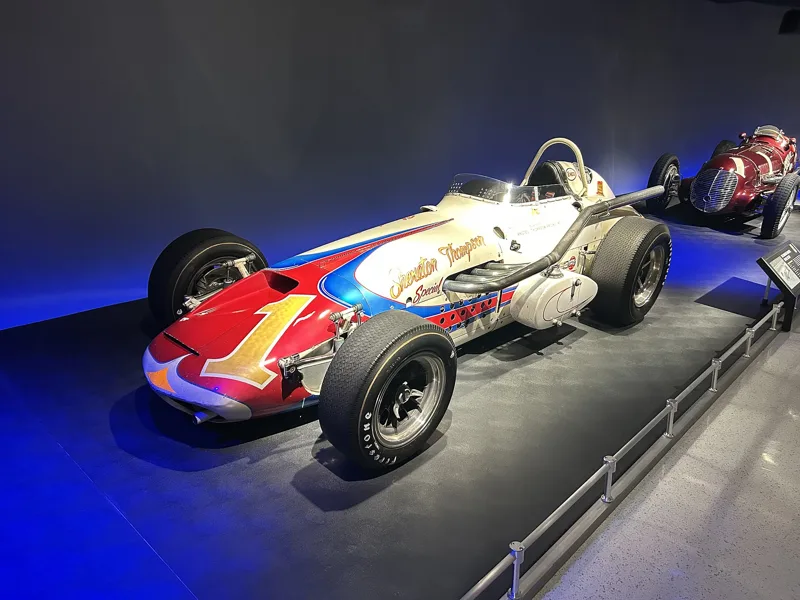
Duane Carter and Masten Gregory drove two of Mickey Thompson's unusual rollerskate cars into the field. Pedro Rodriguez, in an Aston Martin-powered Cooper, was the slowest car of the day. Five of the qualifiers had cleared 150 mph by the time the day closed.
Saturday 25 May began with 31 cars lined up at the start. Rookie Bobby Unser, in a Novi, was first to qualify and finished the day as the fastest. Lloyd Ruby, Jim Rathmann and Dick Rathmann also made runs, while Len Sutton's Leader Card car was slow. Tingelstad completed the 33-car line-up, and Rutherford and Christie bumped Pedro Rodriguez and Chuck Rodee as the day closed.
On Sunday 26 May, 16 cars prepared to qualify, and Ebb Rose sat on the bubble. Strong winds kept most machines off the track early in the day. Troy Ruttman displaced Rose during the afternoon, and Al Miller, driving a third Thompson entry, pushed out Len Sutton with the quickest lap of the day.
Late on, Ralph Liguori squeezed past Masten Gregory, yet ended up on the bubble himself. Len Sutton then posted a near identical time to Liguori's. While officials worked out whether Sutton had bumped Liguori, Ebb Rose took out A. J. Foyt's spare car and posted a faster lap, which removed both Sutton and Liguori. At the death of the clock, Gregory tried one more Thompson car and failed to beat Dempsey Wilson.
How did the race start?
Jones led the field into turn one from pole. Jim Hurtubise, who sat in the centre of the front row, passed him down the backstretch on the first lap. Jones re-took the lead in turn four on lap 2 and held it through the early duel that followed.
On lap 3 Unser avoided Dick Rathmann by swerving, then spun into the turn-one wall. The yellow flag stayed out for nearly ten minutes while a gasoline spill was cleaned up. Once green returned on lap 10, Jones was clear.
Hurtubise held second place for a long time, with Roger McCluskey and Bobby Marshman behind him. By lap 40, however, McCluskey and Marshman had passed Hurtubise. Jones was already more than 20 seconds clear.
On lap 46 caution came out after Bud Tingelstad crashed in turn two, while Allen Crowe lost a wheel and went off in turn one. Under caution on lap 50, McElreath and Marshman spun while in the pits, but neither hit anything.
How did pit strategy shape the race?
The front-engined roadsters were expected to need two or three pit stops each, while the rear-engined Lotus cars planned only one stop for fuel. Jones pitted for the first time on lap 62, and Clark and Gurney worked their way forward. Clark took the lead from McCluskey on lap 68.
Tyre wear worried the heavy roadsters, but the Lotus team hoped to run the whole distance without changing tyres. Jones was only about 18 seconds behind Clark and Gurney despite having already pitted. The Lotus cars handled better through the corners, but the roadsters still gained on the long straights.
Oil smoke began trailing Jones's car from around lap 80. Clark made his only scheduled stop on lap 95, taking fuel and three tyres in 33 seconds, and that gave the lead back to Jones with a 37-second margin. Gurney's stop took 42 seconds because of a worn right-rear tyre, and he dropped to ninth.
Hurtubise, once an early contender, had handling trouble and retired at the midpoint after an oil leak. Eddie Johnson crashed after the 120-lap mark when he spun on what was likely an oil slick and hit the inside wall.
Jones made a second pit stop on lap 125 under yellow. It lasted 27 seconds, and he rejoined with the lead almost intact. With 50 laps to go he led Clark by 43 seconds, with A. J. Foyt third.
Did officials consider a black flag for Jones?
Yes. With about twenty laps left, USAC chief steward Harlan Fengler was considering a black flag, which would have forced Jones into the pits to speak with the stewards and very likely cost him the win. Smoke was worst in the turns, and dripping oil was blamed for Eddie Sachs's crash in turn three.
Agajanian, who owned the car, went face to face with Fengler and Henry Banks at the start/finish line. Colin Chapman joined the argument and asked that Jones be disqualified for leaking oil. Agajanian replied that the leak was small and had ceased, and he joked that other cars were leaking worse. The discussion went on for several minutes before USAC decided against the black flag.
How did the final laps unfold?
The green flag returned on lap 193 with Jones 21 seconds ahead, and he stayed in front to the finish. Jim Clark was second and A. J. Foyt third, while Roger McCluskey spun on the last lap and brought out a yellow flag. Jones cruised home unscathed.
Around lap 160 Duane Carter had blown an engine in turn one, which brought out the yellow and let Jones pit for fresh tyres in 20 seconds. The lead had shrunk to only 10 seconds. When the green came back, Clark began closing the gap steadily, and with 25 laps to go Jones led by only 5 to 6 seconds.
Dan Gurney was forced into the pits with a worn right-rear tyre and then a right-front change. That ended his challenge, and he wound up seventh at the finish. Eddie Sachs had spun twice in the closing laps, once on lap 179 and again in turn three about lap 189, when he hit the wall and lost a wheel.
With the white flag out, McCluskey was close behind Jones as they threaded through traffic, but he spun and came to rest in turn three. That incident brought the final yellow, and Jones passed it on the outside to take the win.
What happened after the race?
The next day Eddie Sachs and Parnelli Jones argued and exchanged punches over the oil leak controversy. Harlan Fengler, the chief steward, later justified his choice: the leak had eased and too few laps were left. He defended the call as one that should not rest on a quick judgement.
The Lotus team was unhappy with what it saw as favouritism towards the American entries, but it decided not to protest. Lotus acknowledged that Jones had been clearly superior on the day. Ford officials were also said to recognise that disqualifying Clark's biggest rival would have gone badly with American fans.
| Finish | Driver and car | Detail |
|---|---|---|
| 1st | Parnelli Jones, Calhoun | Pole sitter; first pit stop lap 62; oil leak controversy |
| 2nd | Jim Clark, Lotus-Ford | Single scheduled pit stop on lap 95 |
| 3rd | A. J. Foyt | Finished third |
| 7th | Dan Gurney, Lotus-Ford | Worn right-rear tyre; two stops late in the race |
| Retired | Jim Hurtubise | Oil leak at the halfway point |
How was the race broadcast?
The race went out live on the IMS Radio Network, with Sid Collins as chief announcer and Fred Agabashian as driver expert. Television coverage was limited to a few minutes of highlights on ABC's Wide World of Sports, the third year it had shown that package.
Lou Palmer, debuting in 1958, switched from turn three to the pits and took over John Peterson's post there. He stayed for 25 years. Palmer also handled the interview with the winner in victory lane.
Mike Ahern returned after a year's absence and took over the turn three position. 1963 was the last year that Charlie Brockman served as statistician, and the network's affiliates numbered more than 700 across the world.