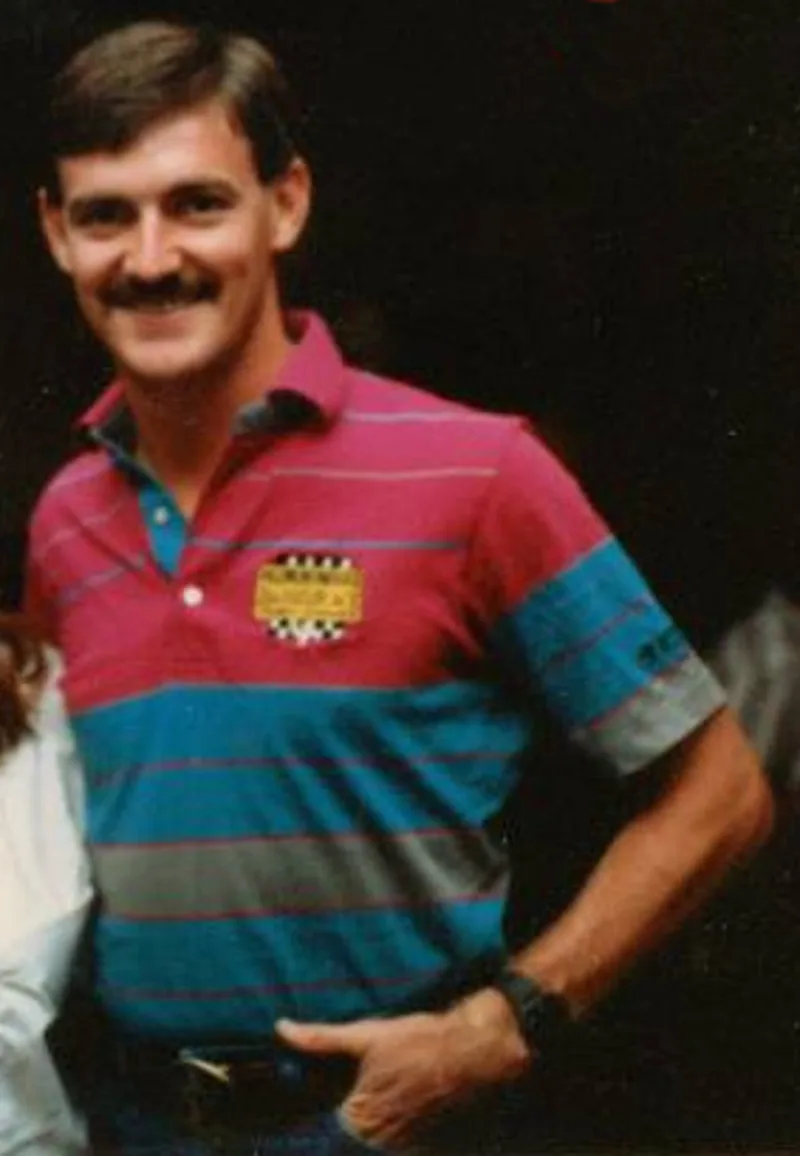
A Wisconsin driver who built his own NASCAR team on a shoestring, won the closest title in Cup history and was killed in a plane crash before he could defend it.
Alan Kulwicki was an engineer-turned-driver from Greenfield, Wisconsin who won the 1992 Winston Cup title, the closest finish in Cup history at that time. He ran his own team on a small budget and was killed in a 1993 plane crash before he could defend the championship.
Alan Kulwicki was an American racer and team owner of Polish descent who won the 1992 Winston Cup championship by 10 points, the closest margin in Cup history at that time. He arrived in NASCAR with no sponsor, a limited budget and a single car, and he ran his own team for most of his career.
He was killed on 1 April 1993 when a corporate plane he was travelling in crashed before landing in Tennessee. He never defended the title, and his career ended with five Cup wins, 24 poles and one championship in 207 races.
Who was Alan Kulwicki?
Alan Dennis Kulwicki was born on 14 December 1954 and grew up in Greenfield, Wisconsin, a suburb of Milwaukee with a large Polish-American community. He was nicknamed Special K and the Polish Prince. An engineer by training, he took a mechanical engineering degree from the University of Wisconsin-Milwaukee in 1977, and he brought that scientific approach to every part of his racing.
Kulwicki was known as a perfectionist who preferred to do things his own way. He turned down rich offers from leading car owners and drove for AK Racing, his own team, through most of his NASCAR career. He was a devout Catholic who carried a Saint Christopher medal in his car, and he remained a bachelor throughout his life.
An engineer who owned his own team, won the closest title in Cup history and was remembered with a Polish victory lap.
How did Kulwicki start racing?
Kulwicki started as a 13-year-old kart racer. His father Gerry built engines as crew chief for the USAC cars of Norm Nelson and Roger McCluskey, so he was often away and could not help at most kart races. Kulwicki found his own way to the tracks, and he usually did much of the work himself.
He began stock car racing at local Wisconsin tracks, including Hales Corners Speedway and Cedarburg Speedway. He won the rookie of the year award at Hales Corners in 1973, and the next year he moved into late models, the fastest and most complicated local stock cars, at the same track. His first feature win came at Leo's Speedway in Oshkosh.
In 1977 he moved from dirt to paved tracks. Working with the racecar builder Greg Krieger, he designed a late model with far more torsional stiffness than its rivals, which helped it handle better in corners. He won the Slinger Super Speedway track championship that year and later took the Wisconsin International Raceway late model titles in 1979 and 1980.
From 1979 he also raced in regional USAC Stock Car and American Speed Association events. He finished third in the ASA points in 1982 and again in 1985, with five career victories and twelve poles. In the ASA series he became friends with a future NASCAR champion, Rusty Wallace.
How did Kulwicki break into NASCAR?
Kulwicki raced four Busch Grand National Series events in 1984, which was then NASCAR's feeder series. He qualified second and finished second on his debut at the Milwaukee Mile, a short distance from his childhood home. He then placed seventh at Charlotte and fifth at Bristol later in the year.
In 1985 he sold most of his belongings, including his short-track equipment, and moved about 860 miles to the Charlotte area. He had only a few things left, and an electrical fire destroyed his pickup two days before he set off, so he borrowed one to tow the trailer. Veteran drivers were amused by the arrival of a northern driver with an engineering degree and limited experience.
His first Winston Cup start came at Richmond on 8 September 1985, driving Bill Terry's No. 32 Hardee's Ford. He ran five races for Terry that season, and his best finish was 13th. Terry then switched the team's number and sponsor and eventually ended his support mid-season, leaving the team to its driver.
How did Kulwicki build his own team?
Kulwicki became an owner in 1986. For a time he was essentially a one-man operation, serving as driver, administrator, crew chief and chief mechanic. He had trouble keeping crew members because he found it hard to trust them with the standard he demanded, and he was hands-on with his cars to the point of being described as a control freak. He looked for crew members who had owned their own cars.
Among his crew were Paul Andrews, who became his crew chief after being recommended by Rusty Wallace, and future crew chiefs Tony Gibson and Brian Whitesell. Ray Evernham, later a crew chief and owner, lasted six weeks with Kulwicki in 1992. Evernham later described him as a genius whose personality came at a cost, and very impatient.
In 1986 Kulwicki won the Winston Cup Rookie of the Year award with one car and two engines. He competed in 23 of 29 events, recorded four top-ten finishes and three DNFs, and averaged a finish of 15.4. He finished 21st in the points that season.
His sponsorship came from Zerex Antifreeze for 1987, when he changed his number to 7. That year he took his first pole at Richmond in the third race, and he came close to his first Cup victory at Pocono, where he finished second after Dale Earnhardt passed him on the last lap. He finished the season with nine top-tens and eleven DNFs, an average finish of 18.2 and 15th place in the points.
What was the Polish victory lap?
Kulwicki's first Cup win came in 1988 at Phoenix International Raceway, in the second-to-last race of the season. Race leader Ricky Rudd had motor problems late on, and Kulwicki led 41 laps and won by 18.5 seconds. Kulwicki had hired Andrews as his crew chief that year.
After the race Kulwicki turned his car around and drove a lap in the opposite direction, clockwise, with the driver's side facing the fans. He said this let him wave to the crowd from the driver's side, and it became his trademark: the Polish victory lap. Andrews recalled that Kulwicki had wanted something special and different for a first win, and it was his only first win.
The 1988 season ended with four poles, nine top-tens and twelve DNFs. He averaged a finish of 19.2 and finished 14th in the points. The following year he ran his own engine programme, collected four second-place finishes and held the points lead after the fifth race. A string of nine engine failures in sixteen races then dropped him from fourth to fifteenth, and he finished 14th again.
Why did Kulwicki turn down Junior Johnson?
At the start of 1990 Junior Johnson, owner of one of the top teams, offered Kulwicki a seat in the No. 11 Budweiser Ford that Terry Labonte had vacated. Kulwicki declined because he preferred to run his own team. His second Cup victory came at Rockingham on 21 October 1990 and finished eighth in the points, his first top-ten points finish.
Johnson made a further approach in 1991 with a $1 million offer for a second car. Kulwicki declined again, and Johnson went to Kraft, which had been negotiating with Kulwicki, and hired Sterling Marlin instead. Kulwicki's own sponsorship had also lapsed when Ashland moved its Zerex brand sponsorship to Valvoline.
The 1991 Daytona 500 featured five cars in military-branch liveries to support forces in the Gulf War. Kulwicki's car carried Army colours, and he climbed from 27th to finish eighth. The deal covered only that race, so he ran a plain white car after it. At the Atlanta race he qualified on pole, and Hooters agreed to sponsor his car after Mark Stahl, another owner-driver, failed to qualify his Hooters-sponsored car. He finished eighth at Atlanta, and the deal became a long-term sponsorship.
How did Kulwicki win the 1992 championship?
Kulwicki started 1992 with a fourth-place finish in the Daytona 500 after starting on a provisional. In April he passed Dale Jarrett with 27 laps left to win at Bristol, and his next win came at Pocono, the first superspeedway win of his career. After that race he stayed in the top five of the season points.
Bill Elliott and Davey Allison traded the points lead for much of the year, and Kulwicki was widely seen as a long shot. After a poor September at Dover, where he crashed on pole and finished 34th, he trailed Elliott by 278 points. The next week at Martinsville, Elliott retired with a blown engine, and Kulwicki finished fifth. Strong results at Charlotte and Rockingham followed, and at Phoenix Elliott had problems while Kulwicki ran fourth.
Going into the Hooters 500 at Atlanta, Kulwicki had to make up thirty points on Allison and stay ahead of Elliott, who trailed him by only 10 points. He changed the lettering on his bumper from Thunderbird to underbird, because he saw himself as the underdog. Allison needed a top-five finish to clinch the title, but he crashed out after Ernie Irvan spun in front of the field, which cleared the path for Kulwicki.
What happened in the 1992 Hooters 500?
The Hooters 500 is regarded as one of the great races in NASCAR history, and it was also Richard Petty's final career start. Kulwicki had a difficult pit stop after a gear problem, and he left pit road in fourth gear. He fought back to the front and held the lead for long periods, leading 103 laps in total against Elliott's 102.
Kulwicki was running out of fuel margin, so he made a fuel-only stop with about half a can of gasoline, which had to be measured quickly. A fuel relay issue left the amount uncertain. Elliott's crew chief lost track of Terry Labonte, who passed Elliott during his stop, and that error allowed Kulwicki to take the five bonus points for leading the most laps.
Elliott won the race, but Kulwicki finished second, and that was enough. He celebrated with a second Polish victory lap, after combing his hair for the television audience. He won twice that season and started from pole six times, the most of any driver. The title was the closest in Cup history until 2004, and he was the last owner-driver to win it for nearly two decades.
What happened in Kulwicki's final year?
Kulwicki's championship brought him a hometown celebration. In January 1993 Greenfield held Alan Kulwicki Day, filling the high school gymnasium with thousands of fans, and he signed autographs for six hours. Hooters made a special tribute card for his autograph sessions that season.
He did not change his habits much after the title. He leased a Swearingen Merlin III twin turboprop from Hooters chairman Robert Brooks, painted in Hooters livery. After five races in 1993 he was ninth in the points, and he had concerns about how often he could use the plane and about other finances. He planned to raise them with Hooters leadership on the flight from Knoxville to Bristol.
On 1 April 1993 the aircraft went down while approaching Tri-Cities Regional Airport, near Blountville, Tennessee. Investigators put the blame on the pilot, who had not switched on the anti-ice equipment that would have cleared ice from the engine inlets. Kulwicki was buried in Milwaukee, and NASCAR President Bill France Jr. attended the funeral.
| Measure | Detail |
|---|---|
| Born | 14 December 1954, Greenfield, Wisconsin |
| Winston Cup title | 1992, by 10 points over Bill Elliott |
| Cup wins | 5, including Phoenix in 1988 and Bristol in 1992 |
| Poles | 24 in Cup racing |
| Top-tens | 75 in Cup racing |
| Career races | 207 |
| Rookie of the Year | 1986 |
| Death | 1 April 1993, aircraft crash near Blountville |
How is Kulwicki remembered?
His transporter made a final lap of the rain-soaked Bristol track later that morning with a black wreath on its grille, and the flagman waved a checkered flag as it passed the line. Rusty Wallace honoured his former rival three days after the crash by performing the Polish victory lap. Davey Allison died on 13 July 1993, and competitors carrying No. 7 stickers added No. 28 stickers for him.
Kulwicki's memory is preserved in many ways. Milwaukee County opened Alan Kulwicki Memorial Park in 1996, with a $250,000 gift from Robert Brooks, and the park includes a museum. UNC Charlotte has given an annual Alan Kulwicki Memorial Scholarship since 1994, and a family gift of nearly $1.9 million in October 2009 led to the motorsports research facility being renamed for him.
He was named one of NASCAR's 50 greatest drivers and inducted into the NASCAR Hall of Fame in 2019. Since 2015 the Kulwicki Driver Development Program has supported drivers with $7777 each, with the field narrowed to 15 applicants. The 2005 film Dare to Dream: The Alan Kulwicki Story was made by his Wisconsin fans for less than $100,000.