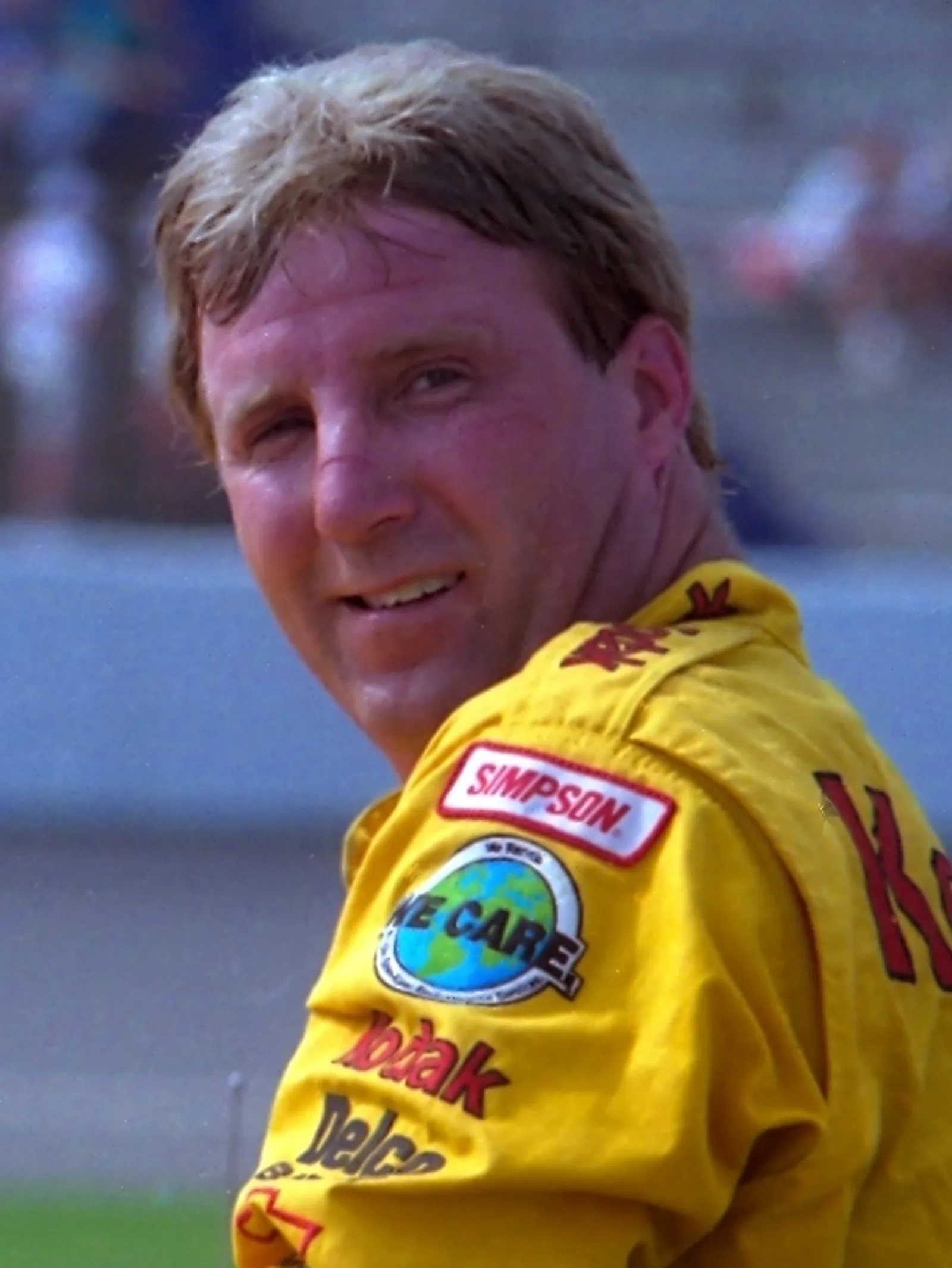
A former stock car driver who won consecutive Daytona 500s in 1994 and 1995, led the Cup points table for 24 weeks in 2002 and retired in 2010 after 748 starts.
Born on 30 June 1957, Marlin raced in NASCAR's Cup Series and won the Daytona 500 in 1994 and 1995. He led the points table in 2002, and he retired in 2010 after 748 Cup starts.
Sterling Marlin is an American former stock car driver who won the Daytona 500 in 1994 and again in 1995. He led the Cup points table for much of 2002 before a crash at Kansas ended his season early. He retired in 2010 after 748 career starts.
Who is Sterling Marlin?
Born on 30 June 1957 as Sterling Burton Marlin, he is a retired American stock car racer. His final competitive outings came in the JEGS/CRA All-Stars Tour, and NASCAR's 75 Greatest Drivers list includes him.
Over his career Marlin raced for a long list of owners, including Roger Hamby, Junior Johnson, Stavola Brothers, Morgan-McClure, SABCO and the Chip Ganassi teams, along with MB2 and Phoenix Racing.
Marlin's legacy rests on his Daytona 500 wins in 1994 and 1995, his 2002 points lead and his career-best third place in the 1995 standings.
How did Marlin's career start in the 1980s?
Roger Hamby hired Marlin in 1983 to drive the No. 17 Hesco Exhaust Chevrolet. He finished tenth at Dover, ended the season nineteenth in the standings, and won the Rookie of the Year award.
After a fifteenth-place run in the 1984 Daytona 500 for Hamby, most of that season was spent with Sadler Brothers Racing, where he had two top tens. In 1985 he made only eight starts, and his best was twelfth at Talladega.
In 1986 he drove Hoss Ellington's No. 1 car, and his best finish was second at the Firecracker 400. In 1987 Billy Hagan hired him full-time for the Piedmont Airlines Oldsmobile, where four top-five finishes helped him to eleventh in points.
The season after that began well, with seven finishes of eighth or better across the opening ten events, and the year closed tenth in the table. In 1989 Sunoco sponsorship arrived, the team moved to number 94, and Marlin matched a career-best thirteen top tens, although he dropped to twelfth in points.
He left that team at the end of 1990. That season he also won his first Busch Series race, at Charlotte, in a Chevrolet owned by Fred Turner.
What did the Junior Johnson and Stavola years look like?
In 1991 Marlin drove the No. 22 Maxwell House Ford for Junior Johnson. He opened with second place at Daytona, won two poles and finished seventh in the standings, with seven top fives and sixteen top tens.
The next season brought six top-five finishes, thirteen top tens and five poles, and he finished tenth. For 1993 he moved to the No. 8 Raybestos Ford for Stavola Brothers Racing, where one top five and eight top tens left him fifteenth in points.
How did Marlin win the 1994 and 1995 Daytona 500s?
Marlin's first career win came at the 1994 Daytona 500, in his 279th career start, driving the No. 4 Kodak Chevrolet for Morgan-McClure Motorsports. He won the race again in 1995, making him one of only five men to take back-to-back Daytona 500s.
Petty, Yarborough, Hamlin and Byron make up the rest of that group. Both of Marlin's first two career victories came in the Daytona 500, a distinction no other driver holds.
Across 1994 he managed one victory, a handful of top fives, eleven top tens, and a climb to 14th in the standings. The 1995 season was his best. He added wins at Darlington and Talladega, finishing with three wins in total, 472 laps led and 22 top tens. That average finish of 9.84 helped him finish third in the standings, his best.
In 1996 he had two wins, five top fives and ten top tens, and he finished eighth. In 1997 he managed only two top fives and six top tens, dropped to 25th in the points, and left the No. 4 team at the end of the year.
What happened at SABCO Racing from 1998 to 2000?
In 1998 Marlin joined SABCO Racing and its No. 40 Coors Light Chevrolet. He opened the year by winning the Gatorade 125, the Daytona qualifier. He failed to make the Primestar 500 three weeks later, the first start he had missed since 1986.
He managed six top-ten finishes that year, ending 13th in points. In 1999 a pole at Pocono, his first since 1995, did not stop him slipping to sixteenth in the table. The next year, at Bristol, he claimed his second Busch Series win while driving SABCO's No. 82 entry.
That season brought tragedy as well. Teammate Kenny Irwin Jr. was killed in a practice crash at New Hampshire. Marlin finished in the top ten seven times and fell back to nineteenth overall.
What was the 2001 season with Dodge like?
In 2001 Chip Ganassi bought the majority stake in SABCO, and the team changed to Dodge Intrepids. In his first start with the new team he won the Gatorade 125 qualifier at Daytona, and by season's end he had matched his career-best third place in the points.
Three days later came the Daytona 500, where the closing lap saw Marlin's car touch the rear bumper of Dale Earnhardt's car in turn four. Earnhardt crashed into the turn four wall and was killed in the impact.
In the days that followed, hate mail and death threats reached Marlin's family from fans who held him responsible. Two of Earnhardt's own drivers, Michael Waltrip and Dale Earnhardt Jr., publicly defended him, and NASCAR's investigation cleared him of wrongdoing.
Marlin then won Dodge's first race in its NASCAR return at Michigan International Speedway, and he added the UAW-GM Quality 500 at Charlotte.
How did the 2002 points battle unfold?
In 2002 Marlin again ran strongly. At the Daytona 500 he was fighting Jeff Gordon for the front when the two touched, and a red flag followed. He pulled a damaged fender away from his tyre during the stoppage, and that work broke the rule against working on cars under red flag, so he was sent to the back for the restart. He finished eighth.
The following week he finished second at Rockingham to Matt Kenseth, took the points lead and held it for the next 24 weeks. For much of that stretch the lead reached triple digits several times.
He won the UAW-DaimlerChrysler 400 at Las Vegas, a race marked by controversy. Late in the race he spun during a pit stop and broke the pit road speed limit. NASCAR's penalty required him to wait fifteen seconds in his stall, but the official was not told until the crew had released the car. NASCAR then changed the rules so that speeding on pit road draws a drive-through penalty.
Marlin finished ninth at Atlanta, then took the Carolina Dodge Dealers 400 at Darlington, his last Cup victory. A string of strong finishes kept him 91 points ahead entering the Chevy Monte Carlo 400 in September.
He finished that race last after an early accident. Mark Martin, who had started the race 125 points behind him, gained 116 points, and Marlin's lead fell to nine points. At New Hampshire the next week he lost the lead, and he dropped to fourth after a 21st-place finish at Dover.
A week later, at Kansas, the crash came after 147 laps, and he finished 33rd. Doctors found a cracked vertebra in his neck, and he sat out the final seven races while Jamie McMurray took over the car. Marlin finished the year 18th, with eight top-five and ten top-ten results.
What happened in 2003 to 2005?
In 2003 Marlin had no top-five finishes, but he recorded eleven top tens and matched his previous year's eighteenth place in the points. He came close to winning the Sharpie 500 at Bristol, where Kurt Busch wrecked him with fewer than 150 laps to go. Busch went on to win the race.
Marlin was unhappy with Busch after the race and said so publicly. Busch later said he had tried to make amends with a gift of beer, and that the offer was turned down.
In 2004 he had three top fives but dropped to 21st in points. For 2006 Ganassi announced that David Stremme would replace him, with the aim of attracting a younger audience. Richard Childress Racing had also offered him a deal, but Marlin honoured his Ganassi contract and finished out 2005.
He missed one race that year, the Sirius at the Glen, because of a family funeral, and Scott Pruett substituted and finished fourth. Marlin reached sixth in the points during the season but finished 30th in the final standings.
How did the final years with MB2 and others go?
In 2006 Marlin joined MB2 Motorsports to drive the Waste Management Chevrolet, running the No. 14. His only top ten that season was ninth at Richmond, and the team finished 36th in owner points.
In 2007 he made the field on speed in each of the first five races. Ginn Racing then replaced him with Regan Smith from the Brickyard onward, and he failed to qualify for two races that year. In November he qualified the No. 09 for Phoenix, finishing 25th, and a week later he finished 33rd at Homestead.
In 2008 he missed the Daytona 500 in the No. 09, qualified at Talladega and Richmond, and raced the No. 40 at Darlington. He ended 2008 with Phoenix Racing. The following March he won the Saturday Night Special charity event at Bristol, leading the whole race.
In 2009 he ran a limited Cup schedule for Phoenix Racing in the No. 09 Chevrolet. His best finish was 35th at Martinsville, which was also his last of 748 career starts.
What did Marlin do after retiring?
On 18 March 2010 Marlin said he was retiring from racing. He had owned car dealerships in Tennessee, and in late 2011 he helped form the Tennessee Racing Association to keep Fairgrounds Speedway active.
He is fully retired from NASCAR, and he has also stepped away from the Pro Late Model class at Fairgrounds Speedway.
What does the career summary show?
| Year | Team | Notable result | Points finish |
|---|---|---|---|
| 1983 | Roger Hamby | Rookie of the Year | 19th |
| 1987 | Billy Hagan | Four top-five finishes | 11th |
| 1991 | Junior Johnson | Two poles, seven top fives | 7th |
| 1994 | Morgan-McClure Motorsports | First Daytona 500 win | 14th |
| 1995 | Morgan-McClure Motorsports | Second Daytona 500 win, three wins in total | 3rd |
| 1998 | SABCO Racing | Gatorade 125 win | 13th |
| 2001 | SABCO Racing, Dodge | Dodge's first NASCAR return win at Michigan | 3rd |
| 2002 | Chip Ganassi Racing | Points lead for 24 weeks, Las Vegas and Darlington wins | 18th |
| 2005 | Chip Ganassi Racing | Sixth in points at one stage | 30th |
| 2009 | Phoenix Racing | Best finish 35th at Martinsville | Limited schedule |
What is Marlin's legacy?
Marlin's legacy rests on his Daytona 500 wins in 1994 and 1995, his 2002 points lead and his career-best third place in the 1995 standings. He retired in 2010 after 748 Cup starts.
In 2003 he appeared on a NASCAR special of the game show Family Feud, where he played against Elliott Sadler and won. In 2026 Tennessee named a five-mile piece of US Route 31 after him, as the Sterling Marlin Commemorative Highway.