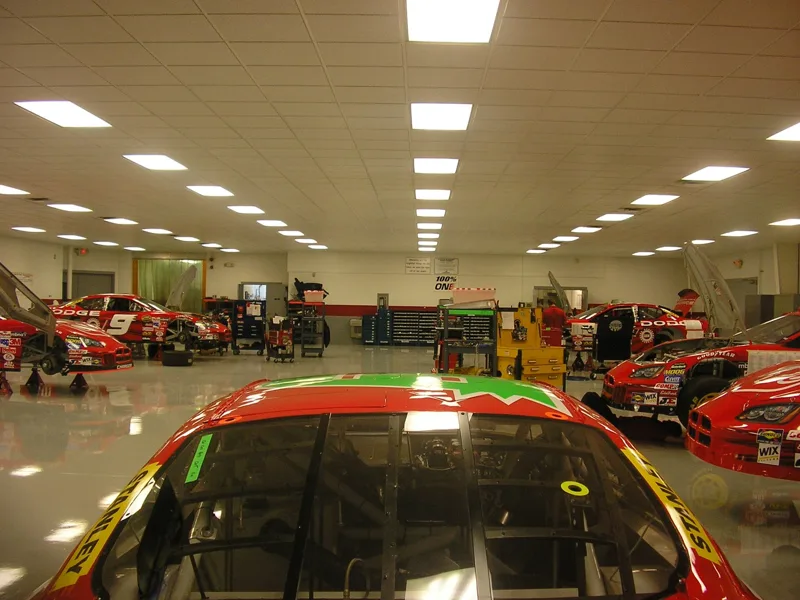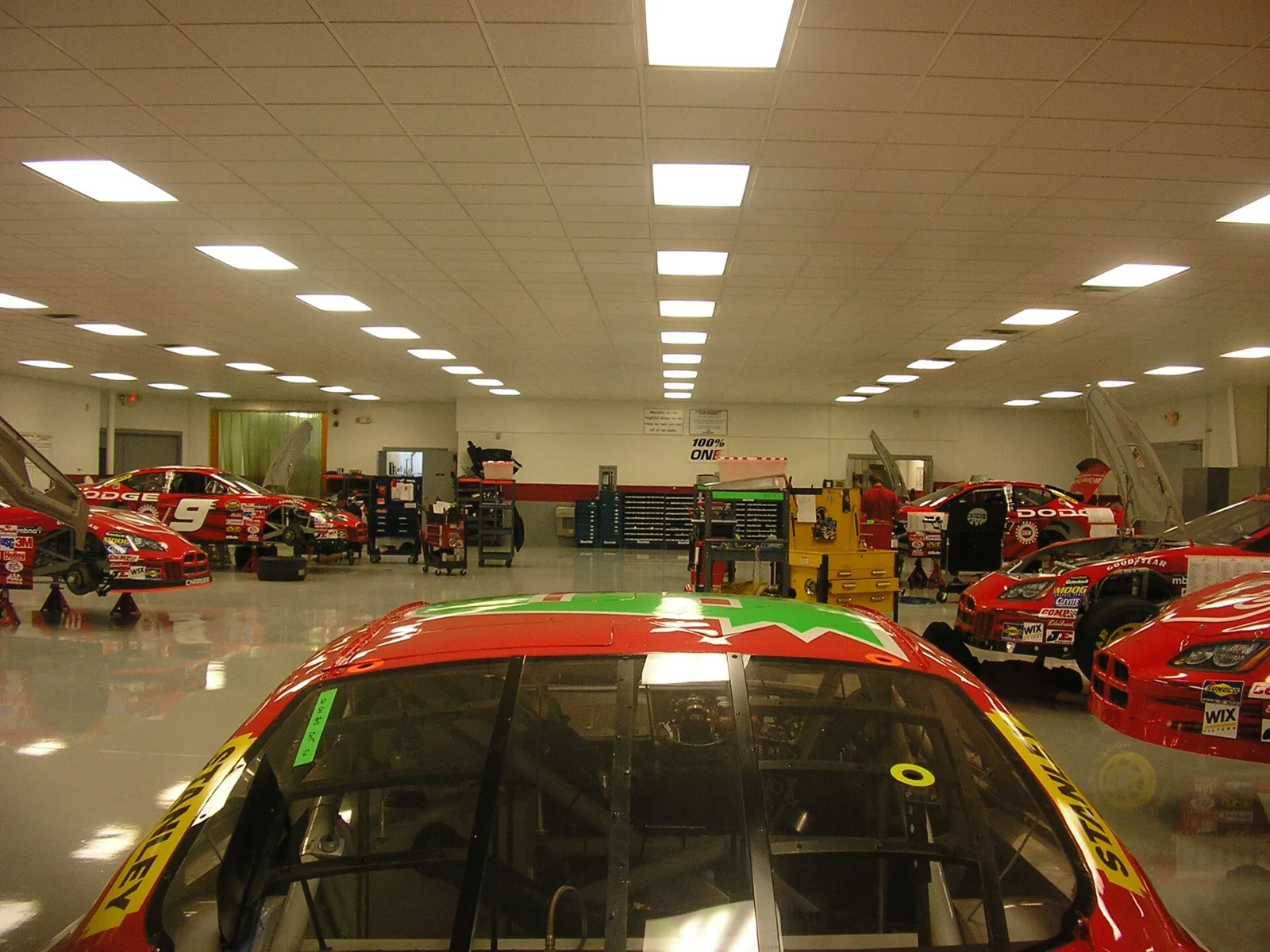
How a 2009 merger, a 2010 rescue and a 2021 sale to GMS Racing shaped a Cup operation that used the Petty name, won a race and changed manufacturers repeatedly.
Richard Petty Motorsports was a NASCAR Cup Series team formed by the 2009 merger of Gillett Evernham Motorsports and Petty Enterprises. Bought in 2010 with Richard Petty's backing, it switched to Ford, built its own chassis and was sold to GMS Racing for US$19 million in 2021.
Richard Petty Motorsports, usually called RPM, was a NASCAR Cup Series team that rose from a 2009 merger of two struggling operations and ended with a 2021 sale to GMS Racing. Its story is one of changing manufacturers, shifting owners and a famous name that gave the team its identity.
What was Richard Petty Motorsports and how did it begin?
Richard Petty Motorsports was formed when Gillett Evernham Motorsports merged with Petty Enterprises, with George Gillett, a former owner of Montreal Canadiens and Liverpool F.C., holding a controlling interest. The January 2009 merger took the team to four cars and a new name, and the operation soon switched from Dodge to Ford.
Ray Evernham was not part of the merger talks, and both he and Richard Petty held only minority shares in the new team. The team also brought in Yates Racing, run by Doug Yates, a Ford engine specialist, brought a past record that included Davey Allison and Ernie Irvan.
A famous name, a rescue purchase and five years of manufacturer changes shaped a Cup team that ended in a 2021 sale.
What was the 2010 crisis and who rescued the team?
The economy was poor and sponsors were scarce, so the team's future was in doubt by 2010. Lead driver Kasey Kahne left for Red Bull Racing, and the Gillett family's financial problems deepened. George Gillett had defaulted on a $90 million loan he used to buy the team.
In October the cars intended for the second Talladega race were briefly seized, and in November four haulers sat at Texas rather than travelling on to Phoenix. Both incidents stemmed from payment disputes with the engine and equipment supplier Roush Fenway Racing.
Richard Petty then joined forces with Medallion Financial, whose head was Andrew M. Murstein, and with DGB Investments, under Douglas G. Bergeron. Together they bought the team for less than $50 million, and Petty kept a one-third holding after putting in a multimillion-dollar investment of his own.
How did the team change manufacturers and build its own cars?
After 2010 the operation shrank from four cars to two, as the new owners pared the business back. From 2015 the team made its own bodywork, and a year later it moved into chassis construction, which lessened its dependence on Roush Fenway Racing.
For 2018 the team moved its alliance from Roush Fenway to Richard Childress Racing, which also brought a manufacturer switch to Chevrolet. The change marked the end of a long period with Ford and the start of a new era of engineering support.
Murstein had sought a sporting asset since 2008, when a blank-cheque vehicle he set up with Hank Aaron and other investors reached $215 million. Murstein bought out Bergeron's holding at the close of 2014, which left him as the main backer.
Which drivers defined the No. 43 car?
The No. 43 was the most visible car in the team's history. Elliott Sadler, A. J. Allmendinger, Aric Almirola, Bubba Wallace and Erik Jones each drove it, and Almirola's 2014 Daytona victory remains the car's defining result. Reed Sorenson and several others also shared the seat, so the car's story is one of frequent change.
| Season | Car | Driver | Notable result |
|---|---|---|---|
| 2009 | No. 19 | Elliott Sadler | Five top-tens; twenty-sixth in points |
| 2010 | No. 43 | A. J. Allmendinger | 19th in points |
| 2012 | No. 43 | Aric Almirola | 20th in points; pole at Charlotte |
| 2014 | No. 43 | Aric Almirola | Won the Coke Zero 400 at Daytona |
| 2016 | No. 44 | Brian Scott | Second at Talladega in the fall |
| 2018 | No. 43 | Bubba Wallace | Second at the Daytona 500 |
| 2019 | No. 43 | Bubba Wallace | Third at the Brickyard 400 |
| 2021 | No. 43 | Erik Jones | 24th in points |
Each row represents a different chapter of the operation. The team's best seasons tended to come when a driver and a crew chief stayed together long enough to build trust in the car.
How did the No. 9 and No. 44 cars develop?
These were the team's most rotated seats, and their drivers changed almost every season. Each change brought a new set of sponsors, crew chiefs and expectations, which made it hard for any single driver to build lasting momentum in the car.
Kahne and Almirola on the No. 9
Kasey Kahne had driven for Evernham Motorsports from his rookie season in 2004 and continued in the No. 9 after the merger. He scored a road course win in 2009 and another at Atlanta, and in 2010 he took a photo-finish victory in one of the Gatorade Duels before leaving for Red Bull Racing.
Aric Almirola replaced him for the remaining races of 2010 and recorded a best finish of fourth at Homestead. That short run gave him a route into the team's longer-term plans.
Ambrose and Hornish
Marcos Ambrose took over at the start of 2011, with Stanley Black and Decker moving across from the No. 19. He won his first Cup race at Watkins Glen that August and recorded a career-high 12 top-tens that year.
Sam Hornish Jr. replaced Ambrose in 2015 and struggled, with three top-tens and a best finish of eighth at Talladega. Richard Petty announced near the end of the season that Hornish would not return.
Brian Scott and the No. 44
Brian Scott came in for 2016 when the entry switched from the No. 9 to the No. 44, a number Petty Enterprises had used and that RPM had also run in 2009. Scott finished second at Talladega in the fall and then announced his retirement for family reasons.
What did Xfinity and ARCA add to the team?
RPM also ran cars in the Xfinity Series and in ARCA. In Xfinity, Ambrose won at Watkins Glen in 2014 in a No. 09 Ford Mustang, and the No. 43 entry ran with Michael Annett, Dakoda Armstrong and later Jeb Burton.
The 2009 Braun Racing alliance had given the No. 9 a few appearances, and in 2011 RPM supplied Ambrose a car in Montreal. In 2016 the team's alliance with Empire Racing placed young drivers in a truck in the Camping World series, and from 2017 that partnership moved to ARCA, centred on Richard Petty's grandson, Thad Moffitt.
Jeb Burton's 2016 season ended early when sponsor J. Streicher and Co. defaulted on its agreement with the team, and RPM was suspended. The episode showed how dependent the operation remained on outside funding.
A closer look at the No. 19 and the No. 98
The team's earliest RPM-era car was the No. 19. Elliott Sadler had driven it for Gillett Evernham from 2006, and the merger opened with a dispute over his place in the car. After Gillett Evernham announced that A. J. Allmendinger would take over for 2009, Sadler's lawyers prepared a breach-of-contract suit, and a settlement six days later returned Sadler to the car while keeping Allmendinger on the roster.
Sadler managed five top-ten finishes in 2009. Stanley sponsored the car for all 36 races in 2010, but poor results led Sadler to leave mid-season, and the team shut the car down. The number was later assigned to other operators, and the car has not returned to the team's books.
Paul Menard's stint in the No. 98 Ford came in 2010, after RPM's buyout of Yates Racing. His numbers were similar to Allmendinger's the year before, with one top five, six top-tens and 23rd in points. When he left for Richard Childress Racing for 2011, taking the sponsorship with him, the No. 98 was shut down.
What were the early seasons of the No. 43 like?
Reed Sorenson moved into the No. 43 for 2009 when the team absorbed the car, and he managed a single top-ten, a ninth-place run at the rain-shortened Daytona 500. The car carried a long list of sponsors that season, yet the results lagged behind the team's ambitions.
A. J. Allmendinger took over the No. 43 in 2010 and finished 19th in points. In 2011 he improved with former Roush Fenway crew chief Greg Erwin and finished 15th in points, but the loss of Best Buy as a primary sponsor led to his release, and he joined Penske Racing.
Allmendinger had also driven the No. 44 in 2009, in a retro Valvoline and Petty Blue scheme, and he finished third in the season-opening Great American Race. That early result offered a glimpse of what the Petty name could mean to a team trying to find its feet.
Why did sponsors matter so much to the team?
Sponsorship was the lifeblood of the operation throughout its life. Smithfield Foods agreed to fund 29 races in each of three seasons from 2014, with brands such as Smithfield, Farmland, Eckrich and Gwaltney on the car, and that deal shaped the team's budget for several years.
When negotiations to extend the Smithfield deal fell through in 2017, the company moved to Stewart-Haas Racing with Almirola. A settlement later kept subsidiary brands on the No. 43 for part of 2018, which showed how much a single backer could decide the shape of a season.
Sponsor churn was a constant. In 2015 Medallion Bank, a subsidiary of Andrew Murstein's financial firm, appeared on select races alongside Mercury Marine and Lyon Financial, and the team had to keep finding partners to fill its race calendar.
What role did the Petty name play in the team?
Richard Petty's presence on the team was more than symbolic. He remained a minority owner and the most recognisable figure attached to the operation, and his name stayed with the cars through each change of owner and manufacturer, even as the business changed hands several times.
The team's identity leaned on that heritage, and the name carried weight that money alone could not buy. Garages, sponsors and fans associated the cars with a family that had built one of the sport's best-known careers, and that association helped the team hold its place on the grid through difficult years.
The link also carried a personal milestone. Petty had reached his 200th Cup win in a Curb Racing entry, and Almirola's 2014 Daytona victory came 30 years to the day after that win, a coincidence that the team leaned on in its public story.
What was the ownership timeline from 2009 to 2021?
The team's history can be summed up in a short sequence of ownership and manufacturer changes. Each step below marks a moment when the operation was reshaped, whether by a merger, a rescue, a new manufacturer or a sale, and each one carried consequences for the drivers and sponsors who followed.
- January 2009: Gillett Evernham Motorsports merges with Petty Enterprises
- Late 2009: switch from Dodge to Ford and merger with Yates Racing
- 2010: the Gillett family's finances collapse and the team is rescued
- November 2010: Petty, Medallion Financial and DGB Investments complete the purchase
- 2015 and 2016: the team builds its own bodies, then its own chassis
- 2018: alliance with Richard Childress Racing and a switch to Chevrolet
- December 2021: majority sale to GMS Racing
What happened when GMS Racing bought the team?
On 1 December 2021 RPM sold a majority interest to GMS Racing for US$19 million. Both of its charters went with the deal, and the company that resulted operated as Petty GMS Motorsports before a later rename to Legacy Motor Club.
Medallion confirmed the sale of all its shares to Maurice J. Gallagher Jr. the following day. The No. 43 kept its own charter, while the second charter moved to the No. 42 car, which GMS then ran.
What is Richard Petty Motorsports' legacy?
RPM's legacy is one of a famous name used to rescue a struggling operation, a team that changed manufacturers several times and built its own bodies and chassis. Almirola's 2014 Daytona win and Bubba Wallace's second-place finish in the 2018 Daytona 500 stand as its defining moments.
The team carried the history of its founder, whose career had reached the 200-win mark in a Curb Racing car, and whose minority stake kept the family name attached to the operation through its toughest years. That link was part of the team's identity to the end.
Under Murstein and later GMS, the operation was reshaped repeatedly. Still, its record shows that one well-known name and a few committed sponsors could sustain a Cup team for more than a decade.