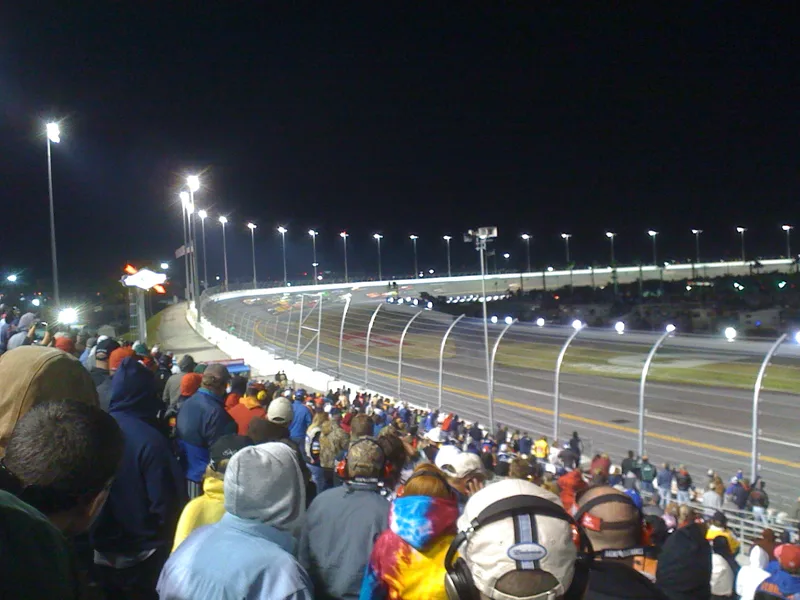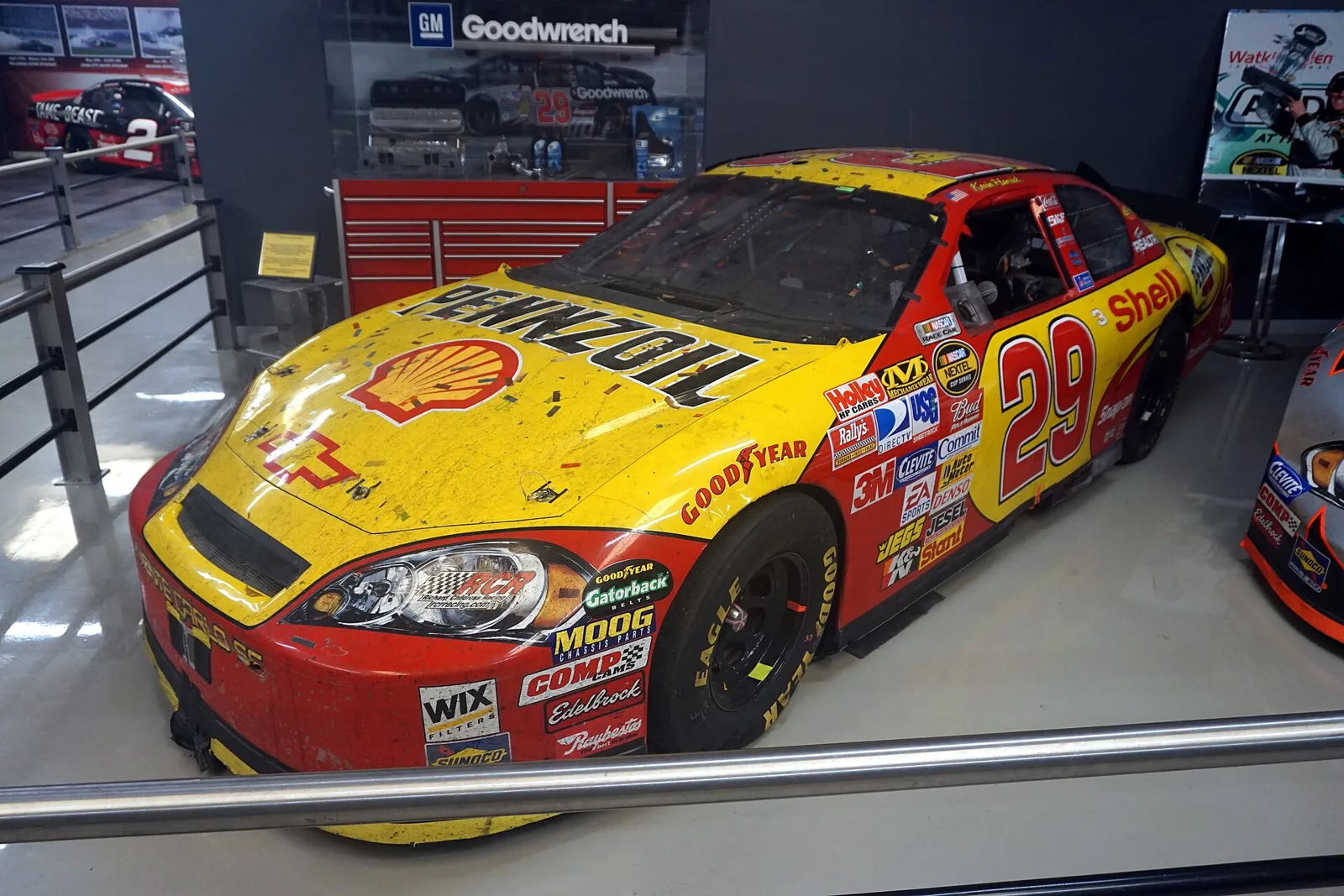
The season opener at Daytona International Speedway ended with a green-white-checkered finish, a multi-car wreck on the final lap and a margin of two hundredths of a second.
The 2007 Daytona 500 opened the NASCAR Nextel Cup season and was won by Kevin Harvick after a green-white-checkered restart. Mark Martin finished second in his 23rd start, a race he had never won, and the finish led to a debate over the freezing-the-field rule.
Kevin Harvick took the 2007 Daytona 500 for Richard Childress Racing, edging Mark Martin by two hundredths of a second after a green-white-checkered restart. The season opener was marked by a last-lap wreck, a debate about the caution rules and the arrival of Toyota as a Cup manufacturer.
What happened in the 2007 Daytona 500?
The race was run on 18 February 2007 at Daytona International Speedway in front of a sellout crowd of 185,000. Harvick completed 202 laps, two more than the scheduled 200, because the closing sequence was run under green-white-checkered rules.
Martin, driving for Ginn Racing, finished second, and Jeff Burton of Richard Childress Racing came home third. Mike Wallace and David Ragan completed the top five, a result that surprised many observers who had expected the leading contenders to fight out the win.
A green-white-checkered finish, a last-lap wreck and a winner decided by two hundredths of a second.
Why did the opening round matter?
The Daytona 500 had been placed on the 2007 calendar in August 2006 as the first of 36 scheduled stock car races. The 49th edition also marked the traditional start of the Cup season, a role it had filled since 1982.
The race is regarded as one of the crown jewels of the sport, alongside the Coca-Cola 600, the Southern 500 and the Brickyard 400. It was first added to the calendar in February 1959, and Jimmie Johnson was the defending winner heading into the 2007 running.
Who was in the field?
Sixty-one cars were entered, representing four manufacturers and 29 teams. The biggest talking point was Toyota, which became the first foreign manufacturer to compete in the Cup Series since Alfa Romeo in 1962.
Toyota's cars ran for Bill Davis Racing, Michael Waltrip Racing and the new Red Bull Racing Team. Juan Pablo Montoya, a former Formula One and Indianapolis 500 winner, made his Cup debut with Chip Ganassi Racing, while A. J. Allmendinger, who had raced in Champ Car, joined Red Bull alongside Brian Vickers.
Casey Mears took over the seat that Vickers had vacated at Hendrick Motorsports. David Ragan replaced Mark Martin in the No. 6 car at Roush Fenway Racing after Martin's nineteen-year association with the team came to an end, and Martin then drove part-time for Ginn Racing.
At 72, James Hylton, a 1966 Rookie of the Year, was bidding to make the oldest Cup start on record. Frank Kimmel, an eight-time ARCA Re/Max champion, was trying to make his Daytona 500 debut with Fast Track Racing.
How did testing go before the race?
NASCAR organised six days of testing across twelve sessions, named the Jackson Hewitt Preseason Thunder. The first three sessions ran from January 8 to 10 and the final three from January 15 to 17, all at Daytona International Speedway.
Tony Raines set the early pace on 8 January at 296.077 km/h (183.974 mph). The most significant time of the week came from Kurt Busch on 17 January, when he reached 307.687 km/h (191.188 mph) in a Car of Tomorrow fitted with a larger restrictor plate than the standard one, ahead of its planned debut at the Food City 500.
Tony Stewart and Robby Gordon were replaced in testing by Mike McLaughlin and P. J. Jones, with Gordon choosing to race in the Dakar Rally.
What happened in practice and qualifying?
Six practice sessions were held before the race, with the first two on 10 February lasting 120 and 90 minutes. Ricky Rudd topped the first session at 48.374 seconds, with David Gilliland second and Sterling Marlin third.
Kenseth was the quickest in the third session at 47.801 seconds, ahead of Reed Sorenson, Mike Wallace, Derrike Cope and Ricky Rudd. Wind gusts made the track difficult, and several cars, including those driven by Riggs, Edwards, Hamlin and Gilliland, were damaged against the wall during practice.
Who took the pole?
Qualifying took place on 11 February and set only the top two starting spots. Gilliland earned his first career pole with a lap of 48.304 seconds, while Rudd, almost two tenths of a second slower, took the other front-row place. It was the second time, and the first since 2000, that two drivers from Robert Yates Racing had qualified on the Daytona 500 front row.
Positions three through thirty-ninth were decided by the two Gatorade Duels on 15 February, and the four fastest drivers who had not already qualified filled the final spots. Eighteen drivers failed to make the race, including Mayfield, Mike Skinner, Regan Smith and Bill Elliott.
Which penalties changed the grid?
Two days after qualifying, NASCAR found unapproved holes in the cars of Matt Kenseth and Kasey Kahne. Each driver lost 50 Drivers' Championship points, their entries lost 50 owners' points, and their qualifying times were thrown out, which sent them to the back for the second Duel.
Michael Waltrip's team was penalised after an illegal substance was found in two intake manifolds. Bobby Kennedy, the team's director of competition, was escorted out of Daytona and suspended indefinitely. Crew chief David Hyder was fined $100,000, the largest fine in the sport's history, and Waltrip lost 100 drivers' points while his entry lost 100 owners' points.
Two Evernham Motorsports cars, driven by Scott Riggs and Sadler, were also penalised for illegal bolts in their spoilers, losing 25 drivers' and owners' points each. Their crew chiefs were suspended for two races and fined $25,000.
How did the Duels settle the grid?
Tony Stewart and Jeff Gordon won the Gatorade Duels and secured third and fourth on the grid. Gordon's car was later found to be an inch too low at post-race inspection because a shock mount and its spacers were misaligned, so he was sent to 42nd for the Daytona 500.
With Gilliland and Rudd on the front row and the Duel results behind them, the grid was set for the start. Eighteen drivers were left outside the field, which meant the Duels had a decisive effect on who could race.
How did the race unfold?
Fox began its live coverage at 2:01 p.m. with Mike Joy, Darrell Waltrip and Larry McReynolds in the booth. Nicolas Cage gave the command to start engines, Big and Rich performed the anthem, and Cal Ripken Jr. drove the honorary pace car.
Phil Parsons waved the green flag at 3:30 p.m. Gilliland held the lead, but by lap two Rudd had dropped to sixth, while Kurt Busch and Tony Stewart moved up behind the leader.
The first caution came on lap 18, after Boris Said tangled with Reutimann on the exit of turn two. Kurt Busch used a quick two-tyre stop and took the lead when the field went back to green on lap 21.
On lap 152 Stewart ran onto the apron in turn four, lost control and spun into Busch. Busch went to the garage for repairs but could not continue, retiring with 46 laps to go.
What happened in the late stages?
A fourth caution came on lap 175 when five cars tangled on the backstretch, including Reutimann, Hamlin, Johnson, Green and Raines. Martin briefly moved to the front just before the yellow appeared.
On lap 186 Ken Schrader was collected in a crash after contact with Dave Blaney, who was left parked for the remainder of the race. In the closing laps Matt Kenseth made contact with Jamie McMurray, which sent McMurray into the wall and collected Dale Earnhardt Jr. McMurray and Earnhardt finished 31st and 32nd, and a red flag of about twelve minutes followed for clean-up.
The stoppage set up a green-white-checkered finish. With the white flag out, Martin was in position to win, while Kyle Busch sat in second and tried to get past him on both sides.
How did the finish happen?
Busch lost grip on the apron, spun and started a chain reaction that took out most of the field. Clint Bowyer turned over onto his roof and slid across the line while on fire, then flipped back upright in the grass.
Harvick got by Martin in the final sprint and won by two hundredths of a second. Burton, who had been sixth coming out of turn four, finished third, and Wallace and Ragan completed the top five.
Why did the finish spark a debate?
NASCAR had introduced a freezing-the-field policy after a 2003 incident at New Hampshire between Casey Mears and Dale Jarrett. Under that policy the field is held in place whenever a caution is shown, which largely ended the practice of racing back to a yellow flag. No caution flew after the last-lap crash in 2007.
The debate centred on Martin, whose 23rd start in the race had not yet produced a win. Some argued that a strict application of the rules could have given him the win, although the visual evidence was disputed. He retired after the 2013 season with 29 Daytona 500 attempts and no victory.
Earlier winners had also been denied near misses on the last lap. Earnhardt's 1998 win came in his 20th start, and Darrell Waltrip's 1989 triumph came in his 17th, so the lack of a win for Martin stood out in the history of the race.
Which drivers finished where?
| Position | Driver | Note |
|---|---|---|
| 1st | Kevin Harvick | Richard Childress Racing; won by two hundredths of a second |
| 2nd | Mark Martin | Ginn Racing; never won the race in 29 attempts |
| 3rd | Jeff Burton | Ran sixth out of turn four, then finished third |
What did the result mean for Harvick and Martin?
Harvick's win gave Richard Childress Racing a headline result at the opening race of the season. It was decided on a restart rather than a long green-flag run, and Toyota's first Cup race was overshadowed by the finish.
For Martin, the runner-up result was another near miss in a Daytona 500 career that never produced a victory. For Gilliland the pole was his first in the Cup Series, and it set the tone for a season that opened on the sport's biggest stage.