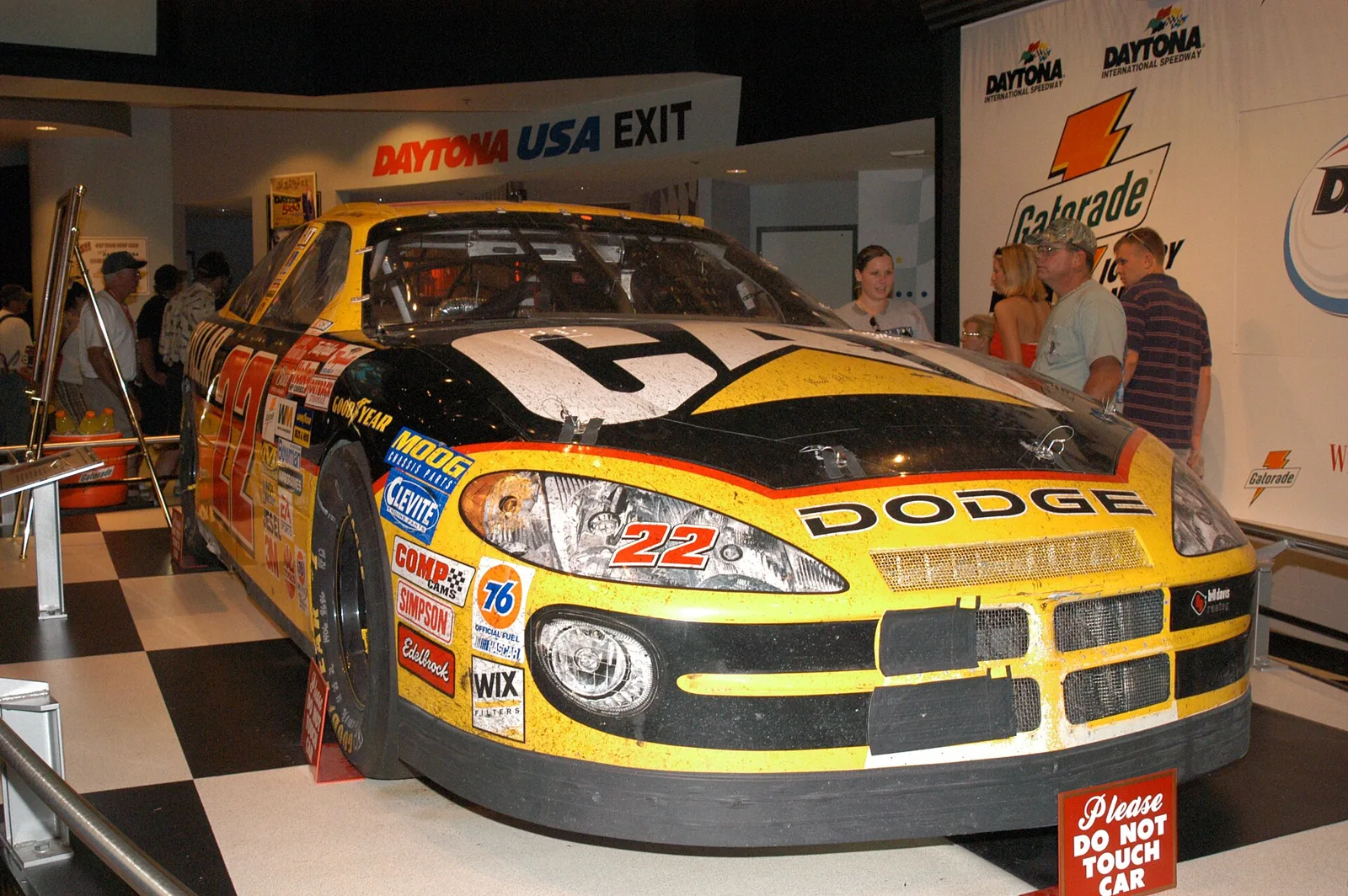
Two rookies started on the front row, a multi-car crash took out 18 cars and the race ended under a red flag.
The 2002 Daytona 500 was the 44th running of the event, held on 17 February 2002 at Daytona International Speedway. Ward Burton won after a red-flag finish that followed an 18-car crash and a rookie front row led by Jimmie Johnson.
Ward Burton won the 2002 Daytona 500 for Bill Davis Racing, driving a Dodge. The 44th running of the event featured a rookie front row, an 18-car crash in the middle of the race, and a late red flag that stopped the field so the cars could race to the finish. It was the first of 36 scheduled Winston Cup races that season.
What was the 2002 race?
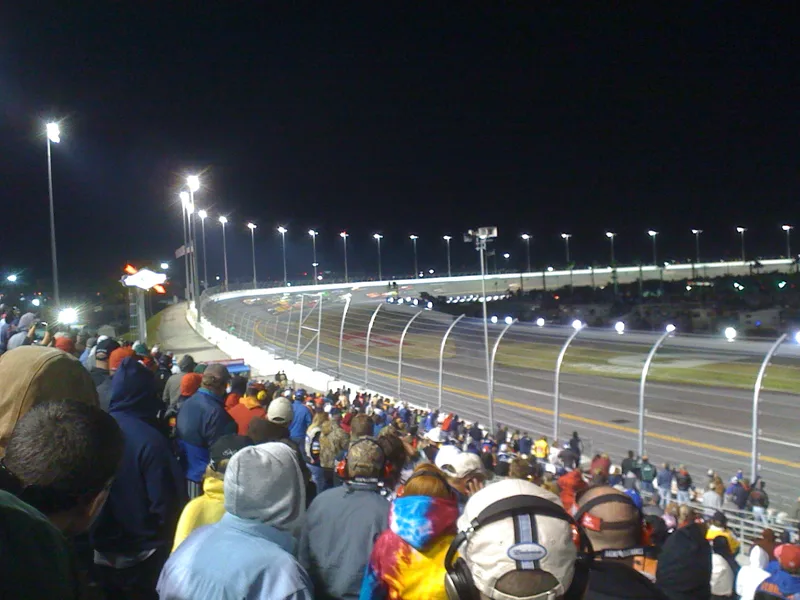
It was the first of 36 scheduled stock car races in the 2002 Winston Cup Series and the 44th running of the Daytona 500, held on 17 February 2002. The track is a four-turn superspeedway of 2.5 miles (4.0 km), with turns banked at 31 degrees and the front stretch at 18 degrees, and the finish line sits on that front stretch.
NBC televised the race for the first time, under a deal signed at the end of the 1999 season. Allen Bestwick called the race with Benny Parsons and Wally Dallenbach Jr., and Bill Weber hosted the pre-race show from the pits.
Two rookies on the front row, an 18-car crash and a red-flag finish that gave Ward Burton the Great American Race.
Why does the Daytona 500 carry such weight?
Bill France Sr., the founder of NASCAR, conceived the race and built Daytona International Speedway to hold it. The first race in 1959 succeeded earlier contests held on the beaches near Daytona Beach. It has opened the NASCAR season since 1982 and has required restrictor plates since 1988.
The race is often seen as NASCAR's most prestigious event, with the largest purse in American auto racing. Many regard a win as on a par with a World Series, Super Bowl or Masters title, and the race is nicknamed the Great American Race.
What rule changes came before the race?
NASCAR mandated a set of aerodynamic rules. Restrictor plates had to be 7/8 in (22 mm) in every car, and the air dams were extended 1.5 in (38 mm) forward on the front bumpers. Dodge, Pontiac and Ford spoilers had to meet specific dimensions, and Chevrolet spoilers were shortened by 1/4 in (6.4 mm).
Ford teams had reported an aerodynamic deficiency during testing, so NASCAR let them lower their spoilers to 6.25 in (159 mm). That change created a new problem, because the rear deck lid had to rise by 1/2 to 3/4 in (13 to 19 mm) to keep the spoiler at legal height. NASCAR also allowed engine changes between qualifying and the race.
How did the rookie front row come about?
Jimmie Johnson, driving the No. 48 Chevrolet for Hendrick Motorsports, took his maiden pole at 48.431 seconds. Kevin Harvick, a fellow rookie, qualified second, just 16-thousandths of a second slower after a driver error on his second lap. It was the first time two first-time participants started on the front row.
Johnson became the third rookie to win pole for the race, after Loy Allen Jr. in 1994 and Skinner in 1997. After qualifying he said the team had shown its hand in testing and practice, and that it had not expected Harvick to be so quick.
Who qualified and who was left out?
Fifty-four cars entered first-round qualifying, and only 43 could race. Qualifying set the first two positions, while the rest of the field was set by the 2002 Gatorade 125s. Eleven drivers, including Spencer, Stricklin and Biffle, failed to qualify.
Dave Marcis made his 33rd Daytona 500 start, breaking Richard Petty's record of 32, and Shawna Robinson became the second woman to qualify for the race after Janet Guthrie in 1980. Gordon and Waltrip won the Gatorade 125s, which put Gordon third and Waltrip fourth on the grid, with Earnhardt fifth.
What happened in practice?
Eight practice sessions were scheduled, and the last was cancelled because of rain. Johnson topped the first session at 48.639 seconds. In the third, Geoff Bodine set 47.776 seconds, and Harvick was fastest in the final practice at 47.588 seconds.
In the fourth session a chain reaction began after Brett Bodine slowed, involving Hamilton, Stewart, Jeff Burton, Spencer and Rudd. Hamilton and Todd Bodine changed to spare cars for the Gatorade 125s. In the final session Craven's engine failed and caused a four-car accident involving Petty, Terry Labonte, Marcis and Brett Bodine.
How did the early laps go?
The early laps were costly. Stewart blew an engine on lap 3, and Earnhardt Jr. ran over debris on lap 23 and cut a right-front tyre while running second. Marcis's final Winston Cup start ended on lap 79 with engine trouble, bringing out the second caution.
Earnhardt Jr. then lost a rear tyre in turn 4 before halfway, and the flailing rubber damaged a brake line, which brought a third caution. On the next restart Brett Bodine spun off Kenny Wallace's bumper, bringing a fourth caution. Shawna Robinson and Mike Skinner tangled on lap 138 for the fifth.
What was the Big One?
The Big One came on lap 148, when Jeff Gordon and Kevin Harvick made contact while fighting for second. Harvick tried to block Gordon as they approached turn 1, but the timing was off. His car then slid down onto the apron and spun back across the track.
Eighteen cars were caught up in the wreck, matching the 2001 race. Among the cars hit were Nadeau, Mayfield, Schrader and Rudd, with Kenseth, Earnhardt Jr. (his third incident of the day) and others also involved.
Johnson's chances ended on lap 173, when he blew a tyre exiting the tri-oval and had to pit. He finished a lap down in 15th. An eighth caution followed when Robby Gordon spun off turn 2, setting up a six-lap showdown between Jeff Gordon and Sterling Marlin.
How was the finish decided?
As the field came to the green, a chain reaction began between the eighth and ninth positions, and Michael Waltrip spun towards the pits. Marlin got a run on Gordon out of the tri-oval and tucked alongside the 24 car. Gordon threw a late block, spun across the nose of the Dodge, and officials stopped the field with a red flag on the backstretch.
The stoppage let course officials clear the track, after which the drivers were to go to the line. Marlin got out of his car to pull away a damaged fender while the cars were stopped, and NASCAR penalised him by sending him to the rear when the cars restarted.
Burton inherited the lead for the three-lap shootout, with Sadler and Geoff Bodine behind him. Jarrett collided with Martin at the white flag and spun through the grass. Burton held off Sadler to win, with Bodine third. Kurt Busch took fourth, followed by Waltrip, Martin, rookie Ryan Newman and the recovering cars of Marlin and Gordon.
Season summary
| Finish | Driver | Note |
|---|---|---|
| 1st | Ward Burton | Dodge, Bill Davis Racing |
| 2nd | Elliott Sadler | Second in the three-lap shootout |
| 3rd | Geoff Bodine | Two years after a near-fatal crash in the Daytona 250 |
| 4th | Kurt Busch | Won the scrap for fourth |
| 5th | Michael Waltrip | Defending Daytona 500 winner |
| 6th | Mark Martin | Behind Waltrip at the flag |
| 7th | Ryan Newman | Top rookie |
Why did the 2002 race matter?
Burton's win was the first Daytona 500 victory for Dodge since Petty's 1974 race. It was also the best finish for Phoenix Racing until Brad Keselowski won the 2009 Aaron's 499 at Talladega.
The field also featured trios of brothers: the three Bodine brothers and the three Wallace brothers all started, which as of 2017 made it the only Daytona 500 with more than one such trio.
What happened in testing before the race?
NASCAR held test sessions in early January, with the leading speeds at the speedway near 183.087 mph. Stacy Compton topped the first session at 183.087 mph, and Jimmie Johnson paced the second at 183.120 mph before leading sessions three and four.
The January 14 sessions were cancelled because of rain, so NASCAR extended testing to January 17. Waltrip and Mike Wallace led the final sessions, with Wallace setting 184.302 mph on the last day.
Who were the pace car drivers and who else was involved?
Jay Leno drove the pace car, and Waltrip's spin on the restart brought him close to it. Buster Auton was the pace car driver who told Marlin to stop repairing his car during the red flag.
Three members of the Bodine family started the race, with Geoff, Brett and Todd all in the field. The Wallace brothers Rusty, Mike and Kenny also started together, a pairing that made the 2002 event unusual in the record books.
What did the race mean for Dodge and its drivers?
Burton's victory was the first Daytona 500 win for Dodge since Richard Petty's 1974 race. Geoff Bodine had won the 1986 race and had survived a near-fatal crash in the Daytona 250 two years before this race, and he finished third behind Burton and Sadler.
Johnson and Harvick both came from the rookie ranks. Newman's seventh place made him the top rookie of the race.
What format rules applied to the race?
Since 1988 restrictor plates have been required for the Daytona 500 and three other events. That rule was an exception to NASCAR's cost-cutting limit of one engine per race weekend.
NBC's first Daytona 500 broadcast had Allen Bestwick on play-by-play, and Matt Yocum, Marty Snider and Dave Burns reported from the pits.
How did the second round of qualifying go?
The second round of qualifying was held on the afternoon of February 11 for drivers who wanted to improve their times. Kyle Petty was the fastest of the four drivers in that session, placed 27th overall.
In the fourth practice Mark Martin led at 47.933 seconds, with Johnson, Rusty Wallace and Benson close behind. In the fifth Casey Atwood topped the session at 47.342 seconds, and Elliott Sadler was among the fastest drivers.
Eleven drivers failed to qualify, including Spencer, Hut Stricklin, Buckshot Jones, Biffle, Rick Mast, Bobby Gerhart, Hermie Sadler, Carl Long, Norm Benning, Kirk Shelmerdine and Dwayne Leik.