Dale Jarrett beat Jeff Gordon by 0.261 seconds in a 25-lap exhibition, after a pole-sitter lost the pack and the field lined up through a qualifier that gave the last grid spot to Jarrett himself.
Jarrett won his second Bud Shootout, finishing 0.261 seconds ahead of Jeff Gordon in a 25-lap race that Mark Martin had started from pole. The race featured four lead changes among four drivers, no cautions and a violent flip for Ricky Rudd near the finish.
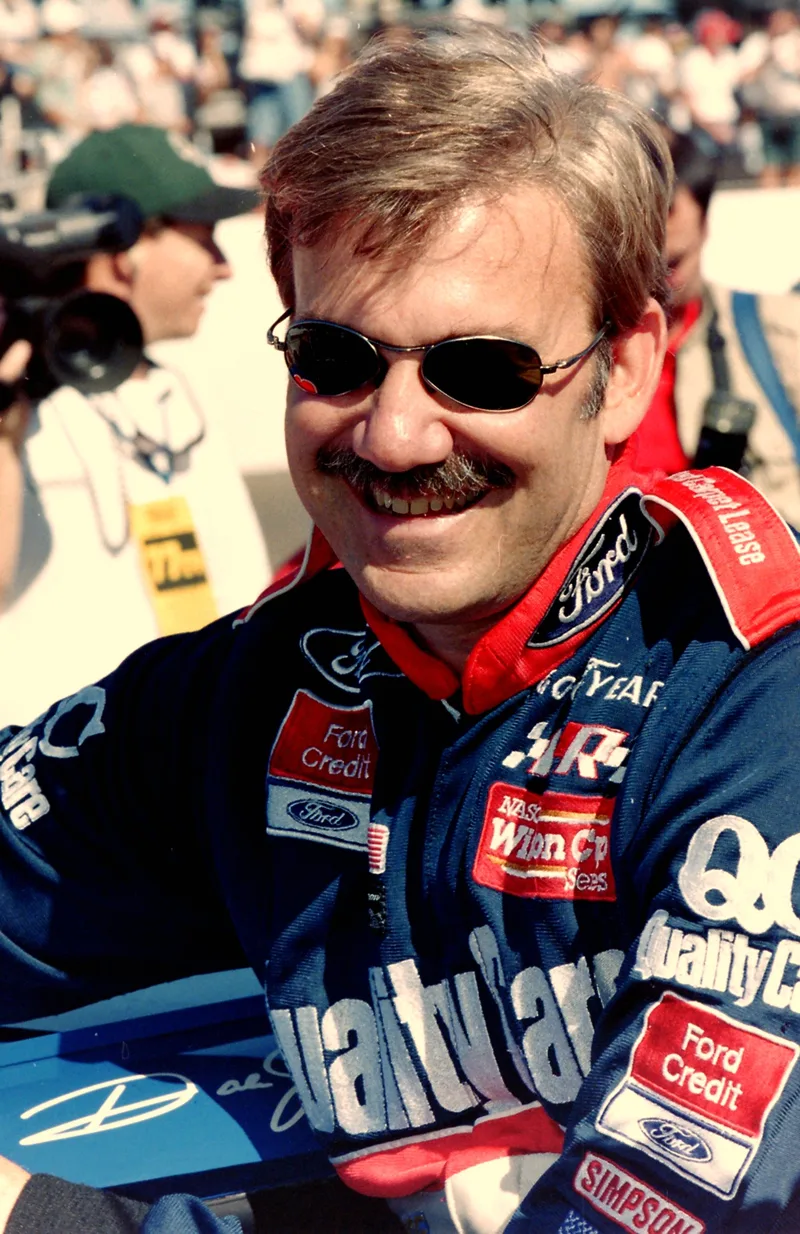
The 2000 Bud Shootout was the first of two non-points exhibition stock car races on the 2000 Winston Cup calendar, held on February 13, 2000 at Daytona International Speedway. Dale Jarrett of Robert Yates Racing won the 25-lap event by 0.261 seconds from Jeff Gordon, with Sterling Marlin of Team SABCO third. It was the 22nd running of the race, and the win was Jarrett's second in the event.
What was the Bud Shootout and who could enter?
The Shootout began in 1979 as the Busch Clash, created by Busch Beer brand manager Monty Roberts to promote the beer. It was renamed the Bud Shootout in 1998, and it invites the fastest drivers from the previous season to race as a warm-up for the Daytona 500.
Fifteen drivers were eligible for the 2000 event: the fourteen pole winners from the previous season, plus the winner of a qualifier race. Mark Martin was the defending race winner and had been among the fourteen pole winners of 1999. Dale Earnhardt, a six-time winner of the Shootout, was not entered in either race.
Not every pole winner could race. John Andretti had taken the pole for the November 1999 Checker Auto Parts/Dura Lube 500, yet he was ruled out because his car lacked a Budweiser sticker. His team owner, Richard Petty, had promised his mother years earlier that alcohol sponsors would not appear on his race cars.
A last-lap pass, a flip for Ricky Rudd and a finish decided by 0.261 seconds in a 25-lap exhibition at Daytona.
How was the race run?
The race was 25 laps long, and each driver had to stop once to swap the right-side tires, somewhere between laps 10 and 12. Laps run under caution were not scored, and if a caution came out the field would be set by the running order of the last completed green-flag lap.
Restarts were also unusual. Rather than the single-file restarts of the time, cars lined up alongside one another in pairs, and every lapped competitor had to move to the back of the field.
The qualifier race before the Shootout was open to the fastest second-round qualifiers from the 1999 season. Its winner would take the fifteenth and final starting place in the Shootout, and the same rules applied to it.
Who was in the field and how did practice go?
Dale Jarrett, the defending Winston Cup champion and a two-time Daytona 500 winner, was among the entrants. He had failed to score a single pole during the 1999 season, the first champion since Dale Earnhardt in 1991 to do so. Jarrett said he wanted to be the best champion NASCAR had seen, and that his team had to accommodate as many people as possible while still doing its job.
Five members of Jarrett's crew, the jackman and four tire changers, had previously worked for Jeff Gordon. They were making their first pit stops for Jarrett that Sunday.
Three practice sessions were held, with the first and third lasting 60 minutes and the second lasting 30. Bobby Labonte led the first session at 46.639 seconds, ahead of Ken Schrader, Kevin Lepage, Terry Labonte and Jarrett. Ricky Rudd was fastest in the second session at 47.147 seconds, with Jarrett, Tony Stewart, Sterling Marlin and Kenny Wallace behind him.
In the last session Jeff Gordon and Joe Nemechek tied for the fastest lap at 192.049 mph (309.073 km/h),.
How was the starting grid decided?
For the Shootout, the 14 drivers who had entered drew their starting positions by lot, a method unique to the event. The draw took place on Thursday, February 10. Mark Martin drew pole, with Marlin, Tony Stewart, Ward Burton and Mike Skinner completing the top five.
Gordon, Bobby Labonte, David Green, Ricky Rudd and Ken Schrader drew positions six through ten. Kevin Lepage, Joe Nemechek, Kenny Irwin Jr. and Rusty Wallace filled positions eleven to fourteen. After the draw Martin said he felt like a new man, and he said the car had been good the year before and that he hoped to stay at the front.
The qualifier had its own draw. Ricky Craven took the pole, with Jimmy Spencer, Jeff Burton, Rick Mast and Kenny Wallace next. Jarrett took one of the last seven places, alongside Waltrip, Barrett, Marcis, Bodine, Cope and Terry Labonte.
How did the qualifier decide the last starting spot?
The qualifier began on Sunday, February 13, and was broadcast live on ESPN from 11:00 AM Eastern, with Bob Jenkins, Benny Parsons and Ray Evernham in the booth. Derrike Cope did not take part, because he and his Fenley-Moore Motorsports team were focusing on second-round qualifying for the Daytona 500. Stanton Barrett and Dave Marcis had to move to the rear because they had missed the draw.
Pole sitter Ricky Craven lost the lead to Jeff Burton in turn one, but the first caution came on that same lap. Kenny Wallace hit the wall in turn four and collected Rick Mast and Barrett, and all three were uninjured but out of the race. Because no laps had been completed, the start was called off and the race restarted with Craven and Jarrett on the front row.
Burton again took the lead in turn one and led the first lap by a narrow margin. Craven passed him on the third lap, and Geoff Bodine came onto pit road for repairs that same lap as the field split into two groups. Jarrett passed Burton for second on lap five and stayed close to Craven until the mandatory pit stops on lap ten.
Jarrett left pit road first and took the lead two laps after Darrell Waltrip pitted. Jimmy Spencer, Waltrip's teammate, retired with a transmission problem. Craven fell to fourth and pitted again for a vibration, and NASCAR penalized him for speeding on pit road. He later retired with the vibration.
Jarrett led the final twelve laps to win the qualifier, earning $36,363 in race winnings and the last starting place in the Shootout. Burton finished 5.095 seconds behind him in second, with Labonte third, Waltrip fourth and Marcis fifth as the last car on the lead lap. The qualifier took 20 minutes and 43 seconds at an average of 181.014 mph (291.314 km/h), and its lead changed hands four times.
How did the main race unfold?
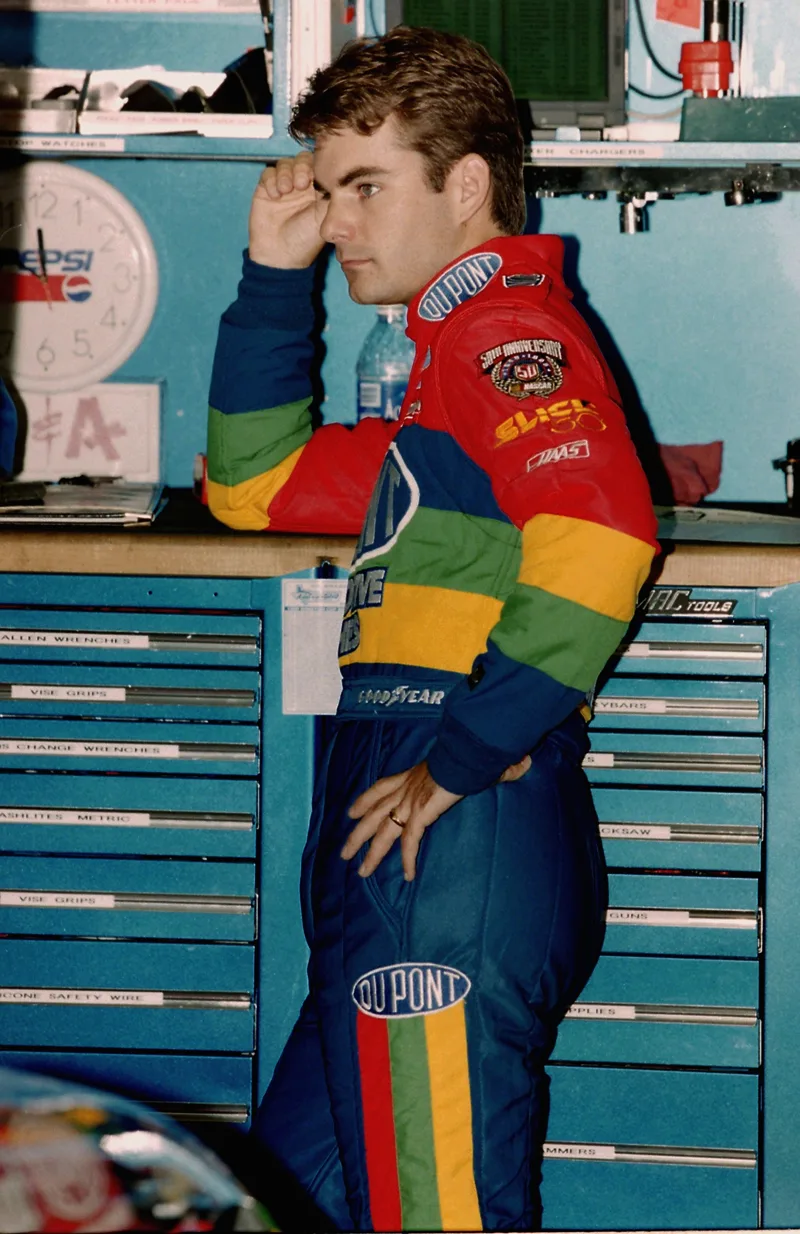
Mark Martin started on pole but was swallowed up by the pack on the backstretch of the first lap. Jeff Gordon passed Tony Stewart for third in turn one shortly after the green flag and took the lead, holding it for the first nine laps. On lap ten thirteen drivers made their mandatory pit stops, while Bobby Labonte and Jarrett stayed out.
Jarrett's decision to stay out followed a plan set by his crew chief, Todd Parrott. The plan was to pit only if Jarrett was running seventh or better, and Labonte's crew chief, Jimmy Makar, decided to use the same approach.
During the stops Martin accidentally struck his jackman, Mike Ehret, and he retired from the race. Mike Skinner also retired on lap ten with engine trouble, after dueling Gordon for the lead. Ehret was interviewed on the CBS broadcast and was reported to be fine.
On lap eleven Jarrett and Labonte rejoined the lead pack, and Sterling Marlin took the lead with his teammate Kenny Irwin Jr. running behind him. Irwin soon dropped to fourth as Rudd moved into second and Jarrett took third. The field then ran single file for about ten laps.
On lap 23 Jarrett pulled alongside Rudd and tried to pass, without success. The next lap Gordon made a daring move into turn one and passed both Rudd and Jarrett for second. On the final lap, Gordon got enough momentum to pass Marlin for the lead, but Marlin did not give up without a fight and nearly pushed Gordon into the infield.
As Marlin fell back, Jarrett drafted up to Gordon and made the pass exiting turn four. Jarrett cleared Gordon for the lead as the field approached the tri-oval and took the win by 0.261 seconds.
Behind the leaders, Marlin lost grip exiting turn four and slid up the track into the left rear of Bobby Labonte's car. Labonte spun down the track and collected Rudd, whose car then spun up the track into the outside wall. Rudd's car was thrown into the air and landed upside-down before sliding to a stop just short of the start-finish line. Rudd's nose also touched the right rear of Ken Schrader's car, sending Schrader into the wall.
Rudd was credited with 24 of the race's 25 laps, and he was unhurt and waved to the crowd. He had endured a violent flip in the same race in 1984. The race finished in the order Jarrett, Gordon, Marlin, Stewart, Lepage, Schrader, Rusty Wallace, Nemechek, Irwin Jr., Ward Burton, Bobby Labonte and David Green. Rudd, Skinner and Martin were the retirements.
The race took 20 minutes and 34 seconds to complete, at an average of 182.334 mph (293.438 km/h). It produced four lead changes among four drivers, with no cautions and no red flags.
Final classification
| Position | Driver | Team | Notes |
|---|---|---|---|
| 1 | Dale Jarrett | Robert Yates Racing | Passed Gordon exiting turn four; won by 0.261 seconds; $115,000 |
| 2 | Jeff Gordon | Hendrick Motorsports | Led the first nine laps and lost the lead on the final lap |
| 3 | Sterling Marlin | Team SABCO | Led from lap 12 until the final lap |
| 4 | Tony Stewart | Said he did not yet know when to move on restrictor-plate tracks | |
| 5 | Kevin Lepage | Finished on the lead lap | |
| 6 | Ken Schrader | Tagged by Rudd's nose and spun into the wall | |
| 7 | Rusty Wallace | Finished on the lead lap | |
| 8 | Joe Nemechek | Tied Gordon for the fastest practice lap | |
| 9 | Kenny Irwin Jr. | Ran behind Marlin for the early laps | |
| 10 | Ward Burton | Finished on the lead lap |
What did the drivers say after the race?
Jarrett celebrated in victory lane and earned $115,000. He explained the final move: he had a run on the outside, and if it failed he would not lose any points. He said that when he saw Gordon and Marlin go side by side, he knew they were giving him a chance, and that Bobby Labonte's car had stayed right with him and given him the push he needed.
Jarrett also said the Chevrolet teams had complained about their disadvantage during Speedweeks, but that their cars had looked good. Parrott described the pit road as chaos, where drivers on the outside had to reach their pit and drivers in the middle would not give any room.
Gordon, who finished second, said he had shot down to the bottom of the track on the final lap and got inside the cars in front of him. He had not expected it to work, and he was left wondering what he was doing in second place. Marlin, who finished third, said Rudd had made a run on Jarrett, which had given Gordon a way past.
Marlin also took the blame for the final-lap wreck. He had tried to pinch Gordon down, but Gordon had got under him, and his car then would not turn. He said he had thought he would miss Labonte for a split second, but that it was his fault and that he had got into him.
Stewart, who finished fourth, said the car had been decent but that he did not yet know when to move on restrictor-plate tracks. He was frustrated that a good car could not overcome the traffic. Rudd said he had seen daylight just before his move, but things had jumbled up and he had hoped nobody would hit him while he was upside-down.
Martin said he did not blame himself for the accident with Ehret but took responsibility for it. He said the brakes had got hot on the way in from the track and he could not stop in time. Ehret was treated and released from the infield care center with a lower right leg contusion.
A day after the Shootout, Joyner-Kersee-Roehrig Motorsports withdrew its #34 entry, which was to be driven by David Green, from the Daytona 500. The team was reportedly not impressed by Green's performance in the Shootout.