A drug suspension dispute, team mergers and new double-file restarts shaped a season that still ended with Jimmie Johnson's fourth straight championship.
The 2009 NASCAR Sprint Cup Series was the 61st season of stock car racing in the United States. Jimmie Johnson won a fourth straight title by 141 points over Mark Martin, and Chevrolet took the manufacturers' crown with 248 points.
The 2009 season was turbulent, with a drug suspension dispute, team mergers and closures and new double-file restarts. Jimmie Johnson still won a fourth straight championship, and Hendrick Motorsports took the top three places in the points table.
What was the 2009 NASCAR Sprint Cup Series?
This was NASCAR's 61st professional stock car season in the United States and the 38th of the modern Cup era. It included 36 races and two exhibition races, from the Daytona 500 to the Ford 400 at Homestead-Miami Speedway.
The final ten races formed the Chase for the Sprint Cup, and there were 41 full-time teams across the season. The season was also the last Cup season of the decade.
Chevrolet won the Manufacturers' Championship with 248 points, and Rick Hendrick took the Owners' Championship. Hendrick Motorsports also finished 1-2-3 in the final points standings, the first Cup team in the modern era to do so.
Johnson's fourth straight title came in a year of suspensions, mergers and new restart rules.
Who won the 2009 championships?
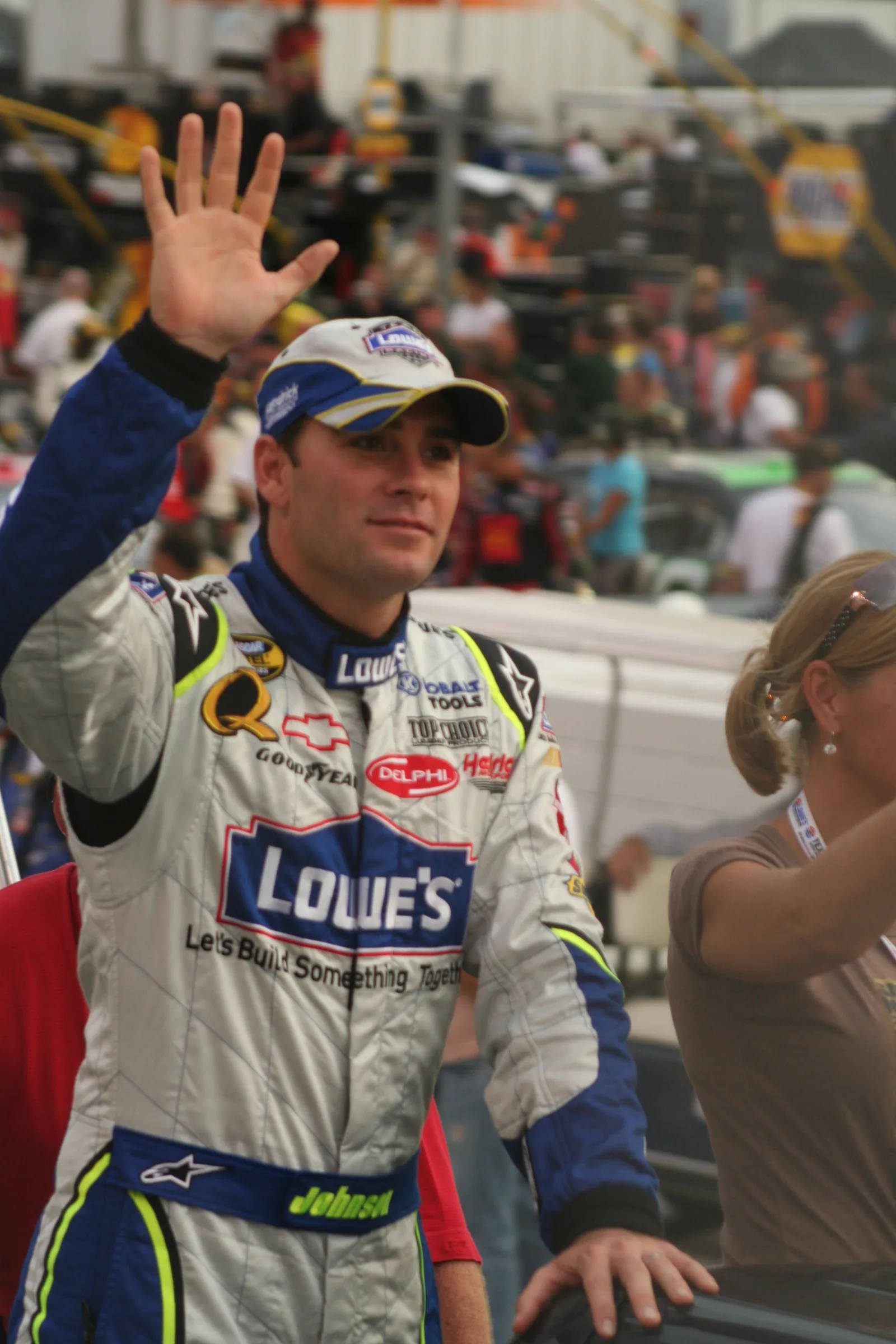
Jimmie Johnson won the Drivers' Championship at the final race, his fourth consecutive title, by 141 points over Mark Martin. He took the championship lead after winning the Pepsi 500 and held it for the rest of the season.
Martin finished second in the points for the fifth time in his career, and Jeff Gordon finished third behind his Hendrick teammates. It was the first time a single team had filled the top three places in the standings.
Johnson's consistency through the Chase carried the title, even though he had a difficult race at Texas.
How did the economy and sponsorship shape the teams?
The 2008 financial crisis forced cuts across the sport. Gas and diesel prices fell to nearly $2.00 per gallon, but corporate sponsors were reluctant to commit millions, so several teams merged, closed or sold. Ganassi and Dale Earnhardt, Inc. joined forces as Earnhardt Ganassi Racing.
The No. 40 team had already closed in July 2008 for lack of sponsorship. Petty Enterprises merged with Gillett Evernham Motorsports into Richard Petty Motorsports, and Bill Davis Racing was sold and renamed Triad Racing Development.
Yates Racing's No. 28 team ceased operations after the Food City 500 on March 22. The No. 8 team folded on April 7, which left Aric Almirola without a ride. Yates Racing and RPM announced a merger on September 10.
Penske Racing bought the No. 22 car, and its owners' points went to another team.
What happened to testing and manufacturer support?
NASCAR banned testing on its sanctioned tracks from November 14, 2008, as a cost-cutting measure, and it cancelled the Pre-Season Thunder event for 2009. Teams still used unsanctioned tracks such as Rockingham Speedway, and Goodyear continued to run tyre tests.
Rockingham stayed one of the few major tracks still available for private work. A fan event, the Richard Petty Driving Experience, kept some of the Pre-Season Thunder atmosphere, with fans riding in a two-seat stock car.
Teams also took on financial partners to stay afloat. In June 2008, Petty Enterprises sold a majority share to Boston Ventures, another sign of the economic strain on the sport.
Manufacturer support also shrank. General Motors' bankruptcy cut its financial support in the Nationwide and Truck series, and Chrysler's bankruptcy left several Dodge Sprint Cup teams without manufacturer support.
Ford, the healthiest of the automakers, kept funding at pre-crisis levels. Toyota made only a small cut before the season and none mid-season, while Dodge said its funding was on hold.
What were the double-file restarts?
Double-file restarts replaced single-file restarts at Pocono in June 2009. The entire field lined up two abreast, and the lucky dog rule applied for the whole race distance. Leaders and lead-lap cars started at the front, and the third-place car always restarted on the inside.
Before the change, the single-file window covered the final 20 laps rather than the final ten. The new procedure had already been tried in the All-Star race and in the Budweiser Shootout.
The change was made because ratings had slipped on the Fox portion of the season. The leader could choose the inside or outside lane, but the third-place car always started on the inside, and cars were only out of order for penalties, mostly for pit road violations. Double-file restarts began in the Nationwide Series on July 3 at Daytona, and the Truck Series was not expected to adopt them until the following year.
What happened in the Jeremy Mayfield case?
Jeremy Mayfield was suspended hours before the Darlington race for a substance abuse violation, and he said a prescription drug mixed with an allergy medicine had caused the positive test. ESPN later reported that he had tested positive for methamphetamines, and that was confirmed in court.
Mayfield sued NASCAR to lift the suspension. He said he had taken Claritin-D, an allergy drug, alongside Adderall, a prescription medication used to treat attention deficit disorder. A restraining order that would have let him race at Dover was ruled in NASCAR's favour, and his team withdrew from the race. He sold the team in late July to raise money for his legal defence.
NASCAR countersued Mayfield, accusing him of willfully violating the substance abuse policy, breaching a contract and defrauding competitors of earnings. Mayfield had earned a substantial sum in NASCAR earnings since May, and the sides disputed when he had started taking his allergy medicine.
During the controversy NASCAR randomly tested a group of drivers, officials and crew members during a rain delay at the Coca-Cola 600 over Memorial Day weekend. Some drivers said the testing process had become far slower than before.
On July 1 a federal court granted a temporary injunction that lifted the suspension, but NASCAR appealed. On July 24 the appeals court allowed NASCAR to re-suspend him after a second drug test, which NASCAR said was also positive.
The episode led to criticism of NASCAR for not publishing its banned substance list. Drivers later said drug testing had gone from a quick check to a much longer process that included identity verification.
How did the early races play out?
The Budweiser Shootout used a new format. Its field was made up of the top six teams from each manufacturer, plus a wild card entry from each, so the previous season's pole winners no longer set the list.
Matt Kenseth won the Daytona 500 after the race was halted by rain on lap 152 and called official. He won the Auto Club 500 a week later, which gave him two straight wins to start the year.
Kyle Busch won the Shelby 427 at Las Vegas after starting from the back following an engine change, and Kurt Busch led 234 laps for a dominant win at Atlanta. Kyle Busch then led 378 of 503 laps to win at Bristol after starting mid-pack.
Jimmie Johnson won at Martinsville in the 25th anniversary year of Hendrick's first Cup win. Jeff Gordon won at Texas for his first victory there, and Mark Martin ended a 97-race winless streak at Phoenix.
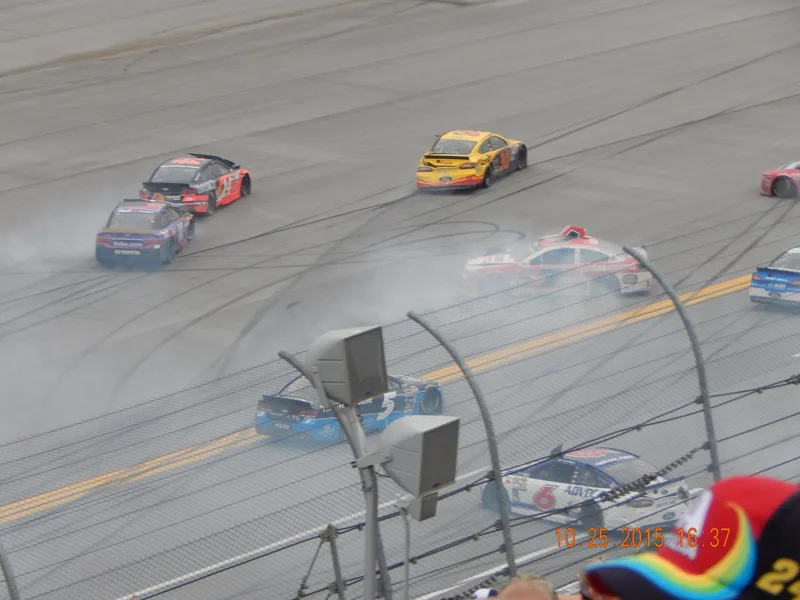
Brad Keselowski won the Aaron's 499 at Talladega in just his fifth start, after a last-lap crash that sent Carl Edwards into the catchfence. Kyle Busch won the Russ Friedman 400 at Richmond on his 24th birthday.
After his car came to rest short of the line, Carl Edwards climbed out and ran across the finish line on foot, a nod to the film Talladega Nights. He was credited with a result near the back of the field.
What happened in the late spring and summer?
Clint Bowyer's 83-race streak without a DNF ended at Darlington, and David Reutimann won the rain-shortened Coca-Cola 600, his first Cup win. Tony Stewart won the All-Star race, and later became the first owner-driver to win a points race since Ricky Rudd in 1998.
Johnson led 298 of 400 laps at Dover, and Joey Logano recorded his first Cup win at New Hampshire, in a race that rain shortened. That win also made him the youngest Sprint Cup winner on record.
Tony Stewart had also won the pole at Pocono, but he started at the back after crashing in practice, and he still went on to win the race.
At Michigan, Brian Vickers won the Carfax 400, the first victory for Red Bull Racing Team.
The 2009 Coca-Cola 600 ran only 340.5 miles, the shortest version of the race in its history, after rain stopped the race and it was never restarted.
How did the Chase races go?
Mark Martin won the Sylvania 300, his 40th and final Cup victory. Johnson then won at Dover, at Auto Club Speedway and at Charlotte.
At Texas, Johnson was caught in a lap 4 crash with Sam Hornish Jr. He finished 38th, and his lead over Martin fell to 73 points, which made the Homestead race a serious test.
At Phoenix, Johnson won and took a 108-point lead over Martin. Denny Hamlin won the Ford 400 at Homestead, while Johnson finished fourth to clinch the title.
How did the rookie race go?
Joey Logano was the clear favourite for Rookie of the Year, and he won at New Hampshire to become the series' youngest winner. Scott Speed and Max Papis, both former Formula One drivers, struggled to adjust to stock cars.
Logano had struggled early in the year before his breakthrough win. Speed and Papis found the stock cars far harder to set up than the open-wheel machines they knew, and neither won a race.
Which races and titles were the headline results?
| Title or race | Winner |
|---|---|
| Budweiser Shootout | Kevin Harvick |
| Daytona 500 | Matt Kenseth |
| Coca-Cola 600 | David Reutimann |
| Lenox Industrial Tools 301 | Joey Logano |
| Sylvania 300 | Mark Martin |
| Ford 400, Homestead-Miami | Denny Hamlin |
| Drivers' championship | Jimmie Johnson |