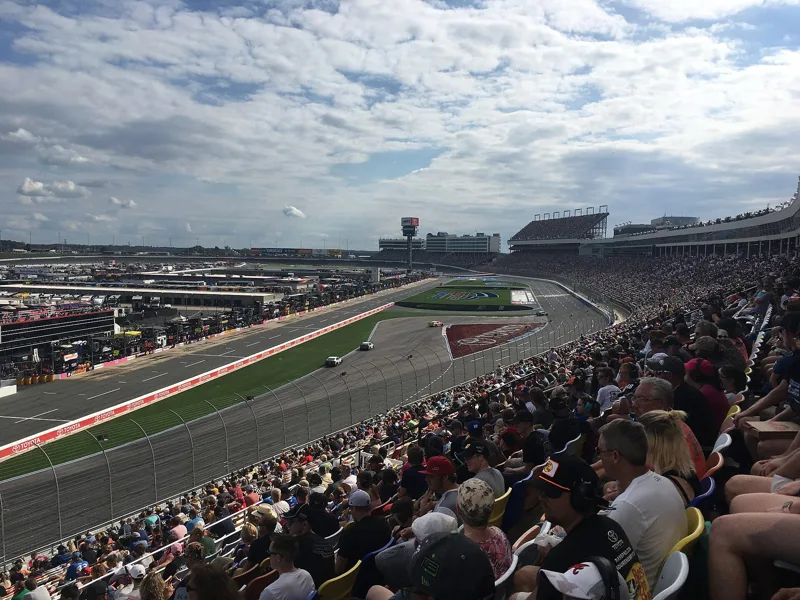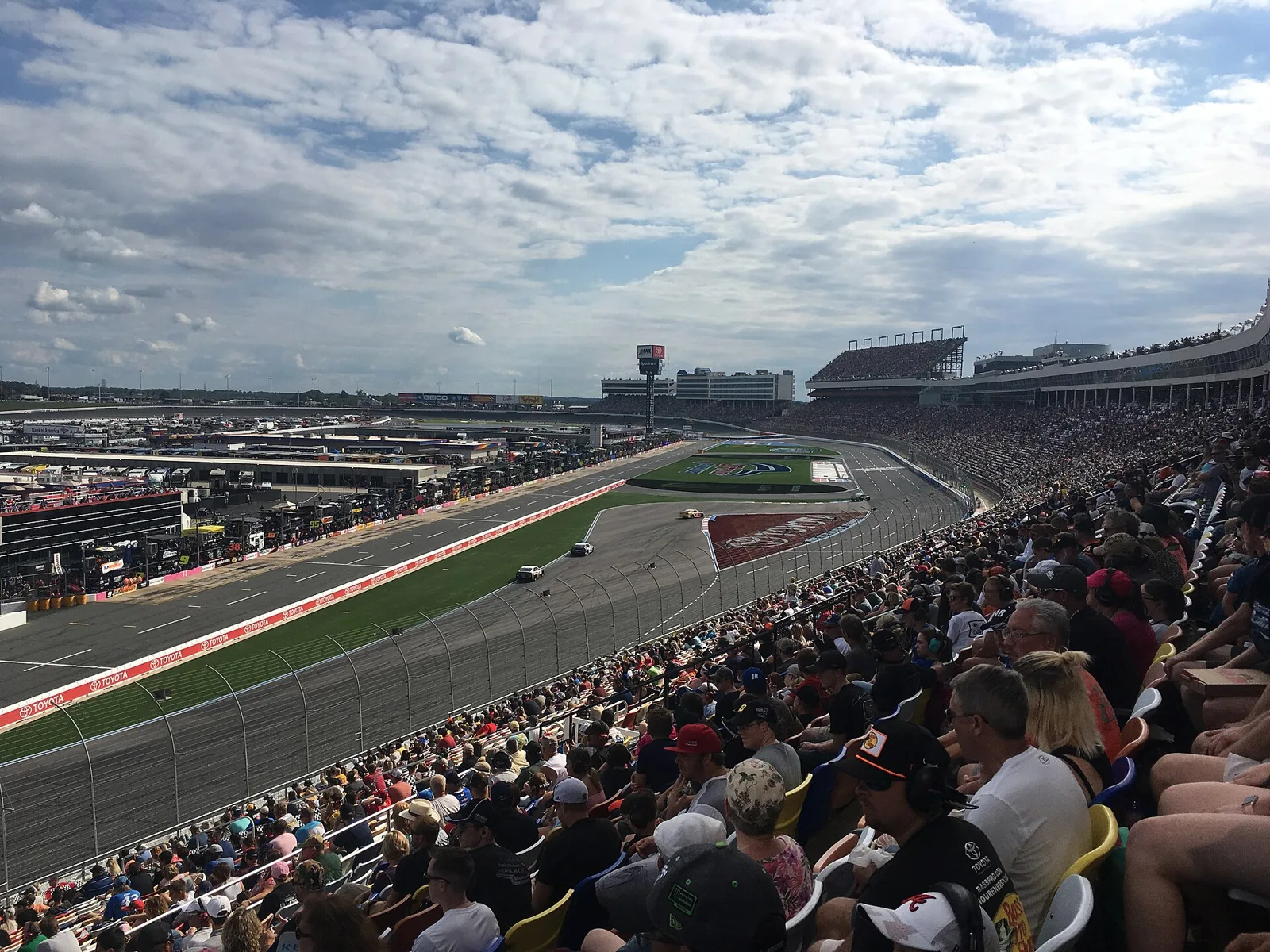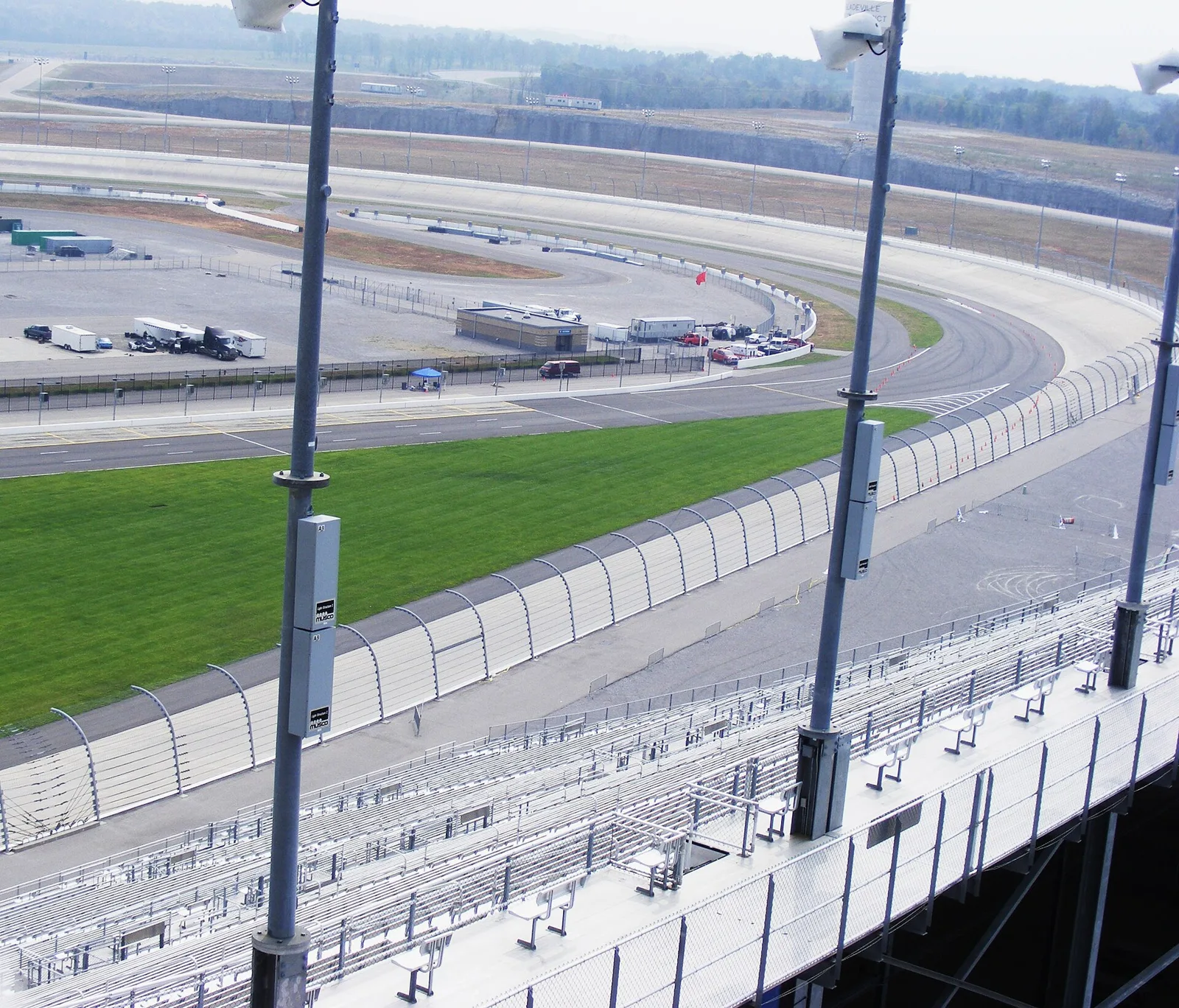
A 2001 concrete tri-oval near Lebanon, Tennessee, that sat largely idle for most of a decade, was sold to an industrial developer and then returned to NASCAR.
Nashville Superspeedway is a concrete tri-oval that opened in April 2001 near Lebanon, Tennessee. After a long period of disuse, Speedway Motorsports took control in 2021 and brought NASCAR's Cup Series back to the track.
Nashville Superspeedway is a 2.140 km (1.330 mi) tri-oval near Lebanon, Tennessee, that opened in 2001. It has a concrete racing surface, a road course built from the main track and infield, and a history that includes a long stretch of disuse before Speedway Motorsports brought NASCAR back in 2021.
The track's story runs from a 1997 plan to bring Winston Cup racing to Middle Tennessee, through a slow construction period, a decade of decline and a revival built on NASCAR. This article covers its origins, layout, owners, events and the safety debate that followed a 2023 crash.
When did Nashville Superspeedway open?
Nashville Superspeedway opened on 7 April 2001 after a planning and construction process that began in 1997 and was slowed by rezoning fights and funding gaps. Dover Downs Entertainment led the project, and the first races, an ARCA event and a Busch Series race, ran on 13 and 14 April 2001.
Plans were announced in November 1997 by Dover Downs Entertainment and Gaylord Entertainment for a 50,000-seat track costing $25-30 million. The developers hoped to attract Winston Cup races, but many observers were sceptical because the seating was small by the standards of the time.
Progress was slow. Landowners in Rutherford County refused to sell, and the project moved entirely to Wilson County after the Rutherford plan drew criticism. Wilson County approved the rezoning 22-3 on 21 December 1998, and a residents' group known as CRASH, short for County Residents Against Racetrack Havoc, sued in February 1999 over zoning.
The Tennessee General Assembly approved $15 million for infrastructure in March 1999. Groundbreaking took place in late August 1999, and the track had been officially named Nashville Superspeedway just before it.
Construction still had obstacles. A state analysis warned that the complex could harm the endangered Tennessee coneflower, and supporters argued that the plant could survive the work. Paving was finished in early November 2000, and the first test runs in March 2001 earned favourable verdicts from testers Tim Steele and Shawna Robinson. Operators also expanded the suites from an initial 24 to meet demand. By the end of construction Dover had spent $125 million on the first phase, although most of the planned development had not begun.
The track opened to the public with an open house on 7 April 2001. Drivers were on track five days later, and the first races saw Ken Schrader win an ARCA Re/Max Series event and Greg Biffle take a Busch Series race. Reaction was mixed, with complaints about a lack of grip, and the track was resurfaced between the first and second turns.
A concrete tri-oval that opened in 2001, sat idle for most of a decade and returned to NASCAR under a new owner.
How is the track laid out?
The oval is a tri-oval measuring 2.140 km (1.330 mi), with 14 degrees of banking in the turns, nine degrees on the frontstretch and six on the backstretch. A 2.897 km (1.800 mi) road course uses parts of the main track and an infield section, which allows a roval configuration.
Measurements differ by sanctioning body. The official NASCAR figure is 1.33 mi, whereas the IndyCar figure is 1.333 mi or 2.145 km. The surface is concrete, which places the speedway among three NASCAR tracks with that surface, alongside Dover in Delaware and Bristol in Tennessee.
The infield road course, built alongside the main track, first raced in July 2001. Plans for a drag strip, a short track and a dedicated road course were dropped, which left the tri-oval and the road course as the core of the complex.
Interstate 840 and Tennessee State Route 452 serve the site. The state built the route in 2000 to handle the traffic that the track would generate.
Why did most racing stop after the first decade?
Attendance stayed weak, the track never won a Cup date, and a $21 million bond debt from a 1999 deal weighed on the owners. Dover Motorsports closed the track for the 2012 season in August 2011, and racing did not return for nearly a decade.
By 2011 the track faced a list of problems. It carried $21 million of bond debt from a 1999 arrangement to extend sewer and water lines, attendance was poor, and Kentucky Speedway's arrival on the Cup calendar in 2011 ended hopes of a Cup weekend.
Dover Motorsports announced the closure on 3 August 2011, with none of the planned projects built apart from the tri-oval. The company hoped to sell the track, and rumours of an IndyCar return for 2013 came to nothing, and the site stayed shut through 2013 and 2014.
In March 2014 Dover representative Gary Camp said the only activity at the facility was testing.
Who owned the speedway while it sat idle?
A sale to NeXovation for $45.8 million, announced in 2014, collapsed when the buyer defaulted. Panattoni later bought the property for $44.7 million to build an industrial park that was ready soon afterwards.
On 30 May 2014 Dover Motorsports announced the sale to NeXovation, a Nashville technology company, for $45.8 million. Its chief executive, Robert Sexton, wanted the facility to run all year, hosting motorsports and technology events alike.
The deal was extended repeatedly. In March 2015 the buyer paid $400,000 for a further extension, and by the end of May the deadline had moved seven times. In July the company defaulted, and by August Dover had reopened the sale.
On 25 August 2016 Dover said it would sell the property to Panattoni, a development firm from California, for $44.7 million. Panattoni first kept the track but later bought land in phases, including about 147 acres in March for $5.1 million and a further 132 acres for $6.37 million that July.
Panattoni ruled out resuming motorsport, and the Speedway Industrial Park had opened by November, once the land had been sold in phases. In December 2019 journalist Larry Woody reported that Marcus Smith, the chief executive of Speedway Motorsports, had shown early interest in buying the track but chose to pursue the Fairgrounds instead.
How did NASCAR come back to Nashville?
Cup drivers called for a return in early 2020, and Dover Motorsports announced in June 2020 that it would hold Cup races at the track the following year. A renovation estimated at $8-10 million followed, and Speedway Motorsports bought the track out in late 2021 for $131.5 million.
In early 2020 drivers including Clint Bowyer and Chase Elliott called for the series to return to the Nashville area, though they preferred the Fairgrounds Speedway because it was closer to the city. Dover chose the superspeedway because the approval process was simpler.
An inspection found the track in excellent condition, and in August 2020 Dover appointed Erik Moses to run it. The facility held its first large-scale events in November 2020, and the next month Dover rebranded it.
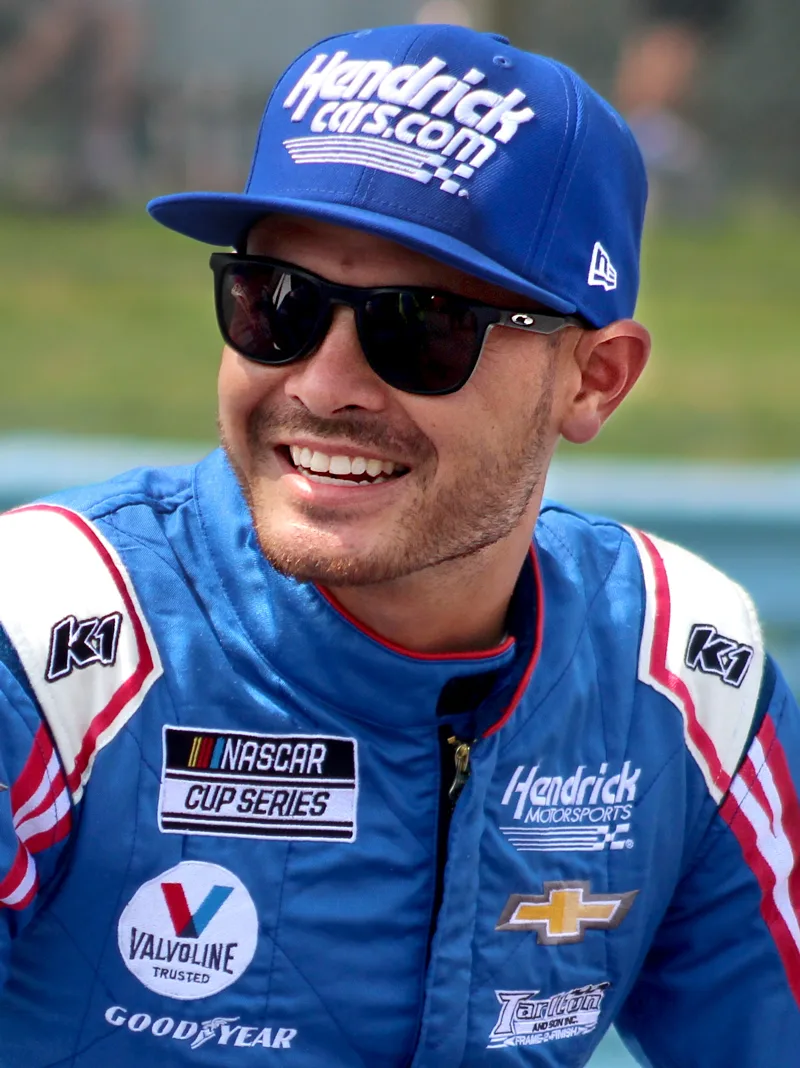
The first Cup Series race at the track was run on 20 June 2021, and Kyle Larson won it. Moses stepped down on 15 November 2022 to become chief executive of the Fiesta Bowl, and two weeks later the track named Matt Greci, its vice president of events and operations, as general manager.
What events does Nashville Superspeedway host?
The track hosts one NASCAR weekend a year, and its history also includes IndyCar racing and a street race that moved onto the oval. The list below covers the main series that have run there.
When the track opened, the O'Reilly Series race, the Sports Illustrated Resorts 250, and the Truck Series race, the Allegiance 200, both ran at the track between 2001 and 2011. Both races returned in 2021, and the Cup Series added the Cracker Barrel 400 that year.
In October 2009 Dover Motorsports moved a Truck Series date from the Memphis Motorsports Park, which it had closed, to Nashville. For a time the track therefore hosted two Truck Series races.
In 2011 pastor Joe Nelms offered a prayer before a race, speaking warmly of his family, NASCAR and its sponsors in an unusual manner, and the clip became an internet phenomenon. ESPN reporter David Newton criticised it, while Bleacher Report writer Richard Langford said it was memorable and not disrespectful.
The Indy Racing League announced its first races at the track in June 2000, and the event ran from 2001 until 2008. Talks for a 2009 date broke down in August 2008. In 2024 the Music City Grand Prix, a street race in downtown Nashville held since 2021, moved to the speedway because its layout would have clashed with construction at the New Nissan Stadium.
What safety debate followed the 2023 Ally 400?
In the 2023 Ally 400, Ryan Blaney crashed into the inside wall, which had no SAFER barrier. Blaney called the hit the hardest of his life, and NASCAR's senior vice president of competition, Elton Sawyer, criticised the lack of a proper barrier.
The crash revived debate about the Next Gen car, in use since 2022 and linked to several injuries in its first year, as well as about the track's walls. SAFER barriers, widely added to track walls after Dale Earnhardt's death, were missing from the inside barrier at this track.
Blaney described the impact in strong terms and advocated for a SAFER barrier to be added.
What are the key figures for Nashville Superspeedway?
| Measure | Figure |
|---|---|
| Opened | 2001 |
| Main track | 2.140 km (1.330 mi) tri-oval, NASCAR measurement |
| IndyCar measurement | 2.145 km (1.333 mi) |
| Banking | 14 degrees in the turns, nine on the frontstretch, six on the backstretch |
| Road course | 2.897 km (1.800 mi), using the main track and infield |
| Surface | Concrete, one of three NASCAR tracks with that surface |
| General manager | Matt Greci, named in late 2022 |
| Permanent seating | 25,000 as of 2021 |
| Seating with temporary grandstands | 38,000, reported in 2023 |
| Peak reported capacity | 50,000 |
| Track purchase from Dover Motorsports | $131.5 million, late 2021 |
| First Cup Series race | 20 June 2021, won by Kyle Larson |