A NASCAR road course debut, a fuel-saving finish and a Hendrick penalty that followed two days later.
Juan Pablo Montoya took the 2007 Toyota/Save Mart 350 at Sonoma on June 24, 2007, starting from 32nd on the grid. The 110-lap NASCAR race gave Montoya his first Nextel Cup Series win. Kevin Harvick finished second, 4.097 seconds adrift, and fuel strategy decided the result, with McMurray and Edwards running short.
Juan Pablo Montoya won the 2007 Toyota/Save Mart 350 at Infineon Raceway in Sonoma, California, starting from 32nd on the grid. It was his first Nextel Cup Series victory and the first by a foreign-born driver since Earl Ross in 1974. Fuel mileage decided the outcome, because Montoya saved enough to finish while several rivals ran short.
Who won the 2007 Toyota/Save Mart 350?
Juan Pablo Montoya won the 110-lap race on June 24, 2007, after a seven-lap duel with Jamie McMurray in the closing stages. Kevin Harvick finished second and Jeff Burton third, both for Richard Childress Racing. The margin of victory was 4.097 seconds, and Montoya took home $310,600.
Fuel mileage, not raw pace, decided a road course race that Montoya won from 32nd on the grid.
Why was Montoya considered a contender?
Montoya had left Formula One after 2006, and he was competing for Rookie of the Year in his first season of NASCAR racing. Infineon Raceway was new to him, yet several drivers considered him a serious threat to win. He said he hoped to have a real chance, and he expected Jeff Gordon to be his main rival on the day.
How was the Infineon Raceway course laid out?
The standard Infineon road course has twelve turns and measures 4.06 km (2.52 miles). In 1998 the track added a Chute that bypassed turns five and six, cutting the lap to 3.14 km (1.95 miles). Many drivers criticised the Chute and preferred the full layout, so in 2001 a 70-degree turn, 4A, replaced it and gave the circuit its current length of 3.20 km (1.99 miles).
The Chute was used only for NASCAR events, and this race was one of them. Infineon was one of two road courses to hold NASCAR races, the other being Watkins Glen International. The Sonoma race was the first of the season's two road course events and the sixteenth of thirty-six scheduled races in 2007.
How did practice set up the weekend?
Three practice sessions came before Sunday's race, one on Friday and two on Saturday, lasting 90, 50 and 60 minutes. Bobby Labonte set the pace in the first session, ahead of Robby Gordon and Kurt Busch. The early times showed how little the field had settled.
In cool Saturday afternoon conditions Montoya was fastest in the second session at 77.591 seconds, ahead of Harvick and Jeff Gordon. Stewart was fourth quickest and Fellows fifth. Denny Hamlin set the final practice time at 78.219 seconds, with Stewart second and Robby Gordon third.
The sessions were not without damage. J. J. Yeley damaged his car's sheet metal at turn ten, and Jeff Gordon spun and struck the turn eleven tyre barrier, sustaining minor damage. Hamlin's car had suffered an electrical fault that a new distributor cured. Edwards and David Ragan then flew to the Milwaukee Mile for the AT&T 250 Busch Series race and returned to Sonoma once it finished.
How did qualifying set the grid?
Fifty-two drivers entered the Friday evening qualifier, but NASCAR's procedure allowed only forty-three to race. Each driver ran two laps, and the starting order followed each driver's fastest time.
Jamie McMurray took his third career pole, and his first since the 2005 Pennsylvania 500, with a lap of 77.521 seconds. He had the advantage of recording it when conditions were cooler. Robby Gordon held the pole until McMurray's lap and then lined up alongside him on the front row. Earnhardt qualified third, Said fourth and Stewart fifth.
Nine drivers failed to qualify, including Ward Burton, Scott Riggs, Paul Menard, Brian Vickers and Kenny Wallace. Afterwards McMurray admitted he had been slightly nervous, expecting Juan Montoya and Ryan Newman to beat his time later in the session.
Which teams used road course specialists?
Several teams swapped their regular drivers for road course specialists. Michael Waltrip Racing put in Terry Labonte, a two-time NASCAR Nextel Cup Series champion, and P. J. Jones, the 1993 24 Hours of Daytona winner. BAM Racing chose Klaus Graf, the 2005 Trans-Am Series champion, and Hall of Fame Racing selected endurance driver Ron Fellows.
Front Row Motorsports picked former SCCA Trans-Am champion Brian Simo, while Butch Leitzinger, a race winner in the American Le Mans Series and Busch Series East, replaced Jeremy Mayfield at Bill Davis Racing. Scott Pruett withdrew from his Chip Ganassi Racing ride because of a scheduling conflict, and former V8 Supercars champion Marcos Ambrose pulled out of his JTG Daugherty Racing entry.
How did the race unfold?
Tina Coleman gave the invocation and Emmy Rossum sang the national anthem. Jerry Rice and Mike Wells, representing the Northern California Toyota Dealers, then gave the order to fire the engines. The race started at 5:22 p.m. McMurray kept the lead into the first corner, but Robby Gordon and Earnhardt moved ahead of him, and McMurray dropped to third. Montoya, who had started 32nd, was up to 20th by the thirteenth lap.
Cautions came early. Goossens, Kenseth and Kyle Petty made contact at turn eleven on lap two, and Goossens could not restart his car. Sterling Marlin's engine failed on lap 14, and the second caution followed one lap later. A brake duct found in turn four brought out the third caution a few laps later.
Green-flag pit stops began on the next lap. Hamlin took the lead on lap 37 by out-braking Johnson into turn eleven, and Stewart led from the forty-first lap. A piece of metal on the start-finish line then brought out the fourth caution on lap 44, and Edwards led at the lap-46 restart.
Robby Gordon passed Kyle Busch to move back into second, then passed Edwards on lap 56 to retake the lead. Jarrett and Johnny Sauter made contact on lap 53, and the fifth caution followed. Ragan spun on the chute on the following lap, bringing the sixth. Robby Gordon led the lap-59 restart, and McMurray moved into second by lap 62.
The seventh and final caution came when Sorenson spun at turn seven after clipping a curb. At the lap-70 restart Robby Gordon chose to stay out, and Stewart out-braked him for the lead. Stewart then pitted, which let McMurray reclaim the lead, and Earnhardt passed Robby Gordon at turn eleven. Robby Gordon and Stewart both pitted on lap 75, and Kenseth had spun into the grass that same lap before rejoining.
By lap 86 McMurray led Harvick, Montoya, Kyle Busch and Burton, and five laps later the gap between the top three was 1.3 seconds. Montoya passed Harvick on the inside at turn eleven on lap 92. Five laps after that McMurray reported that his engine kept losing power at several points on the circuit.
Montoya made contact with McMurray during one attempt, and on lap 102 he ran too deep into turn eleven. Two laps later he went around the inside entering turn four and took the lead for good. McMurray slowed on lap 97 to conserve fuel, and he was running low by the finish.
Stewart moved ahead of Jeff Gordon but slid and made contact with him. Edwards, running fourth, ran out of fuel two laps later and pulled onto pit road. Montoya saved fuel over the final two laps and crossed the line first.
How did pit strategy shape the finish?
Several drivers pitted under the caution flags, which let them take on fuel and tyres while the field was bunched together. McMurray and Edwards both made stops for fuel and tyres late in the race, and Said stalled during his stop, so his crew had to push-start the car.
Robby Gordon went the other way at the lap-70 restart, staying out to keep the lead. That choice kept him at the front for a long stretch and gave him 48 laps led overall, but his fuel ran short before the finish and he dropped to sixteenth. Harvick's later remark that the strategy won it for Montoya points to the same lesson: the drivers who could make their fuel last were still in contention at the end.
Final classification
| Finish | Driver | Detail |
|---|---|---|
| 1 | Juan Pablo Montoya | Started 32nd; first Nextel Cup win |
| 2 | Kevin Harvick | Passed by Montoya on lap 92 |
| 3 | Jeff Burton | Richard Childress Racing teammate of Harvick |
| 4 | Clint Bowyer | Top ten finish |
| 5 | Greg Biffle | Top ten finish; found it hard to overtake |
| 6 | Tony Stewart | Led at the lap-70 restart |
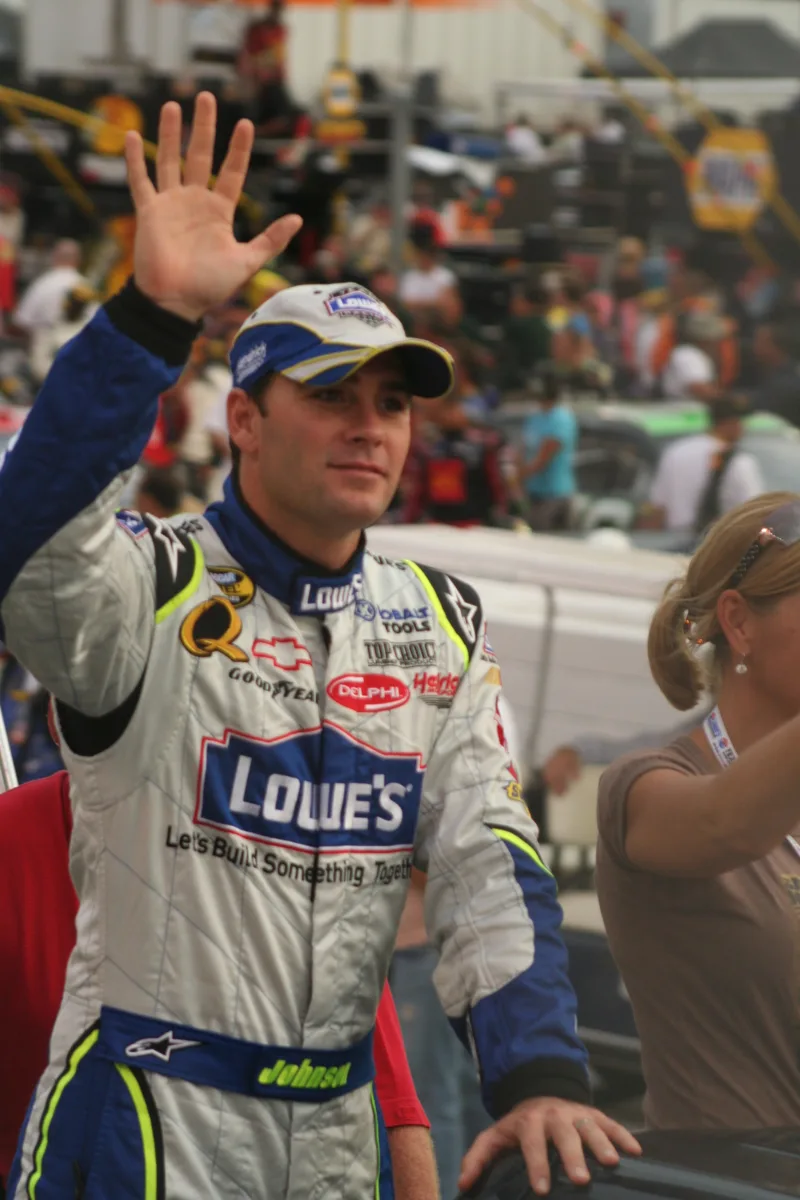
| 7 | Jeff Gordon | Penalised two days later with Jimmie Johnson |
| 8 | Kyle Busch | Top ten finish |
| 9 | Said | Top ten finish |
| 10 | Denny Hamlin | Top ten finish |
| Sixteenth | Robby Gordon | Led 48 laps, the most of any driver |
What did the win mean for Montoya?
Montoya became the first foreign-born driver to win a Nextel Cup race since Earl Ross took the 1974 Old Dominion 500. He was also the first Hispanic winner in the series, and the victory gave Chip Ganassi Racing its first win since October 2002.
He collected $310,600 in victory lane. Montoya said he felt more relieved than excited, and he called it the biggest thing he had done, adding that open-wheel racing was where he had been expected to win.
Harvick, who finished second, thought Montoya had been short of fuel for the full distance. He described Montoya as a great road racer who was not the fastest car on the day, and said the strategy had won it for him.
Which drivers were disappointed?
Robby Gordon led 48 laps, more than any other driver, but he finished sixteenth after running short of fuel. He had started on the front row and hoped to fix his fuel mileage before the Watkins Glen road course later in the season.
Burton said the team had worked hard on fuel mileage across the previous year and this year, and that the effort had paid off with a competitive run all race long. Greg Biffle, fifth, said his car felt good but overtaking was difficult. Jeff Gordon credited crew chief Steve Letarte and the team for calling the pit strategy well enough to climb from far back into the top ten.
What penalties followed for Hendrick Motorsports?
Two days after the race, Hendrick Motorsports was penalised for car parts on the cars of Jeff Gordon and Jimmie Johnson. Crew chiefs Steve Letarte and Chad Knaus were fined $100,000 and suspended for the next six races, and both were placed on probation.
NASCAR director John Darby said flaring on Johnson's and Gordon's front fenders had made them one inch wider than the rules allowed. The penalties also removed 100 driver and owner points from Rick Hendrick, Gordon and Johnson, and the probation ran until December 31, 2007.
Hendrick Motorsports announced on June 28 that it would not appeal. Johnson and Gordon accepted the decision while calling the penalties harsh.
How did the championship look afterwards?
Gordon kept the Drivers' Championship lead with 2,438 points, ahead of Hamlin in second. Kenseth and Burton moved up to third and fourth, Johnson fell to fifth, and Stewart passed Edwards for sixth. Harvick and Bowyer were eighth and ninth, and Kyle Busch, Truex and Earnhardt completed the top twelve.
Chevrolet held its Manufacturers' lead at 135 points, with Ford second on 86. Dodge stayed third and Toyota fourth. Chevrolet led Ford by 49 points with twenty races remaining, and the race drew 6.5 million television viewers.