From a 1983 Brescia start as Brixia Motor Sport to five years of Formula One with Dallara chassis, then a long run of Ferrari, Porsche and Aston Martin GT and endurance cars.
BMS Scuderia Italia was an Italian racing team founded by Giuseppe Lucchini in Brescia in 1983. It raced in Formula One from 1988 to 1993, then built a long career in touring cars, sports cars and FIA GT, with Ferrari and Aston Martin machinery.
BMS Scuderia Italia is an Italian racing team that Giuseppe Lucchini founded in Brescia in 1983 under the name Brixia Motor Sport. It entered Formula One in 1988 and raced there until 1993, after which it moved into touring cars and sports car racing. Its manufacturer partners over the years ranged from Alfa Romeo and Lancia to Ferrari, Porsche and Aston Martin.
The team's history falls into three chapters: a climb through Italian rallying and touring cars, five seasons in Formula One on a tight budget, and an endurance and GT career that brought several championships. This guide covers each chapter in turn.
How did the team begin in Brescia?
Lucchini's motor racing career started in the late 1970s with Osella. He then joined Mirabella Racing, where he managed operations in Italy's Group 6 series and in the World Endurance Championship. In 1983 he decided to form a team of his own and named it after the Latin name of Brescia.
Brixia Motor Sport began in the Italian Rally Championship with an Alfa Romeo GTV6. It switched to a Lancia 037 in 1985 and returned to Alfa Romeo in 1987, when it expanded into the World Touring Car Championship with the Alfa Romeo 75. Those early years taught the team how to run several cars in a competitive series.
A small Italian outfit that entered Formula One on a shoestring and then reinvented itself as a specialist in Ferrari and Aston Martin endurance racing.
Why did the team move into Formula One?
After Alfa Romeo's exit from touring car racing in 1987, Lucchini looked to Formula One for the following year. Brixia struck a deal with Giampaolo Dallara to build a new chassis, drawing on the team's earlier Formula 3000 entry. The outfit was renamed BMS Scuderia Italia for its Formula One debut.
Dallara was the listed constructor for championship purposes. The team hired Vittorio Palazzani, a former owner of Scuderia Mirabella, as sporting director, and Sergio Rinland designed the F188 and served as chief engineer. Cosworth supplied the DFZ V8, and Alex Caffi, an Italian, was hired as the sole driver.
How did the 1988 and 1989 seasons go?
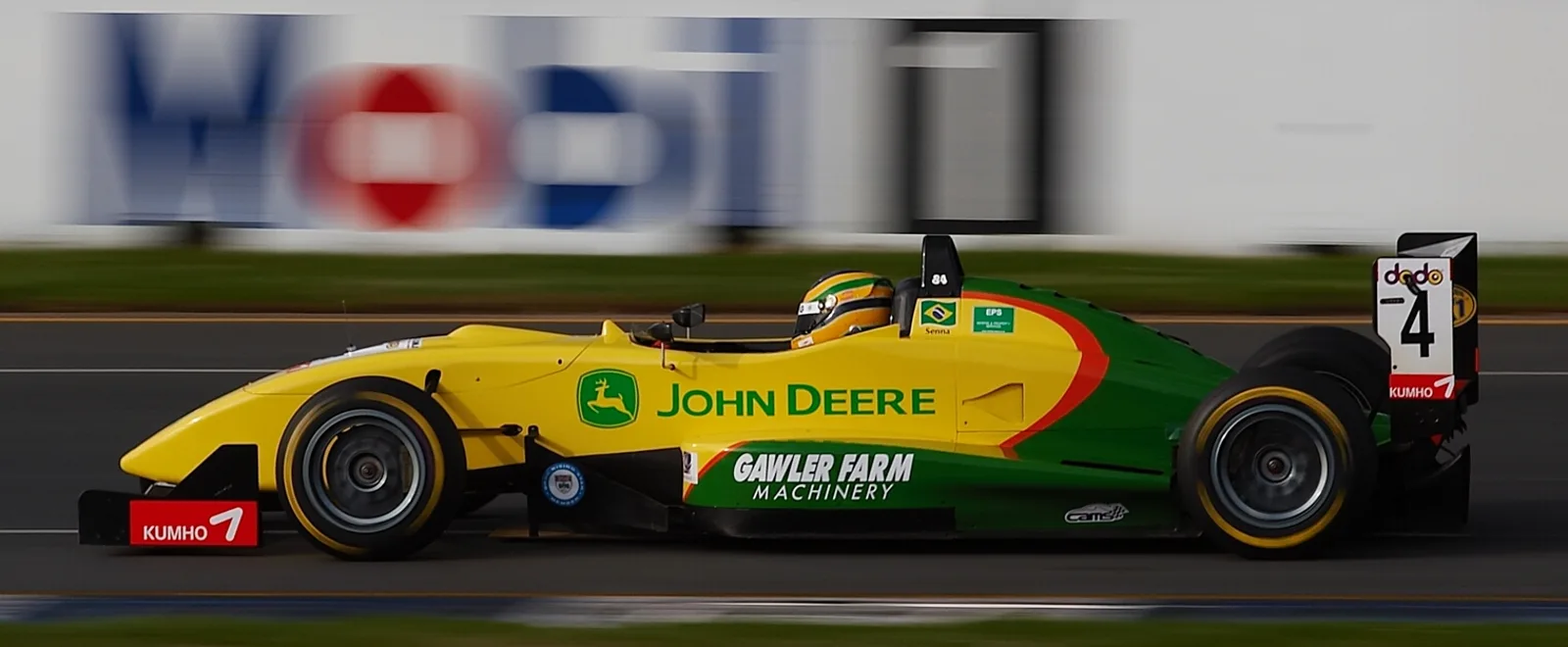
The F188 was finished late, so for the Brazilian opener the team fielded a Dallara Formula 3000 machine instead. Caffi scored no points in the opening year, but the team qualified for fourteen of sixteen races. His best finish was seventh at the Portuguese Grand Prix, one place outside the points.
For 1989 the team added Andrea de Cesaris alongside Caffi, and the new F189 was the work of Mario Tolentino. Caffi took the team's first points with fourth place at Monaco. In Canada De Cesaris finished third for the team's first podium, while Caffi was sixth, and Caffi also qualified third in Hungary. Pooled across both cars, those eight points left the Dallara name in eighth among constructors.
What happened to the team in 1990 and 1991?
The 1990 season was harder. Team manager Patrizio Cantu left, former Ferrari engineer Pierpaolo Gardella took over, and Caffi departed for Arrows. Emanuele Pirro became the second driver, with Gianni Morbidelli racing the first two rounds while Pirro was unwell. The team scored nothing and completed only seven of sixteen Grands Prix.
For 1991 Lucchini replaced Tolentino with Nigel Cowperthwaite, and the F191 ran on Judd V10 engines instead of Cosworth units. JJ Lehto took third at the San Marino Grand Prix, which delivered the team's first points of the year, and Pirro scored sixth at Monaco. Dallara finished eighth once more.
How did the team fare in its final years in Formula One?
In 1992 Lucchini secured year-old Ferrari V12 engines, and Pierluigi Martini replaced Pirro. Two sixth-place finishes for Martini, at the Spanish and San Marino Grands Prix, were the only points the team earned that year. That left Martini sixteenth in the drivers' standings and Dallara tenth among the constructors.
At the close of 1992 Lucchini said the 1993 cars would come from Lola in Britain, fitted with Ferrari engines. The team signed Michele Alboreto and the rookie Luca Badoer and secured sponsorship from Chesterfield cigarettes. The switch did not pay off. The chassis was uncompetitive, and a rule limiting the grid to 25 starters meant Alboreto and Badoer often struggled to qualify. Badoer's seventh place at San Marino was the best result of the year, and it put the team ahead of Tyrrell among the constructors.
By late in the year money was tight, and the team pulled out of the final two races in Japan and Australia. The team had already attended the 1993 Formula One Indoor Trophy, where it was knocked out in the semi-finals. Lucchini then turned to a merger, since Minardi also faced money problems. The two combined for 1994, and the merged operation earned points again in 1994 and 1995 before Lucchini left to focus on other programmes.
What did the touring car years look like?
After leaving Formula One, the team took on Nissan's Primera for the new German Super Tourenwagen Cup in 1994. The move gave the squad a new category to learn. Michael Bartels and Ivan Capelli finished sixth and eleventh in the drivers' championship. In 1995 the team expanded to three cars, with Capelli, Sascha Maassen and Kieth O'Dor.
He took the team's sole win of 1995 at AVUS and ended the championship tenth. A collision during the second AVUS race that same weekend claimed his life, a tragedy that overshadowed the season. Anthony Reid replaced him in 1996, when the team chose not to run its full line-up, and Maassen was the team's best-placed driver with sixteenth place.
The team briefly returned to touring cars in 1998, entering a pair of Alfa Romeo 155s in the Italian Superturismo Championship for Christian Pescatori and Emanuele Moncini. Lucchini then withdrew from that series the following season.
How did the team's sports car programme develop?
Lucchini became one of the first customers for Porsche's 911 GT1 in 1997. Pierluigi Martini and Christian Pescatori shared the car, and their best finish was sixth at Helsinki, which earned a single point. That year also brought the team's first start at Le Mans, where Brazilian Antonio Hermann de Azevedo joined Martini and Pescatori.
In 1999 the team bought two Ferrari 333 SP prototypes for the Sports Racing World Cup. Pergusa produced a win for Pescatori and Moncini, who finished third and fourth in the drivers' table. The team was second in the teams' table, fourteen points behind JB Racing. It finished second again in 2000, and in 2001 it won the teams' title in the renamed FIA Sportscar Championship by 22 points, while Marco Zadra took the drivers' crown.
What did the FIA GT years achieve?
For 2002 the team returned to the FIA GT Championship with two Prodrive-built Ferrari 550 Maranellos. Andrea Piccini and Jean-Denis Deletraz won three races in a row early in the year and added a fourth at Estoril to close the season. Even so, several races without points left the team fourth in the teams' table.
In 2003 a third car ran under the Care Racing banner, and new technical director Marco Gadola joined the operation. The team won eight of ten races that season and took the teams' title for BMS Scuderia Italia, with the Care entry third in its own table. The title came back in 2004, when Lilian Bryner became the first woman to win an international 24-hour race, at Spa.
Lucchini then moved the team into endurance racing. The switch showed how far the focus had moved away from single-seaters. In 2005 two Ferraris ran in the new Le Mans Endurance Series and the Italian GT Championship, and both series produced teams' titles. The 550s also returned to Le Mans. A crew of Gollin, Cressoni and Ramos won the opening Le Mans Series round, and Pescatori, Bartyan and Seiler took two of the next four events. In the Italian GT series the team won five of seven races, and it took two GT2 wins with a Ferrari 360 Modena GTC that it ran alongside the outfit Racing Team Edil Cris.
How did Aston Martin and Porsche shape the later years?
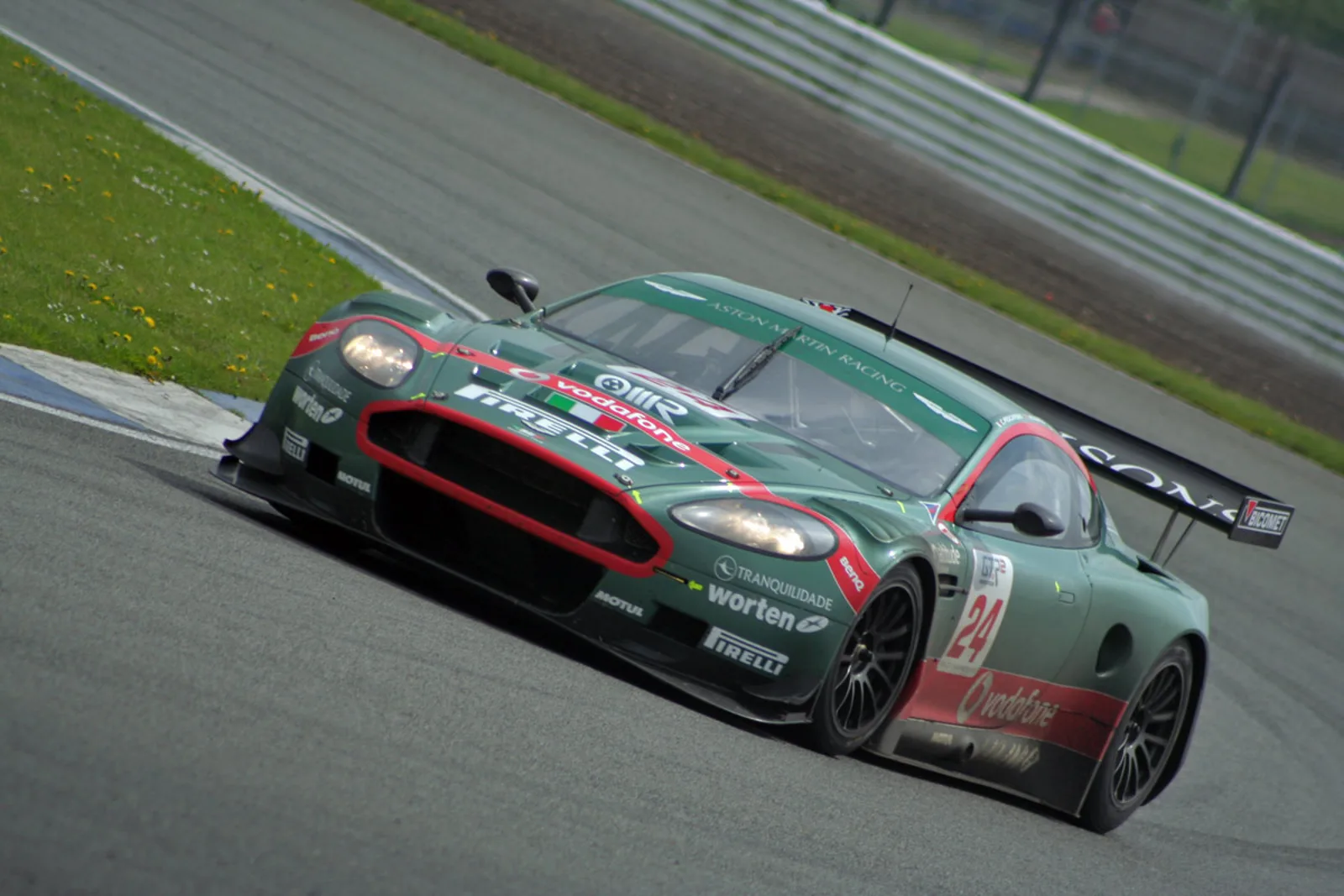
In 2006 Prodrive picked BMS Scuderia Italia as one of two teams to run factory-backed Aston Martin DBR9s, and the team entered the FIA GT Championship. The squad could not win a race, but it kept scoring points and finished second in the teams' table. Its lone Le Mans entry crashed heavily after only three laps.
For 2007 the team stayed as Aston Martin's main GT1 entry and also bought a Porsche 997 GT3-RSR for the GT2 class. Porsche factory driver Emmanuel Collard shared that car with Matteo Malucelli and won a class at the Spa 24 Hours. The DBR9 finished eleventh overall at Le Mans that year. The GT1 operation went winless and placed sixth in the teams' table, while the DBRS9 won the final FIA GT3 event of the year and the team took third in that category. The Aston Martin partnership ended after the season.
Where does the team stand today?
After the Aston Martin deal ended, the team turned to Ferrari F430s for the GT2 class, and its two entries finished second in their class at Le Mans in 2008 and 2009. The Brixia Racing name survived as a separate outfit, founded by Marcello Zani and Matteo Malucelli to focus on FIA GT3 and national GT racing.
Key results at a glance
| Season | Formula One highlight | Team standing |
|---|---|---|
| 1988 | Qualified for fourteen of sixteen races; best finish seventh at the Portuguese Grand Prix | No points scored |
| 1989 | Third for De Cesaris at the Canadian Grand Prix | Eighth, with eight points |
| 1990 | Seven of sixteen Grands Prix completed | No points scored |
| 1991 | Third for JJ Lehto at the San Marino Grand Prix | Eighth again |
| 1992 | Two sixth-place finishes for Pierluigi Martini | Tenth for Dallara |
| 1993 | Seventh for Luca Badoer at the San Marino Grand Prix | Withdrew from the last two races |