BMW's V12 LMR took the win, but three Mercedes accidents and a rewritten rulebook dominated a race that many still rank among the decade's best.
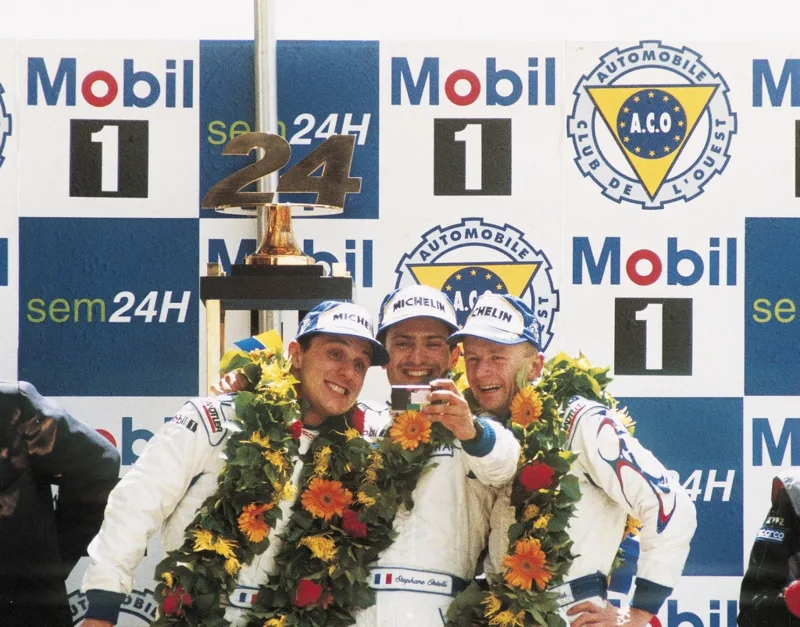
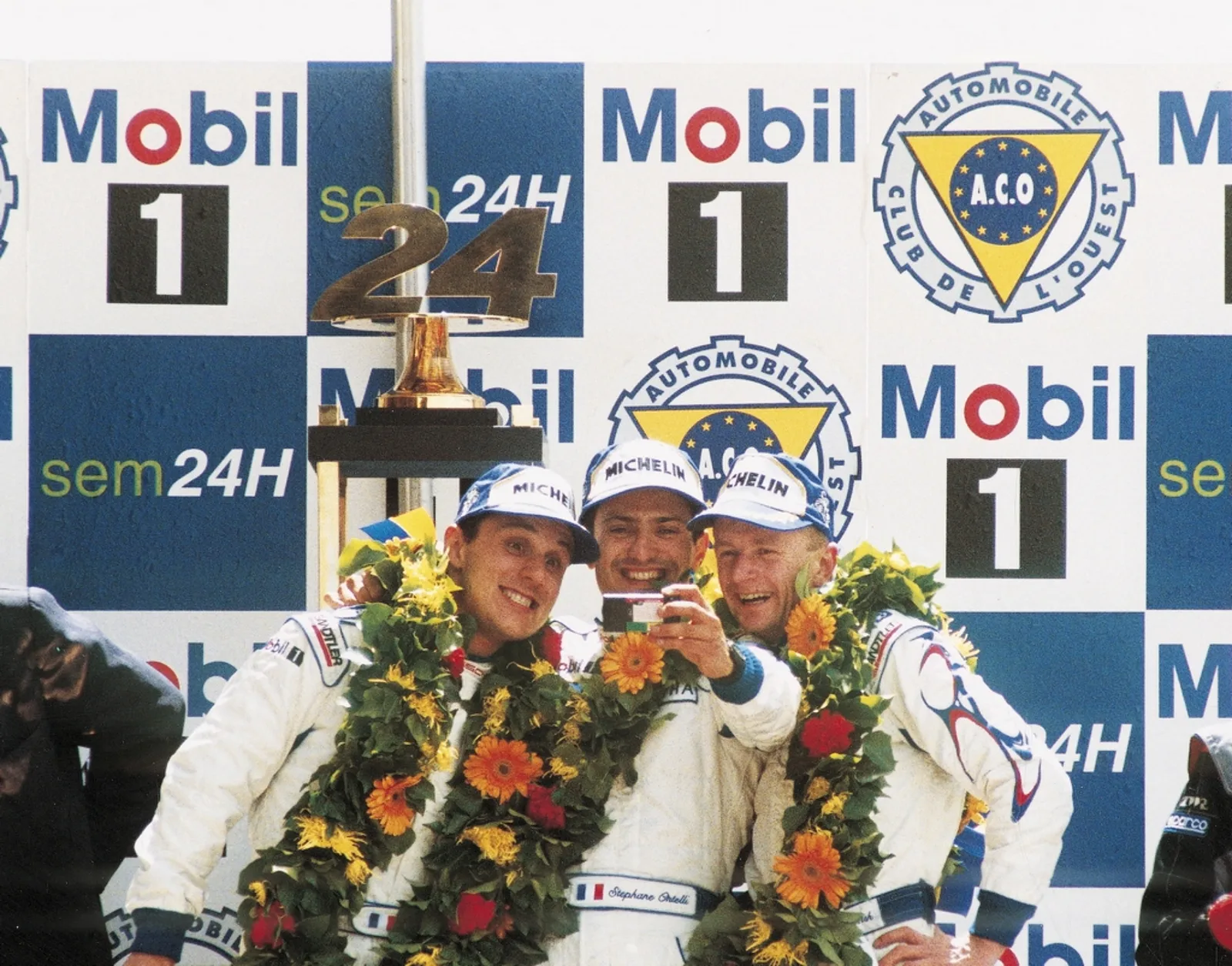
The 1999 24 Hours of Le Mans, the 67th running, was won by the BMW V12 LMR of Yannick Dalmas, Pierluigi Martini and Joachim Winkelhock. It took place on 12 and 13 June 1999 at the Circuit de la Sarthe, and three Mercedes accidents overshadowed the win.
BMW won the 1999 24 Hours of Le Mans with its V12 LMR, a prototype driven by Yannick Dalmas, Pierluigi Martini and Joachim Winkelhock. Commentators lauded the race as one of the decade's best, but three Mercedes accidents overshadowed the victory. New regulations had also drawn the GT and prototype classes much closer together.
What did the 1999 rule changes do to the classes?
The Automobile Club de l'Ouest renamed its LM-GT1 class LM-GTP and dropped the homologation approval that had applied to it. Prototypes and GTP cars were now treated as near equivalents, with the main difference being that GTP cars were closed-top. Traction control and ABS brakes were banned, and so were automatic gearboxes and electronic or hydraulic differentials.
Officials acknowledged that the big works teams had been treating the GT rules as a formality. Both classes were limited to a maximum width of 200 cm, and the flat-bottom floor had to run the full width of the car. Turbocharged engines were capped at 4.0-litres, while normally aspirated maximums stood at 6.0-litres for prototypes and 8.0-litres for GTS cars.
Fuel tanks were standardised at 90 litres, and tyre widths differed, with prototypes allowed 16-inch wheels and GTP cars limited to 14-inch. The prototypes were then split into two divisions, the lighter one at 650 kg and the heavier at 900 kg. The LM-GTS and LM-GT classes carried a minimum weight of 1100 kg.
A race lauded as one of the decade's best, decided in the final hour by a puncture.
Who lined up for the 1999 race?
The 1999 field was dominated by three German manufacturers and two Japanese teams. Porsche's works team was absent after its 1998 victory, and its place was taken by Audi, run by the Volkswagen Group. Mercedes-Benz, BMW and Audi faced Toyota and Nissan, with Panoz and Courage as the dark horses.
Toyota, Mercedes-Benz, BMW, Audi, Nissan, Panoz and Riley and Scott all arrived with major factory commitment. Prototypes made up the biggest group, with 20 qualifiers, while the new LM-GT class drew only four Porsche entries. The number of turbo engines dropped noticeably that year. The international prototype series, now called the Sports Racing World Cup, added a ninth round at Kyalami, and the ACO gave automatic entries to class winners at the Petit Le Mans.
That automatic entry was a sign of how closely the ACO was working with Don Panoz and his new American Le Mans Series. Class winners at the American flagship race earned an automatic place at Le Mans, which tied the two calendars together more firmly.
Pit work was tightly policed. Only four people could work on a car in the pit lane, although an unlimited number could help in the team garage, and refuelling allowed nothing beyond driver changes and cleaning. The circuit itself changed as well. New grandstands went up beside the ACO offices, the track became the first with complete remote camera coverage, and the start time was the standard 4pm, with no television clash that year.
The organisers also added an evening concert, headlined by The Wailers, the band of the late Bob Marley. During work to extend the infield commercial area near the Dunlop curve, a 25 kg unexploded bomb from the Second World War was found and removed.
Elsewhere, the La Filiere Elf team returned for a fourth year, now working with Henri Pescarolo's new Pescarolo Promotion Racing team. That team ran a C50 with Porsche engines sourced from Joest Racing, and it drove the car with Michel Ferte and Patrice Gay. The Ferrari 333 SP, meanwhile, was increasingly uncompetitive, and only one entrant brought it to Le Mans. Philippe Gache and Thierry Lecourt, who had been appointed the Riley and Scott agents in Europe, ran a works-supported Mark III Series 2 with a transverse Hewland gearbox in place of the longitudinal unit, which lowered the chassis.
How did BMW rebuild its prototype after 1998?
BMW hired Graham Humphrys as chief designer after a disappointing 1998 debut, and the new car was again built by Williams Grand Prix Engineering. Only 68 of the almost 3500 components carried over into the new V12 LMR. The upgraded 6.0-litre V12 could be tuned to 570 bhp and reach 325 kph.
The bodywork gained a Formula One-style roll bar and an offset airbox that fed air to the rear wing more efficiently. The chassis was a new carbonfibre and honeycomb monocoque with the engine set further back, and ballast was needed to reach the required 900 kg. The works cars ran under Team Schnitzer, with Charly Lamm in charge and BMW Motorsport directors Mario Theissen and former Formula One winner Gerhard Berger involved.
Team Schnitzer had reason for confidence. JJ Lehto, Jorg Muller and Tom Kristensen had won the Sebring 12 Hours in March, but that winning car had been wrecked at Sebring and the one at Le Mans was a new chassis. Three cars went to pre-qualifying and only two reached race week, the one left out being a BMW Art Car by the artist Jenny Holzer.
Two of BMW's 1998 chassis passed to the independent teams of Thomas Bscher and Kazumichi Goh. Bscher returned with David Price, Steve Soper and Bill Auberlen, while the Goh car was driven by Hiro Matsushita, Hiroki Katoh and Akihiko Nakaya. Both cars kept their 1998-spec engines.
The old prototype's disappointing debut had demanded a full overhaul after summer testing. The new bodywork was designed to improve downforce, and its roll bar and airbox were the main visible changes from the 1998 car.
Audi, Nissan and Courage bring new prototypes
Audi's R8R was built around a new 3.6-litre turbo engine, a race engine unlike any the group had built in 60 years. Twin Garrett turbos and air-inlet restrictors held it to 550 bhp. The hull came from Dallara, and Tony Southgate completed the design after Giampaolo Dallara recommended him for the job.
Joest Racing ran the Audi cars, a team that had already won Le Mans five times outright. Michele Alboreto led a squad of experienced touring-car drivers that included Rinaldo Capello, Laurent Aiello, Emanuele Pirro, Frank Biela and Didier Theys. The cars had raced at Sebring first, finishing third and fifth before new chassis were built for Le Mans.
Courage's C52 was an evolution of the C51, rebuilt from two existing chassis. It used the 3.5-litre twin-turbo V8 that had first been tried in the Nissan R390 GT1, and moving from Michelin to Bridgestone tyres meant reworking the suspension and rear diffuser. Courage's line-up included Alex Caffi, Andrea Montermini and Domenico Schiattarella, all former Formula One drivers. The NISMO works team entered the second C52, driven by Didier Cottaz, Marc Goossens and Fredrik Ekblom.
Nissan's position was less comfortable. The economic downturn in Japan was hurting major companies, and the group was in talks with Renault. NISMO still chose to make a final attempt at Le Mans by switching to prototypes with the R391, which used the VRH50A, a normally aspirated 5.0-litre V8 developed from the 4-litre Infiniti engine then used in the Indy Racing League. G-Force Precision Engineering in the UK built the car, and Nigel Stroud, Doug Skinner and Chris Rushforth brought experience from the Panoz GTR-1 project. Aguri Suzuki and Masami Kageyama returned to the driving line-up, having been among the first Japanese drivers on the Le Mans podium the year before.
How did the race unfold through the night?
Two cars each from Toyota, Mercedes and BMW fought for the lead early on. After Mercedes withdrew its team and the leading Toyota dropped back with gearbox issues, a close three-car battle continued into the night. At 3am Thierry Boutsen crashed at the Dunlop curve, handing the BMW works cars a sizeable advantage.
That comfortable margin did not last. At midday the throttle of JJ Lehto's leading BMW stuck open, and he was pitched violently into the track barriers. The race tightened again, and the last four hours became a contest between the all-Japanese Toyota crew and the BMW running on the same lap.
The final hour settled it. A high-speed puncture sent the Toyota into the pits for seven minutes, and the BMW crossed the line first. The Toyota's gearbox problems and the Lehto accident had already shaped the day, but the tyre failure was the decisive blow.
Among the GTS cars, the renamed class was a separate contest. Chrysler Vipers ran at the front there, and the works ORECA team took the first two places ahead of the customer cars behind them.
Three Mercedes accidents cast a shadow over the race
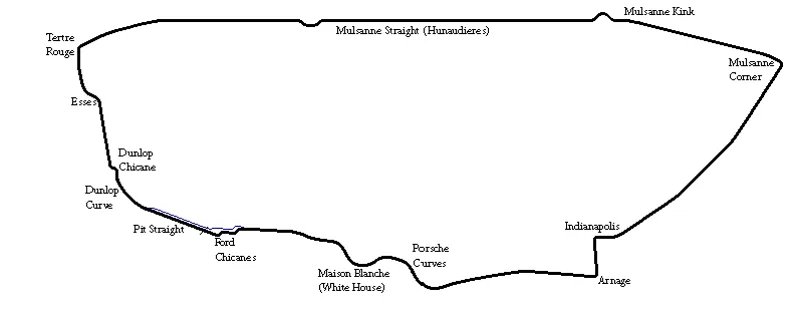
Mercedes-Benz generated the most drama before the flag. Mark Webber crashed twice during practice. Later, in the fifth hour, Peter Dumbreck's car lifted at one of the fastest places on the circuit, somersaulted three times into the trees beside the track, and he emerged shaken but unscathed.
The three accidents looked almost identical, and they changed the race. Mercedes withdrew its team, which took a serious contender out of the battle for the lead. BMW's victory was therefore overshadowed by the accidents, even though it had been won on the track.
How was the final order decided?
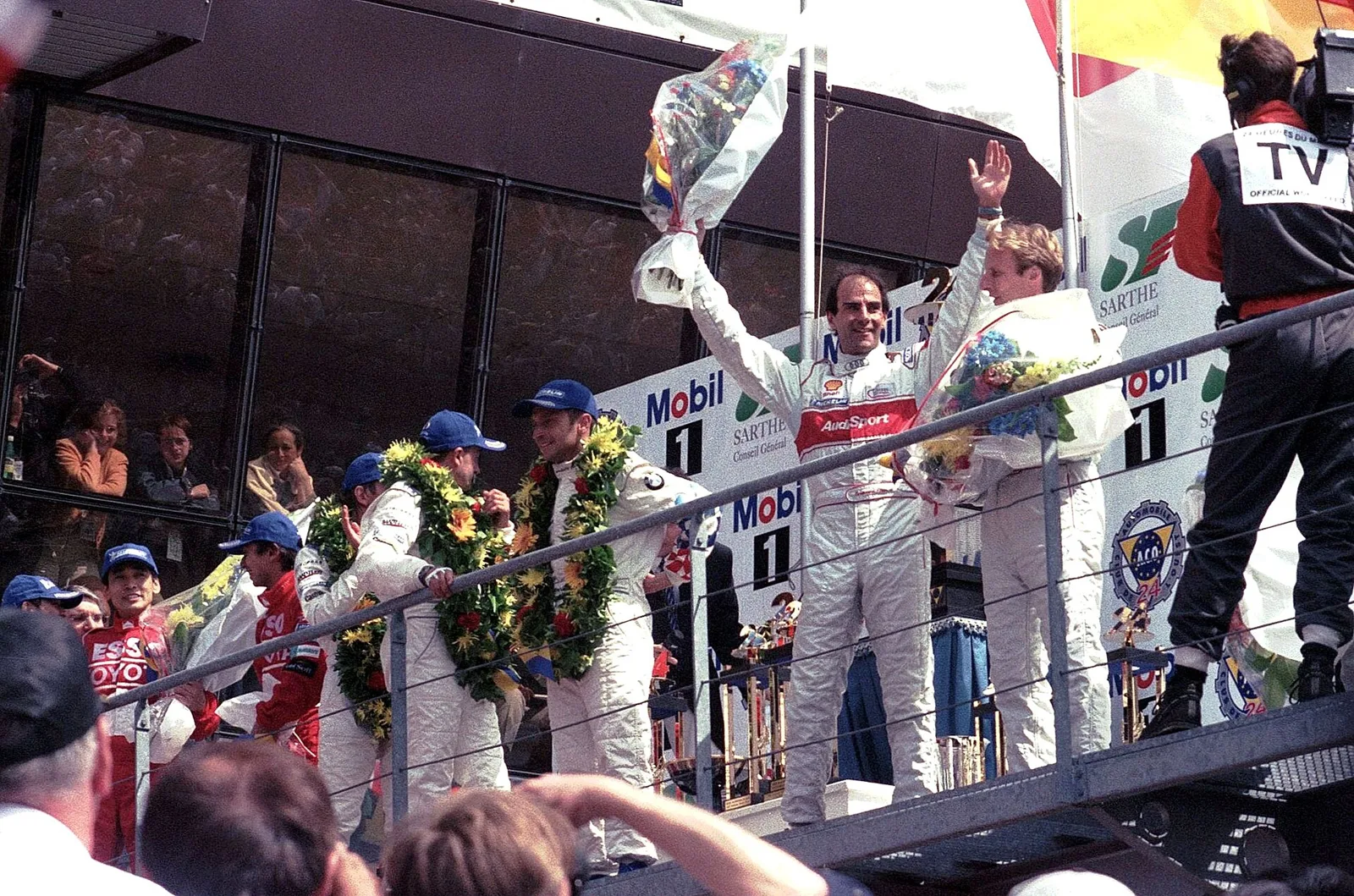
BMW's V12 LMR of Dalmas, Martini and Winkelhock won the 24 hours, after Toyota lost seven minutes in the pits with a puncture in the final hour. The works ORECA team finished 1-2 in the renamed GTS class, ahead of four customer cars, while Henri Pescarolo finished ninth overall.
The finishing order and class results
| Position | Entry | Result |
|---|---|---|
| First overall | BMW V12 LMR | Dalmas, Martini and Winkelhock won |
| Lost the lead | Toyota | Gearbox issues early, and a puncture cost seven minutes |
| Withdrawn | Mercedes-Benz | Team withdrawn after the accidents |
| First and second in GTS | ORECA Chrysler Vipers | Works team 1-2 in the renamed class |
| Ninth overall | Henri Pescarolo | His final start, the 33rd of his career |
Speed mattered less than the ability of each car to survive the night, and the leading BMW was still running cleanly when the Toyota lost its seven minutes.
What did the 1999 race mean for Le Mans?
Pescarolo's ninth place closed a career that had reached a record-breaking 33rd start as a driver. Thierry Boutsen also announced his retirement after his crash. The race combined drama, tension and excitement, and it left a clear legacy in the new rules that drew the GT and prototype classes together.
The reshaped regulations tied the prototype and GT classes together more closely. Renaming LM-GT1 as LM-GTP admitted what the works teams had been doing for some time.
For BMW the win came after a rebuild that had kept only a small share of the old car. The Sebring result in March had given the team a reason for optimism, but Le Mans rewarded a car that had been rebuilt rather than refined. For Audi, the race was a debut several years in the making, built around the first purpose-built race engine from the group in 60 years.