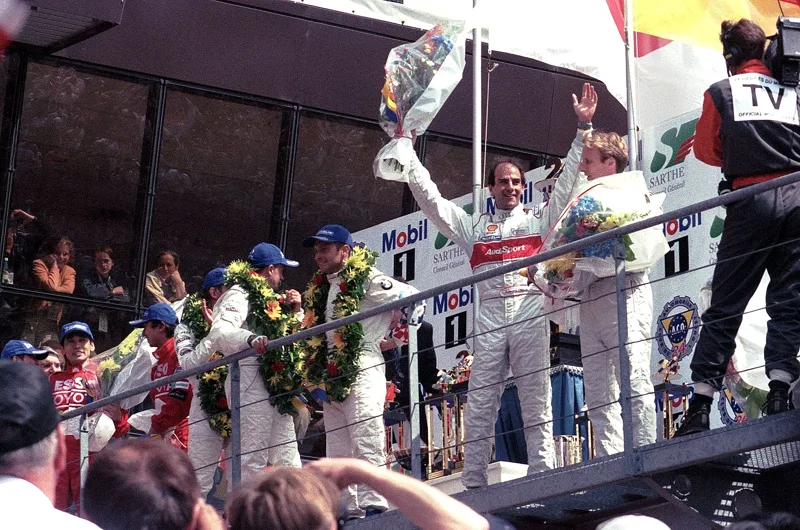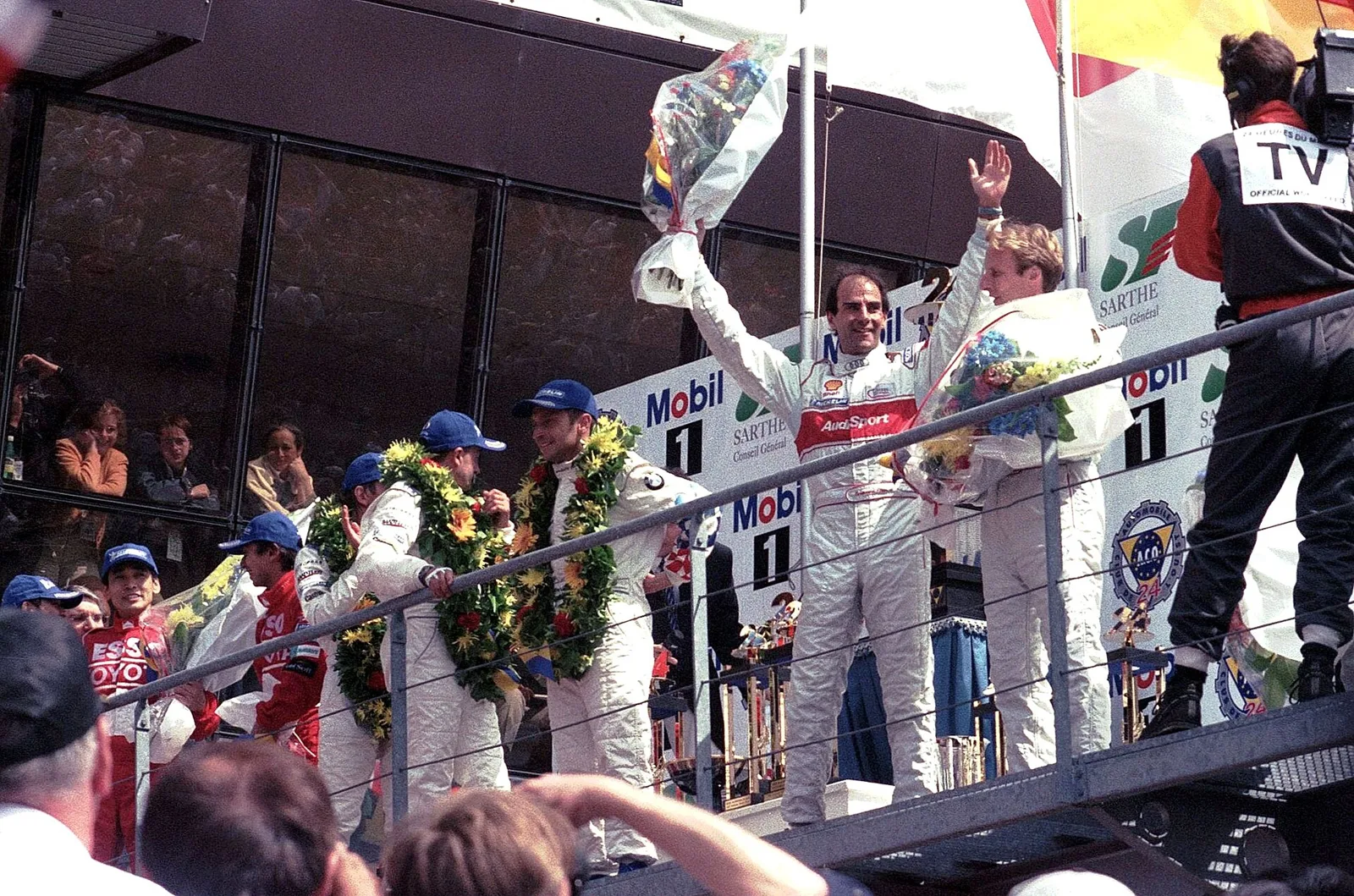
A Toyota gearbox failure in the closing hours handed Porsche its 16th overall win, while an all-Japanese Nissan crew reached the podium for the first time.
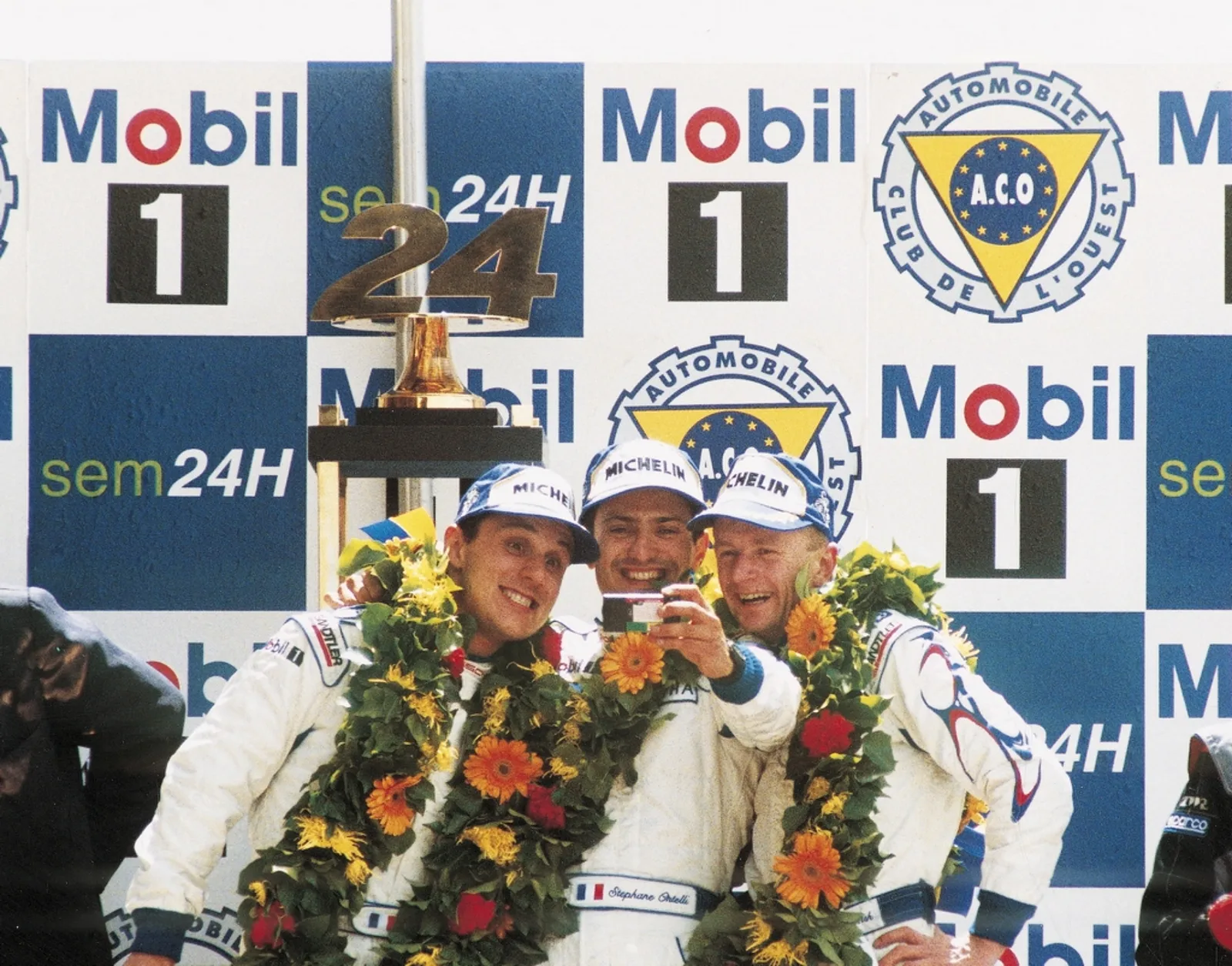
The 1998 24 Hours of Le Mans, the 66th running, was won by the Porsche 911 GT1 of Allan McNish, Stephane Ortelli and Laurent Aiello on 6 and 7 June 1998. It gave Porsche its 16th overall victory, and a Toyota gearbox failure late on decided the race.
Porsche won the 1998 24 Hours of Le Mans for its 16th overall victory, with Allan McNish, Stephane Ortelli and Laurent Aiello sharing the winning car. A Toyota gearbox failure in the closing stages handed the Porsche works team a 1-2 finish. Nissan finished third with an all-Japanese crew, the first time such a crew had stood on the podium.
What did the 1998 rules change?
The prototype class became LM-P1, with its engine limit raised from 5.1 litres to 6.0 litres, or to 4.0 litres for turbos. The ACO made no other notable technical changes, so the rules stayed broadly familiar. The race start was moved to 2pm to avoid a television clash with the French Open finals.
Practice times alone set the grid once again. LM-P2 cars had to use non-turbo six-cylinder engines of up to 3.5 litres.
Outside Europe the calendar was changing too. Don Panoz received copyright permission from the ACO to run a new race at his Road Atlanta circuit. The new Petit Le Mans, a race of 1000 miles or 10 hours, was held in October, the penultimate round of the 1998 IMSA season, and it was run as an experiment with ACO and IMSA classes racing side by side.
A Toyota gearbox failure with less than 90 minutes to go handed Porsche its 16th overall Le Mans win.
The prototype field and its cars
Five works teams entered the prototypes and six took part in the GT classes. More than 30 prototypes applied for pre-qualifying, led by Porsche, Ferrari and Courage, and Riley and Scott returned after winning the IMSA series. BMW and WR arrived with new designs, while Debora came back as the only LM-P2 entry.
Pundits expected a wide-open race, with at least 20 cars able to take line honours. Twenty-seven former or current Formula One drivers, racing or testing, were on the entry list. The International Sports Racing Series had grown to eight rounds with almost twenty entries, while the GT1 class had become a manufacturer arms race.
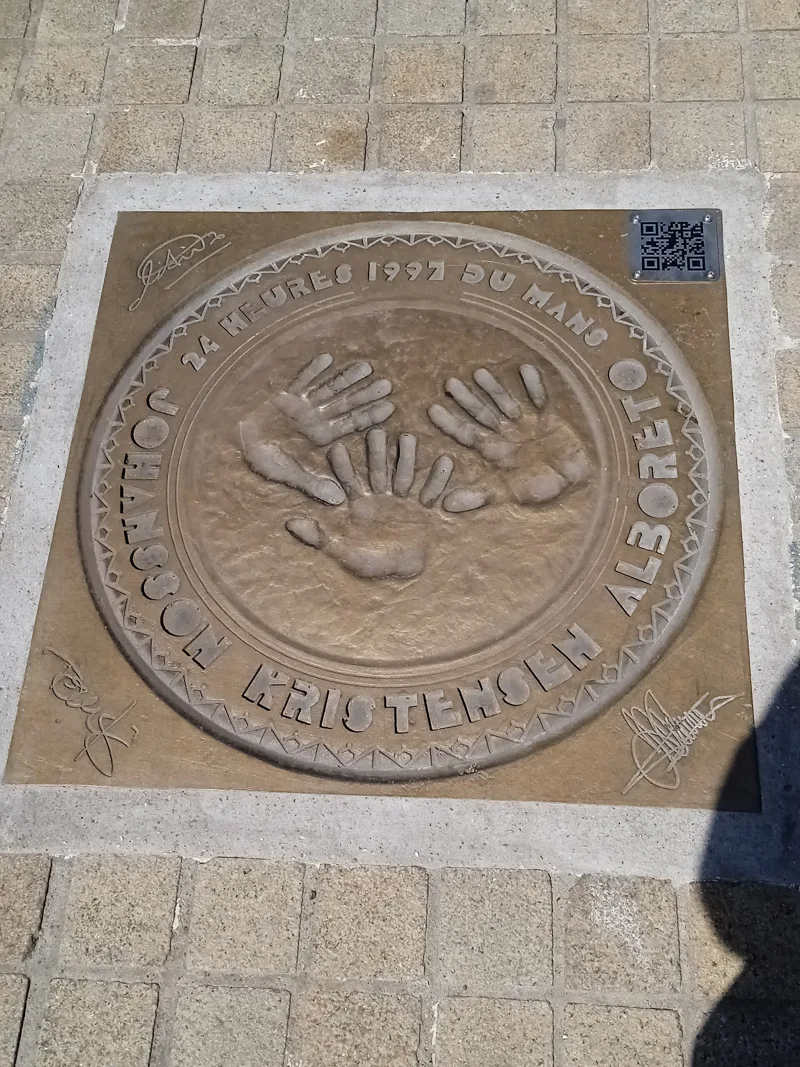
Porsche's prototype was the LMP1-98, a revived TWR chassis now run by Joest Racing with factory 3.2-litre engines. Its power was restricted to 530 bhp, against 600 bhp for the GT1 cars, but it weighed almost 80 kg less. Michele Alboreto, Stefan Johansson and Yannick Dalmas were its drivers, and a second car carried Pierre-Henri Raphanel, James Weaver and David Murry. It was the third time Joest had run the TWR prototype, now as a works-assisted entry.
Ferrari's 333 SP was still racing on both sides of the Atlantic, and four examples arrived at Le Mans. Momo Racing, which had won the Daytona and Sebring endurance races at the start of the year, returned with Didier Theys and Mauro Baldi. Doyle brought Wayne Taylor, Eric van de Poele and Fermin Velez, and each car was tuned to 600 bhp under the ACO restrictors.
BMW's V12LM was built with Williams Grand Prix Engineering, using a 6.0-litre V12 from the McLaren F1 GTR tuned to 550 bhp. It was 22 kg lighter than the earlier car. The cars were run by Team Rafanelli, with Hans-Joachim Stuck, Steve Soper and Tom Kristensen in one, and Pierluigi Martini, Joachim Winkelhock and Johnny Cecotto in the other.
Courage's C51 marked a renewed collaboration with Nissan, using a turbocharged 3.0-litre V8 that produced 540 bhp through a six-speed sequential gearbox. Two of the C51s were driven by Didier Cottaz, Marc Goossens and Jean-Philippe Belloc, and by Fredrik Ekblom, Patrice Gay and Takeshi Tsuchiya.
Courage arrived with four cars, the most Le Mans starts of any French manufacturer at 17 times. Veteran Henri Pescarolo joined Olivier Grouillard and the French F3 championship leader Franck Montagny in a C36 for the Elf La Filiere team. A C50 was sold on to the Japanese team AM-PM, which entered it with Yojiro Terada, Franck Freon and Olivier Thevenin.
Philippe Gache bought one of the latest Riley and Scott Mk IIIs and had it prepared in Provence. With its engine tuned in the United States to 550 bhp, the car reached pre-qualifying with only three quick laps in hand. Gache drafted in two former motorcycle racers, Didier de Radigues and Wayne Gardner, as co-drivers.
Kremer's K8 Spyders made their 29th consecutive appearance at Le Mans. Almo Coppelli squeezed through pre-qualifying by 0.008 seconds, ahead of a privateer K8 driven by Franz Konrad. An Evo version of the car failed to qualify, because its aerodynamics had not been tested and it was unsafe to drive quickly.
Debora returned for the first time since 1995, after missing out in 1996 and 1997. Didier Bonnet reused the LMP296 but fitted a BMW M88 engine in place of its 2.0-litre Cosworth, reduced to 3.2 litres for 350 bhp. The car still weighed just 700 kg, which made it the lightest car in the field.
Which GT1 cars were the strongest?
Porsche's 911 GT1-98 was the most developed of the GT1 cars, with a full honeycomb carbon chassis and a turbocharged flat-six bored out from 3164cc to 3196cc and tuned to 600 bhp. Mercedes-Benz returned after a seven-year absence with the CLK-LM, and its engine was limited to 600 bhp by the restrictors as well.
Porsche was marking 50 years since its founding, and the GT1-98 was almost 100 kg lighter than its predecessor, with revised suspension and cooling, and its fuel cell moved behind the driver rather than sitting in the nose as is usual for Porsches. Veteran Bob Wollek was starting his 50th 24-hour race, Daytona and Spa included, and he led a squad of young works drivers alongside Jorg Muller and Uwe Alzen.
Allan McNish was given the second car with Laurent Aiello and Stephane Ortelli, after Dalmas moved to the Joest prototype. A second pair of Zakspeed GT1-98s failed pre-qualifying.
The CLK-LM was designed around the long straights of Le Mans, with the shorter, lighter V8 version of the 6.0-litre M.119 engine. Engine, differential and gearbox formed one assembly that bolted into the frame, which made repairs quicker, and the bodyshell came from David Price's DPS Composites. Gull-wing doors recalled the 300 SL that won in 1952, and Mercedes-Benz had covered more than 10,000 km of endurance testing.
A year earlier Mercedes-Benz had considered its cars too new for Le Mans, but confidence was higher in 1998 after the team won the first two rounds with the older GTR. Bernd Schneider, the GT1 champion, drove one of the two new cars with Klaus Ludwig and rookie Mark Webber. Ricardo Zonta shared a car with Jean-Marc Gounon and Christophe Bouchut, both of whom normally raced a GTR for a customer team.
McLaren's F1 GTR was being outpaced by newer designs, and only two cars were entered, both through GTC Gulf Team Davidoff. Steve O'Rourke ran an ex-BMW works car in the British GT series and brought in American Bill Auberlen alongside Tim Sugden. Thomas Bscher enlisted Emanuele Pirro and Rinaldo Capello, both touring-car veterans new to Le Mans and part of Audi's works team for 1999.
Toyota's debut and the wider GT field
Toyota returned after missing 1997 with the GT-One, also known as the TS020, a thinly disguised sports prototype. Only two roadworthy versions were built for homologation, and Andre de Cortanze, who had worked at Peugeot and Sauber, was technical director, with Claude Martens as lead designer. From the flag it was the Toyota team setting the pace, and the car made its race debut with gearbox problems that would shape the race.
The GT field was large, with almost 50 entries shared equally between GT1 and GT2. Mercedes-Benz had dominated the second half of the 1997 season and won both the drivers and teams titles, so it was the team to beat in the GT1 class.
Automatic entries went to six cars: the 1997 class winners at Le Mans and at the Coupe d'Automne, along with the GT1 class winner of the FIA series. Among them was the Gulf McLaren that had won the 1997 Le Mans GT1 class, which returned in the same long-tail configuration as the previous year.
How did the lead change hands?
Toyota set the early pace from the 2pm start, but the GT-One's gearbox problems hit all three cars before nightfall. Two works Porsches then took over at the front and held the lead through the night, as Toyota pushed hard to make back the time it had lost.
Dawn brought mechanical problems for the Porsches. The Toyota of Geoff Lees, Thierry Boutsen and Ralf Kelleners grabbed the lead back. In 1997 Porsche had lost its race in the final hours, so the team had good reason to watch the closing stages closely.
The leaders ran on the same lap for five hours, a tense stretch that thrilled the crowd. The duel finally broke at 12.35pm, when fewer than 90 minutes remained. Kelleners held a lead of about a minute over McNish, and each car had one stop remaining when the Toyota's gearbox failed and Kelleners coasted to a halt.
McNish and Alzen then eased back, with three laps in hand over the nearest Nissan, and took the 1-2 Porsche finish.
The finishing order at Le Mans
| Position | Entry | Result |
|---|---|---|
| First | Porsche 911 GT1-98, McNish, Ortelli, Aiello | Porsche's 16th overall victory |
| Second | Porsche 911 GT1, Uwe Alzen | 1-2 Porsche finish after the Toyota failure |
| Third | Nissan, all-Japanese crew | First all-Japanese crew on the Le Mans podium |
| Eighth | Doyle-Risi Ferrari 333 SP | Best prototype, 19 laps behind the winner |
| GT2 class | Viper Team ORECA Chrysler | First and second in GT2 |
All four Nissan team cars finished the race, and the team took the podium with its all-Japanese crew.
Why did the prototypes trail the GT cars?
The prototypes were never quick enough to keep up with the GT1 cars, and every one of them suffered some form of problem during the race. The Porsche GT1 cars had a clear advantage in speed. The best-placed prototype was the Doyle-Risi Ferrari, which finished eighth, 19 laps behind the winner.
GT2 told a different story. Viper Team ORECA's Chryslers ran trouble-free and finished 1-2, winning convincingly over the Porsche 911 teams behind them.
What did the 1998 result mean for Porsche and Le Mans?
Porsche's victory was its 16th overall win, and it came in the works GT1 car rather than the TWR prototype. Porsche had gone into the race against a formidable list of works rivals, including Mercedes-Benz, Toyota, Nissan and Panoz GT, plus BMW and Ferrari in the prototype ranks.
In the end it was the reliability of the winning car, and the failure of a rival's gearbox at the critical moment, that settled the race. The all-Japanese Nissan crew on the podium was a first for Le Mans.
The result extended Porsche's record for overall Le Mans wins. The win came from steady running through the night, not from a single decisive advantage. Toyota had pushed Porsche hard all night, and the race was not settled until the Toyota stopped.