Peugeot filled the podium in the first Le Mans run under the ACO's new rules, with GT cars back in the race for the first time since 1986.
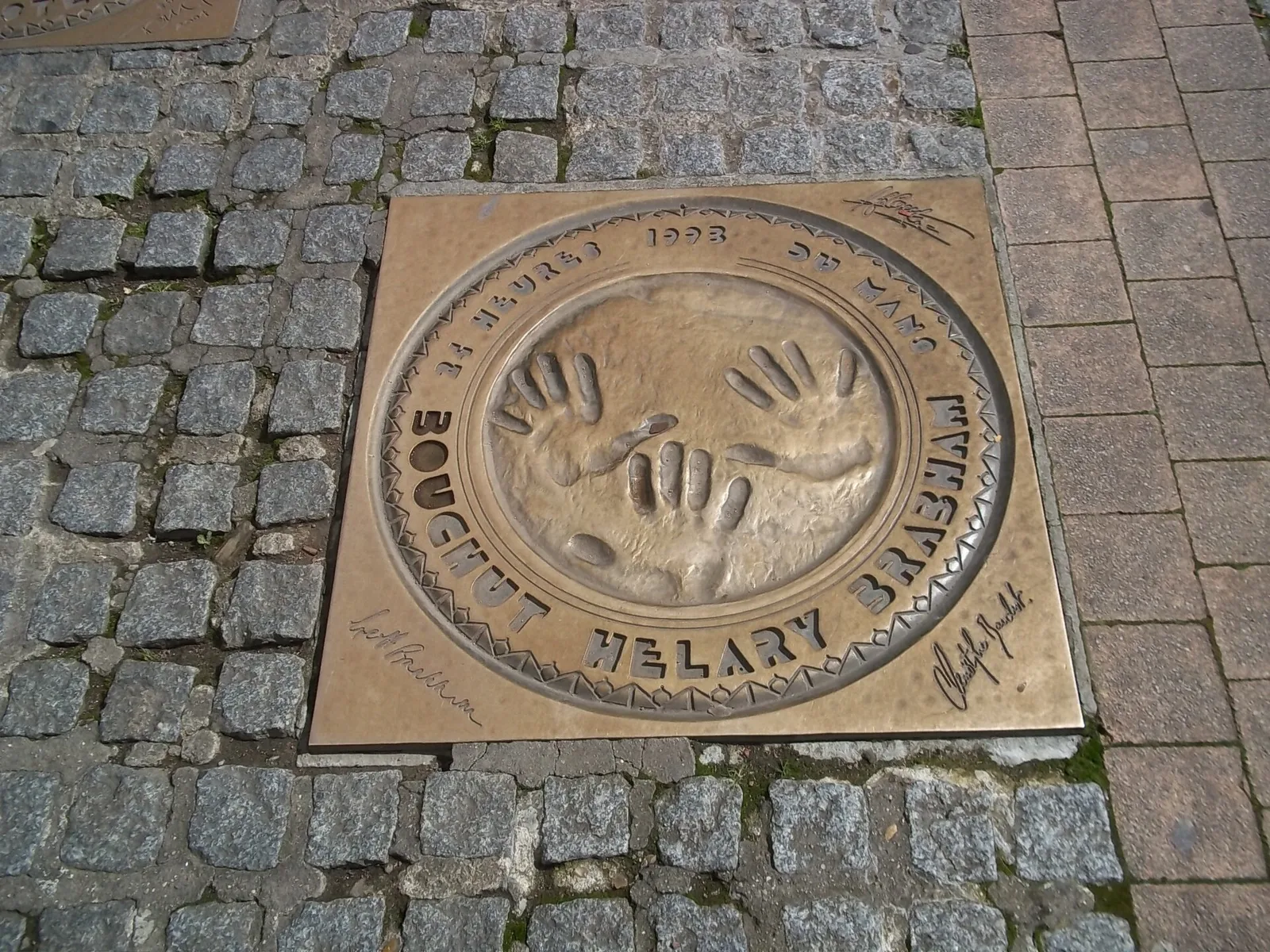
Brabham, Helary and Bouchut won the 1993 race for Peugeot, which also took second and third. The result came under the ACO's own class system, drafted after FISA cancelled the sportscar world championship at the end of 1992, with GT cars back in the field.
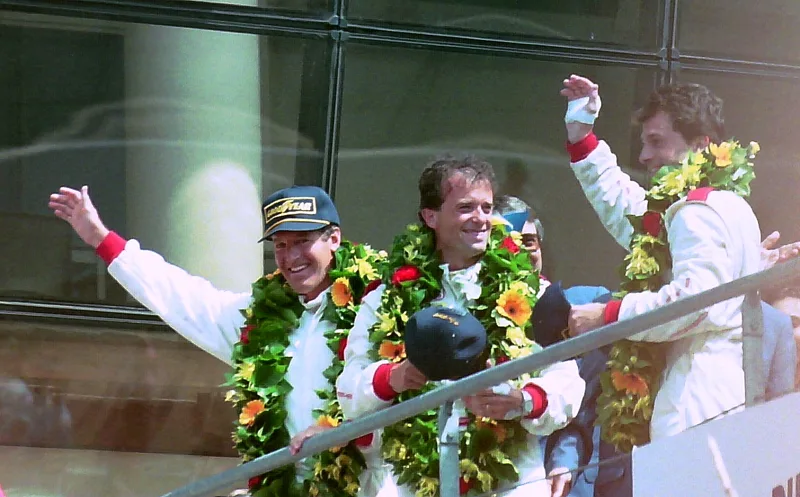
The 1993 24 Hours of Le Mans, the 61st Grand Prix of Endurance, was run on 19 and 20 June. It was won by a Peugeot 905 Evo 1B driven by Geoff Brabham, Eric Helary and Christophe Bouchut, who completed 375 laps, and Peugeot took the first three places.
Why was the 1993 race a different kind of Le Mans?
The Sportscar World Championship was cancelled at the end of 1992, which left the Automobile Club de l'Ouest (ACO) free to write its own rules. For the first time since 1986 the race opened to Grand Touring cars, and the ACO used a four-category structure with engine restrictors to balance performance across the categories.
The categories covered the 1991-92 works cars, the older Group C cars from IMSA or the pre-1991 rules, IMSA's new World Sports Car class and the GT cars. The Group C cars could run without fuel or weight limits, because restrictors now did the balancing. Their age counted against them, though, since modern ground effects had moved on considerably.
Max Mosley, the FISA president, was openly dismissive of the ACO's regulations and of the organisation itself. Mosley's own format had done much to bring endurance racing to its lowest ebb, which made the criticism pointed.
Peugeot filled the top three places in a race run under the ACO's own rules after the world championship had collapsed.
Categories at a glance
| Category | Eligible cars | Power control |
|---|---|---|
| Category 1 | 1991-92 FIA sportscars, the works Peugeot and Toyota | Set by the ACO rules |
| Category 2 | Group C cars from IMSA or the pre-1991 rules | Air-inlet restrictors, with no fuel or weight limits |
| Category 3 | IMSA World Sports Car cars with three-litre production or F3000 engines | Air-inlet restrictors |
| Category 4 | GT cars, with power output limited to 500 bhp | Air-inlet restrictors |
Teams now had to qualify the cars they intended to race. That closed the test-car loophole, in which drivers rotated through a spare car with its engine turned up for qualifying. Reserve cars were allowed, but they had to start at the back.
The test day returned in mid-May for the first time since 1987. Refuelling also changed: teams could no longer work on the car while it was being filled, so tyre changes became rarer and teams tended to double- or triple-stint their tyres.
How did the 1993 entry come together?
With no official ties to FISA any more, the ACO was free to open the entry list as it saw fit. When entries closed in April the field was full at 58, including the first Ferrari GT to appear at Le Mans since 1984.
The problem was that most manufacturers had moved on. Peugeot, Mercedes, Jaguar and Toyota were all developing engines for Formula One. The proposed classes therefore attracted mainly the customer teams.
The race also brought in a new main trophy, inspired by the Borg-Warner Trophy for the Indianapolis 500. It stood 1.2 metres (47 inches) high, and it was so heavy that all three drivers had to lift it together. Bruno Vandestick made his debut as race announcer that year and has held the role for over 30 years.
Who were the Category 1 contenders?
Peugeot Talbot Sport had won the 1992 Sportscar World Championship, taking five of the six rounds, but its Evo 2.2 never raced. Instead the team adapted the gull-wing chassis into a C-variant, fitted with the Evo 2.2 rear end and a new transverse sequential gearbox.
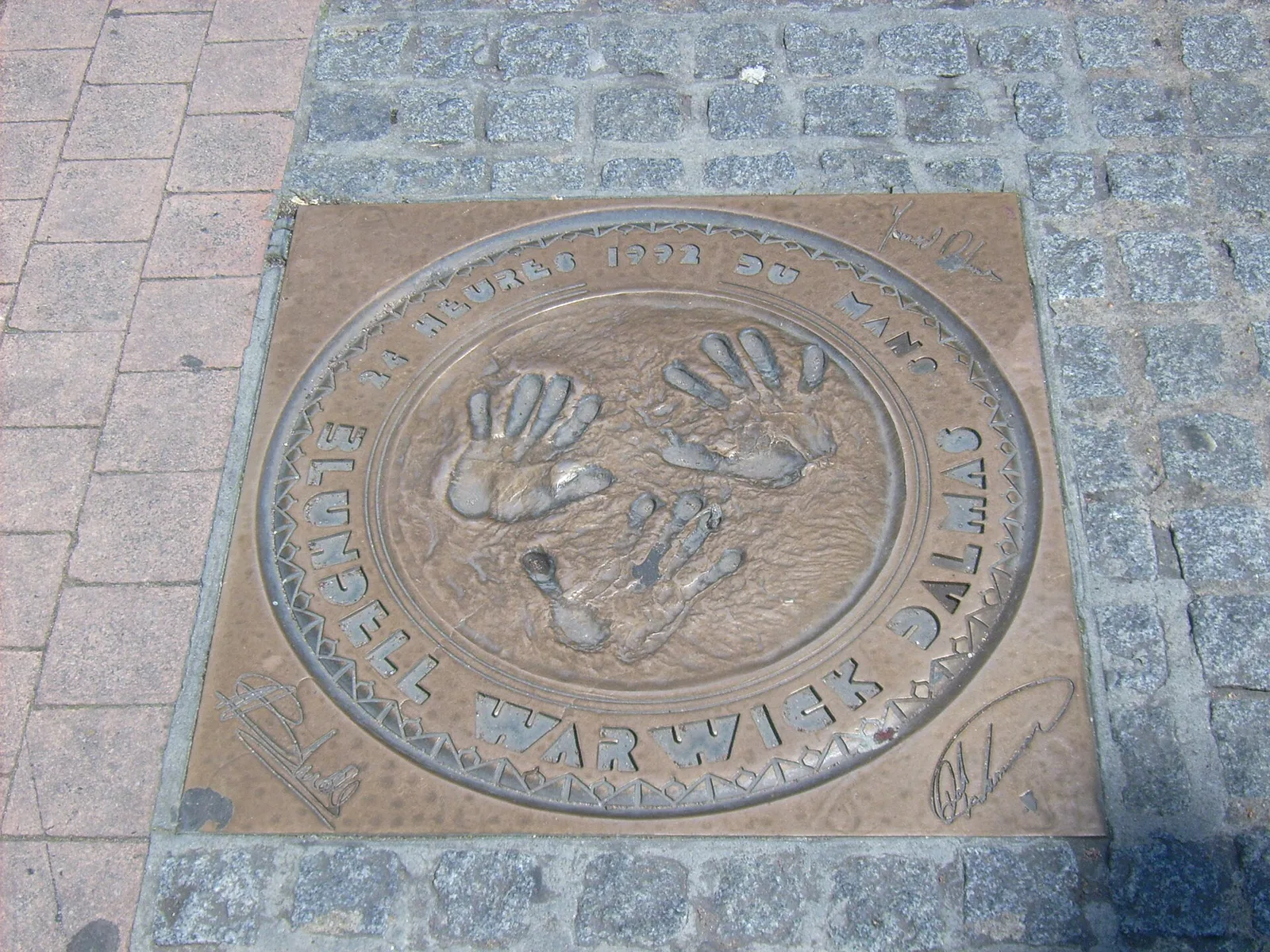
Team director Jean Todt and his engineers had adapted the gull-wing chassis. Philippe Alliot, Mauro Baldi and Jean-Pierre Jabouille shared the first car. Yannick Dalmas, the previous year's winner, raced with Teo Fabi and Thierry Boutsen in the second, while the third car was driven by Helary and Bouchut, both Le Mans rookies, with Geoff Brabham, an Australian four-time IMSA champion.
Toyota returned with its TS010 after a year out. In March the Toyota team joined Peugeot for tests at the Circuit Paul Ricard. Tony Southgate refined the aerodynamics and front suspension, while in Japan the V10 engine and gearbox were strengthened after the previous year's problems, and three new chassis were built. Geoff Lees, Jan Lammers and Juan Manuel Fangio II shared one car, Irvine, Sekiya and Suzuki another, and Wallace, Acheson and Raphanel the third.
Allard entered a J2X, the project having been bought by Robert Lamplough after a group of engineers acquired the Allard name. The car was designed by John Iley, with a high-downforce look that earned it the nickname Batmobile. Its engine deal with Honda fell through because Honda was fully committed to IndyCar. At the May test day Robert Lamplough could not get faster than 275 km/h (170 mph), roughly 100 km/h slower than the competition.
Which Category 2 cars raced in 1993?
Toyota had taken the 1992 class win when the regulations were skewed in its favour, and it returned with 93C-V cars for two customer teams. Shin Kato's SARD team ran Roland Ratzenberger, Mauro Martini and Naoki Nagasaka, while the Trust Racing Team brought George Fouche, Steven Andskar and Eje Elgh. The restrictors held the Group C cars below 600 bhp, but they could be driven flat out without watching fuel consumption, and they were about 150 kg heavier than the Category 1 cars.
Kremer Racing had been ever-present, despite tough rules that penalised the Porsches. It arrived with three modified 962s, the K6, one with a carbon hull and two with aluminium hulls. Giovanni Lavaggi, Jurgen Lassig and Wayne Taylor drove one, and Almo Coppelli, Robin Donovan and the adventurer Steve Fossett drove another.
Joest Racing had missed 1992 but returned with a pair of low-downforce long-tail 962s. The second car had Frank Jelinski and a driver listed as John Winter, with Manuel Reuter completing the line-up. Reuter had won the race in 1989 for Sauber-Mercedes. Bob Wollek and Henri Pescarolo had an incredible 48 Le Mans starts between them, and they were joined by Ronny Meixner, who had won the GT category at Daytona that year.
Yves Courage had raced his own Cougar cars at Le Mans since 1982, when Group C began. His team ran three Porsche-engined cars, rebadged as C30LMs after Ford ordered the Cougar name dropped. Derek Bell was recruited as lead driver, alongside Lionel Robert and Pascal Fabre. The Chamberlain Spice SE89C ran with Nick Adams, Herve Regout and Andy Petery. It was the car that had won last year's FIA Cup, now fitted with a 3.5-litre Cosworth DFZ. Graff Racing brought its SE89C for a fourth run, with three young French rookies and an older 3.3-litre DFL engine.
Roland Bassaler returned with a Sauber SHS C6 built in 1982, one of the heaviest cars in its class, with a 3.5-litre BMW engine that produced only 450 bhp.
Hans Obermaier's team ran a 962 fitted with carbon-carbon brakes, the first 962 at the race to have them. Otto Altenbach was its senior driver, joined by Jurgen Oppermann and Loris Kessel, after Jurgen Lassig had moved to Kremer.
Guy Chotard's team ran a former Momo 962 that competed at Le Mans in 1990 under IMSA GTP rules. Its all-French line-up included Jean-Pierre Beltoise, who had raced for Matra and BRM twenty years earlier and had made fourteen Le Mans starts. He was too unwell to compete in race week, so Denis Morin took his place, and Beltoise stayed on in the pits as a strategist.
What happened in Categories 3 and 4?
The IMSA federation had announced its own World Sports Car category earlier in 1993, along similar but not identical lines to the ACO's rules.
Category 3 was home to the IMSA World Sports Car-style entries, including the small Welter Racing team returned with its LM92/3, a centre-seat spyder with the 2-litre engine from the Peugeot 405 Turbo 16 rally car. With a Garrett turbo it produced 725 bhp and weighed 658 kg, and its drivers were Patrick Gonin, Bernard Santal and Alain Lamouille.
Didier Bonnet brought a new Debora SP93 from the French Coupe Alfa Romeo series. Its 3-litre V6 from the Alfa Romeo 164 was tuned to 230 bhp, and the low-profile sports racer weighed 637 kg, the least of any entrant. Its lead driver was Yvan Muller, who had just won the 1992 British Formula Two Championship.
A final Category 3 name came from Lucchini Engineering, set up in 1980, whose first race car appeared in 1986 in the Italian Coupe Alfa Romeo series.
Category 4 was the return of GT cars to Le Mans, where the last such car to race had been a solitary Group B BMW M1 in 1986. The class rules were the ACO's own version of the GT regulations FISA was still drafting. They accepted modified production GTs and cars from equivalent national championships, with power output limited to a maximum of 500 bhp.
How did the 1993 race unfold?
The race had been expected to be a contest between Peugeot and Toyota, each fielding a trio of cars. Alliot took his third consecutive pole for Peugeot, and he and Irvine set the early pace. Both cars lost several laps with engine problems, so the lead passed to Thierry Boutsen and Geoff Lees as evening came. At 11pm Juan Manuel Fangio II's Toyota was punted from behind by a GT car that had missed its braking point.
The race turned at 3.30am, when Fabi's Peugeot pitted from the lead with electrical trouble. The third Peugeot, which had been run conservatively, inherited the lead and did not give it up. The Toyotas struggled with transmission problems for the second year running.
Irvine's Toyota pitted from third at Sunday lunchtime and lost 10 laps in a gearbox rebuild. The win was settled for Peugeot, which took a 1-2-3 finish. In the Category 2 class, Toyota's privateers beat the Porsches and Courages, finishing fifth and sixth, and Irvine's car made its way back up to fourth.
Why was the GT class result later changed?
In the GT class, Porsche arrived with a works car and a number of customer teams, while Jaguar ran three cars under Tom Walkinshaw Racing. The works Porsche was delayed, and the Jaguars headed the class. The TWR car of John Nielsen, David Brabham and David Coulthard finished 15th overall. The team had been running under appeal for racing without the catalytic converters that the production car carried, and a month after the race the Jaguars were disqualified.
The class win then went to the Monaco Media team Porsche Carrera.
What did the 1993 race mean for Peugeot?
The result showed how a rebuilt class structure, with GT cars back in the mix, could still deliver a Peugeot one-two-three. Le Mans was the only race on the calendar that year for the team, which had been run under team director Jean Todt.
Peugeot had developed an Evo 2.2 version of its 905 that never raced, so the Le Mans effort with the adapted C-variant carried the programme's hopes. The result was a clean sweep of the top three places.