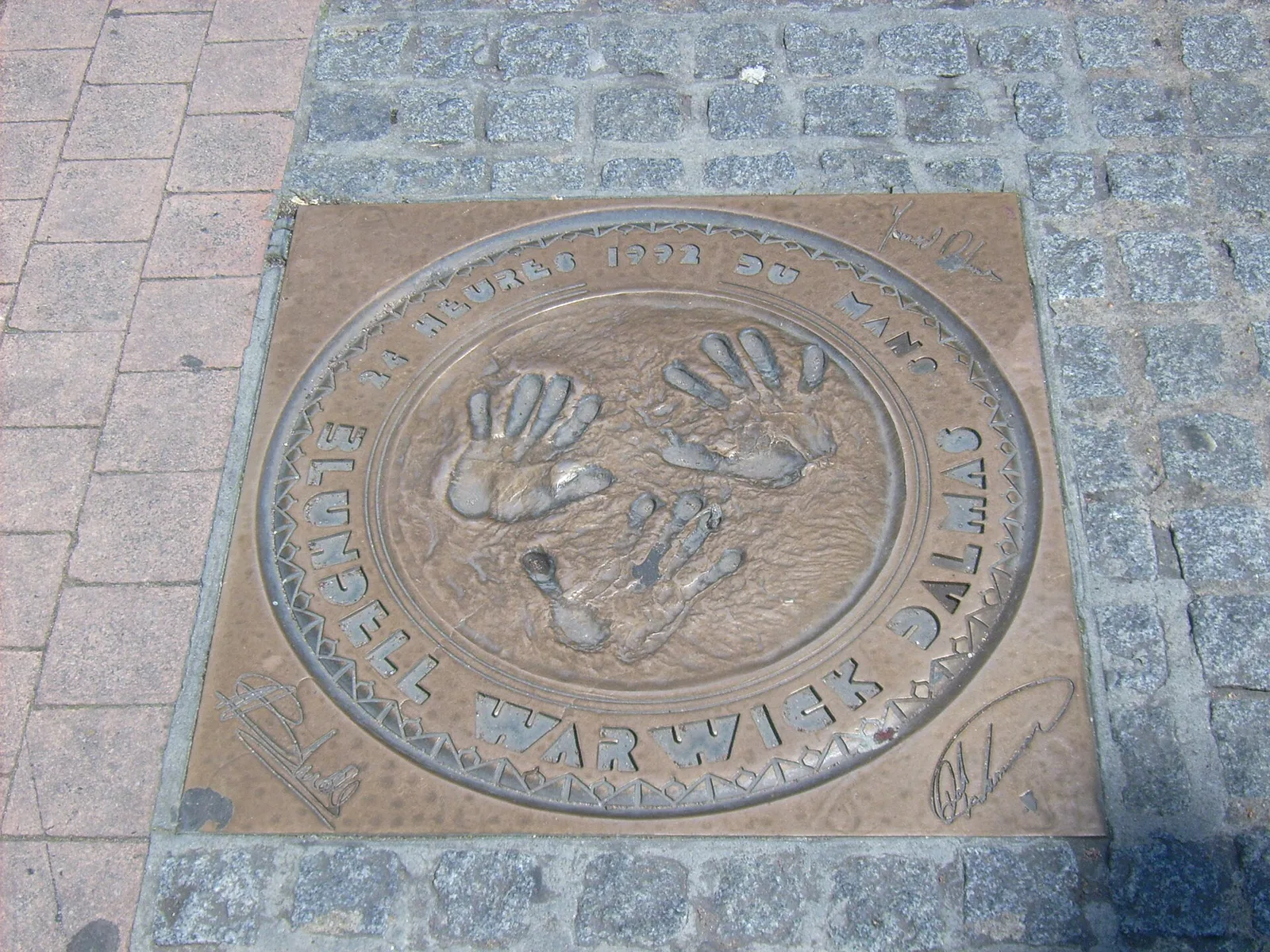
The 1992 race started with the smallest field since 1932 after Jaguar and Mercedes-Benz had withdrawn, and a Peugeot ended up six laps clear.
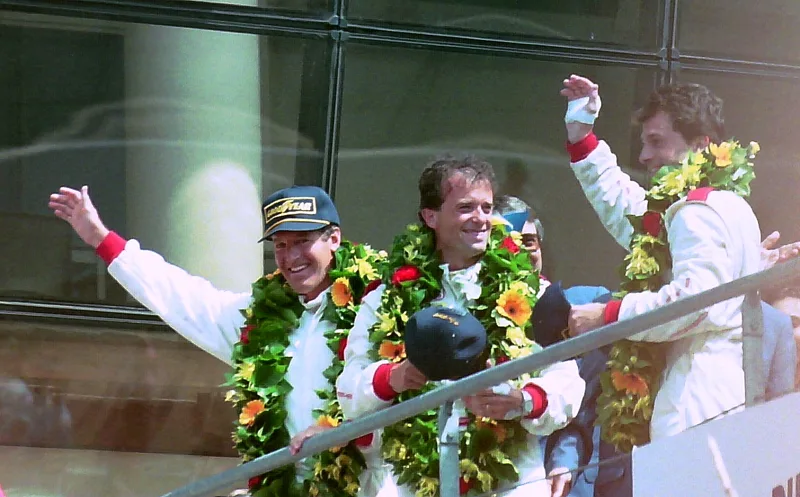
Peugeot won the 1992 24 Hours of Le Mans by six laps, with a crew of Derek Warwick, Yannick Dalmas and Mark Blundell. The race drew 28 starters, the lowest number since 1932, after the withdrawal of Jaguar and Mercedes-Benz from the championship.
The 1992 24 Hours of Le Mans was the 60th Grand Prix of Endurance, run on 20 and 21 June. It drew only 28 starters, the lowest figure since 1932, after Jaguar and Mercedes-Benz had withdrawn from the championship. Peugeot won by six laps, with Derek Warwick, Yannick Dalmas and Mark Blundell sharing the car.
Why was the 1992 field so small?
Jaguar and Mercedes-Benz had both withdrawn from the World Championship at the end of 1991. That left Peugeot, Mazda and Toyota as the only major manufacturers in the series, and the race had to be opened to older Group C cars and national trophy cars to fill its grid.
The championship itself had nearly been cancelled. Entries had been weak, and event promoters resented the fees the governing body demanded. In March, Peugeot, Mazda and Toyota each paid $3 million to FISA to keep the series running, and the ACO was left to fill the Le Mans grid as best it could.
A cheaper FIA Cup was added for former Group C2 cars, which ran steel brakes and were limited to 9500 revs, and it scored points only in the European rounds. Porsche's cars were given their own class, but with a tighter fuel allowance than before, at 2140 litres, down almost 20 per cent from 2550 litres.
Peugeot won by six laps in a race that began with the smallest field since 1932 and rules rebuilt on the fly.
How did the four categories work in 1992?
The race used four categories. Category 1 was for the 1991 and 1992 sportscars, Category 2 for Group C cars, Category 3 for Porsche 962s and the Porsche-engined Cougars, and Category 4 for national sports cars. The rules were designed to keep a mixed field safe, so the average of each car's four best qualifying laps had to fall within 130 per cent of the fastest time.
Categories at a glance
Entries had come in unevenly across the four categories, and the ACO had to take what it could get. The table shows how the field was built up from each class.
| Category | Eligible cars | Entries delivered |
|---|---|---|
| Category 1 | Sportscars from the 1991 and 1992 Sportscar World Championship | Five new Peugeot, Mazda and Toyota entries, plus extra works cars |
| Category 2 | Group C cars from Jaguar, Toyota and ALD | Four |
| Category 3 | Porsche 962s and Porsche-engined Cougars | Eight |
| Category 4 | Low-cost national series sports cars | Nine promised, three delivered |
The final field was a medium-sized 44 entries on paper, but only 30 cars arrived for scrutineering in race week. That matched the lowest entry figure since 1932, and it left the race looking more like a non-championship Formula One event of the 1960s, with a few factory cars against a crowd of privateers.
The ACO also created a specially trained extraction team to free injured drivers from crashed cars. It cancelled the Index of Energy Efficiency, because fuel consumption could not be matched across such different classes.
How did Peugeot prepare its cars?
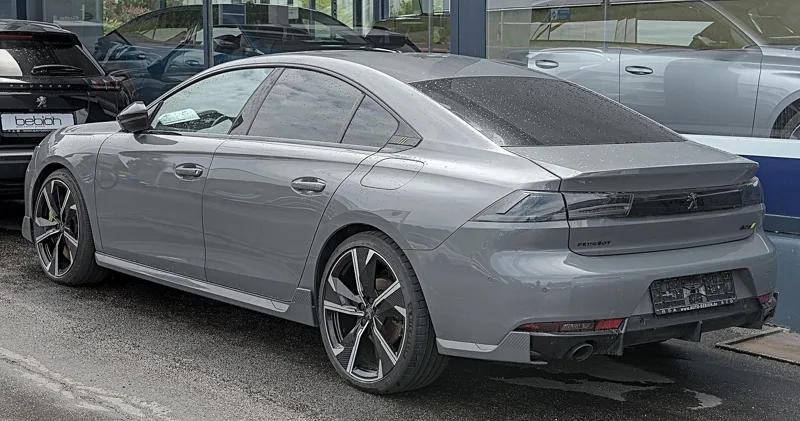
Peugeot was the only factory team left in Category 1 after Jaguar withdrew at the end of 1991, as Sauber-Mercedes had also gone. Peugeot's 905 Evo 1-bis had a new stubby nose and a lowered shell, with a large twin-plane rear wing added for downforce. Its xenon headlights were the first used on a racing car, giving a very bright beam that could reach over 300 metres.
Boudy's engineers found 20 bhp more from the V10, which had been rebuilt in steel for durability, and the gearbox received matching strengthening. The team ran six 24-hour tests, most of them at the Circuit Paul Ricard, including chicanes on the Mistral straight for a better simulation.
Warwick had been released by Jaguar, and he and Dalmas had finished second in the opening round before winning the next one at Silverstone with Blundell joining them for Le Mans.
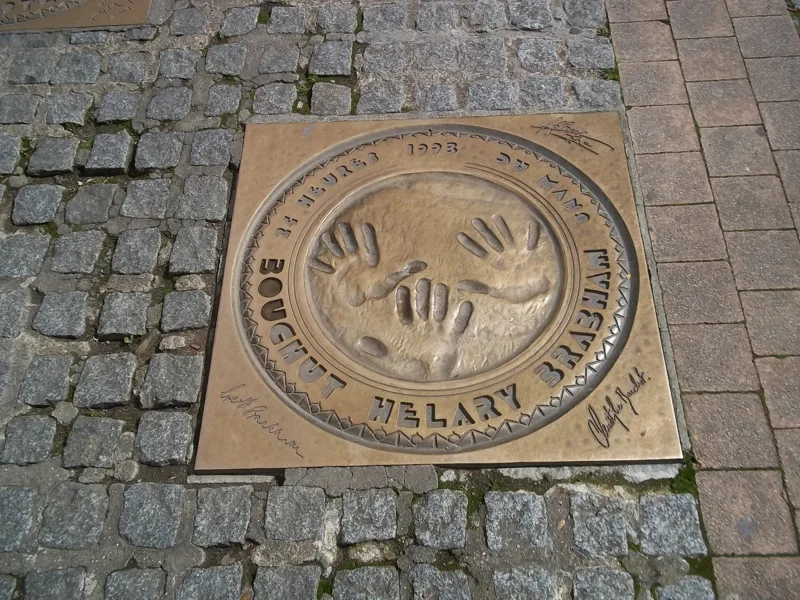
Two cars ran the championship under team director Jean Todt. Mauro Baldi, Philippe Alliot and Jean-Pierre Jabouille shared one car, while Derek Warwick, Yannick Dalmas and Mark Blundell drove the other. A third car, driven by Alain Ferte, Eric van der Poele and Karl Wendlinger, was entered for the race only.
What was Mazda's plan for 1992?
Mazda knew its 787B was being made obsolete by the new regulations. It investigated a 3.5-litre car, using XJR-14 monocoques ordered through its Ford link to Jaguar, and fitted Judd V10 Formula One engines, badged as Mazdas. The model was the MXR-01.
The MXR-01 needed much work to turn a sprint car into an endurance racer, and the biggest effort went into the engine and its Hewland transmission. With about 600 bhp and a top speed of only 325 km/h, it gave away around 20 km/h to its Peugeot and Toyota rivals.
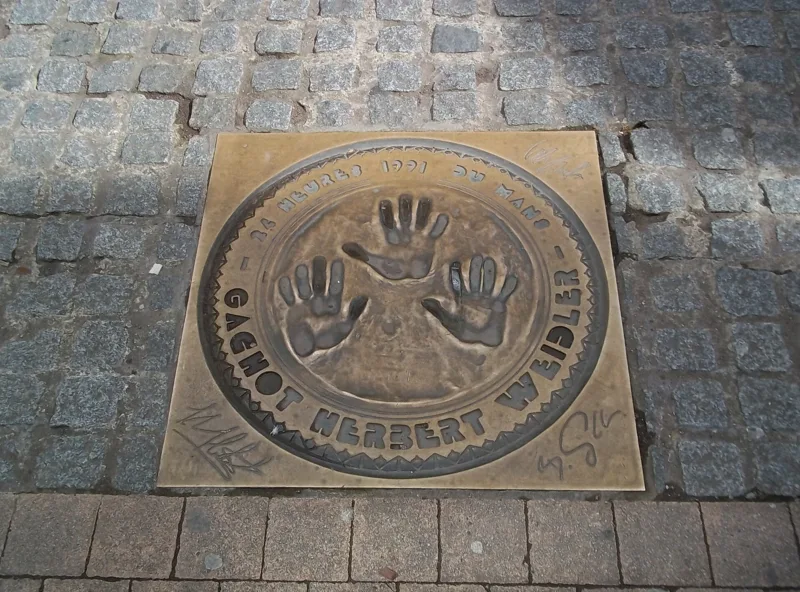
Five chassis were bought, and four came to Le Mans. The 1991 winners Volker Weidler, Johnny Herbert and Bertrand Gachot had one car, in the same orange and green Renown livery as their previous winning car.
What did Toyota bring to the race?
Toyota returned with a new SWC car, the TS010, after a year out. It was the first racing Toyota not designed by a Japanese engineer, and it came out of the TOMS-Europe facility, with Tony Southgate as project co-ordinator. The car used a completely new 3.5-litre RV10 V10 engine and a six-speed gearbox.
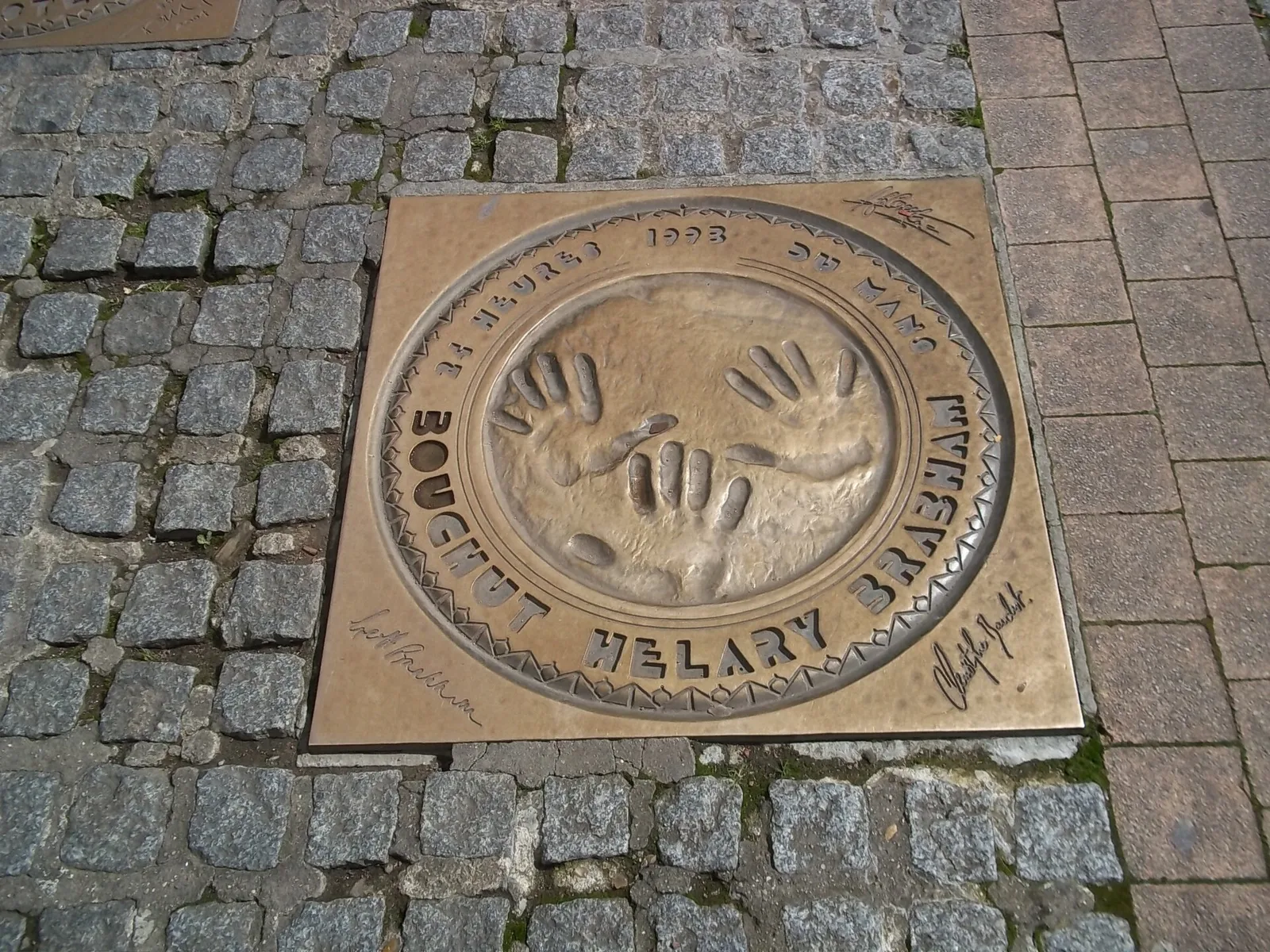
The Toyota TS010 had won the opening round at Monza by default, as the sole classified finisher. Its drivers Geoff Lees and Hitoshi Ogawa had raced for the team for years, but Ogawa was killed in May in an All-Japan Formula 3000 race. His place went to David Brabham, with Ukyo Katayama as the third driver.
The second Toyota team car pulled in drivers from the TWR team, Jan Lammers and Andy Wallace, with reigning champion Teo Fabi as the third driver. The third car was driven by Kenny Acheson, Masanori Sekiya and Pierre-Henri Raphanel, and it was the one that finished second.
Who were the privateers in 1992?
Lola had been left without a contract after the turbo era ended, and it looked to develop a customer car for the new formula. The T92/10 was developed by former Spice technical director Graham Humphrys, with a honeycomb carbon monocoque. Euro Racing reworked the gearbox and rear suspension after early failures.
Lola had built a customer car, the T92/10, for the new formula, and Charles Zwolsman's Euro Racing team took two. Zwolsman raced with Cor Euser and Jesus Pareja, while the owner entered himself in the second car, along with Heinz-Harald Frentzen and Shunji Kasuya.
BRM had last raced in Formula One fifteen years earlier, but it was no stranger to Le Mans, having worked with Rover on the turbine car in the 1960s. Entrepreneur John Mangoletsi approached the Rubery Owen company in 1989 about a road-going supercar and racing sportscar.
BRM returned to motor racing with the P351, designed by Paul Brown with Chris Norris, with a 3.5-litre V12 built by Terry Hoyle. Its lead drivers were Wayne Taylor and Harri Toivonen, with Richard Jones as the third driver. The car arrived with less than two hours of track time, because mechanical problems had kept it out of the Silverstone round.
Spice Engineering had dominated the customer market in the Group C era, and the FIA Cup suited its ageing Category 1 cars. Four of the five entries in one division were Spices.
Hugh Chamberlain entered his two SE89C cars through Euro Racing. Ferdinand de Lesseps was the main driver, with Richard Piper and Olindo Iacobelli alongside him, and Iacobelli was the sole American in the field. Belgian Bernard de Dryver's team, Action Formula, brought an SE90C with a DFR Cosworth engine, with Gigi Taverna, Alessandro Gini and John Sheldon as drivers. Tim Lee-Davey sold the seats in his Spice paddock to Chris Hodgetts, Francois Migault and Thierry Lecerf. A privateer Jaguar effort was also lost when funding failed, just days before scrutineering.
Which Category 2 car was Toyota's entry?
Toyota was the only manufacturer to enter Category 2, with two customer teams running the 92C-V, the latest Group C model in the All-Japan championship. Its 3.6-litre twin-turbo V8 had four valves per cylinder, and designer Southgate made further aerodynamic improvements.
Shin Kato's SARD team had long been a stalwart customer, and its drivers were Eddie Irvine, Roland Ratzenberger and Eje Elgh. They were the regular trio from the Japanese championship, and their car was one of the two Toyota entries in the class.
How did the 1992 race unfold?
The race started in wet conditions, which made visibility difficult. The two Peugeots set the early pace until Volker Weidler's Mazda overtook them. The Peugeots and Mazdas were on Michelin wet-weather tyres, which handled the conditions far better than the Goodyears on the Toyotas, and they pulled away.
Weidler's hour at the head ended when a slow fuel stop allowed the Warwick, Dalmas and Blundell Peugeot to take the lead. The rain eased in the early evening, allowing the Toyotas to show their pace, but drizzle returned at 9pm.
Through the night most cars suffered mechanical trouble or slid off the track, while the leading Peugeot remained trouble-free. At 8.45am Warwick's car stopped on the back straight with the engine cutting out. He tried three times to restart it, limped back to the pits, had the electronics replaced in a quarter of an hour, and still came out with a three-lap lead.
The Peugeot then ran unhindered to a six-lap victory over the Toyota of Acheson, Sekiya and Raphanel, which was misfiring and losing power. The Peugeot of Baldi, Alliot and Jabouille finished third, barely a lap behind and closing quickly, while the Mazda of Weidler, Herbert and Gachot came home fourth with half its gears missing.
Final classification
| Finish | Drivers | Car | Note |
|---|---|---|---|
| First | Warwick, Dalmas, Blundell | Peugeot 905 | Six laps clear of the Toyota |
| Second | Acheson, Sekiya, Raphanel | Toyota TS010 | Misfiring and losing power at the finish |
| Third | Baldi, Alliot, Jabouille | Peugeot 905 | Barely a lap behind the leaders |
| Fourth | Weidler, Herbert, Gachot | Mazda MXR-01 | Finished with half its gears missing |
The race also showed how thin the field had become, with only 30 cars arriving for scrutineering in the end.
What did the 1992 race mean for the championship?
The 1992 race was the third round of the Sportscar World Championship, and it was a race of compromises. Its 28 starters were a reminder of how far the entry had shrunk, and the rules had been changed repeatedly to keep the series alive.
The rule changes that year, including the FIA Cup and the 130 per cent qualifying limit, were designed to keep privateers in the field. They also gave the ACO a way to bring cars from many different classes to the same start line. Mazda's 1991 winning crew finished fourth in the 787B's successor, the MXR-01, which showed how far the rotary cars had fallen behind under the new rules.