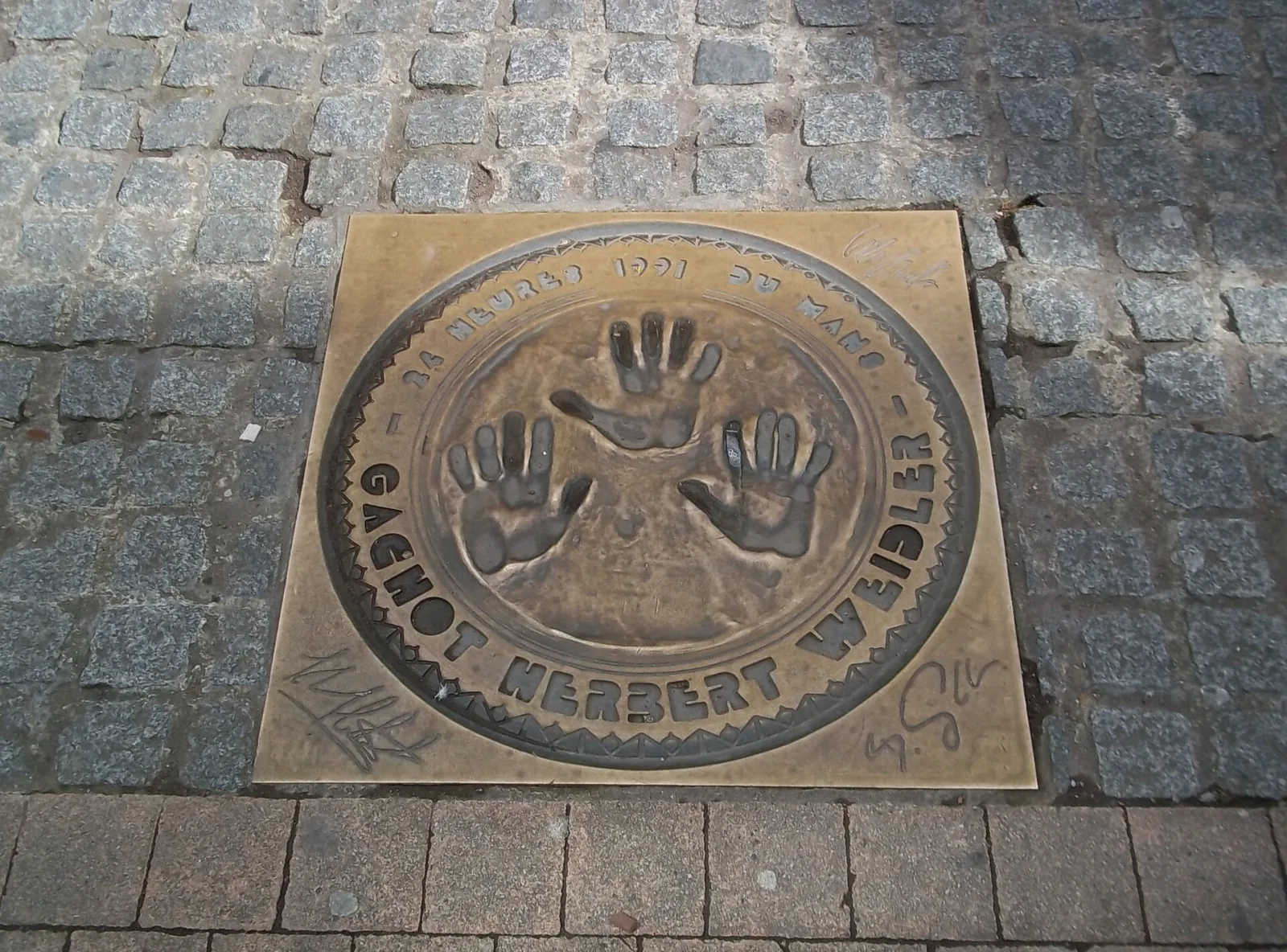
A rotary Mazda 787B won the 1991 race two laps ahead of a Jaguar, after the leading Mercedes lost its water pump belt with three hours to go.
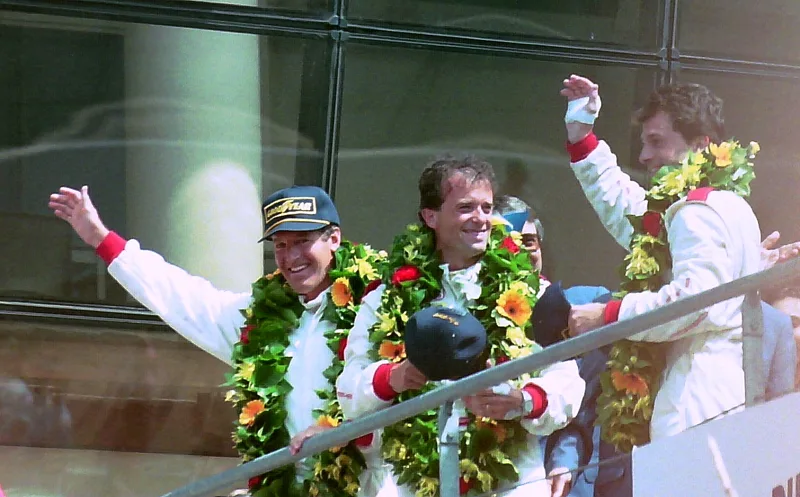
The rotary Mazda 787B of Weidler, Herbert and Gachot won the 1991 race by two laps. The win followed the failure of the leading Mercedes, whose water pump belt stopped the engine cooling after close to 17 hours in front, leaving a Jaguar second.
The 1991 24 Hours of Le Mans, the 59th Grand Prix of Endurance, was run on 22 and 23 June. Jaguar and Sauber-Mercedes had been expected to decide it, but a Mazda 787B driven by Volker Weidler, Johnny Herbert and Bertrand Gachot won by two laps. The victory came when the leading Mercedes lost the belt that drove its water pump.
Why was the 1991 race expected to be a Jaguar and Mercedes showdown?
The race was anticipated to be the final showdown between Jaguar and Sauber-Mercedes, with Porsche, Mazda and the new Peugeots in supporting roles. Jaguar had beaten Porsche in 1988, and Sauber-Mercedes had defeated both in 1989. In 1990 Mercedes stayed away, and Jaguar took its own 1-2 victory.
The 1991 race was the first under the new 3.5-litre non-turbo regulations for sports cars. Few manufacturers had models ready for them, so FISA allowed the Group C cars back as Category 2 and declared 1991 a transitional season. Those Group C cars had their minimum weight raised by 100 kg to 1000 kg, although the rotary Mazdas were exempt from that rule.
Mazda's position was unusual. Its rotary cars avoided the weight rule, and the team ran the full championship in Category 2 as the sole Japanese representative.
The leading Mercedes lost its water pump belt with three hours to go, and a rotary Mazda inherited the win.
What rules governed the 1991 race?
FISA and the ACO finally reached an agreement in the close season. The ACO accepted FISA's demands over media, commercial and timekeeping rights, and in return FISA offered a five-year contract in the new Sportscar World Championship, with worldwide television coverage.
The new 3.5-litre sports cars had a minimum weight of 750 kg. The Group C cars kept a fuel limit of 2550 litres, and they carried 100 kg of extra ballast in the top ten spots, while the rotary Mazdas did not.
FISA also decreed that Category 1 cars should take the top ten grid spots in the championship races, regardless of their times, with the Group C cars arranged behind them. By March only 17 cars had been committed to the championship.
FISA cut the commitment to 40 championship cars, and it gave a waiver to non-registered teams for Le Mans and two non-European rounds. Nissan and Toyota had stayed out of the championship, and Jaguar and Mercedes were livid when they seemed set to race for the one-off event without its expense. A compromise allowed non-registered cars to race only if an SWC team entered them with the same engine.
How big was the 1991 entry list?
After the FISA entry-list problems, the ACO received a reasonable total of 46 cars, matching the number of berths in its new pit complex. The grid eventually held 38 cars, the smallest in almost 60 years.
The 3.5-litre formula was joined by the Spice-Fords, Peugeot, Jaguar and Mercedes-Benz. Jaguar and Mercedes also had their older Category 2 Group C cars to call on, and Porsche engines dominated that class with 19 cars from Porsche and Cougar.
Spice Engineering had been bankrupt early in 1991. It was acquired in March by the Japanese corporation Fedco, which relaunched the company as Spice Prototype Automobiles. Dutchman Charles Zwolsman, running Euro Racing, was its main customer, and bought two of the new chassis. Fedco kept one of its new chassis for racing in Japan and brought it to Le Mans. Its rookie drivers were helped by Naoki Nagasaka, who had raced for SARD-Toyota. Five more Spice entries came under the Euro Racing umbrella.
How did the Jaguar and Mercedes factory teams line up?
As defending champions, Jaguar brought the XJR-14, designed by Ross Brawn, fitted with the Jaguar-badged version of the Ford-Cosworth HB Formula One engine, which produced 650 bhp above 11000rpm. Two cars were entered for the 3.5-litre class, but only one arrived, driven by Teo Fabi, Andy Wallace and Kenny Acheson. Its rear wing had two tiers, and the bubble canopy doubled as the door. FISA rules also required each SWC team to enter at least one 3.5-litre car.
TWR fielded four XJR-12s in Category 2, and a squad of more than 100 personnel arrived for the race. Alastair McQueen adjusted the aerodynamics, the brakes were enlarged, and engine specialist Allan Scott boosted the 24-valve V12 to 7.4 litres.
The driving pairings were built around each championship's core drivers. Derek Warwick ran with John Nielsen and Andy Wallace, Teo Fabi joined Wollek and Acheson, and the IMSA pair of Davy Jones and Raul Boesel raced with Michel Ferte. The fourth car, the rebuilt Jaguar that had crashed at Daytona, went to the Suntec team with Mauro Martini, Jeff Krosnoff and David Leslie.
Sauber-Mercedes entered a single new C291, with its 3.5-litre flat-12 M291 engine, for the Mercedes-Junior team of Karl Wendlinger, Michael Schumacher and Fritz Kreutzpointner. It also brought three C11 cars with 5.0-litre M119 engines, which put out up to 850 bhp in qualifying and 720 bhp in race settings. The C291 was also one of the first sports cars to feature a sequential gearbox.
What did Peugeot bring to the 1991 race?
Peugeot's 905 was designed at the Peugeot Talbot Sport factory near Paris, led by Andre de Cortanze. Its monocoque and shell were made of advanced composite and tested in the Dassault wind tunnel. The V10 was angled at 80 degrees, had four valves per cylinder and produced 600 bhp with Magneti-Marelli management. Jean-Pierre Boudy headed the engine team, having already worked with Renault, and Peugeot had supported the WM team in its attempt to break 400 km/h at Le Mans.
The transaxle sent first and second gear through the front wheels, while third to sixth went to the rear. The car was unveiled in mid-1990 and ran in the final two races of that season. Baldi and Alliot went on to win the opening round at Suzuka in 1991. Peugeot had last raced at Le Mans in 1926, when it was the dominant team in motorsport.
Baldi was the reigning world drivers' champion with Sauber-Mercedes, which he shared with Jean-Louis Schlesser. Former Formula One world champion Keke Rosberg drove the second Peugeot with Yannick Dalmas, matching experience with young French Formula One prospects, and the team also brought in Jean-Pierre Jabouille and Pierre-Henri Raphanel, under team director Jean Todt.
Who else was on the 1991 grid?
Mazda was the only Japanese representative, and it ran its rotary 787B cars in Category 2. Porsche engines dominated the class, and privateers filled the remaining places on the grid, with the Porsche-engined cars forming the biggest group.
The grid was thinner than the entry list suggested. The 46 accepted entries had shrunk to 38 starters by race day.
Spice was not the only customer name. Hugh Chamberlain entered both of his SE89Cs, one of them the 1989 championship-winning car, and PC Automotive returned with its SE89C, which had its DFL upgraded to a 3.5-litre DFZ engine. Classic Racing, the only American entry that year, ran a 3-year-old SE88 with a 3.2-litre Ferrari V8 turbo.
Tsunemasa Aoshima's AO Racing took an all-female crew of Desire Wilson and Lyn St James in an all-pink SE90, joined by French Indy Lights driver Cathy Muller. Louis Descartes's team built a second carbon-fibre chassis, the C91, and the Graff and Berkely Spice entries were refused by scrutineers when their drivers could not show current racing licences.
How did the 1991 race unfold?
The Peugeots had been ahead for the first hour, yet their reliability let them down, and both were soon in the pits, out of the race. The Mercedes cars then took the lead and ran 1-2-3 for several hours. The Jaguars were limited by fuel consumption and had to temper their pace, while the Mazda 787Bs stayed in the top ten.
At the halfway point the Schlesser, Mass and Ferte Mercedes led its teammates by a lap. Within an hour, Wendlinger's car was in the pits with a fourth-gear fault. The Mazda was quicker through the laps than the Mercedes, although it made little impression on the margin.
The leading Mercedes had spent close to 17 hours at the front, and then its temperature began to climb as it headed into the pits. The belt on the water pump had come off, which stopped the engine cooling. A similar failure had struck the third team car a few hours earlier.
The Mazda then screamed past into the lead with three hours to go. Its run had been very reliable, and although the Jaguars tried to push, Herbert brought the car home two laps ahead of the IMSA Jaguar of Jones, Boesel and Ferte. The Mercedes-Junior team lost a place in the last hour but finished fifth and won the Index of Energy Efficiency.
Michael Schumacher also set a new lap record during the race, beating the previous one by five seconds.
Final classification
| Finish | Drivers | Car | Note |
|---|---|---|---|
| First | Weidler, Herbert, Gachot | Mazda 787B | Two laps ahead of the second-placed Jaguar |
| Second | Jones, Boesel, Ferte | Jaguar | IMSA team entry |
| Fifth | Wendlinger, Schumacher, Kreutzpointner | Mercedes C291 | Won the Index of Energy Efficiency |
Only 12 cars were classified at the finish, including a single entry from the new Category 1.
What changed at the Le Mans circuit in 1991?
The ACO started demolishing and rebuilding the pits in September 1990, at a cost of more than 12 million pounds. The new complex had 46 pit spaces, a 2900-seat grandstand and the race-control centre and media centre, and it was inaugurated on the Friday night with fireworks. The pit lane was 15 metres wide, with a further 3 metres next to the pit wall for the teams, and the pit straight was widened to 12 metres. Each of the 46 pit spaces was 15 by 5 metres, five times the size of the previous pit space.
Out on the track, the Indianapolis and Arnage corners were modified with larger run-off areas. The Hunaudieres chicanes were resurfaced to smooth out the bumps, and the signalling pits at the Mulsanne hairpin were demolished, because car radios had made them redundant.
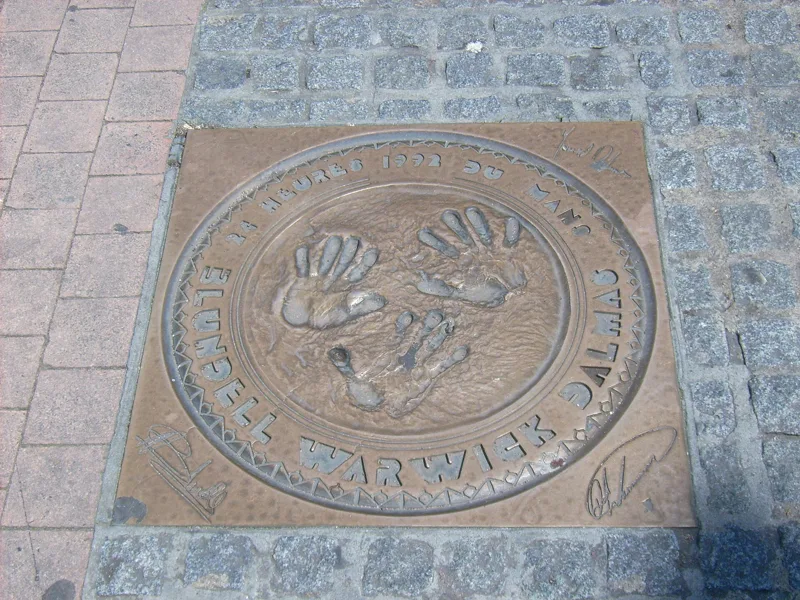
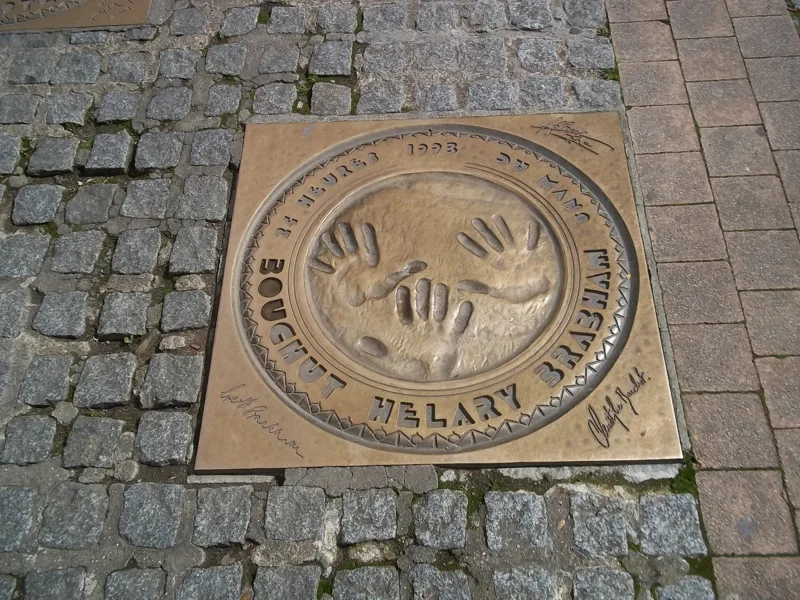
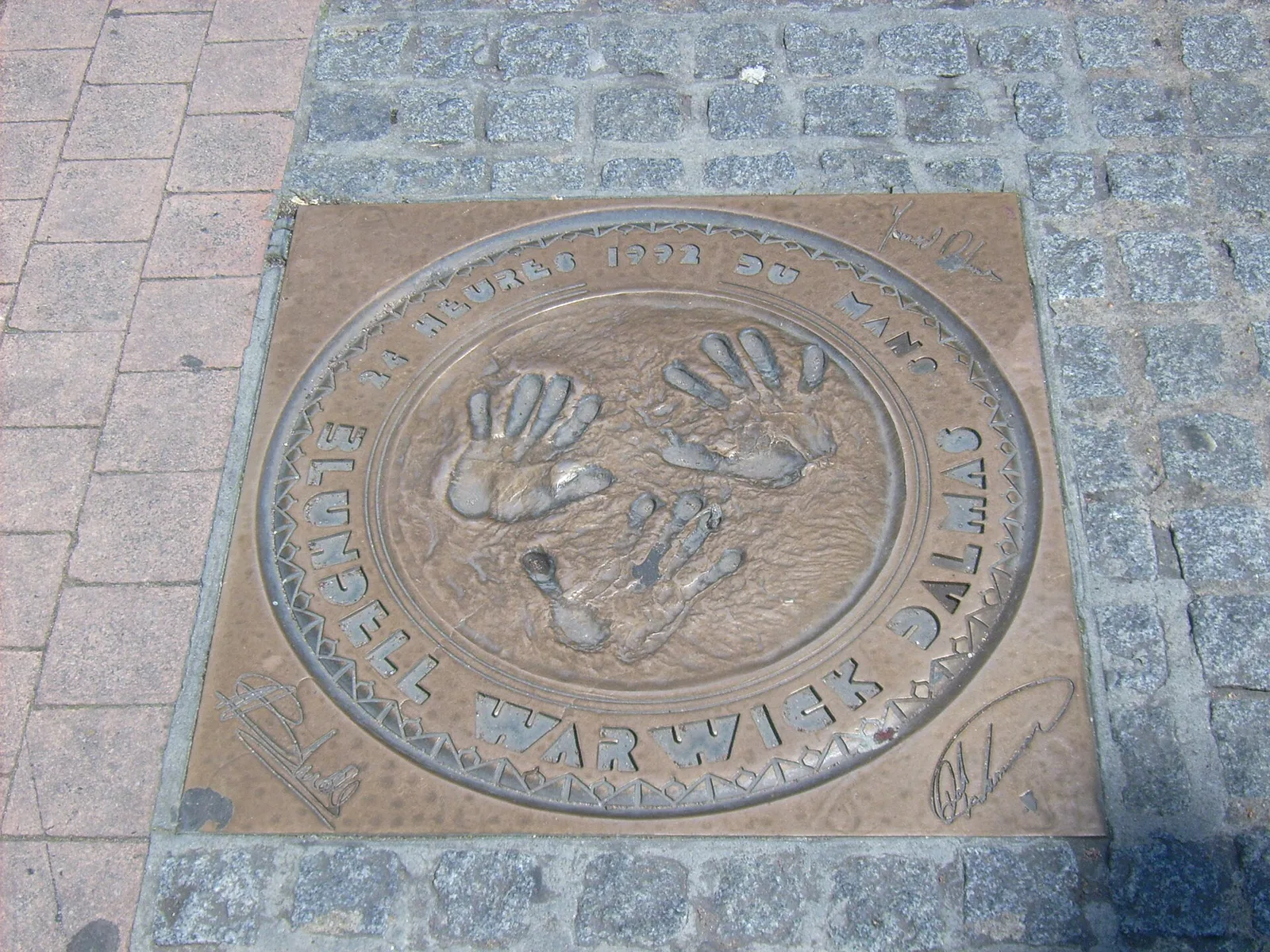
Le Mans also started the Empreintes des Vainqueurs, a plaque on the pavement in the city where previous winners leave their hand and footprints at the start of each racing week. Ticket prices ran from 28 pounds for entry, with a shuttle bus at 10 pounds, and grandstand seats from 25 to 38 pounds. Coach tours for British fans cost 60 to 70 pounds, and camping around the track cost around 13 to 20 pounds.
What did the 1991 race mean for the championship?
The race was run within a championship that had been reshaped by its transitional rules. The next year the grid was smaller, with only 28 cars starting.
The following winter FISA's commission recommended cancelling the championship, although it was later revived. Mazda's win on the rotary 787B came under rules that exempted the rotary cars from the weight rule that applied to the piston-engined Group C cars.