A road-legal Porsche 962 built under the new GT rules, the Dauer 962 Le Mans, beat the Toyotas, and Eddie Irvine's late chase took second place.
Porsche's Dauer 962 Le Mans took the 1994 win, built as a road-legal car from a decade-old racer. It finished ahead of its main rivals, the Toyotas, with Eddie Irvine second after a late chase, and the result showed the GT equivalency rules at work.
The 1994 24 Hours of Le Mans was won by a car that had its roots in a 10-year-old design. The Dauer 962 Le Mans was a road-legal version of the Porsche 962 Group C car, and it was built to take advantage of a gap in the new GT regulations. Eddie Irvine's late pursuit of the leaders brought him second in a Toyota.
Why was the 1994 Le Mans winner controversial?
The Dauer 962 was entered as a GT car, even though it shared its basic design with a racer that was a decade old. The regulations let a manufacturer apply for GT1 status with a single new model that was still being designed. That loophole meant one prototype could be classed as a production GT.
GT cars were allowed more engine power and a fuel tank 50% larger than prototypes, while prototypes had better aerodynamics. The Dauer had both advantages, and that made it the car to beat under the equivalency formula. Toyota, the Dauers' main rival, could no longer race its 3.5-litre TS010 and backed two customer teams instead.
Porsche did not begin the project from scratch. It had studied the GT rules and, faced with the new McLaren F1 and the impossibility of a mid-engined 911 in time, decided to use its existing racing model. Porsche's influence also helped assemble a strong driver line-up for the car.
A road-legal Porsche built through a rules loophole won the 1994 Le Mans race, but the regulations were soon tightened.
How did the GT rules come about?
After the Sportscar World Championship was cancelled, the Automobile Club de l'Ouest (ACO) wrote its own GT regulations in September 1993, before FISA had finished its work. Those rules created an equivalency formula that pitted GT cars against prototypes, using air-inlet restrictors, smaller fuel tanks and minimum weights to bring their performance closer together.
The FISA GT rules defined a GT as a two-door road car on sale to the public, registered for road use in two of several named countries. Minimum annual production was 25 cars for GT1 and 200 for GT2, but the loophole meant a manufacturer could apply for homologation before any cars had been built.
One result was the BPR Global GT Series, formed by merging Jurgen Barth's German Porsche series with Patrick Peter and Stephane Ratel's Venturi supercar series. It ran 8 races in Europe and Asia, and it gave GT cars a series of their own.
The ACO chose to embrace mixed-class racing. Its equivalency formula let production-based GT cars chase outright victory against its own prototype class and the IMSA World Sports Car cars, which was an unusual step at the time.
The ACO itself was nearly penniless after the championship's collapse, and it handed the finance and promotion of the race to the Syndicat Mixte.
Class rules compared
| Class | Fuel tank | Target output | Minimum weight | Maximum tyre width |
|---|---|---|---|---|
| LM-P1/C90 | 80L | 550 bhp | 900 kg (950 kg for turbos) | 16 inches |
| LM P2 | 80L | 400 bhp | 620 kg with production engines | 12 inches |
| LM GT1 | 120L | 650 bhp | 1000 kg | 14 inches |
| LM GT2 | 120L | 450 bhp | 1050 kg | 12 inches |
| IMSA GTS | 100L | 650 bhp | 1000 kg | 16 inches |
Air-inlet restrictors were graded according to engine volume, induction system and valves per cylinder. A 52.5mm restrictor on an 8-litre Dodge Viper V10 was set against a 25.9mm unit on the quad-turbo Bugatti EB110, so that both produced around the same power.
Which teams made up the 1994 entry?
The ACO received 83 applications and pruned them to 50, which produced 48 starters along with a number of cars on reserve. Three nominal factory teams were involved, from Porsche, Lotus and Honda. The old Group C cars now made up only a third of the entries, as manufacturer support for them had faded. Thirty-six cars took part in the test day in early May. Toyota, Venturi and Alpine were strong backers of their customer teams.
Sportscar racing was in a state of flux. The fleet of former Group C cars was ageing, and the IMSA World Sports Car class was still in its infancy. The ACO therefore adapted its prototype rules to aim for the 1990 Group C cars, with the proviso that they had to be open-topped with flat underfloors.
Toyota returned with its regular customer teams. Its 94C-V was essentially a two-year-old car built on a six-year design, and it had stronger gearboxes and a new aero kit. The SARD car carried the name of Roland Ratzenberger, who had been killed in qualifying for the San Marino Grand Prix shortly before the test day. That car was driven by Mauro Martini, Jeff Krosnoff and Eddie Irvine, who had been brought in as Ratzenberger's replacement.
The Nisso Trust team had enticed veteran Bob Wollek to join its regulars George Fouche and Steven Andskar, which gave the Toyota effort a strong sportscar pedigree.
The Kremer brothers had converted their Porsche 962 into an open-top spyder called the K7, but it was ruled ineligible at the May test day. They built the K8 in its place, and the project was taken over for Gulf Oil UK, with Derek Bell brought out of a year of retirement to drive it. Bell ran mid-field at the test day, which meant the car needed work to reduce its downforce, and for the race he was joined by Robin Donovan and Jurgen Lassig.
ADA Engineering had raced low-budget Group C cars through the previous decade. In 1992 it had entered a Porsche 962C-GTi with Derek Bell and his son, and for 1994 the car was refashioned for the LM-P1/C90 rules and entered for Japanese driver Masahiko Kondo, with Jun Harada and Tomiko Yoshikawa alongside him.
Yves Courage's team set aside a planned C41 for IMSA and ran three cars instead, two C32LMs and a third hastily prepared car. Henri Pescarolo, Alain Ferte and Franck Lagorce drove the lead car.
What was in the LM-P2 and smaller entries?
The LM-P2 class was limited to single-seat prototypes with production-based engines. Welter Racing ran two LM94 cars with 1.9-litre Peugeot engines tuned to 400 bhp. Patrick Gonin and Pierre Petit drove the older LM93 with Marc Rostan, while Herve Regout, Jean-Francois Yvon and Jean-Paul Libert took the lead car. Weighing under 650 kg, they were the lightest cars in the field and could reach 305 km/h (190 mph).
Didier Bonnet's Debora was an upgraded SP93 with a 3-litre Alfa Romeo V6 tuned to 260 bhp. The Harrier LR9, a concept road car originally built by Lester Ray, was converted to an open-top spyder with a 350 bhp Cosworth BDG engine. It had been rejected by the GT2 scrutineers for having no roof, so Hugh Chamberlain persuaded them to place it in the LM-P2 prototype class.
Louis Descartes entered an ALD 06 with a BMW 3.5-litre engine producing 450 bhp. Roland Bassaler's 1982 Sehcar, rebadged as an ALPA, was given a Cosworth V8, and at 12 years old it was the oldest chassis to run at Le Mans.
How was the Dauer 962 built?
Porsche could not develop a mid-engined 911 in time for 1994-5 to answer the McLaren F1, so it worked with its other successful racing model. Jochen Dauer, a former racer and Porsche customer team owner, had long wanted a road-going conversion kit for the 962. Chief engineer Norbert Singer saw the new GT1 rules as the ideal chance to compete.
The Dauer was registered in GT1, which gave it 100 bhp more than the LM-P1 cars. Its 50% bigger fuel tank was an added bonus. The car could run only 12-inch tyres and was 100 kg heavier than the original sportscar. With the restrictors in place, its 3-litre engine produced 620 bhp and reached a top speed of 330 km/h (205 mph).
Three chassis were built, and two came to Le Mans. Although they were nominally entered by Dauer, they were prepared by Joest Racing.
How did the 1994 race start?
Alain Ferte put the homegrown Courage on pole, but Derek Bell swept around the outside to lead into the first corner. Ferte and Baldi in the Dauer passed him on the back straight, and after the prototypes had pitted the two Dauers of Baldi and Stuck ran 1-2 at the end of the first hour.
Toyota's challenge came from its tyre strategy, with double-stinted tyres shortening the extra fuel stops its cars had to make. When Dalmas ran his Dauer out of fuel as it came into the pit lane, and Sullivan had a puncture, the Toyotas seized the chance and took a 1-2 lead into the night.
The Courages picked up as the temperature fell and began to pull back the gap, but their charge ended early on the Sunday with terminal engine problems. The Nisso Trust Toyota led through the night until it pitted at dawn with a faulty differential. The hour of repairs dropped it to fifth and handed the lead to the SARD Toyota.
Who won the 1994 24 Hours of Le Mans?
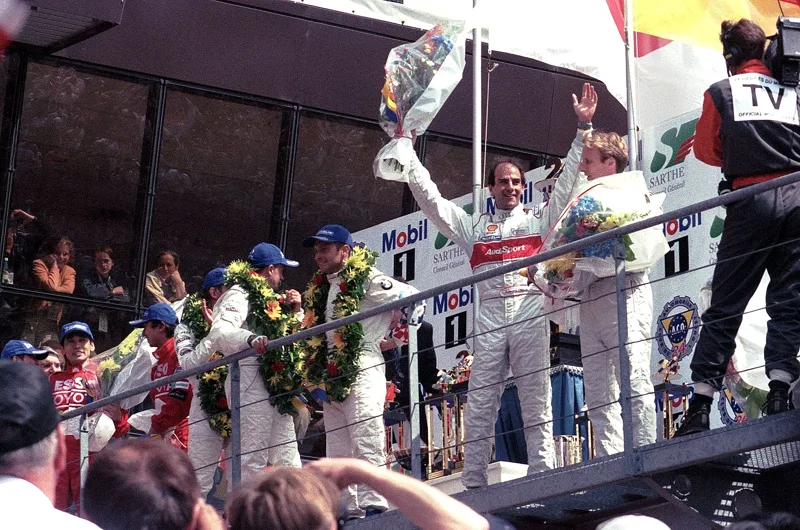
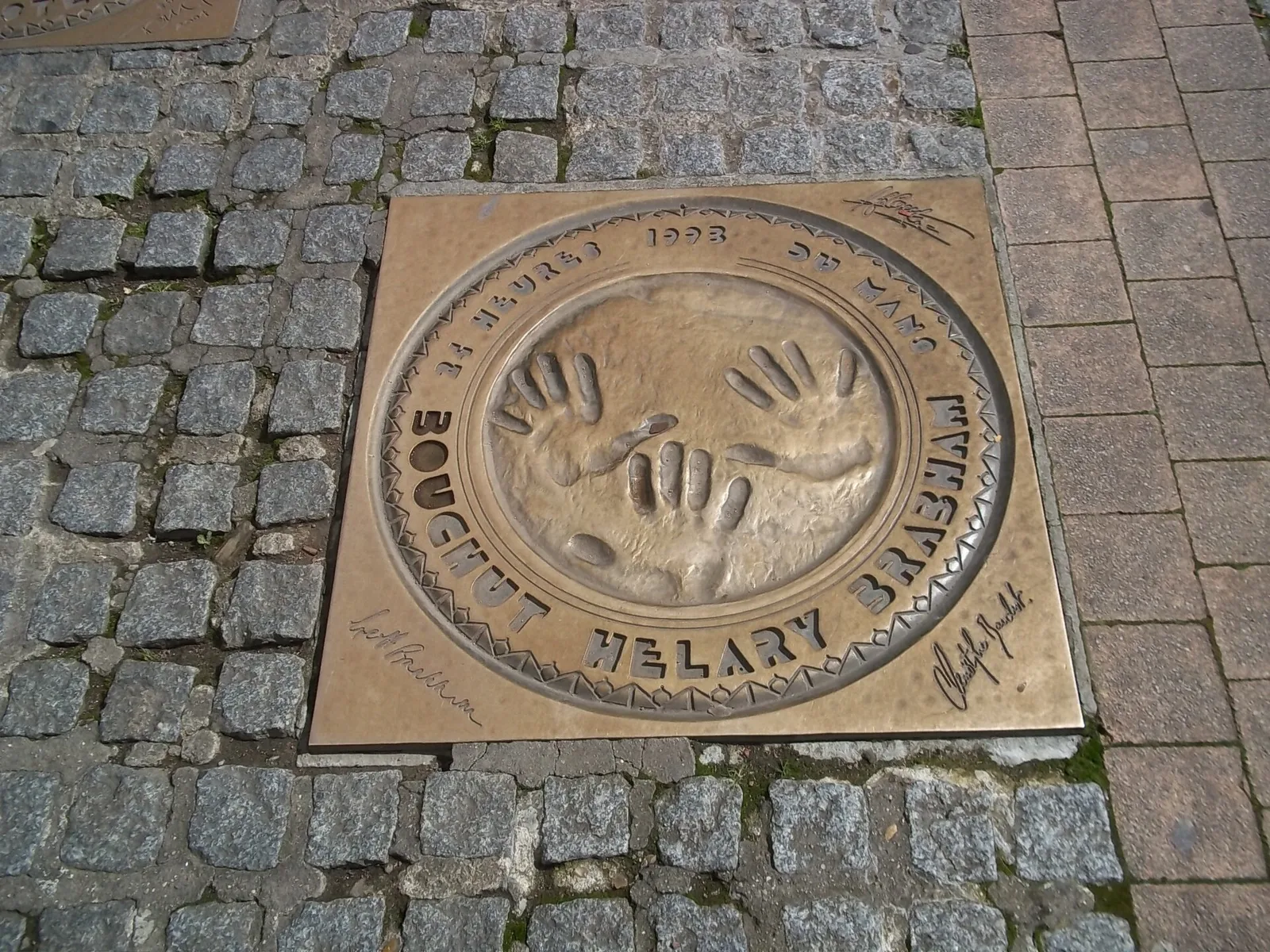
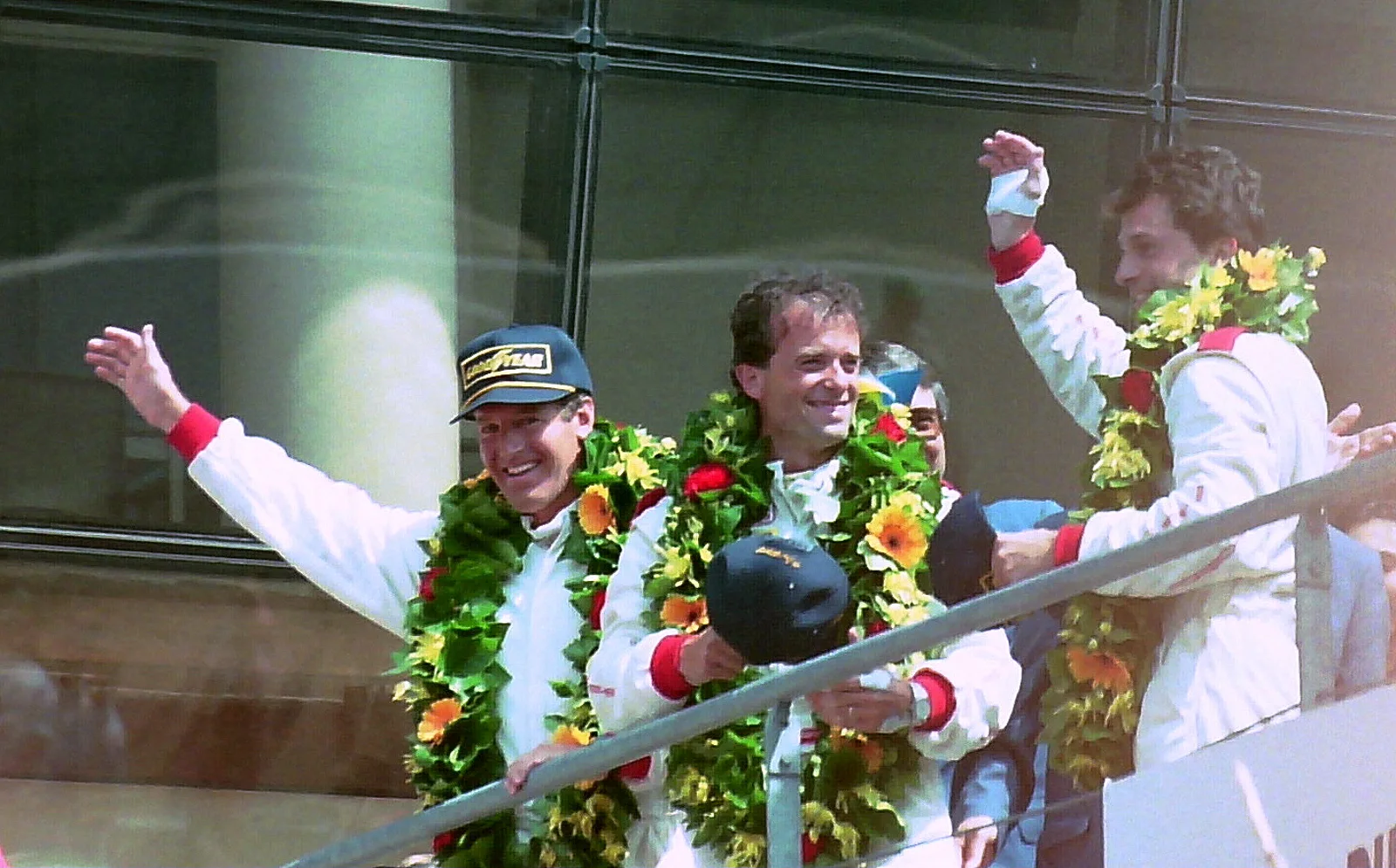
The Dauer-Porsche of Hurley Haywood, Yannick Dalmas and Mauro Baldi won the race. Irvine finished second in the SARD Toyota after a late pursuit of Thierry Boutsen, who had been running second until Irvine caught him.
Toyota's pace through the morning looked like it might finally bring the marque its first Le Mans win, with the Dauers never more than one or two laps behind, waiting for a slip. With 100 minutes to go, Jeff Krosnoff came to a stop at the pit exit with a broken gear linkage. He slammed the car into third gear by hand and drove a lap back to the pits, but a quarter-hour of repairs was all the Dauers needed to pass.
The result showed how the equivalency formula could bring GT cars into the outright contest with prototypes. Porsche's car had started life as a racer, and it finished ahead of a field of Toyotas that had been built around prototype rules.
Irvine then took off in an all-out pursuit over the last hour. He caught Boutsen with ten minutes to go, and when they came up behind slower cars before the final chicane, Irvine pounced and trapped Boutsen behind them. Boutsen tried to re-pass in the closing laps, scattering flag marshals who were expecting a tame procession to the flag.
In the GT class, outside the Dauer cars, ten other makes competed across the two classes. The GT1 win was expected to go to the Dauers, but in GT2 the Callaway Corvette was disqualified for refuelling on track. That left the Larbre Porsche to lead home a class 1-2-3 finish.
What did the FIA and the ACO change for 1994?
The FIA had threatened the ACO with the loss of its international licence if spectators invaded the track again at the end of the race. The rule would be rigorously enforced, because cars could still be travelling at speed towards the finish line.