A Joest-run TWR-Porsche won on its race debut, while steady reliability and a 22-year-old rookie decided a race the press had called one of the most open in years.
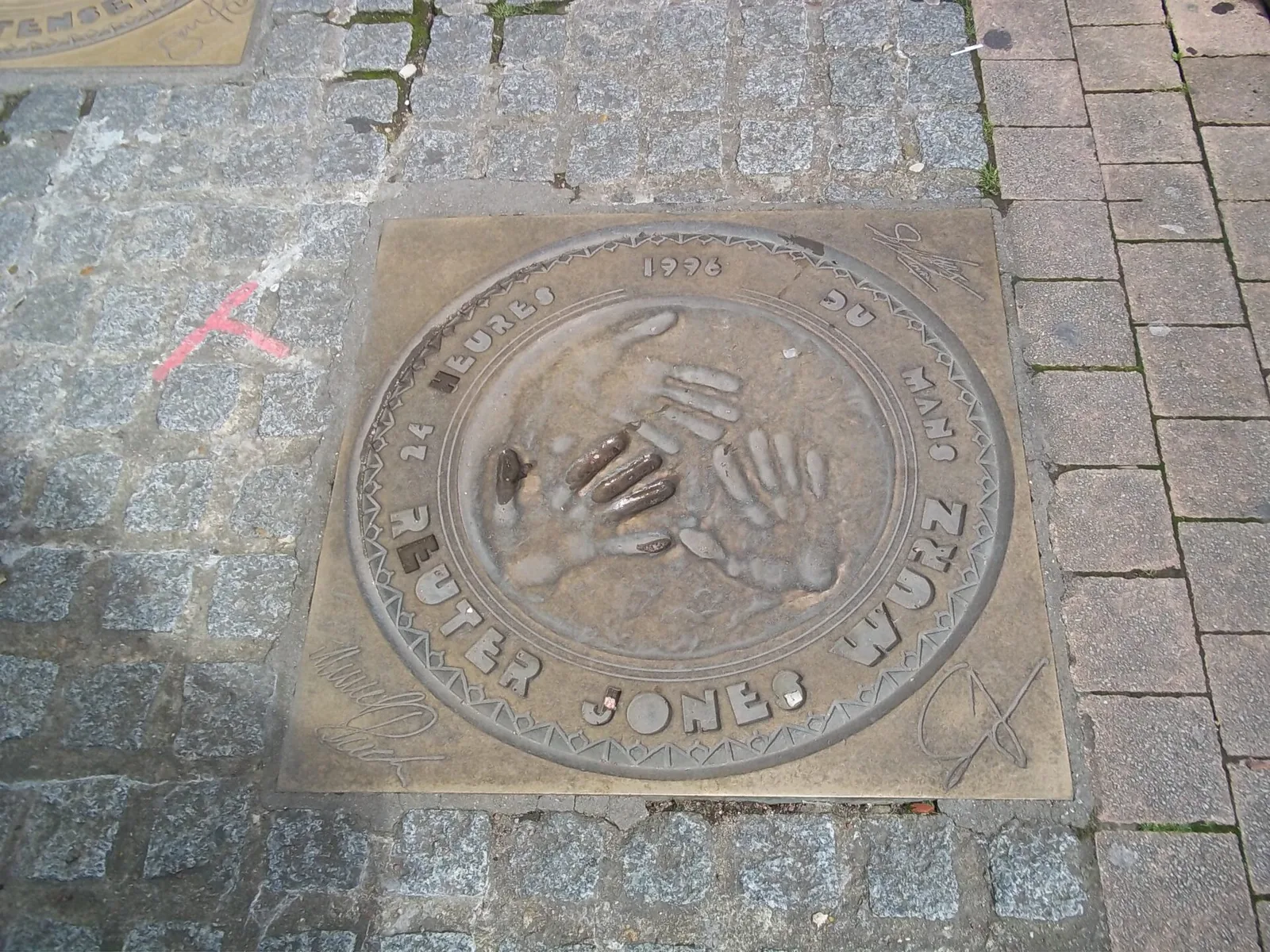
The 1996 24 Hours of Le Mans, the 64th running, took place on 15 and 16 June 1996 at the Circuit de la Sarthe. A Joest Racing TWR-Porsche driven by Davy Jones, Manuel Reuter and Alexander Wurz won, and the car had made its race debut that year.
Alexander Wurz, aged 22, became the youngest overall winner in the history of the 24 Hours when the Joest Racing TWR-Porsche of Davy Jones, Manuel Reuter and Wurz won the 1996 race on 15 and 16 June. The car won on its race debut, just as McLaren had done the year before. Works Porsches and the new 911 GT1 were the strongest rivals, but reliability settled the outcome.
What were the rules for the 1996 race?
The ACO kept its equivalency formulae between prototypes and GT cars, but it added engine volume and turbo boost to the calculations. It also rewrote its prototype rules in parallel with the American IMSA-WSC regulations, setting a minimum weight of 875 kg.
Backing the success of the SRO series, the FIA had produced its own GT rulebook, laying the ground for a formal championship in 1997. GT1 cars could now make major engine modifications, while GT2 cars still needed series-production engines.
Aerodynamic aids were more generous, with carbon fibre and other specialist materials allowed, although driver aids remained tightly limited. GT1 cars had to build only 25 street-legal examples, with a proof-of-concept promise accepted in place of the rest.
The ACO also required three drivers to qualify in each car. To throw prototypes and GT1 cars into battle from the start, the grid was split in two, with prototypes lined up in qualifying order on the left and GT cars on the pitward side.
A 22-year-old rookie on a race debut, and a car built for reliability, took the youngest overall Le Mans win.
Class limits for 1996
| Class | Minimum weight | Fuel tank | Engine limit | Tyre width |
|---|---|---|---|---|
| LM P1 and C90 | 875 kg | 80 litres | 5.1 litres, or 3.0 litres for turbos | 16 inches |
| LM P2 | 650 kg | 62L | 3.4L for six cylinders, or 2.0 litres for four turbo | 14 inches |
| WSC | Graded by engine size and type | 80 litres | 4.0 litres, or 3.0 litres for turbos | 18 inches |
| LM GT1 and GT2 | ACO sliding scale | 100 litres | 8.0L, or 4.0 litres for turbos | 14 inches front, 12 inches rear |
WSC engines were also limited by speed, to 8500 rpm for two-valve V8s and 10500 rpm for four-valve V12s. GT2 cars were restricted to ferrous brakes, while GT1 cars were allowed carbon brakes.
How were the entries and the grid arranged?
The automatic entries were halved from 20 to 10, and the ACO received 107 applications. Of those, 76 were accepted, and 66 went to pre-qualifying at the end of April. From that session 38 starters were chosen, with five reserves waiting in case of need.
Each car had to be driven by three drivers. The start was moved to 3pm to fit television coverage of an England and Scotland football match at the Euro championships.
Race-week entries were dominated by GT cars, with 39 against 14 prototypes, and only three WSCs came from the IMSA series, which was leading the revival of sports car racing in America. Journalists saw the race as one of the most open in years.
Two new manufacturers joined the GT1 field. Chrysler brought the Viper, a muscle car with an 8-litre engine, and Porsche answered the McLaren F1 with its 911 GT1.
The prototype field and its cars
Courage Competition, the French manufacturer, brought three C36 spyders, a development of the Group C-based C30. The team fitted carbon brakes and reworked the suspension and cooling ducts, and a reshaped rear wing completed the aerodynamic changes.
The turbocharged 3.0-litre Porsche flat-six was held to 520 bhp, which removed about 80 bhp from the previous year's power. Mario Andretti returned with Jan Lammers, the 1988 winner, and Derek Warwick, who had won in 1992.
A second C36 was driven by Philippe Alliot, Didier Cottaz and Jerome Policand. The Elf La Filiere academy, based at the Le Mans Technoparc, entered its car with veteran Henri Pescarolo, starting his 30th race, alongside Franck Lagorce and Emmanuel Collard, both much younger than their team leader.
Kremer Racing's newly built K8 Spyder, with power trimmed to 530 bhp, was driven by Christophe Bouchut, Jurgen Lassig and Harri Toivonen. The older car had Stanley Dickens, George Fouche and the adventurer Steve Fossett, and the team had taken 30 kg out of the design.
TWR had run Jaguar's works effort in the Group C years, and its XJR-14, designed by Ross Brawn, had won the teams' and drivers' titles in 1991. When IMSA allowed turbocharged cars, Tom Walkinshaw approached Alwin Springer at Porsche North America, and Porsche agreed to supply engines, powertrain and expertise for Daytona, Sebring and Le Mans. A 100 lb ballast increase for turbo cars, announced shortly before the 1995 Daytona race, led Porsche to withdraw.
Reinhold Joest then took over the Porsche project a year later, which suited Porsche because it could focus on its GT1 cars. The car was rebuilt as an open-top with a three-litre twin-turbo straight-six, and Davy Jones, Manuel Reuter and the 22-year-old rookie Alexander Wurz drove one car. Michele Alboreto, Pierluigi Martini and Didier Theys drove the other.
Andy Evans's Scandia team ran two Ferrari 333 SPs from the IMSA series, and one was leased to Pascal Witmeur, whose team was known as Racing for Belgium. Evans's entry was crewed by Fermin Velez and Yvan Muller, while the second car carried sponsorship from 1001 Belgians to raise money for children. Tony Southgate reworked the airflow for the restrictors, and the top speed rose by 30 kph to 330 kph (205 mph). The new bodyshells came from Dallara in race week. Eric van der Poele topped pre-qualifying in both cars, and he had also been part of the winning crew at Sebring.
Riley and Scott's Mark III had won the Daytona and Sebring races for Doyle Racing, and the works team used the winning drivers from Daytona, Wayne Taylor, the IndyCar driver Scott Sharp and Jim Pace. It was built on a tubular frame with a carbon and Kevlar chassis tested in a wind tunnel. The engine bay accepted any stock unit, and the car ran a 4.0-litre Oldsmobile Aurora V8 producing 550 bhp.
Welter Racing's LM96 was the only one of its cars to pass pre-qualifying. Didier Bonnet's Deboras used a 2.0-litre Cosworth turbo producing 360 bhp, and one of his two cars failed pre-qualifying despite a lap four seconds faster than the previous model.
Jim Downing's Kudzu DLM was the seventh chassis the team had built, and it had its own intake system to cope with the tighter restrictors. Downing again raced with Yojiro Terada and Franck Freon, the same pairing as the two previous years. Its three-rotor Mazda produced the equivalent of 400 bhp, and a carbon hull made the car 90 kg lighter and almost six seconds faster than before.
Which GT1 cars were the front-runners?
McLaren's F1 GTR was upgraded, with the engine sitting lower in the chassis and revised suspension, steering, brakes and cooling. Nine new chassis were built, and the BMW engine lost only 40 bhp to the new restrictors, which left it near 600 bhp with a top speed of 330 kph (205 mph).
Two cars went to Gulf Racing, run by Bellm and Owen-Jones, and two more to the Japanese newcomers Team Goh. Fabien Giroix took one for BBA Competition, and BMW Motorsport supplied three to the Italian Bigazzi team, which had four wins at the Spa 24 Hours. Thomas Bscher's two 1995 chassis were upgraded to 1996 specification by David Price Racing.
In the BPR series the McLarens had won all four opening rounds before Le Mans. Ray Bellm and James Weaver had won two of them, and JJ Lehto, last year's sensation, joined them.
Porsche's answer was the 911 GT1, which was in effect a lengthened, squashed 911 but was the company's first mid-engined car and its first fully water-cooled engine. Herbert Ampferer, the new head of Porsche Motorsport, had started the project just after McLaren's 1995 Le Mans win. Its 3.2L 24-valve flat-six had twin KKK turbochargers producing 590 bhp.
The 911 GT1 used a six-speed sequential gearbox and carbon-ABS brakes. The first chassis was finished in March and ran unpainted at pre-qualifying, after almost 7000 miles of testing. Two road-going cars allowed the car to be homologated under the promised-production clause, as the Dauer-Porsche had been in 1994.
BMW's Bigazzi team also ran two cars, one with Steve Soper, Marc Duez and Jacques Laffite. The other Bigazzi-run car, owned by BMW North America, carried Johnny Cecotto, Danny Sullivan and the three-time Formula One World Champion Nelson Piquet, who was making his first run at Le Mans.
How did the race unfold from the start?
The two TWR-Porsches and two works Porsches set the pace from the start, and the challengers from Ferrari, Courage and McLaren fell away with mechanical trouble or accidents. The only car close enough to the Porsches was the Gulf McLaren of Ray Bellm, James Weaver and JJ Lehto.
That McLaren held third place on Sunday morning until it had to stop for a gearbox change. From then on the Porsches and the Joest car were left to fight over the win. After the early shakeout the order at the front changed little.
The works Porsches and the Joest car
The works Porsche team had strong cars, but the Joest car won on consistency over the 24 hours. Evenly matched on pace, the two teams were separated by the metronomic reliability of the Joest car and by drivers who kept to a steady schedule.
Wurz, at 22, had been brought into the car as a rookie and shared the driving with the more experienced Jones and Reuter. He was part of a crew that held its place through the closing hours, and the car finished its first race in the lead. Porsche's weekend was strong overall, with the works cars the fastest in the early laps.
GT2 and the wider field
A strong weekend for Porsche was capped by Roock Racing, which comfortably won the GT2 class on its Le Mans debut. The GT classes made up most of the race-week entry, and the GT2 result gave Porsche a second win to set beside the overall victory.
The TWR-run prototype had been developed from a Jaguar project and then turned to Porsche power.
Why did Wurz's win matter?
Alexander Wurz, at 22, is the youngest overall winner in the race's history. The victory came on the Joest car's race debut, following McLaren's win on its debut in 1995, so two cars in two years had won at the first attempt.
Porsche's 911 GT1 had made a big impression on its debut, but the Joest car's reliability gave it the edge in the end. The works cars had been the fastest in the early laps.
The pre-race talk had been of an open contest, and the result bore that out. It was a victory that owed as much to discipline as to speed.