A lowered hill on the Mulsanne Straight, a tighter entry process and a single shared test day shaped the 2001 24 Hours, which drew 220,000 people.
The 2001 24 Hours of Le Mans was held on 16 and 17 June at the Circuit de la Sarthe in France. Rinaldo Capello took the LMP900 pole for Audi, and the race drew 220,000 people after changes to the Mulsanne Straight and an 80-application entry process.
The 2001 24 Hours of Le Mans was the 69th running of the race, held on 16 and 17 June at the 13.605 km (8.454 mi) Circuit de la Sarthe. It drew 220,000 people, and its entry and qualifying were shaped by changes to the circuit and to the class rules.
How did the race begin, and why is it so prestigious?
The race was first held in 1923, after the motoring journalist Charles Faroux, the ACO general secretary Georges Durand and the industrialist Emile Coquile agreed to run a test of vehicle reliability and durability. It is regarded as the most prestigious sports car race in the world.
Many regard it as the most prestigious endurance event for sports cars, and it forms part of the Triple Crown of Motorsport.
The 2001 Le Mans was shaped by a lowered Mulsanne hill, a crowded entry list and an Audi pole that a gravel trap almost denied.
What changed on the Circuit de la Sarthe before the race?
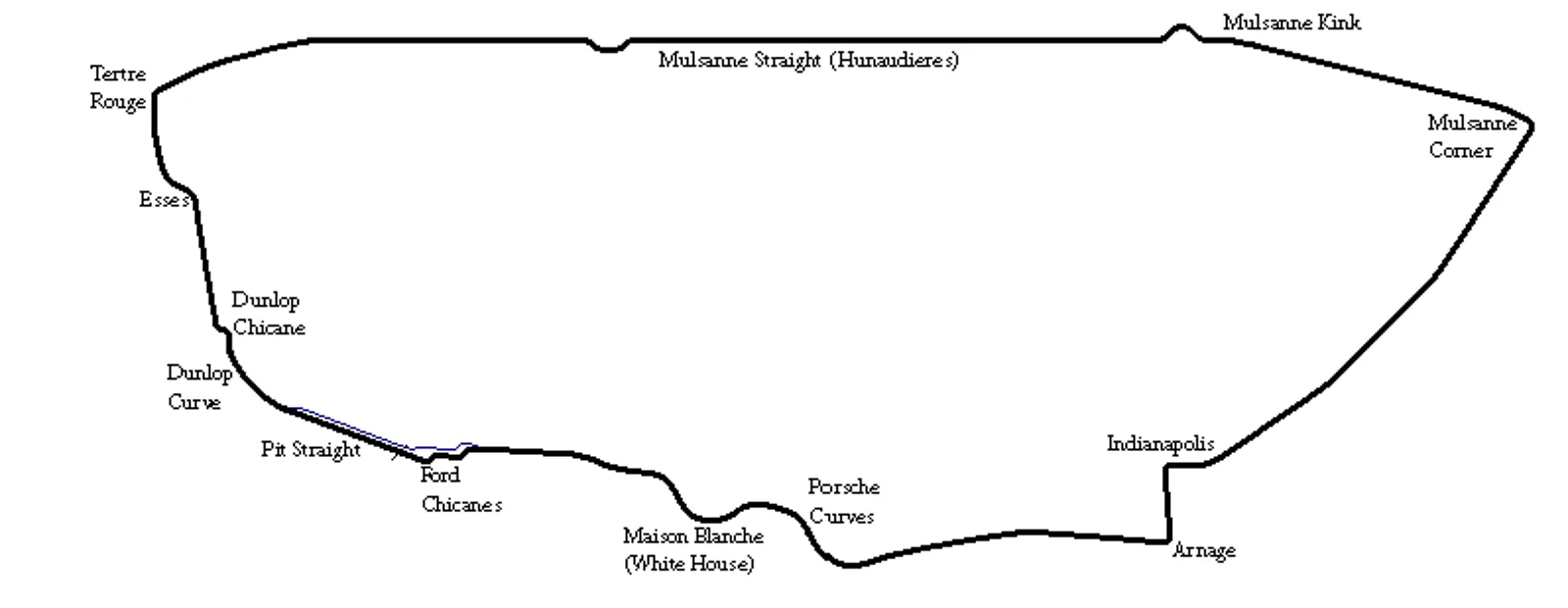
The road forming the Mulsanne Straight was altered after the 2000 race. A hill on the approach to Mulsanne Corner was lowered by 2.4 m (7.9 ft), at the spot where Mark Webber had an airborne accident in a Mercedes-Benz CLR during the 1999 warm-up.
The Federation Internationale de l'Automobile required the work, which cost almost F6.5 million. Traffic using the area was diverted onto an alternate route while 7,000 m3 (250,000 cu ft) of cuttings were removed, from 1 December 2000 until mid-March 2001.
The run-off area was widened ahead of the Indianapolis corner, and the gravel trap and spectator section were relocated further back to improve safety.
What rule changes came in for 2001?
The ACO allowed LMP675 cars to use a V6 turbocharged engine of up to 2,000 cc, up from the V4 permitted in 2000. Teams could also fit a V8 into a car that was normally aspirated. The weekend format changed as well: 48 cars and six reserves drove together on the test day, in place of separate sessions.
The governing body scrapped its daylight headlight requirement, and the FIA would oversee laboratory crash testing of every car. The weekend format also changed, so that no cars would be eliminated from contention, as had happened in previous editions.
How was the entry list built?
The ACO received 80 good-quality applications before the deadline at midnight on 28 February 2001. An eight-person selection committee granted 48 invitations in late March, spread across the LMP900, LMGTP, LMP675, LMGTS and LMGT categories. Those decisions were made before the full entry list was published on 4 April.
Automatic places went to teams that had won their class in 2000 or had won Le Mans-based events, such as the 2000 Petit Le Mans, the Race of a Thousand Years and the 2000 1000 km of Nurburgring. Each pre-selected team could enter no more than two cars and could not change its vehicles or drivers.
The pre-selected teams had already been placed on the list, so the committee's invitations filled the remaining places. The final list of automatic berths arrived on 26 January 2001. Three of the twelve pre-selected teams, Audi Sport North America, Viper Team Oreca and Dick Barbour Racing, chose not to take up their places.
Eight marques, among them Audi, Bentley and Cadillac, were admitted to the prototype categories, where works teams and privateers mixed. Lola, Pilbeam and Reynard cars made up the eight-vehicle LMP675 class.
Chrysler, General Motors through its Chevrolet division, and Saleen were the three manufacturers in the LMGTS class. Most LMGT cars were Porsches, with Callaway represented by a single team.
The full 48-car list and six reserves were announced on 4 April. On 27 April the No. 59 Saleen/Allen Speedlab S7 was withdrawn, and the No. 21 Team Ascari car was promoted from the reserve list to take the vacated grid slot.
What did the pre-race test day involve?
A mandatory test day was held on 6 May, split into two daytime sessions of four hours each. Several drivers ran off the circuit during the sessions. All 48 cars and four reserve entries took part, and they drove together rather than in separate sessions for each class.
Stefan Johansson's No. 4 Johansson Motorsport R8 was fastest in the morning at 3:36.054. Tom Kristensen was second in the No. 1 Joest Audi, and Stephane Ortelli third in the No. 7 Bentley EXP Speed 8.
Pirro (Team Joest), Herbert (Champion Racing) and Dalmas (Chrysler LMP) completed the top six. Eric van de Poele set the fastest LMP675 time for Dick Barbour, while the Larbre team led both GT classes with its Oreca Viper and its Porsche.
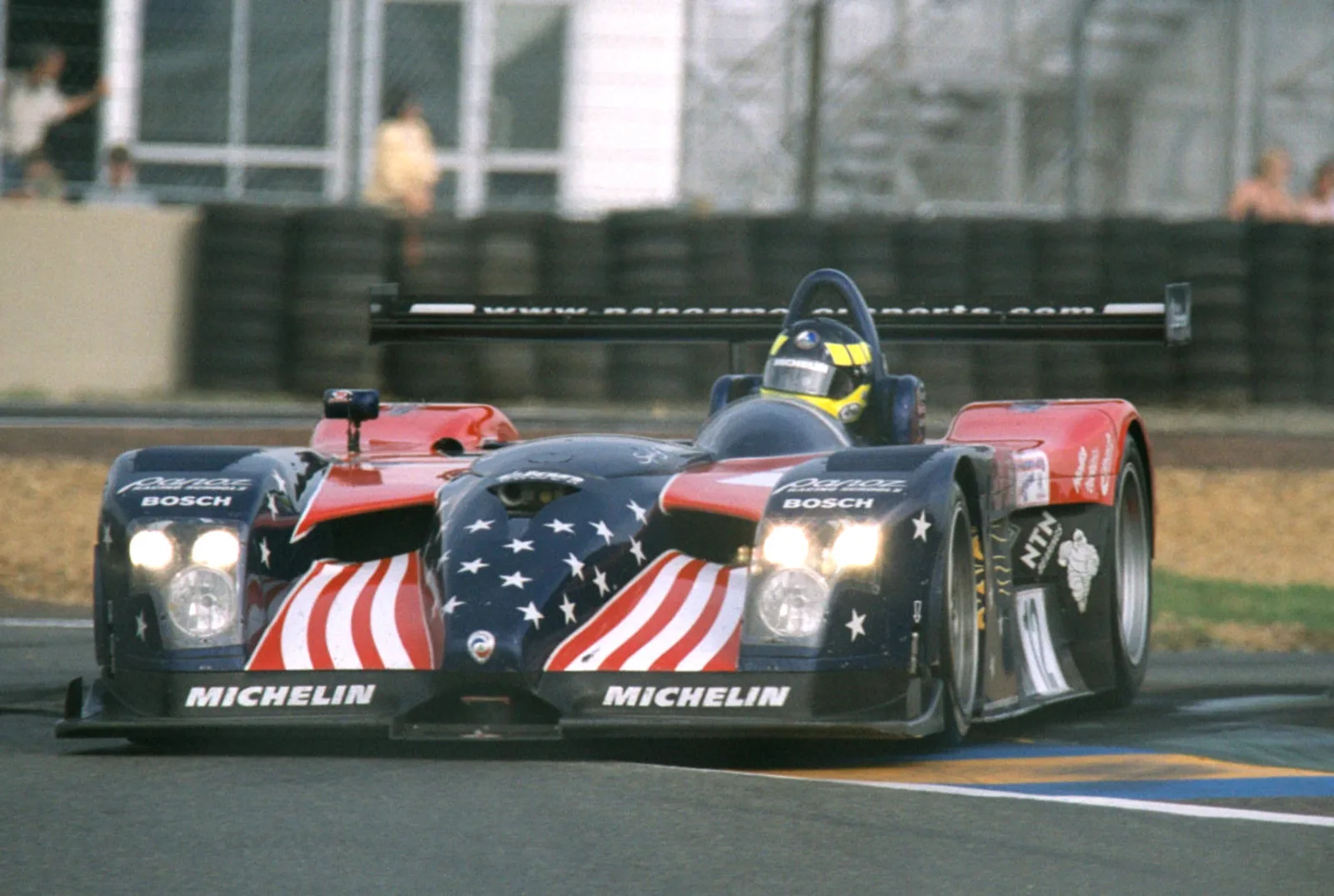
A broken exhaust header led to a fire in David Brabham's Panoz LMP07, whose carbon fibre chassis was damaged in the final moments of the morning session. The team withdrew the No. 12 car for the rest of the day.
A suspension arm had to be replaced on the No. 2 Audi after Kristensen damaged its front-right corner. The No. 64 Corvette stopped on the Mulsanne Straight when its steering gave out.
In the second session Rinaldo Capello set the fastest lap in the No. 2 Audi at 3:32.742. Ralf Kelleners was second for Champion Racing, Martin Brundle third in Bentley's No. 8 car, Jan Lammers fourth for Racing for Holland, and Frank Biela fifth in the second Joest Audi.
Oliver Gavin put the No. 60 Saleen Allen Speedlab S7R at the head of the GTS runners at 3:54.344, and Xavier Pompidou's No. 73 Freisinger Porsche led the LMGT class. Fabio Babini's No. 83 Seikel car and the No. 35 Rowan Pilbeam made contact at the Ford Chicane late in the session.
How did qualifying run over eight hours?
Qualifying ran for eight hours, in four two-hour sessions on 13 and 14 June. Every entrant had to set a time within 110 per cent of the fastest lap by the fastest car in each of the five categories. The timed running was split between the two days.
Audi, the pre-race favourites, led early on. Capello took the first session's fastest time at 3:34.880, with Kristensen three-tenths of a second behind. Lammers was third and Kelleners fourth for Champion Racing, and Brundle's Bentley was the fastest of the Bentleys in fifth.
Kristensen improved to 3:32.458 seven minutes into the second session, four seconds faster than Allan McNish's pole lap from 2000. Capello then lost time when his No. 2 car had a power steering fault, and Lammers moved up to fourth before Brundle was demoted to fifth.
Brundle's Bentley had a punctured tyre on the Mulsanne Straight, which sent it into the gravel at Mulsanne Corner. Anthony Reid's MG-Lola in the LMP675 class had a possible blocked fuel filter, but kept the class pole, and Ron Fellows crashed into a tyre barrier at the second Mulsanne chicane.
In the final session Capello set 3:32.249 in the No. 2 Audi and took pole from Kristensen. Kristensen's car had gone into a gravel trap at the first Mulsanne chicane with a slow puncture, which cost him the lap.
Reid twice reset the fastest LMP675 lap to take the class pole at 3:41.769 for MG. The No. 60 Saleen of Gavin took the GTS pole, and Cort Wagner's Callaway C12 kept the LMGT pole, which was never bettered.
Who took the class poles?
| Class | Pole sitter | Note |
|---|---|---|
| LMP900 | Rinaldo Capello, No. 2 Audi | 3:32.249 in the final session |
| LMP675 | Anthony Reid, No. 34 MG-Lola | 3:41.769, set twice in the final session |
| LMGTS | Oliver Gavin, No. 60 Saleen | Class record of 3:52.849 in the third session |
| LMGT | Cort Wagner, Callaway C12-R | His lap was not bettered by any other driver |
What happened in the warm-up and the race?
The drivers took to the track at 09:00 on 16 June for a 45-minute warm-up on a damp track after overnight rain. Teams used the session for systems checks, tyre compounds and driver familiarisation. Christian Pescatori's No. 2 Audi was fastest at 3:40.497, ahead of Pirro's No. 1 Joest Audi.
Guy Smith's No. 7 Bentley was the highest-placed Bentley in the warm-up, and the ROC Auto Reynard set the fastest LMP675 lap at 3:51.491. Klaus Graf's No. 11 Panoz went into the gravel after a tyre issue.
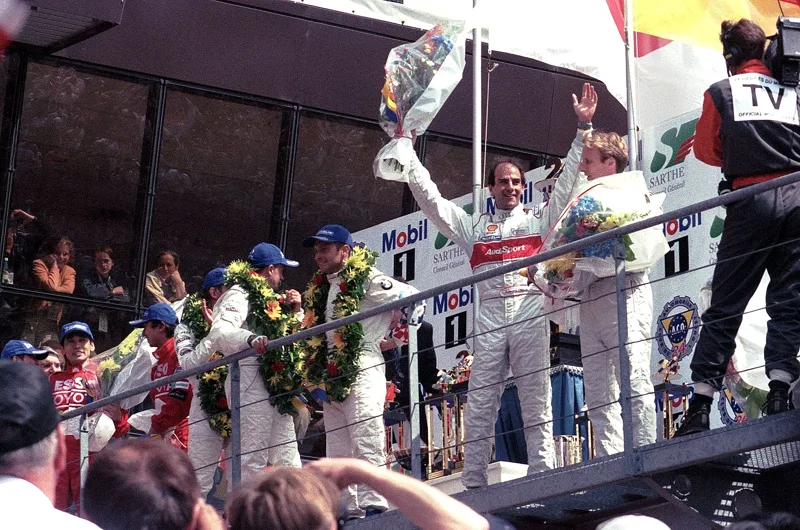
The race drew a crowd of 220,000. A Bentley shared the podium with Audi's top two finishers, and their margin over third place was formidable.
Corvette Racing's GTS win was tarnished by a slow pace, with two GT class Porsche 911s running ahead of the Corvette. It was the last time a Porsche team finished ahead of the GTS class until 2010.
The official distance was 4381.65 km, at an average speed of 180.949 km/h. The highest trap speeds were 318 km/h for an Audi R8 in the race and 335 km/h for a Dome Judd S101 in practice.