Steve Saleen's Mustang tuning business grew into a racing team, a Ford supplier and a sports car maker, before debt and a Chinese joint venture overshadowed it.
Saleen is an American specialty sports car maker and parts supplier based in Corona, California. Founded in 1983 by Steve Saleen as Saleen Autosport, it built the S7 supercar and raced Mustangs, and its later years were shaped by debt and a failed Chinese joint venture.
Saleen is an American maker of specialty high-performance sports cars and aftermarket parts, based in Corona, California. Its story runs from Mustang tuning in the 1980s to a racing record built on the S7, a contract to assemble Ford GTs and a Chinese joint venture that ended in court. The brand is still privately held, but its name is now tied as much to debt and litigation as to the cars.
Who founded Saleen and what did it first build?
Steve Saleen, a former professional Formula Atlantic driver, established the brand in 1983 as Saleen Autosport. The first three cars were hatchbacks, built in 1984 in white, copper-glow and black. In 1985 he fitted the first certified supercharger to a production Saleen Mustang.
That 1985 car went to Nault Ford in Manchester, New Hampshire, and it was the first centrifugal supercharger on a late-model Mustang. Forced induction ran through the brand's later engine work, including the Series I to Series VI superchargers sold under the company's own name.
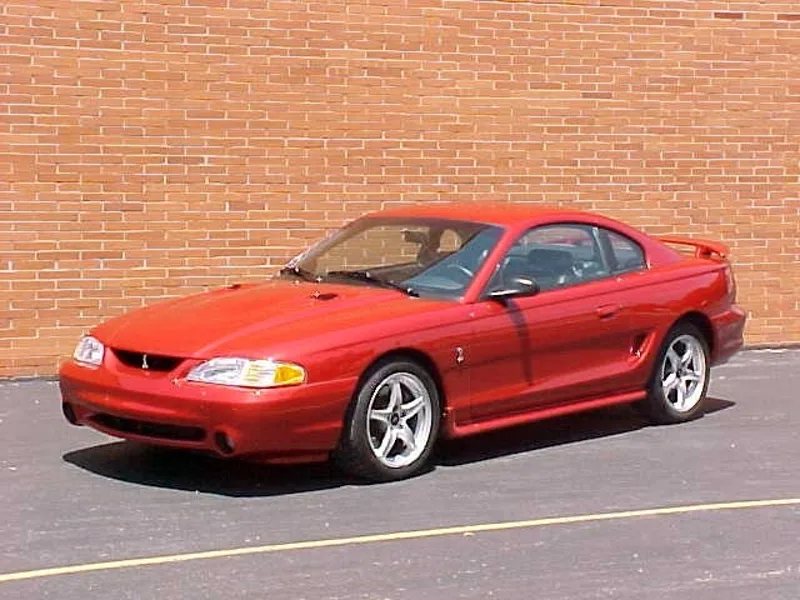
Saleen Performance Parts was set up in 1990 to meet demand for aftermarket parts. In 1994 the company debuted the S351, which had a Saleen-built 351 cubic-inch engine. When the Mustang GT moved to the modular V8 in 1996, Saleen kept developing its own EPA-certified 351W engine, and the company was restructured as Saleen, Inc. in the late 1990s.
From three hatchbacks in 1984 to the S7 supercar, with a racing record that outlasted the company's money.
How did Saleen get into motorsport?
Saleen's racing history began in 1984, when Steve Saleen raced a street Mustang at Sears Point Raceway in California. In 1986 a race-prepared Saleen won the 24 Hours of Mosport in Canada, and that result made Saleen cars a fixture of motorsport through the rest of the 1980s.
The 1987 SCCA Drivers' Championship went to Saleen, with a three-car team of Steve Saleen, Parnelli Jones and George Follmer. That team also took the Team, Manufacturer and Tire championships. In 1988 the team finished first, second and third at Mosport for a third consecutive win, which gave Ford its first 1-2-3 finish since Le Mans in the late 1960s.
The 1990s brought more wins. In 1991 Saleen took the SCCA Race Truck title, winning five of the six races it contested, which put it level with the series' top win count. In 1995 Steve Saleen formed the RRR Speedlab with the comedian Tim Allen, and the team won the SCCA Manufacturers' Championship in 1996 with the SR Widebody Mustang.
In 1997 the RRR Speedlab competed at the 24 Hours of Le Mans for the first time, marking the Mustang's first return there in more than 30 years. In 1998 the team won both the SCCA Manufacturers' and Drivers' championships, and in 1999 an ex-Le Mans Saleen SR won the Spanish FIA GT championship.
What was the Saleen S7?
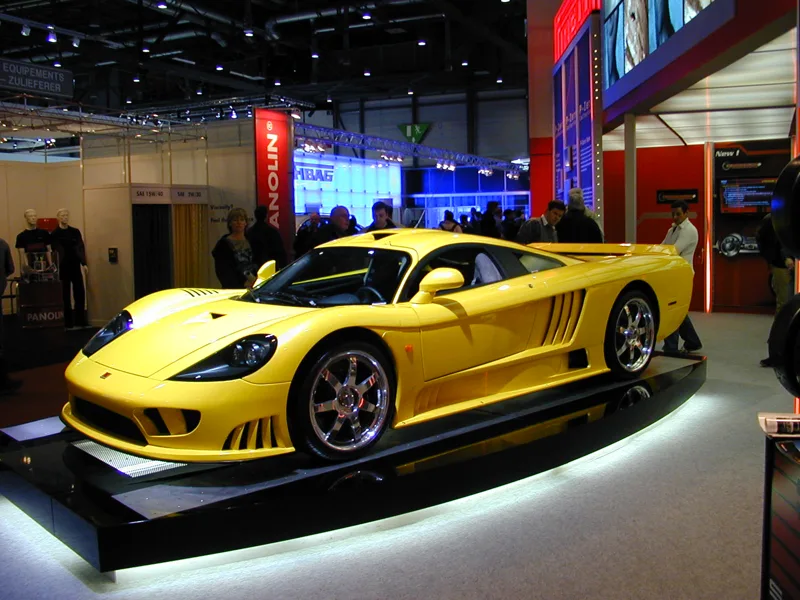
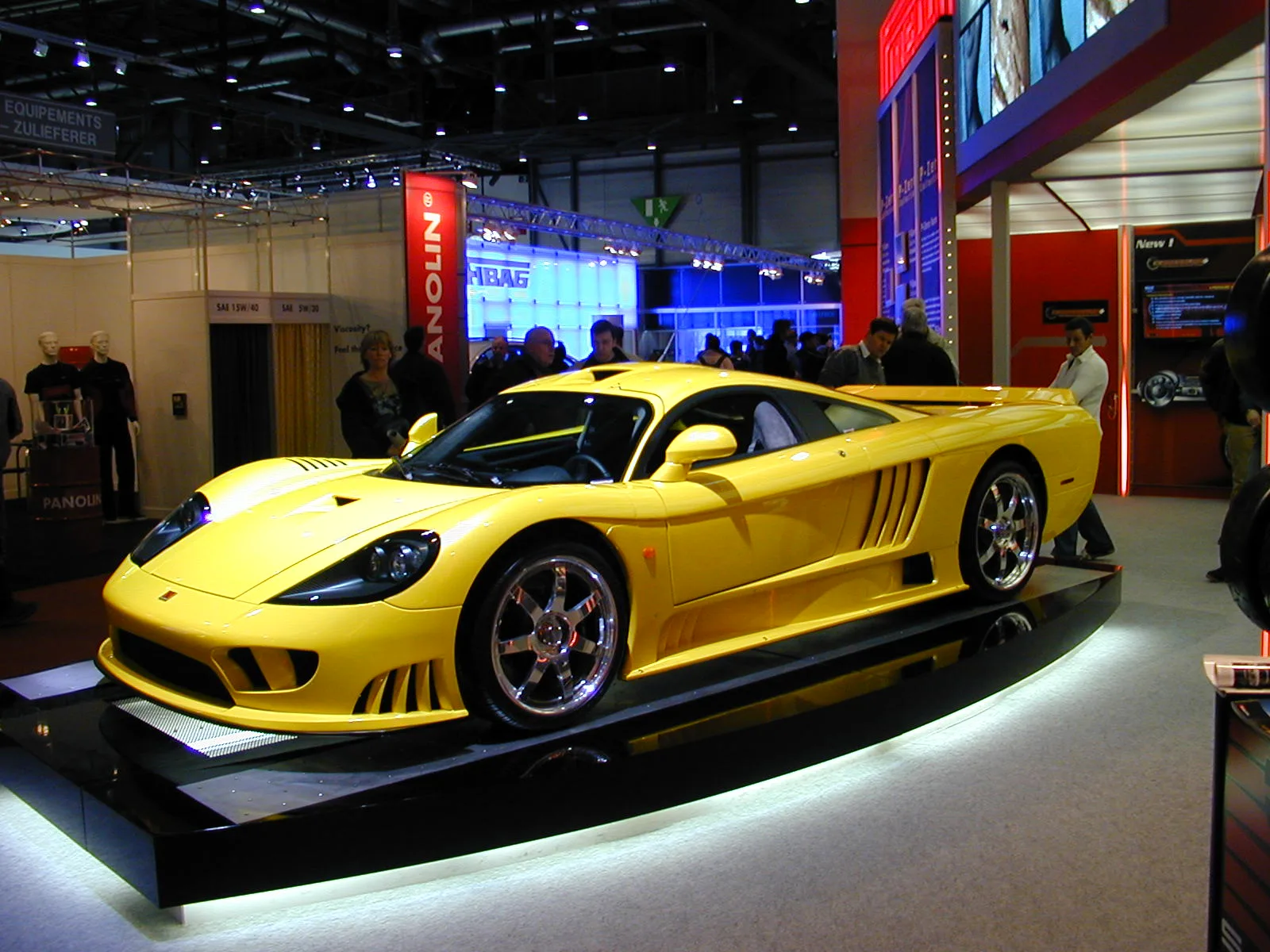
The Saleen S7, introduced in 2000, was the company's flagship and its only production car not based on an existing design or chassis. It was a mid-engine sports car, wholly built by Saleen, and initially priced at just under US$400,000.
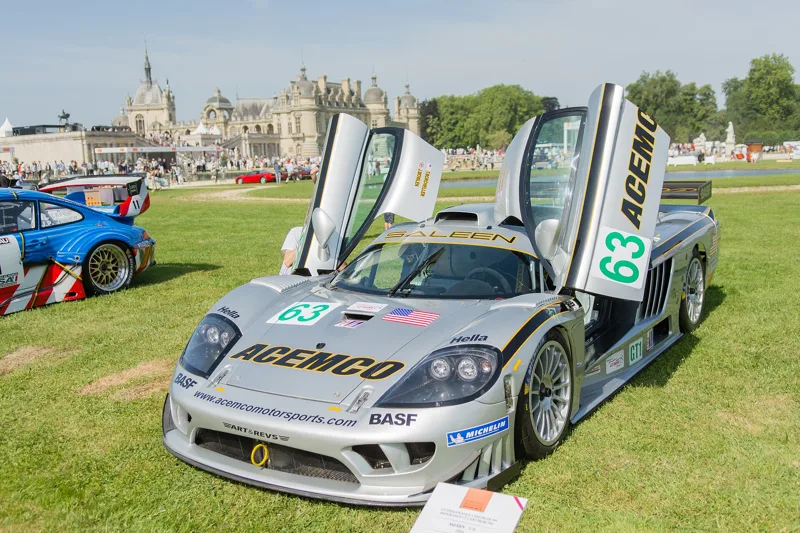
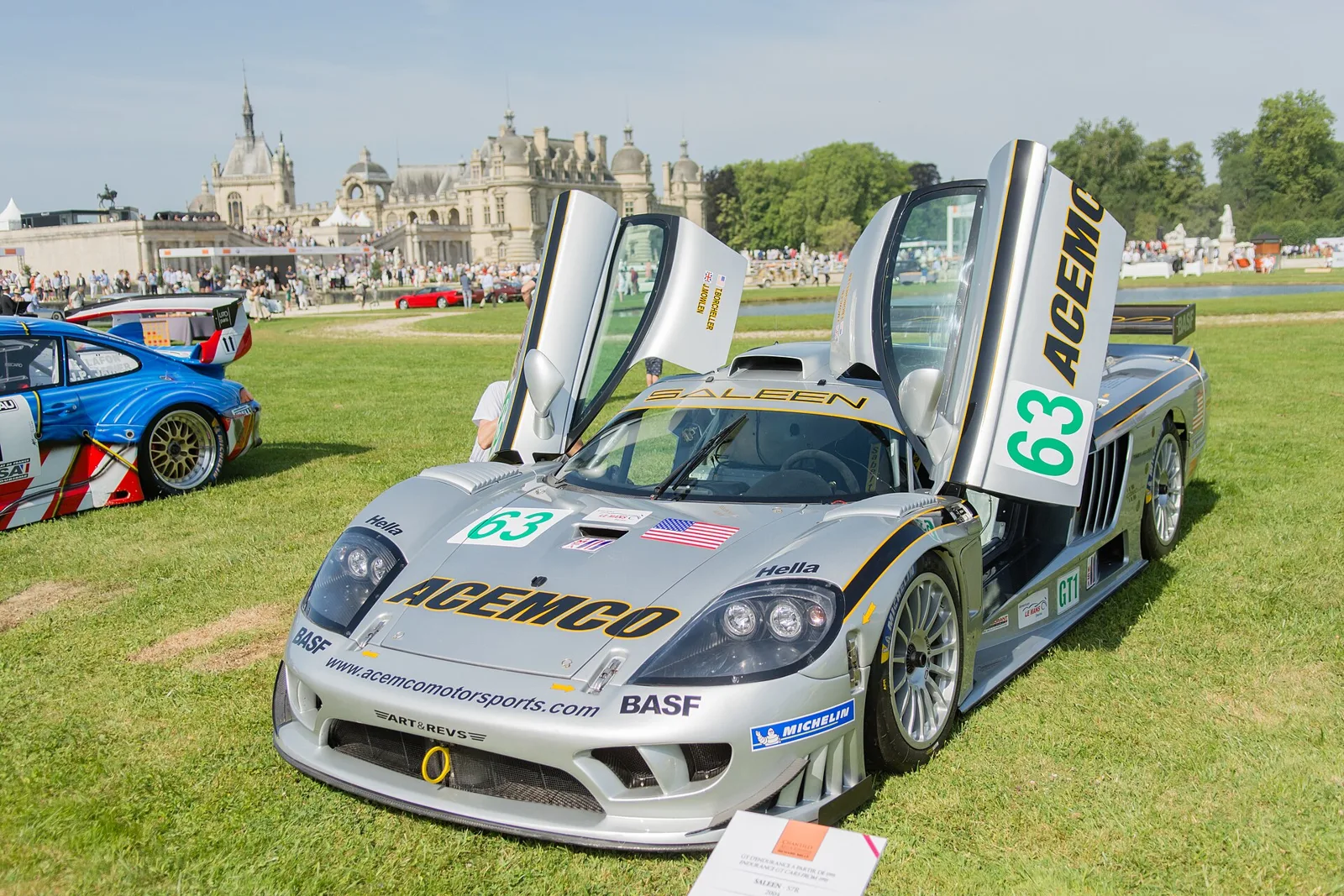
Its first season brought four GT championships in 2001, along with records at the 24 Hours of Le Mans. Its racing version, the S7R, was introduced for the 2001 season and dominated its first year, with customer teams winning four Drivers' Championships in four different series.
The S7 also appeared in later Chinese promotion. In 2019 a Chinese joint venture presented an updated version called the S7 Le Mans at an event in Beijing, which featured the actor Jason Statham, and the venture also promoted a crossover called the MAC.
How did Saleen become a Ford supplier?
In 2002 Saleen won the assembly and paint contract for the new Ford GT, which effectively made it a tier-1 supplier to the Ford Motor Company. In 2004 it added a 203,000-square-foot plant in Troy, Michigan, where a $15 million facility built Ford GTs under contract.
The Irvine plant had already moved in 2001 to a 100,000-square-foot site. Distribution widened as well: Canada in 2003 under a licensing deal, and Japan in 2005 through a Tokyo-based importer. Saleen opened its first own-brand retail store in Irvine in 2006.
Chrysler work followed in 2007, when Saleen supplied all the paint for the new Dodge Viper. In 2009 it released the SMS570 Dodge Challenger.
What performance parts did Saleen make?
Saleen Performance Parts sold custom wheels, exhaust systems, brakes and superchargers. The supercharger line ran from a 1998 Eaton Roots-type unit to Saleen's own Lysholm-screw designs, while accessories such as scenic roofs and HID headlamps widened the range for Mustang owners.
Series II, launched in 2001, used a newer Eaton M90 Roots-type unit. Series III enlarged the displacement from 90 ci to 112 ci. Series IV switched to a twin-screw type with 1.6 L of displacement, and Series V became the first forced-induction system developed entirely in-house, with 2.3 L of displacement.
Series VI added boost and power and was offered for 2005-2009 Ford Mustangs, 2004-2008 F-150 trucks with a 5.4 L engine, and several Ford and Lincoln models. Other accessories included the Shakercharger, a ram-air intake with a hood scoop, and a Scenic Roof of tempered laminate glass certified to US NHTSA standards.
Why did Saleen run into debt after 2010?
Saleen went public through a reverse merger in June 2013, but by the end of 2014 it was in significant debt and close to bankruptcy. The SEC revoked the registration of its securities on October 12, 2017, and the company became privately held again.
Steve Saleen had been selling Mustangs under the SMS name, because he did not legally own the Saleen name. Revstone bought and legally produced 42 Saleen Mustangs in 2010 and 2011, and an agreement at the end of 2011 between Ford, Revstone and Steve Saleen let him produce under the Saleen name again.
In 2015 the firm tried to raise cash by offering a Saleen Mustang to investors willing to commit over $1 million. Electrek later reported that Saleen was seeking small investors from $500 and that, as of September 2021, it had only $14,000 cash on hand.
What happened to the Chinese joint venture?
In 2017 Saleen and his partner Charlie Wang formed Jiangsu Saleen Automotive Technology with the city of Rugao in Jiangsu province. The venture planned a large factory, but its only mass-produced model, the MaiMai microcar, had sold just 27 units by April 2021, and the court put the company up for auction in May 2022.
The state-owned shareholder Nantong Jiahe invested CNY3.4 billion (US$481.3 million) and owned 34% of the company. The other four shareholders were shell companies controlled by Wang. Wang said the venture would produce sedans, SUVs and crossovers, and that he wanted the brand to rival Porsche.
The Rugao factory closed in February 2020. In April 2020 a former senior legal manager, Qiao Yudong, said that Wang had made false claims about technology investment. In June 2020 the Nantong court seized the company's assets, and the Chinese government said Wang had embezzled nearly $1 billion in state funds. Wang then left for the United States and, in July 2020, sued the Chinese partner.
What are the key Saleen figures?
| Item | Figure |
|---|---|
| First production run | Three cars, 1984 |
| S7 launch price | Just under US$400,000 (2000) |
| Irvine plant | 100,000 square feet (2001) |
| Troy plant | 203,000 square feet; $15 million facility (2004) |
| S7R 2001 record | 19 wins out of 32 races; 27 poles |
| S7R 2002 record | 18 wins out of 40 races; 21 poles |
| Nantong Jiahe stake | 34%; CNY3.4 billion (US$481.3 million) |
| MaiMai sales | 27 by April 2021; 31 by May 2022 |
| Planned Rugao capacity | 150,000 cars a year |
| Cash on hand | $14,000 as of September 2021 |
How is Saleen remembered?
Saleen is best remembered for the S7 and for its racing Mustangs of the 1980s and 1990s, along with the Ford GT assembly contract that made it a major Ford supplier. Its later years were marked by debt, a reverse merger, a Chinese venture that collapsed in court and an auction of the company in 2022.
The S7R's 2001 and 2002 results give a clear measure of its racing record: 19 wins out of 32 races in 2001 and 18 wins out of 40 races in 2002. The car also took 27 poles in 2001 and 21 in 2002, and it set fastest laps at many tracks.
In 2004 the S7R won at Imola, beating Ferrari, Maserati and Lamborghini, and the debuting Maserati MC-12. In 2006 the Saleen/Oreca team took the victory and the fastest lap at Circuit de Spa-Francorchamps, with an S7 race car.