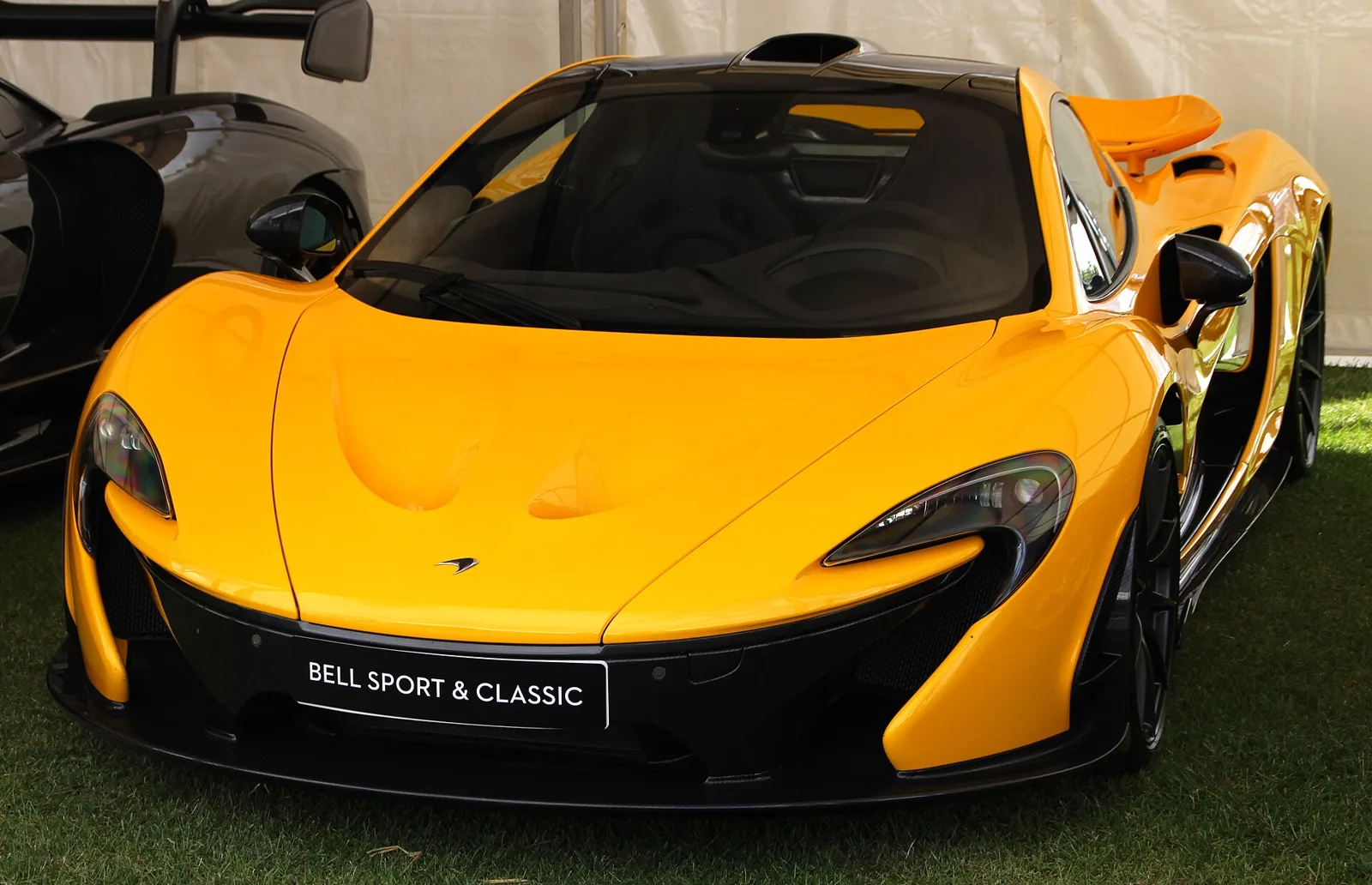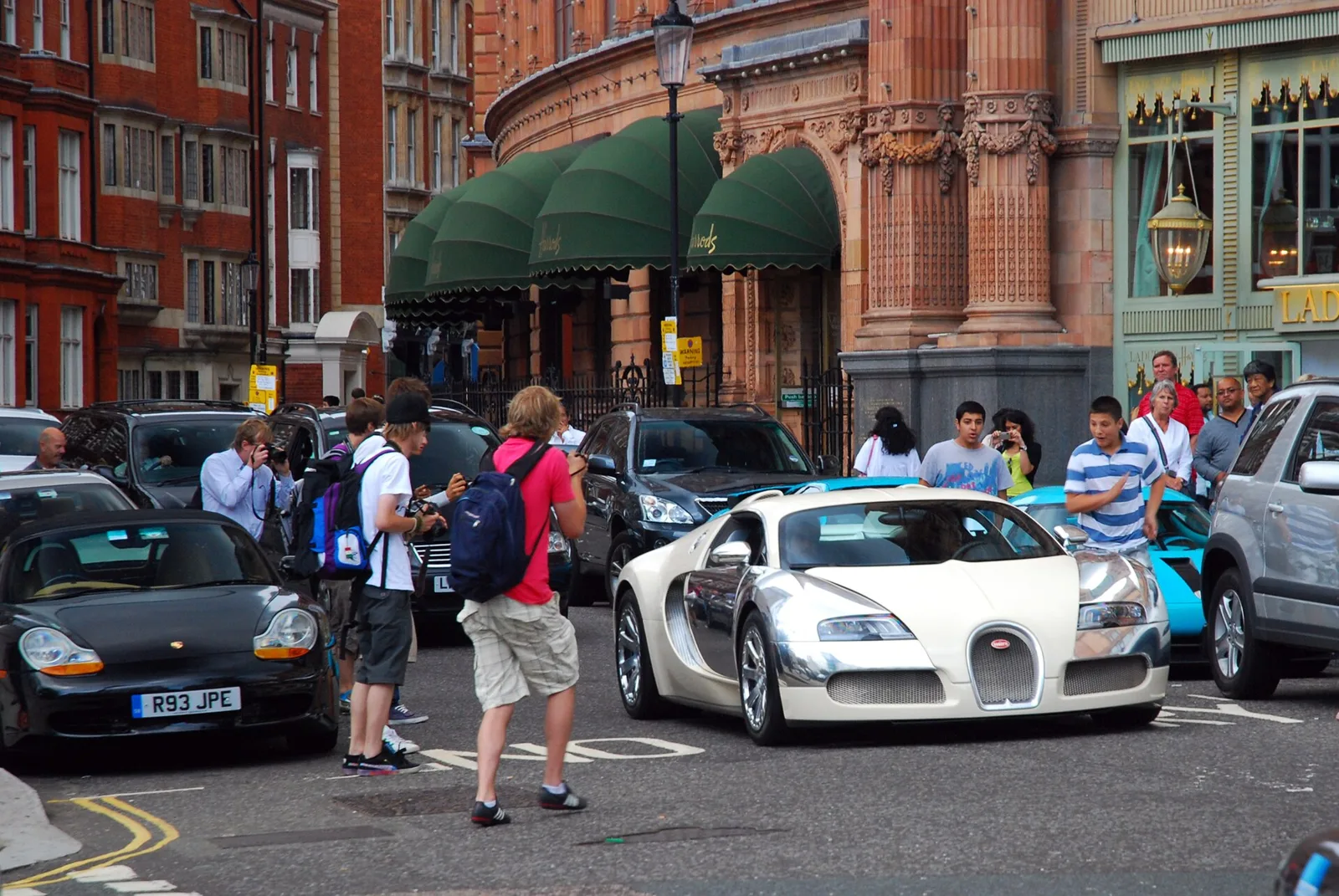
From the Detroit muscle cars first called supercars to hybrid hypercars and Chinese newcomers, and the places owners bring their cars.
Car spotting is an amateur pastime built around watching and photographing unusual, rare and exotic cars. Spotters find supercars and hypercars at car shows, rallies, cars and coffee events, club meets and online communities, then share their photographs on social media and dedicated sites.
The word every car spotter chases was first pinned on Detroit muscle cars, not Italian exotics: by May 1965 an American magazine was already writing about supercars and "the supercar club".
What is car spotting?
Car spotting is the amateur hobby of observing or photographing interesting cars: prototypes, vintage models, rare machines, modified cars, sports cars and exotic supercars. A spotter is simply someone with a strong interest in doing that, and the photographs tend to reflect the individual taste of whoever took them.
It can happen almost anywhere, but car shows and rallies pull in the biggest crowds of spotters and are the traditional events that built the hobby's popularity. Shots end up on social media, on dedicated spotting websites, in newspapers and in books. Auto shows such as the New York International Auto Show, the LA Auto Show, and the Paris and Tokyo events gave enthusiasts a close look at new designs and at how cars were developing.
Newer gatherings have widened the field. Niche events such as cars and coffee, along with brand deals, now draw large followings through social media, so a spotter today can be part of a crowd without ever entering a show hall.
The word spotters chase hardest was first pinned on Detroit muscle cars.
What counts as a supercar?
A supercar (the label exotic car means the same thing) is a road-legal sports car that offers the power, speed and handling of a circuit machine, plus a subjective cachet from pedigree, exclusivity or both. The label is applied most often to low-bodied, mid-engined luxury sports cars at the extreme edge of performance.
Shape is a useful clue. A car that sits low may lack ground clearance, yet it gains a centre of gravity that favours handling and presents less frontal area than a front-engined rival. Both cut aerodynamic drag, which helps top speed. Supercars often act as the flagship of a maker's sports range and carry performance technology borrowed from motorsport. The McLaren 720S, Lamborghini Aventador and Ferrari 458 Italia are typical examples.
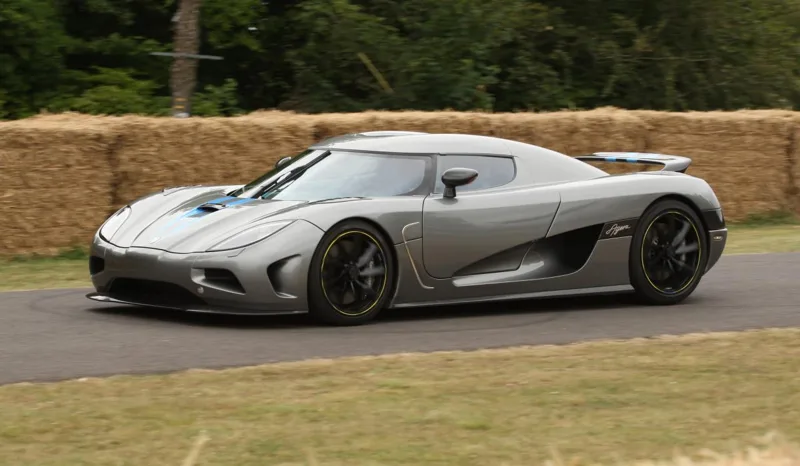
Nobody has fixed the boundary. The Lamborghini Miura, introduced in 1966, is often named as the first supercar, and by the 1970s and 1980s the word was in regular use even though it had no precise definition. One reading that held up to the 1990s demanded a mid-engined two-seater with at least eight cylinders, usually a V12, at least 298 kW (400 bhp) and a top speed of at least 290 km/h (180 mph). Other definitions are softer: the car must be very fast with matching handling, look sleek and eye-catching, and carry a price in a rarefied atmosphere of its own. For some people, limited production is also essential, as with the most elite Ferrari and Lamborghini models. McLaren, Pagani and Koenigsegg build only supercars.
Which exotics should you know on sight?
The cars differ by region, which gives a spotter a sensible way to learn them. In Europe the list starts with the Miura. In America, supercar once meant something else entirely. During the 1960s the top versions of American muscle cars carried the name, a result of the so-called horsepower wars between the domestic manufacturers. A 1968 issue of Car & Driver described a market segment it called the "Supercar street racer gang", and the S/C in the name of the 1969 AMC S/C Rambler stands for SuperCar.
After the muscle car declined in the 1970s, the word spread worldwide and came to mean an exotic car with high performance. Then the 1990s and 2000s brought American cars built on European lines. The Ford GT, the Dodge Viper and recent Chevrolet Corvettes have all been called supercars, and smaller firms added Hennessey's Venom GT and Venom F5, SSC's Ultimate Aero and Tuatara, and the Saleen S7.
Japan arrived in the early 1990s. The Honda NSX, built from 1990 to 2005 as a lightweight, mid-engined, rear-drive V6, was called Japan's first supercar by the motoring media. It matched contemporary European exotics for performance and features while proving more reliable and easier to live with. The Lexus LFA followed, sold from 2010 to 2012 as a two-seat front-engined coupe with a 4.8-litre (293 cu in) V10 making 412 kW (561 PS; 553 hp). The Nissan GT-R, on sale since 2009, has a twin-turbo V6 making between 353 and 529 kW (480 to 720 PS; 473 to 710 hp), sending power to all four wheels through a dual-clutch gearbox, and has been called a supercar with everyday practicality. The second-generation NSX, built from 2016 to 2022, added all-wheel drive, turbocharging, a hybrid system and up to 449 kW (610 PS; 602 hp).
China is the newest source. Recent years have brought a run of home-built supercars, most of them hybrid or electric: the Denza Z, Hyptec SSR, Yangwang U9, Hongqi S9 and NIO EP9.
What is a hypercar, and how rare is one?
A hypercar is the term used since the 2000s for the very highest-performance supercars. Motoring journalism usually keeps it for cars made in low numbers, from two figures to the low thousands, built over and above a maker's usual range and carrying twenty-first century prices that often top a million euros, dollars or pounds. Like supercar, it has no formal definition.
The magazine The Drive offers one: a top-of-the-line supercar built in limited numbers. Asking prices can touch US$1 million, a level that had been passed by 2017. Examples include the Porsche Carrera GT, the Ford GT and the Ferrari F40, F50 and Enzo line. Only a few makers, namely Bugatti, Pagani and Koenigsegg, build nothing but hypercars, which is why seeing one in traffic is so uncommon.
Which car was the first hypercar?
| Candidate | Year | Case made for it |
|---|---|---|
| Mercedes-Benz 300 SL Gullwing | 1954 | Tubular frame, first production fuel injection and the fastest street-legal car, at 260 km/h (160 mph) |
| Lamborghini Miura | 1967 | Revolutionary mid-engined layout |
| McLaren F1 | 1993 | Named by other observers as the first |
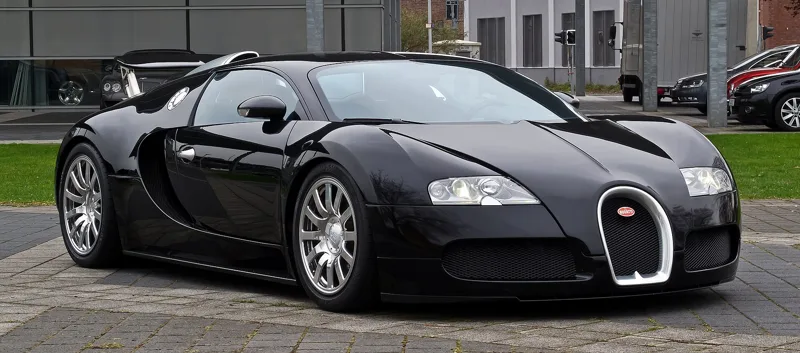
| Bugatti Veyron | 2005 | Named by other observers as the first |
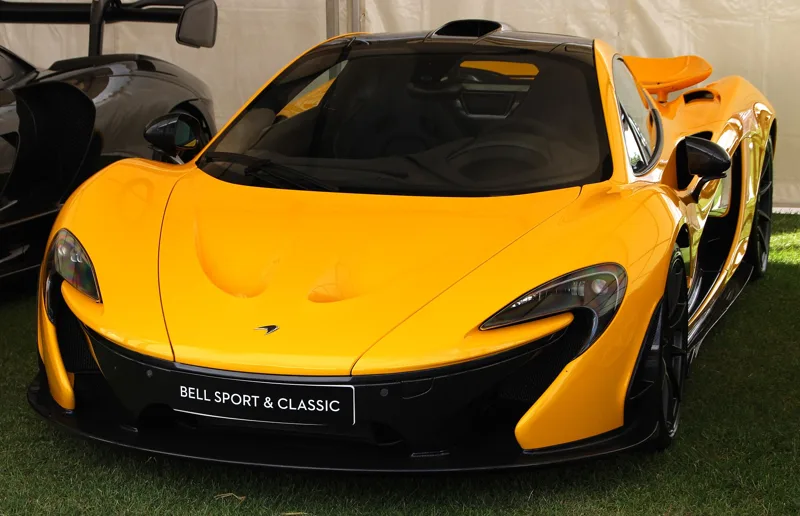
Powertrains have changed what a hypercar is. The hybrid trend began in 2013 with LaFerrari, the Porsche 918 Spyder and the McLaren P1, and continued with the Koenigsegg Regera in 2016, then the Mercedes-AMG One and McLaren Speedtail in 2017. The McLaren W1 and Ferrari F80 followed in 2024, and later the Corvette ZR1X. Some hypercars have gone fully electric, among them the Rimac Nevera, Lotus Evija, Pininfarina Battista and NIO EP9. The word also names a type of sports racing car: the Le Mans Hypercar category is part of the FIA World Endurance Championship, and it was built on road-going hypercars after rule changes that took effect from 2021.
Where do car spotters find rare supercars and hypercars?
The best odds are at organised gatherings where owners choose to bring their cars: car shows, rallies, major auto shows and the cars and coffee meets that social media now publicises. Car clubs add another layer. These groups form around one vehicle type, a brand or a shared interest such as off-roading, and many host meets that welcome interested non-members.
Traditional clubs are usually non-profit and run by volunteers, although some grew large enough to employ salaried staff, and car dealers sponsored a few of them in the 1960s. Many charge a membership fee in return for publications and events. Beyond meets, clubs run races, cruising days, shows and "mod" days when members can use garage equipment and service tools to help each other with DIY work. Some operate a prospecting period, during which would-be members help with club cars and events before being "patched in", and in US clubs that moment is usually marked by a jacket or T-shirt and a metal drag plate for the car. Many members treat the whole thing as a lifestyle rather than a hobby.
Online communities do much of the finding now. The Internet accelerated growth, and unlike traditional clubs most online communities are open to everyone for free. Larger ones claim membership in the hundreds of thousands. Typical features include forums, databases of specifications and repair information, photo-sharing and for-sale listings, while many of the leading ones keep directories of regional meets. Communities have also grown around YouTube channels and podcasts, where smaller studios and individuals can reach a mass audience without a large budget.
How can you spot cars safely and respectfully?
The clearest guidance comes from how the clubs themselves behave. Meets are social events as much as car displays: members talk about cars, eat together, go sightseeing and watch films. Interested non-members are often welcome, which gives a newcomer a straightforward way to meet owners and talk about their cars.
Clubs also show where the risk lies. In Japan, some clubs exist partly to regulate street racing, so that members race people they know and so lower the chance of an accident, and clubs there are used to enter team drifting contests. In Canada, clubs hold indoor meets, often in a heated parkade arranged with the facility's operator, to get around harsh weather and short summers.
What links these examples is organisation: groups settle the time, the place and the company in advance, and newcomers are brought in gradually, as the prospecting system shows. For a spotter, the practical reading is to go where owners have chosen to gather.
Where does car spotting go next?
The audience is changing too. Car-spotting grew up at show halls, but social media and brand deals now bring large followings to niche events. Car communities have begun forming around digital media outlets, and the cameras, microphones and software available to amateurs mean production value is often high.
What does this mean for someone starting out?
Start with the vocabulary, since the argument over supercar and hypercar boundaries will come up in every conversation. Learn the cars by region: Italian mid-engined exotics, American Corvettes and Vipers, the Japanese NSX, LFA and GT-R, and the new Chinese electric entries. Then pick a gathering. A free online community offers specification databases and a directory of local meets, and a club meet gives you a way in with real owners.
Whatever you shoot, the hobby rewards a personal eye. Spotters are known for expressing their individuality through their own photographs, so the pictures that matter will be yours, not copies of someone else's.