A 3.8 litre twin-turbo V8 with an electric motor, 375 production cars and a run of track-focused variants that ended in 2016.
The McLaren P1 was a mid-engined hybrid flagship from McLaren Automotive, shown as a concept in 2012 and built from 2013. It paired a 3.8 litre twin-turbo V8 with an electric motor, and 375 cars were produced before production ended in December 2015.
McLaren's P1 was a mid-engined hybrid flagship that took the company's Ultimate Series into a new technical era. It was shown as a concept at the 2012 Paris Motor Show and reached production at the 2013 Geneva show. Its 3.8 litre twin-turbo V8 and electric motor gave a system output of 903 hp, from a run of 375 cars.
Where did the P1 come from?
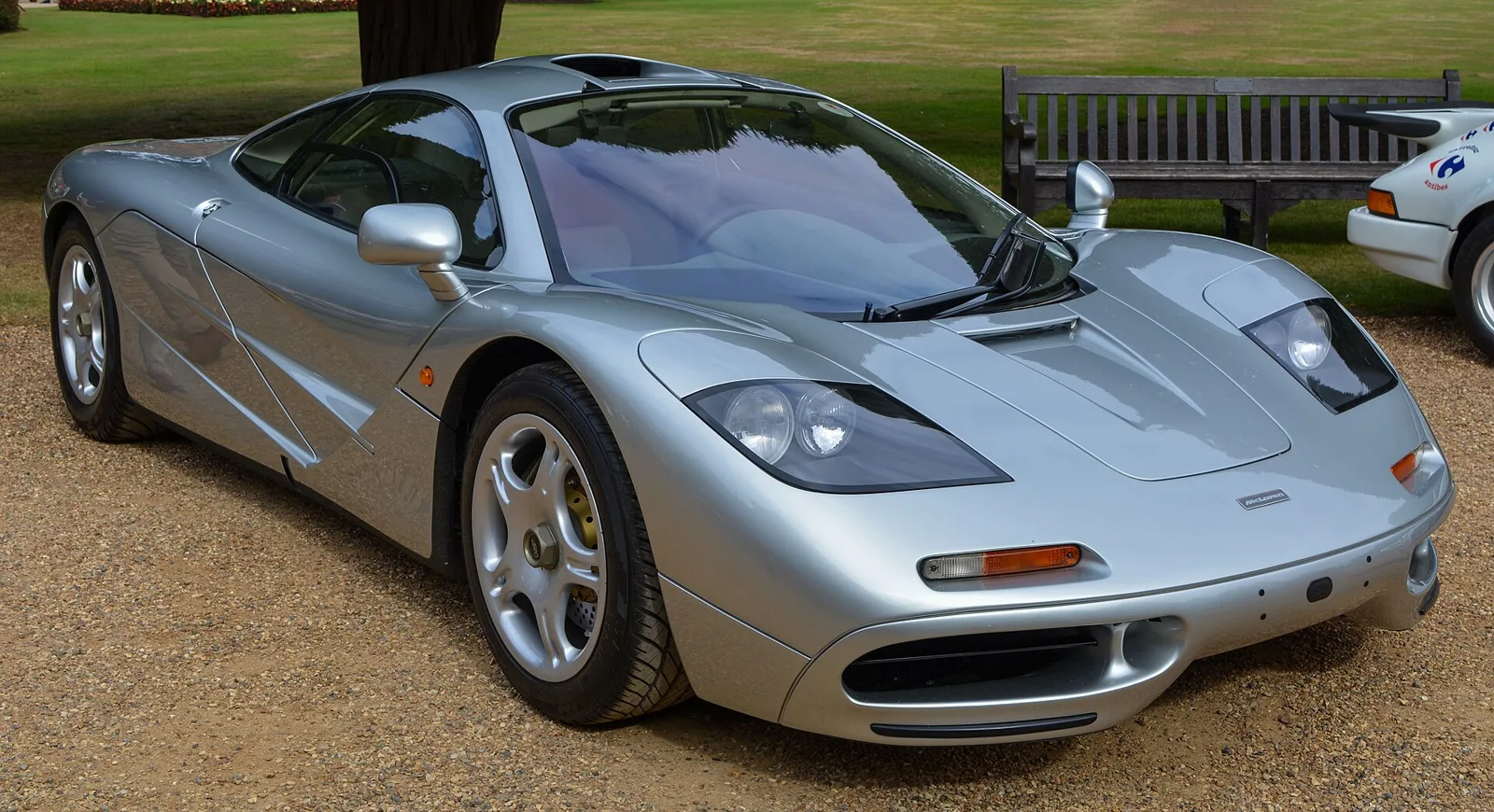
The P1 was built to continue the work of the McLaren F1, whose production ended in 1998. McLaren Automotive then stayed dormant until 2010. The McLaren 12C, launched in 2011, was the first production car after the F1, and a new McLaren Production Centre opened that year to support it.
The next flagship was codenamed P12 and was reportedly called Mega Mac during early planning. Autocar said it would be limited to 500 units and would use a planned 5 litre V8 of 799 hp. The aim was to rival the Bugatti Veyron on performance.
A teaser appeared in September 2012, and the first concept was shown at the Paris Motor Show that autumn. The concept was revealed on the 20th anniversary of the F1, and the production version followed at the 2013 Geneva International Motor Show.
A mid-engined hybrid that used electric torque to fill the gaps in a twin-turbo V8, and then spawned a family of track-focused variants.
Who designed the P1 and what inspired it?
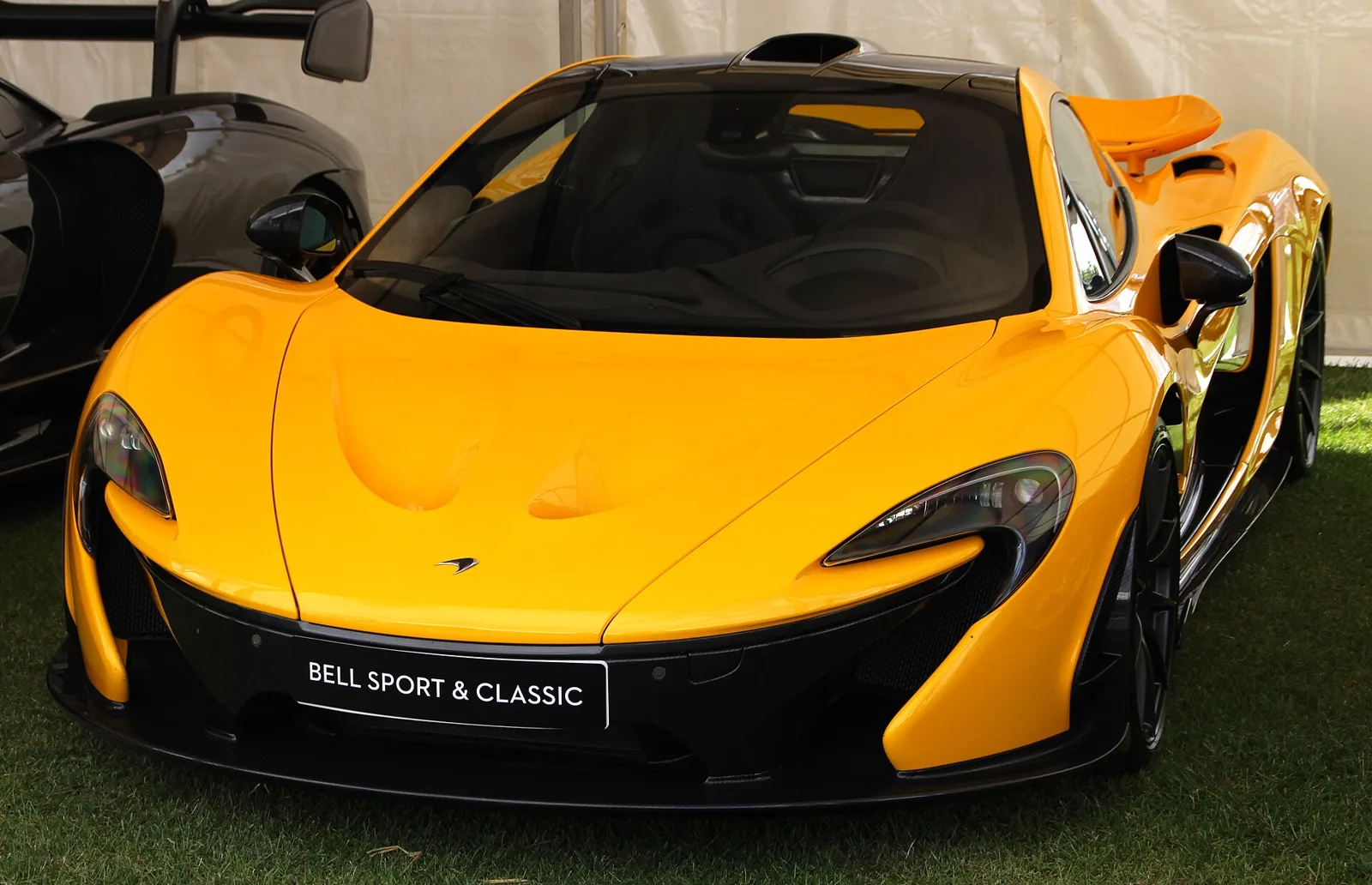
The P1 was styled by American designer Frank Stephenson, who drew inspiration for parts of the car from a sailfish he saw on holiday in Miami. Like the F1, the P1 is mid-engined, rear-wheel drive and built around a carbon fibre monocoque. It is considered the spiritual successor to the F1.
Aerodynamic figures released with the concept quoted 600 kg of downforce well below maximum speed, a drag coefficient of Cd 0.34 and active aerodynamic components. McLaren said it had no interest in out-Veyroning the Veyron. Its performance was to be more track-oriented.
McLaren's managing director, Antony Sheriff, said the aim was not the highest top speed but the quickest series production road car on a circuit.
What engine and hybrid system does the P1 use?
The P1 uses a 3.8 litre twin-turbocharged V8 of 3,799 cc, producing 542 kW (737 PS; 727 hp) at 7,500 rpm and 720 N m (531 lb ft) of torque at 4,000 rpm. An electric motor adds 132 kW (179 PS; 177 hp), and the combined output is 674 kW (916 PS; 903 hp) with 900 N m (664 lb ft) of torque.
The electric motor can be deployed by the driver or left in automatic mode. In automatic mode the electronics fill the gaps in the petrol engine's output, which is called torque fill. The result is an effective powerband of almost 7,000 rpm.
The battery is a 324-cell lithium-ion pack by Johnson Matthey Battery Systems, placed behind the cabin. It can be fully charged in two hours. The transmission is a 7-speed dual-clutch unit by Graziano Trasmissioni, sending power to the rear wheels.
Formula 1 features include IPAS, which gives an instant boost from the electric motor, and DRS, which opens the rear wing to increase straight-line speed. KERS is also fitted, and the two systems are operated by buttons on the steering wheel.
How did the hybrid system work in practice?
The P1 could run on petrol, on electric power alone or on a mix of both. The electric motor could be deployed by the driver at the moment of choice, or the car could take over in automatic mode and fill torque gaps. Both approaches sat inside one powertrain.
The battery can be charged by the engine or from a plug, and a full charge takes two hours. Its all-electric range on the European cycle is at least 10 km (6.2 mi), so the electric element was a supplement to the petrol V8 rather than a replacement for it.
How fast is the P1?
McLaren claims 0-100 km/h in 2.8 seconds, 0-200 km/h in 6.8 seconds and 0-300 km/h in 16.5 seconds. Autocar recorded 0-60 mph in 2.8 seconds and a quarter mile in 10.2 seconds at 237 km/h. The car is electronically limited to 350 km/h (217 mph).
The P1 has a dry weight of 1,395 kg (3,075 lb), which gives 656 PS per tonne. Its kerb weight is 1,547 kg (3,411 lb), or 601 PS per tonne. Those figures give the car a strong power-to-weight ratio.
Braking from 300 km/h to a standstill takes 6.2 seconds and covers 246 metres. From 60 mph the car stops in 30.2 metres. The brakes are carbon-ceramic units from Akebono, with bespoke Pirelli P-Zero Corsa tyres.
How efficient is the P1?
In electric-only mode the P1 has an EPA rating of 18 MPGe and an all-electric range of 19 mi (31 km). Running on petrol alone, it manages a combined 17 mpg-US (14 L/100 km). The total range is 330 mi (531 km), and the European figure gives at least 10 km (6.2 mi) of electric driving.
The P1 was one of the first high-performance hybrid sports cars. The Porsche 918 Spyder had begun taking orders before it, and the LaFerrari was introduced alongside it.
How did the P1 compare with its rivals?
The P1 entered a field where the Porsche 918 Spyder had already begun taking orders, and the LaFerrari was introduced alongside it. McLaren was clear that it was not chasing the highest top speed. The stated target was to be the fastest road car around a track, not the fastest in a straight line.
The Veyron comparison framed the brief. Rather than chase a straight-line record, the car's performance was set to be more track-oriented.
How was the P1 built and sold?
Production began in October 2013, and each car was hand-assembled by a team of 61 engineers. The planned rate was one car per day, and McLaren planned 50 cars by the end of 2013. The first retail deliveries took place at the company's headquarters in Woking.
The Americas, Asia-Pacific and Middle East allocation sold out in August 2013. The United States took 34% of the run and Europe 26%. The first US delivery came in May 2014, and production ended in December 2015 after 375 units.
Did the P1 have a recall?
In January 2016 the NHTSA recalled 122 cars from the 2014 and 2015 model years. The cars had been built between 1 March 2013 and 31 October 2015. The fault was a faulty secondary bonnet latch that could fail to catch if the primary latch snapped.
McLaren replaced the parts at no cost to owners.
What changed in the P1 GTR?
The P1 GTR was a track-focused version that marked 20 years since McLaren's 1995 Le Mans victory. It was built after the 375 standard cars and produced 1,000 PS (735 kW; 986 hp). Its kerb weight was 1,440 kg (3,175 lb), and McLaren built 58 of them.
The GTR had a fixed rear wing that could still use DRS, a fixed ride height and slick tyres. That fixed wing gave it 10% more downforce than the road car. Its weight fell by 50 kg (110 lb) compared with the standard P1.
Lanzante Motorsport converted 27 GTRs for road use. The road-legal version is quoted at 362 km/h (225 mph) and 0-97 km/h in 2.4 seconds.
What was the P1 LM?
The P1 LM was a road-legal development of the GTR built by Lanzante Motorsport. Six new GTRs were built for the programme, five of them were sold, and the sixth was kept for development. It used a 3,994 cc twin-turbo V8 with an 8,500 rpm red line.
The LM produced 1,000 PS (735 kW; 986 hp) and 1,050 N m (774 lb ft) of torque. It weighed 60 kg (132 lb) less than the GTR and gave 40% more downforce.
The prototype XP1 LM set the fastest time for a road car up the Goodwood hillclimb, at 47.07 seconds, driven by Kenny Brack. On 27 April 2017 the same prototype set a Nurburgring lap of 6:43.22, also driven by Brack, which beat the road car record.
Which other P1 specials were built?
The P1 Spider was unveiled at Goodwood in 2022. Lanzante offered five conversions to the open-top car at 2.4 million euros. The P1 GT, built in 2018, was a special based on the GTR with only two examples produced.
The GTR-18 added six more road conversions with Longtail bodywork and a larger front splitter. A P1 by MSO from 2016 had a carbon fibre body and special trim, and a 2018 GTR by McLaren Special Operations paid tribute to Ayrton Senna.
What is the P1's legacy?
McLaren said the P1 completed a sub-seven-minute Nurburgring lap, averaging more than 179 km/h (111 mph), although the exact time was not published. The P1 LM later beat the road car's record with a time of 6:43.22.
The P1 LM's record run used road-legal tyres and no front number plate, which kept the lap within the rules for a road car. The car has also been reproduced widely as a model. Scale versions have come from Hot Wheels, Lego, Scalextric and Minichamps, among others.
What are the P1's key specifications?
| Item | Standard P1 | Detail |
|---|---|---|
| Engine | 3.8 litre twin-turbo V8, 3,799 cc | 542 kW (737 PS; 727 hp) at 7,500 rpm |
| Electric motor | 132 kW (179 PS; 177 hp) | Torque 260 N m (192 lb ft) |
| System output | 674 kW (916 PS; 903 hp) | 900 N m (664 lb ft) combined torque |
| 0-100 km/h | 2.8 seconds | McLaren claim |
| Top speed | 350 km/h (217 mph) | Electronically limited |
| Dry weight | 1,395 kg (3,075 lb) | 656 PS per tonne |
| Kerb weight | 1,547 kg (3,411 lb) | 601 PS per tonne |
| GTR | 1,000 PS (735 kW; 986 hp) | Kerb weight 1,440 kg (3,175 lb) |
| LM | 3,994 cc V8 | 1,050 N m (774 lb ft) torque |