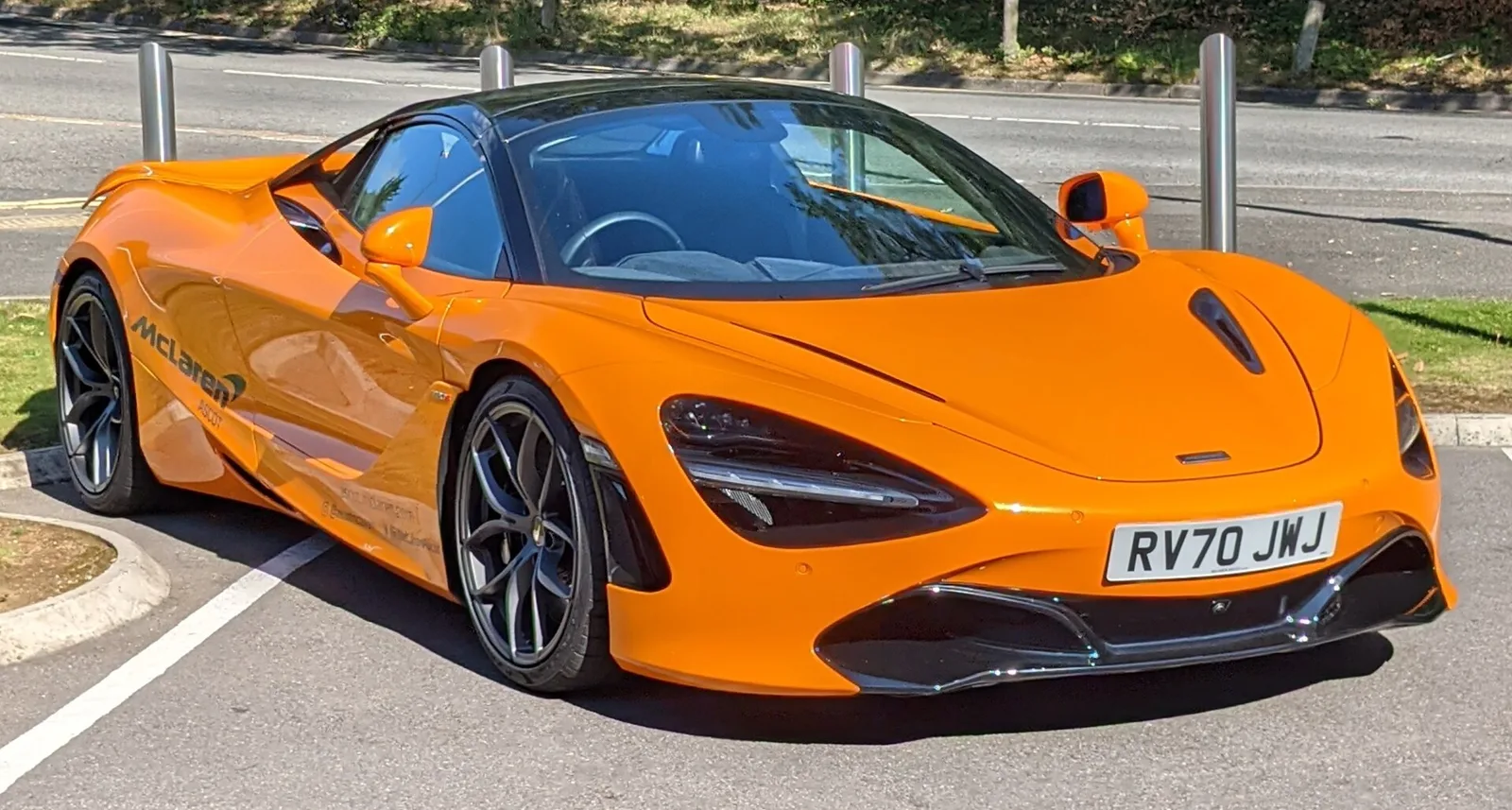
A carbon tub, butterfly doors and a 720 PS twin-turbo V8 defined McLaren's 2017 supercar, which went on to spawn Spider, 765LT and track variants.
Launched at Geneva in March 2017, the 720S succeeded the 650S as a mid-engined car with a 3,994 cc twin-turbo V8. Its output was rated at 720 PS (530 kW; 710 hp), and the coupe was joined by Spider and track variants. It uses a MonoCage II carbon tub, and McLaren succeeded it with the 750S in 2023.
The McLaren 720S is a mid-engined supercar that replaced the 650S from May 2017. It was the first all-new car in McLaren's plan to launch 15 new cars by 2022, and the company said it was 91% new compared with its predecessor. Its design borrowed several details from the McLaren F1.
Where did the 720S come from?
The 720S replaced the 650S from May 2017, after a launch at the Geneva Motor Show on 7 March 2017. McLaren described the car as 91% new compared with its predecessor, and its carbon monocoque was lighter and stiffer than the 650S tub.
Within the Super Series, the 720S was the second all-new car, and it succeeded the 650S. Its launch was one step in the wider plan to bring 15 new cars to market by 2022.
A carbon tub, butterfly doors and a 720 PS twin-turbo V8 defined McLaren's supercar of 2017.
Why did the 720S have butterfly doors?
The 720S used twin-hinged butterfly doors that drew on features from the McLaren F1. The MonoCage II tub allowed dihedral doors with large cutouts, and that construction was central to how the car was entered and exited.
The headlights hid air vents that fed two small radiators in front of the wheels. The doors carried air channels that routed air towards the engine, so the body's shape had a function beyond styling.
The rear end used thin LED taillights similar to those on the P1, with two round exhaust pipes. The design was inspired by the great white shark, and the cockpit had a teardrop shape.
How did the 720S's design add downforce?
The 720S's exterior features gave 50% more downforce than the 650S. The aero features sat alongside the cooling vents and door channels described above, and all of them were designed to work together.
The interior added a folding driver display and carbon fibre accents to the same design language, which carried the car's sharp styling into the cabin.
What engine powers the 720S?
The M840T unit is a twin-turbo V8 of 3,994 cc, rated at 720 PS (530 kW; 710 hp) at 7,500 rpm. It produces 770 Nm (568 lb ft) of torque at 5,500 rpm, and it evolved from the M838T used in the 650S.
Because the engine evolved from the M838T, the 720S inherited much of its basic architecture from the 650S, and the revisions were made within that existing family.
Efficiency was a stated aim as well. CO2 emissions were 249 g/km, and the combined fuel economy was 26.4 mpg-imp (22.0 mpg-US; 10.7 L/100 km). Efficiency improved about 10% on the 650S.
How did the 720S's chassis and suspension work?
The 720S used the MonoCage II tub, which was 18 kg (40 lb) lighter than its predecessor. The Pro-active Chassis Control II system was 16 kg (35 lb) lighter than before, and its suspension used accelerometers and pressure sensors in the dampers.
The suspension system used findings from a PhD course at the University of Cambridge.
The same tub underpins the Senna, Speedtail and Elva, which made the carbon structure a platform for several later models. Variable Drift Mode manipulates stability control, and the car offers three driving modes: track, sport and comfort.
What was inside the 720S?
The standard interior used Alcantara and Weir leather with carbon fibre trim. A Bowers and Wilkins audio system and fixed carbon fibre racing seats were options, and the digital display behind the wheel retracts in track mode.
The touch screen is angled towards the driver, which places it in the driver's line of sight. The fixed racing seats were offered as an alternative to the standard seating, so buyers could choose between the two.
How fast was the 720S?
The 720S reached 0-97 km/h (0-60 mph) in 2.9 seconds, and it covered the quarter-mile in 10.3 seconds. Its top speed was 341 km/h (212 mph).
The quarter-mile figure and the 0-97 km/h time were both quoted for the standard coupe, which is the baseline against which the variants are compared later in this article.
What was the 720S Spider?
The 720S Spider arrived in December 2018 with a retractable roof that takes 11 seconds to operate, six seconds quicker than the 650S Spider. The roof works at speeds up to 50 km/h (31 mph), and the Spider weighs 45 kg (100 lb) more than the coupe.
With the top closed the Spider reaches 341 km/h (212 mph), but with the top retracted that falls by 16 km/h (10 mph). The roof therefore costs some top speed, which is the main trade-off for open-air driving.
What is the 765LT?
The 765LT was unveiled on 3 March 2020 with 765 PS (563 kW; 755 hp), and it was limited to 765 units worldwide. It reached 0-100 km/h in 2.8 seconds and had a top speed of 330 km/h (205 mph).
Its 1,339 kg (2,952 lb) weight was the lowest in the family, and it carried 25% more downforce than the 720S.
The 765LT Spider followed on 27 July 2021, weighing 1,388 kg (3,060 lb). The Spider was also limited to 765 units worldwide, so the open-top version shared the same rarity as the coupe.
Which special editions were built?
The Le Mans special edition marked the 25th anniversary of McLaren's F1 GTR win at Le Mans in 1995. Its VIN began with 298, the laps completed by the race car, and sales began on 17 June 2020.
The Apex Collection comprised 15 cars in five designs, and the UK price was 288,813 pounds per unit. First deliveries were expected in October 2019.
How did the 720S perform in motorsport?
The 720S GT3 was revealed in August 2018 with a price of $564,000, and McLaren said 90% of it differed from the road car. An Evo version launched in 2023 with aerodynamic and suspension improvements over the original GT3 car.
The 720S GT3X was announced in March 2021 as a track-only car outside GT3 rules. It set the fastest time at the 2021 Goodwood Festival of Speed shootout and sprinted up the hill in 45.01 seconds.
How did the 720S compare with the 650S?
The 720S was 91% new compared with the 650S, and its exterior features produced 50% more downforce than its predecessor. Its MonoCage II tub was 18 kg (40 lb) lighter, and its chassis control hardware weighed 16 kg (35 lb) less than before.
Most of the changes were made to the chassis and aero rather than to the styling alone. The lighter tub, the lighter control hardware and the suspension sensing worked together to shape how the car handled.
The Spider roof was also quicker to operate, taking 11 seconds against the six-second advantage it held over the 650S Spider. Those gains matched the wider aim of building a car that felt new in almost every system.
How did the 720S's production and sales unfold?
Spider deliveries and the Le Mans special edition began on 17 June 2020, while the Apex Collection had been announced with first deliveries expected in October 2019. The 765LT was later limited to 765 units worldwide, and the same cap applied to its Spider.
The 720S line-up covered the coupe, the open-top Spider, track-focused racing cars and several special editions, all built around the same carbon tub.
Limited runs were a recurring feature of the 720S story.
The 788HS capped its run at 200 cars, split between 100 coupes and 100 Spiders, which kept the final versions rare.Those limits shaped the car's place in the range, from the standard coupe and Spider at the core to the rarer special editions and the 750S that followed in 2023.
How efficient was the 720S?
The 720S emitted 249 g/km of CO2 and returned 26.4 mpg-imp (22.0 mpg-US; 10.7 L/100 km) on the combined cycle. Efficiency improved about 10% on the 650S.
The 26.4 mpg-imp figure is a combined cycle number, and it sits beside the 249 g/km CO2 figure as the car's two main efficiency measures.
Those combined cycle figures apply to the coupe. The efficiency gain sat alongside a car that was 91% new, so the improvement came from a substantial rework rather than a minor tweak.
What awards did the 720S win?
Top Gear named the 720S Supercar of the Year in 2017, and Festival Automobile International named it Most Beautiful Supercar of the Year 2017. The World Car Awards followed with 2019 World Performance Car, and the Red Dot Design Awards gave it Best of the Best in 2018.
Taken together, the awards show the car won praise from motoring journalism, design judges and technology bodies alike. IEEE named the car a Top 10 Tech Car in 2018. LEGO Speed Champions released a 720S model kit in June 2017, a sign that the car had become recognisable beyond the motoring press.
What replaced the 720S?
The 750S replaced the 720S in 2023 with 750 PS (552 kW; 740 hp), and it is 30 kg (66 lb) lighter.
The 788HS was unveiled on 9 July 2026 with 788 PS (580 kW; 777 hp). Production was limited to 200 cars, 100 coupes and 100 Spiders. It arrived well after the 750S, which means the family kept growing long after the original car's launch.
What are the McLaren 720S specifications?
Its core figures are a twin-turbo V8 of 3,994 cc making 720 PS (530 kW; 710 hp), a 2.9-second 0-97 km/h time and a top speed of 341 km/h (212 mph). CO2 emissions were 249 g/km.
The table below lists the core figures for the coupe and the main variants. Where a value belongs to a particular version, the table names it.
| Specification | Detail |
|---|---|
| Launch | Geneva Motor Show, 7 March 2017 |
| Engine | 3,994 cc twin-turbo V8 (M840T) |
| Output | 720 PS (530 kW; 710 hp) at 7,500 rpm |
| Torque | 770 Nm (568 lb ft) at 5,500 rpm |
| 0-97 km/h | 2.9 seconds |
| Quarter-mile | 10.3 seconds |
| Top speed | 341 km/h (212 mph) |
| CO2 emissions | 249 g/km |
| Combined fuel use | 26.4 mpg-imp (22.0 mpg-US; 10.7 L/100 km) |
| 765LT | 765 PS (563 kW; 755 hp), 1,339 kg (2,952 lb) |
| 750S | 750 PS (552 kW; 740 hp), successor from 2023 |
Frequently asked questions
How quick is the 720S over a quarter-mile?
The 720S covered the quarter-mile in 10.3 seconds, after reaching 0-97 km/h in 2.9 seconds, with a top speed of 341 km/h (212 mph).
Is there a convertible 720S?
Yes. The Spider was introduced in December 2018, and its roof takes 11 seconds to operate. The coupe remains the lighter option.
How does the 765LT differ from the 720S?
The 765LT produces 765 PS (563 kW; 755 hp) and has 25% more downforce than the 720S. It reaches 0-100 km/h in 2.8 seconds.
What did the Apex Collection cost?
Each car in the 15-strong Apex Collection cost 288,813 pounds in the UK.
Is the 788HS a limited model?
Yes. Production was limited to 200 cars, split evenly between 100 coupes and 100 Spiders.