How Rob Dyson's Poughkeepsie team went from SCCA club racing to IMSA GTP wins, Porsche Cups, Grand-Am titles and ALMS championships.
Dyson Racing is a sports car team founded by Rob Dyson in 1974 and based in Poughkeepsie, New York. It won IMSA GTP races with Porsche, took the inaugural American Le Mans Series title in 1999 and claimed Grand-Am championships in 2000, 2001 and 2002.
Dyson Racing is a professional sports car team that Rob Dyson founded in 1974 in Poughkeepsie, New York. Over four decades the team became a fixture in North American sports car racing, winning across the IMSA GT Championship, the American Le Mans Series and the Grand-Am series.
Who founded Dyson Racing and where is it based?
Rob Dyson started the team in 1974, having first raced in the Sports Car Club of America with a Datsun 510 sedan. The team is based in Poughkeepsie, New York, and it competed in IMSA and American Le Mans Series championships for decades.
Dyson's first SCCA season was a modest affair, with his wife Emilie serving as the entire pit crew. He took his first victory, a regional event at Watkins Glen, and by 1977 had moved up to SCCA nationals with Pat Smith as crew chief. A national championship followed in 1981 with a Nissan 200SX.
A Poughkeepsie club racer's team that won IMSA GTP, Grand-Am and ALMS titles across four decades of sports car racing.
How did the SCCA and GTO years prepare the team?
The SCCA years gave Dyson the competitive base he needed. The move up to national events coincided with Pat Smith joining as crew chief, and the national title of 1981 proved that the team could win at the highest level of club racing.
His debut as a professional came at Lime Rock Park in Connecticut in 1983, in a Firebird. He ran the car in nine IMSA GTO races and selected Trans Am events, with a best result of third in class at the Elkhart Lake 500.
During this period Dyson built a close relationship with Goodyear, which began with modest radial tyre development and grew into a full-scale tyre support programme that lasted two decades. That partnership would prove essential to the team in the years that followed.
How did Dyson Racing win in IMSA GTP with Porsche?
Dyson bought a Porsche 962 from privateer Bruce Leven and took the team's opening win at Lime Rock Park in May 1985 with Drake Olson, even though the car ran a smaller 2.8-litre engine. Olson later won the inaugural Porsche Cup of North America, and that started a run of four Porsche Cups in a row for the team.
The team added more wins in 1986 and 1987, with Price Cobb finishing second in the championship in both seasons. In 1986 Rob Dyson earned the Most Improved Driver honour, and Pat Smith was recognised as Mechanic of the Year.
James Weaver joined in 1987 and took the win on his debut at Road Atlanta, sharing the car with Cobb. The Englishman drove for the team from 1988 until his retirement two decades later, and he became one of the most familiar faces in the operation.
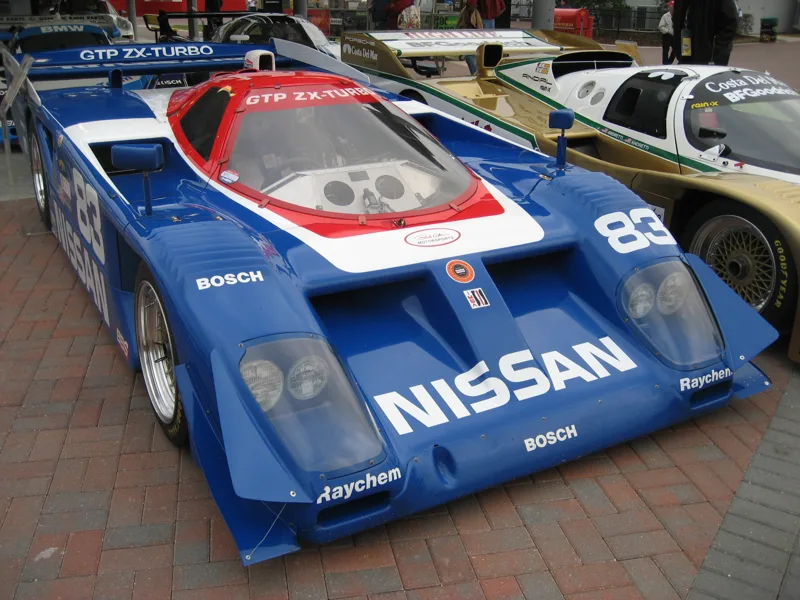
1988 belonged to the Nissan GTP ZX Turbo, which won eight races in a row. Dyson still took two of Porsche's three wins that season, the first at Miami in February and the second at San Antonio in September, and the San Antonio victory, scored with the team's own 962-DR1 chassis, ended Nissan's run.
In 1989 the team added an open-wheel programme, running four CART races with a Lola T88/00 Cosworth, the best result being eleventh at Long Beach. Dyson and John Paul Jr. still raced the IMSA GTP event at Lime Rock in the Porsche.
Porsche returned as factory support in 1990. Dyson collected four podiums, while Porsche's sole victory that year came at Tampa, which turned out to be the team's final IMSA GTP victory. The in-house DR2 chassis, built in 1991, found only limited success.
Sitting out 1992 was a painful decision, since it was the first season since 1974 without Rob Dyson behind the wheel. The team returned for the February 1993 Daytona 24 Hours and finished fifth overall and second in GTP.
What did the World Sportscar years and Riley and Scott cars achieve?
Dyson rejoined IMSA for the inaugural World Sportscar Championship in 1994 with a Spice chassis and a production-based Ferrari 348 V8 engine. The car sounded good but lacked power, and the operation chose the Riley and Scott MkIII as its car for 1995.
With Ford V8 power from Lozano Brothers Porting, the team won at Road Atlanta on the car's third outing. James Weaver fought for the title down to the New Orleans finale, where he took pole and the victory, but he finished two points short of the championship.
Championships on the WSC and ALMS circuit
The team kept two cars in 1996, earning three wins and a third-place championship finish for Butch Leitzinger. In 1997 Leitzinger won the IMSA WSC drivers' title, and the team won its first Daytona 24 Hours and its first team championship with six wins across the season.
In 1998 Leitzinger's second straight IMSA WSC crown came alongside Weaver's USRRC Can-Am title. Elliott Forbes-Robinson took the inaugural American Le Mans Series crown in 1999, and he and Leitzinger shared the shortened USRRC championship.
The team also won its second Daytona 24 Hours in 1999 and took second at Sebring. That result remains the tightest finish in the race's history, a reminder of how close the team came to a major victory that year.
Grand-Am and the Riley and Scott record
Grand-Am was a different story. The team abandoned the Reynard 2KQ after early testing at Daytona showed it was well off the pace, and instead revived its Riley and Scott Fords to win the inaugural Grand-Am SR1 championship with Weaver in 2000.
The team won six races and another team championship in 2001, and seven series wins plus the Team Championship in 2002. Chris Dyson finished second in the 2002 drivers' standings with five wins and earned Rookie of the Year honours, missing the title by two points after a scoreless Rolex 24 Hours.
Across 1995 to 2002 the Riley and Scott cars won thirty-eight times, with Daytona 24 Hours overall victories among the highlights. That run made the design one of the most successful machines the team ever fielded.
What did the Lola era bring from 2002 to 2006?
From 2002 the team ran Lola chassis with Advanced Engine Research engines, winning the LMP675 engine title in 2002 and the team's LMP675 championship in 2003. The Lola cars then moved up to LMP1 in 2004 and produced a run of podiums, including a one-two at Mid-Ohio in 2005.
The partnership with Lola and the engine builder AER began in mid-season 2002 with the EX257/MG, a package built to win the LMP675 class and contend overall against Audi. The Riley and Scott era had prepared the team for the challenge.
In 2003 Weaver and Leitzinger won overall at Sonoma against the larger Audi R8s, the first LMP675 car to win an ALMS race overall. Chris Dyson won the drivers' title that year, and the team took its first ALMS class honours at Sebring. Chad Block and Didier de Radigues shared that result with Chris Dyson.
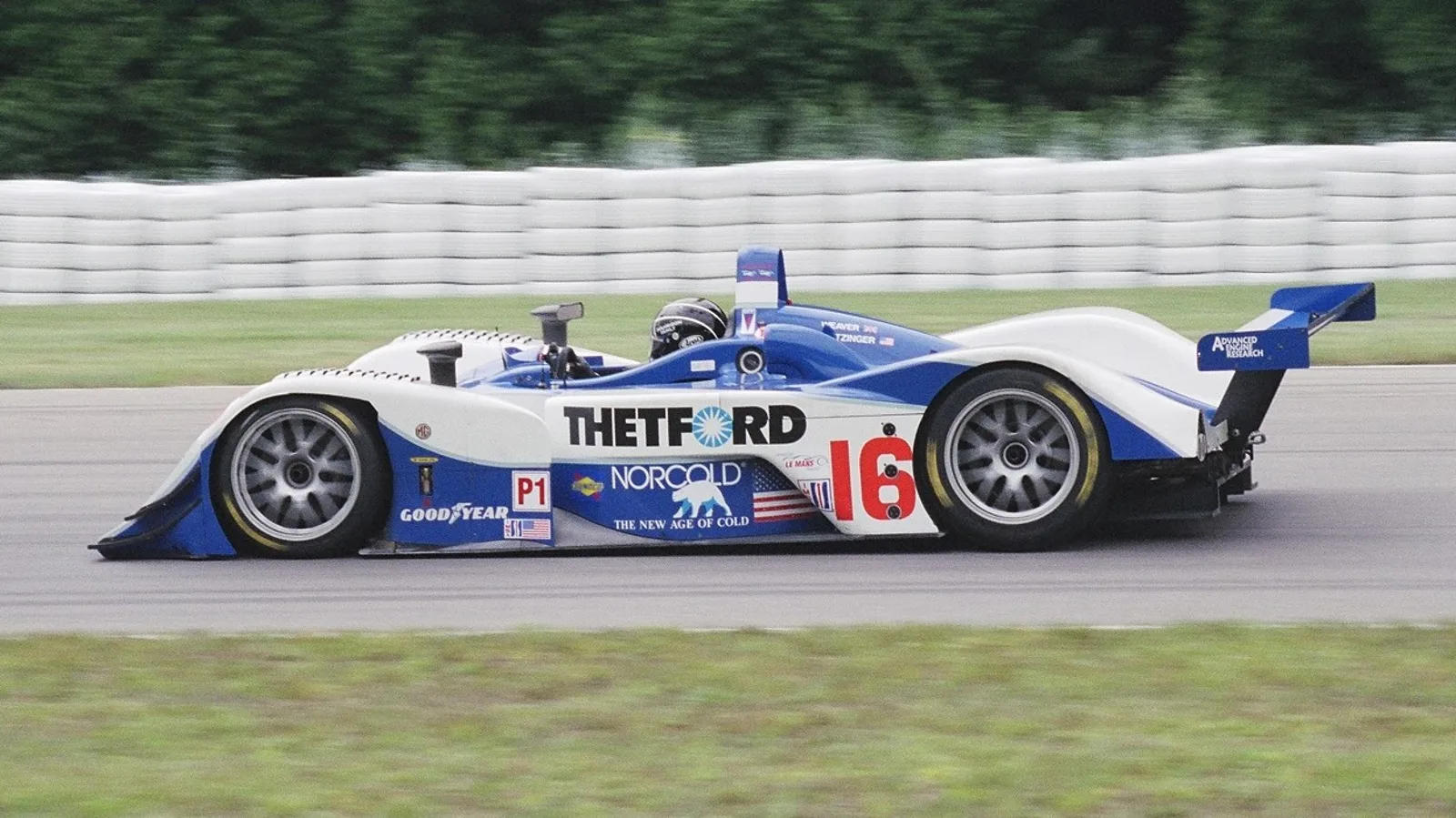
In 2004 the cars moved up to the LMP1 class under a rule realignment. Weaver and Leitzinger won at Mosport, and together the 16 and 20 cars produced eleven podiums. The team finished second in the championship, with Weaver and Leitzinger second in the drivers' standings.
Michelin tyres arrived for 2005, and the team delivered its first ALMS LMP1 one-two finish at Mid-Ohio, with Weaver and Leitzinger winning at Mosport again. In 2006 the team ran two new Lola B06/10-AER cars against Audi's diesel R10s and finished second in LMP1 behind the factory squad.
James Weaver retired after the 2006 Laguna Seca round, leading a pit stop at every visit in his final race. The moment closed a long chapter for the operation, though Weaver stayed on as a consultant to the team.
What happened in the Porsche, Mazda and Oryx years?
Porsche returned to the programme in 2007 with two RS Spyders in LMP2. Leitzinger and Wallace took third place in the LMP2 drivers' table, while the team placed second in the teams' championship behind Penske Racing. The partnership gave the operation fresh momentum after several seasons of mixed results.
The 2008 season ended with a third-place team finish, and Porsche narrowly won the LMP2 manufacturers' title by a single point over Acura. The team's form was solid, though the factory-backed cars were now leaving the ALMS programme.
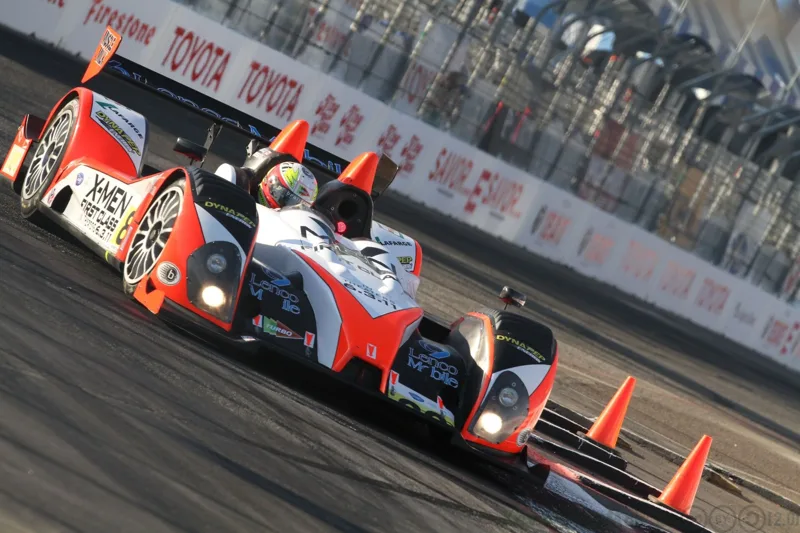
With Porsche ending factory ALMS support after 2008, Dyson partnered with Mazda in 2009 to run two BP and Castrol-backed Lola B09/86 LMP2 cars. The team won two class races at Lime Rock Park and Petit Le Mans that year.
In 2010 the LMP1 and LMP2 classes merged into one LMP class, and the team, now on Dunlop tyres, took its first overall ALMS victory at Mid-Ohio in August with Guy Smith. The Mazda-powered cars had finally delivered the breakthrough the team had been seeking.
Together with Oryx Racing, the 2011 team claimed five class victories, four overall wins and thirteen podium finishes. By season's end the operation held five championship titles, including the team and drivers' crowns.
The 2012 season was a rivalry with Muscle Milk Pickett Racing. Mechanical trouble for the HPD gave Dyson overall wins at Baltimore and at Road America, where the margin of 0.083 seconds set the closest overall finish in ALMS history. Dyson celebrated its 100th ALMS start at Baltimore and claimed its 200th podium at Mid-Ohio that season.
Did Dyson Racing race in the Pirelli World Challenge?
In 2014 the squad came back to racing in the Pirelli series, driving a Bentley Continental GT3. Leitzinger took part in five rounds and Smith in two, and the squad picked up one win and three podiums. The programme was modest by the team's standards, but it kept the operation active.
In 2015 Chris Dyson competed full-time and ended ninth in the standings, with one victory and four podiums from 20 races. The Bentley programme showed the same instinct for adaptation that had defined the operation since its SCCA days.
What were the key results by season?
| Year | Series | Result |
|---|---|---|
| 1974 | SCCA | Team founded by Rob Dyson |
| 1981 | SCCA | National championship with a Nissan 200SX |
| 1985 | IMSA GTP | First win at Lime Rock Park with a Porsche 962 |
| 1990 | IMSA GTP | Final IMSA GTP victory, at Tampa |
| 1997 | IMSA WSC | First Daytona 24 Hours win and first team title |
| 1999 | ALMS | Elliott Forbes-Robinson wins the inaugural series |
| 2000 | Grand-Am | SR1 Championship with James Weaver |
| 2003 | ALMS | LMP675 team title and Chris Dyson drivers' title |
| 2011 | ALMS | Five championship titles with Oryx Racing |
| 2012 | ALMS | Road America win by 0.083 seconds |
What is Dyson Racing's legacy?
Dyson Racing built a legacy of consistent endurance and sprint success across four decades of North American sports car racing. Its driver development, its long Goodyear and Porsche partnerships and its 200th podium in the ALMS are the marks it leaves behind.
The team's continuity was unusual. Rob Dyson raced for years, James Weaver drove for the team for two decades, and Chris Dyson became a regular name at the front of the field in several series.
Its later years show the same willingness to change. The team moved from Porsche to Mazda, then to Lola and finally back to a Bentley GT3 entry in the Pirelli World Challenge. Each change kept the operation competitive across a long span of motorsport history.