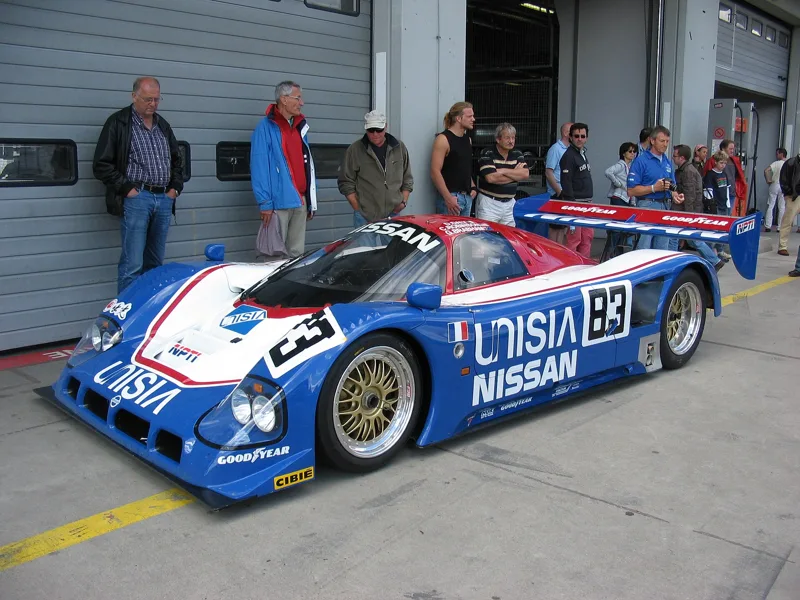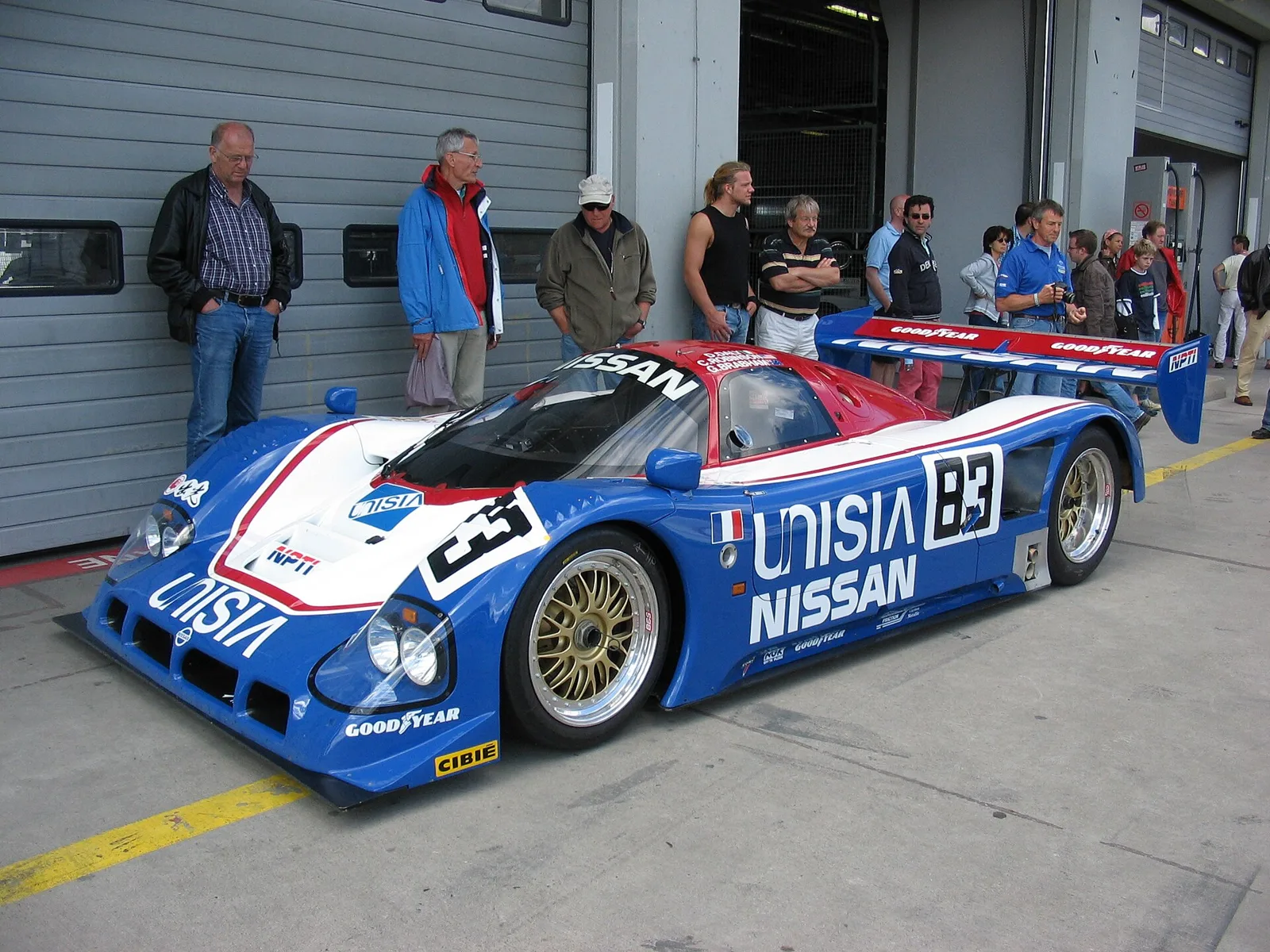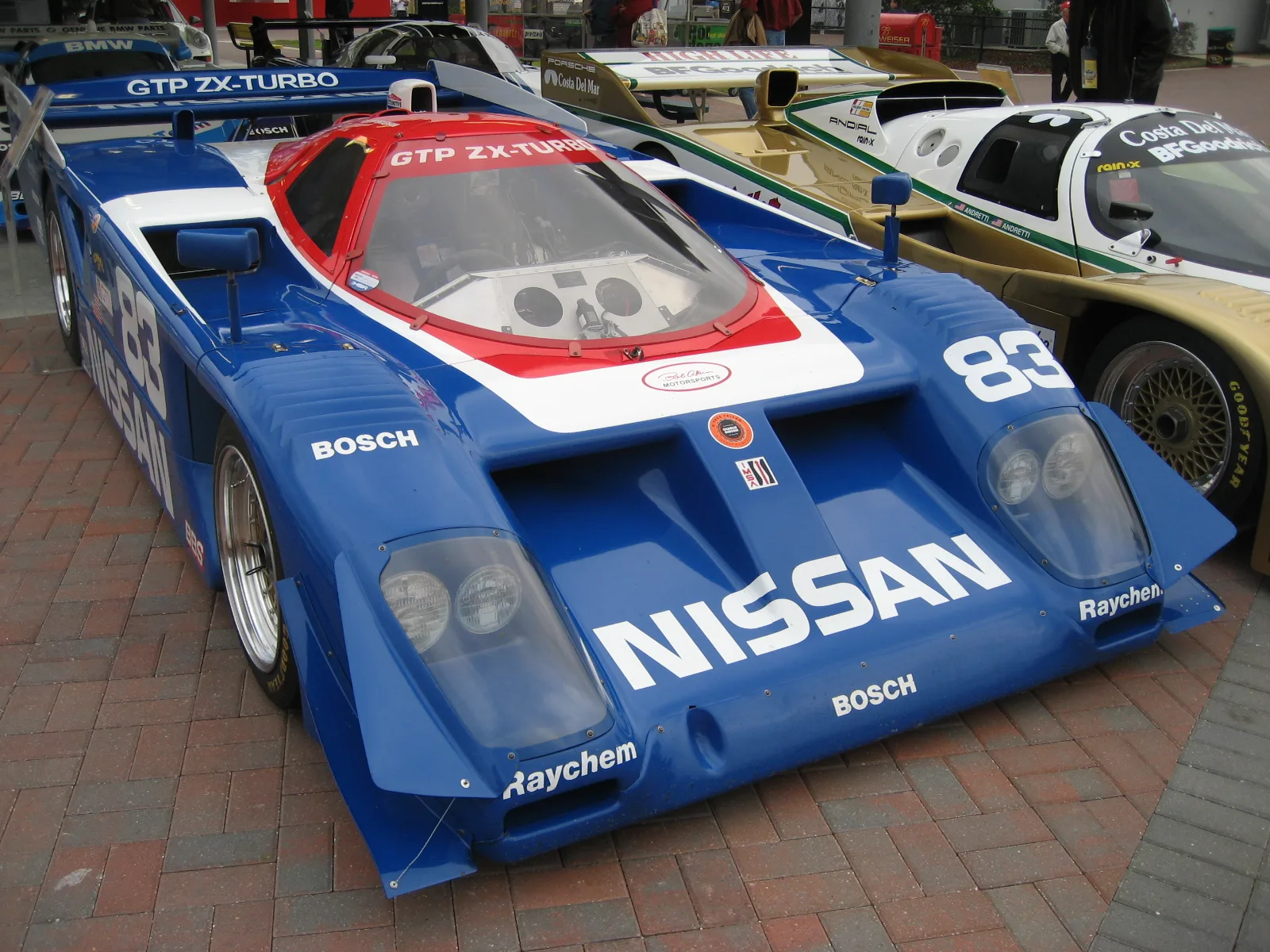
A turbocharged racer built with Electramotive Engineering that beat the Porsche 962, won two constructor's titles and gave way to the NPT-90 in 1990.
The Nissan GTP ZX-Turbo was an IMSA GTP racer built by Electramotive Engineering for Nissan between 1985 and 1990. It used a turbocharged VG30ET V6 and became the first car to beat the Porsche 962, helping Nissan take two constructor's titles.
The Nissan GTP ZX-Turbo was a racing car built for Nissan in the IMSA GT Championship between 1985 and 1990. It was the first car to beat the Porsche 962 in IMSA's premier GTP category, and it helped Nissan win the constructor's title and the 12 Hours of Sebring in 1989 and 1990.
What was the GTP ZX-Turbo?
The GTP ZX-Turbo was a prototype raced by Nissan from 1985 to 1990 in the IMSA GT Championship. Developed by Electramotive Engineering, it took its name from the turbocharged VG30ET V6 it shared with the production Nissan 300ZX. It was replaced during 1990 by the NPT-90.
The block looked much like the road car's, but the racing engine had been heavily reworked to survive competition. The name reflected that shared origin, even though the racing unit was a very different engine by the time it reached the track.
A Nissan built to beat Porsche at its own game, and it did so often enough to win two constructor's titles.
Why did Nissan enter IMSA?
In 1984 Nissan named Electramotive Engineering its official North American racing development arm. The aim was to re-establish the brand in the United States after the Datsun name was phased out, and IMSA was the stage chosen to show off the company's technology.
Nissan had used the 24 Hours of Le Mans from 1983 in the same way. Electramotive maintained, modified and fielded the cars, while Nissan supplied the VG30ET motors, which Electramotive developed further for racing. The Porsche 962 had dominated IMSA's premier GTP class before the GTP ZX-Turbo arrived.
How were the first chassis built?
Lola Cars International was contracted to build the chassis, to Nissan's and Electramotive's own specifications. Chassis #1 and #2, the Lola T810s, were finished in early 1985, and that year was spent developing the car for 1986. The early cars were used mainly for development.
Electramotive had to modify the T810 to suit smaller tracks and shorter sprint races. As the design moved beyond the original T810, the modified cars were renamed GTP ZX-Turbos.
A third T810, chassis #3, was built by Lola, sold to Japan and then sent back to Electramotive, which adapted it by the end of 1987. Some cars shared the tub of the Lola T710, better known as the Chevrolet Corvette GTP.
Electramotive eventually built its own tubs, completing five in 1988. In 1990 the company became Nissan Performance Technology Inc. (NPTI), and the old cars were finally retired after the NPT-90s were finished partway through the 1990 season.
That change mattered. Once Electramotive built its own cockpit tubs, the team no longer depended on Lola for that part of the car and could shape the chassis around its own racing needs.
How did the car perform in 1985 and 1986?
The first Lola T810 debuted at Laguna Seca, where Don Devendorf and Tony Adamowicz took it to eleventh place. A heavy practice crash at Charlotte sidelined the car for much of the year, and 1986 brought a best result of third at Portland with Geoff Brabham.
A ninth at Sears Point was the best result of 1985 before mechanical trouble ended the season's remaining starts. In 1986 Nissan sat out a number of rounds to concentrate on development, Daytona and Sebring among them.
The renamed car opened its season on the streets of Miami, and then problems piled up. Mid-Ohio brought a career-best seventh, but at Portland the car fought the leaders and came home third with Geoff Brabham driving.
A fourth place followed at the next round. The final race in Columbus gave a distant fifth, lifting Nissan to seventh in the constructor's standings.
What happened in 1987 and 1988?
In 1987 the GTP ZX-Turbo won its first race at Miami, beating a Porsche 962 by eleven seconds once three hours had elapsed. In 1988 Nissan expanded the programme to two cars and won eight races in a row, before it lost the championship to Porsche by a single point.
Electramotive ran into clutch failure at Road Atlanta and an accident at Riverside in 1987. It found little success until the final round at Del Mar, where the car closed with a sixth-place finish.
Nissan still climbed to fifth in the constructor's standings, though its points tally was a fraction of the champion Porsche's. The 1988 season began poorly with an eighth at Miami, but Road Atlanta brought a win by just four seconds over the factory Jaguar team.
Palm Beach fell next, followed by Lime Rock, Watkins Glen, Mid-Ohio and Road America, a run credited largely to a turbocharger technology that gave the car an edge over naturally aspirated rivals. The second car made its debut at Portland, and the two cars swept the top spots.
The eight-race streak ended at San Antonio, where the lone entered car suffered electrical problems. The cars returned to winning at Columbus, though the season finale went to Derek Daly's car, which came home fourth.
Nissan won nine of the fourteen GTP rounds that season, yet skipping Daytona and Sebring cost it the constructor's title. Porsche won by a single point, and Geoff Brabham took the drivers' title by a wide margin.
The title race showed how much a single missed round could cost. Porsche collected points at the races Nissan had skipped, and the gap at the end was one point.
How did the 1989 season go?
In 1989 the team took on both Daytona and Sebring, even with doubts about the cars' reliability. Neither car finished at Daytona, although one lasted most of the race. At Sebring, Chip Robinson, Geoff Brabham and Arie Luyendyk shared a surprise victory by two laps.
Miami brought back the winning form, and Jaguar was beaten again. The car proved its endurance with a win at Road Atlanta, and Lime Rock, Mid-Ohio and Mosport were conquered next, along with Road America.
Palm Beach ended in problems, and Portland gave second and third as Jaguar's new machine started to look quick. Topeka brought the top two places, and a short run of wins followed at San Antonio and Sears Point.
Ten victories to Jaguar's three made the constructor's title an easy one, and it was the first non-Porsche title since the class formed in 1983. Brabham beat Chip Robinson to the drivers' crown, his second.
Who ran the car in 1990?
In 1990 the defending champions faced a new problem: the GTP ZX-Turbo was now the target of rivals, so Nissan began work on a successor while the older car kept racing. The renamed NPTI team was supported by privateer Busby Racing, which ran a third car.
Daytona brought trouble again, but Miami gave the GTP ZX-Turbo its third win there, and Busby's new car finished second. The team also improved at Sebring, taking the win and a second place for the other car.
Eagle-Toyota beat Nissan at Topeka, where the NPT-90 made its debut with one car of each type running. At Lime Rock Nissan lost again, but Mid-Ohio brought a return to the top, with the NPT-90 ahead of the GTP ZX-Turbo.
Fifth place behind the new car ended the older car's racing career, and the second NPT-90 arrived at the following round to take over from the final GTP ZX-Turbo. Geoff Brabham won his third drivers championship that year, and Nissan took the GTP constructors title again.
Nissan therefore ran two generations of the car at once through much of 1990, with the older GTP ZX-Turbos and the new NPT-90s sharing the programme.
John Shapiro entered one GTP ZX-Turbo at Miami in 1991, finishing 13th before the team folded. That was the final race for the car, although the NPT-90s kept the GTP ZX-Turbo name on them.
What were the car's outings beyond IMSA?
The Le Mans Company in Japan bought one of the first three Lola T810s for the All Japan Sports Prototype Championship. The car debuted late in 1985, and that season ended with eighth place at the 1000 km of Fuji.
The 1986 return to Fuji ended in sixth, 13 laps adrift of the winning Porsche 962. The car was retired once the team moved on to a Porsche.
After the GTP ZX-Turbo was retired in 1990, one former works chassis went to Europe for the 1991 Interserie championship. It was quick but often could not finish, and it was dropped quickly.
How was the GTP ZX-Turbo marketed?
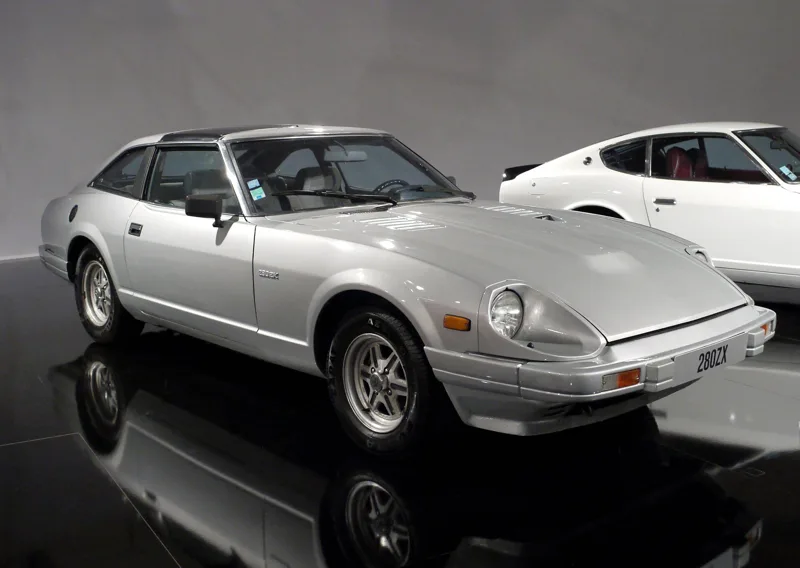
Nissan used the car to show off a sporty, advanced image while the Datsun name was being retired in the United States. The GTP ZX-Turbo appeared in television and print advertising for the whole Nissan range, and especially for the 300ZX that shared its engine.
The car was also featured in a Miami Vice episode about the IMSA GT Miami Grand Prix, although that footage was mainly from the race itself. It also appeared in the 1990 game GT Super Screamers from Worlds of Wonder.
Nissan GTP ZX-Turbo specifications
| Specification | Detail |
|---|---|
| Class | IMSA GTP prototype |
| Years raced | 1985 to 1990 |
| Developer | Electramotive Engineering for Nissan |
| Engine | Turbocharged VG30ET V6, shared with the Nissan 300ZX and extensively modified |
| Chassis | Lola T810 for the first cars; Electramotive-built tubs later, five completed in 1988 |
| Chassis numbers | #1, #2 and #3 for the Lola T810s |
| 1988 result | Nine wins from fourteen rounds; Porsche took the constructor's title by a point |
| 1988 win streak | Eight races, ended at San Antonio |
| 1989 result | Ten wins to Jaguar's three; constructor's title won |
| Sebring 1989 | Win by two laps |
| Titles | Constructor's championship in 1989 and 1990; 12 Hours of Sebring in 1989 and 1990 |
| Successor | NPT-90, debuting in 1990 |
| Final GTP ZX-Turbo race | 13th at Miami in 1991, entered by John Shapiro |