Six purpose-built coupes from Shelby American and Carrozzeria Gransport, a 1965 GT title and a first car that was lost for decades.
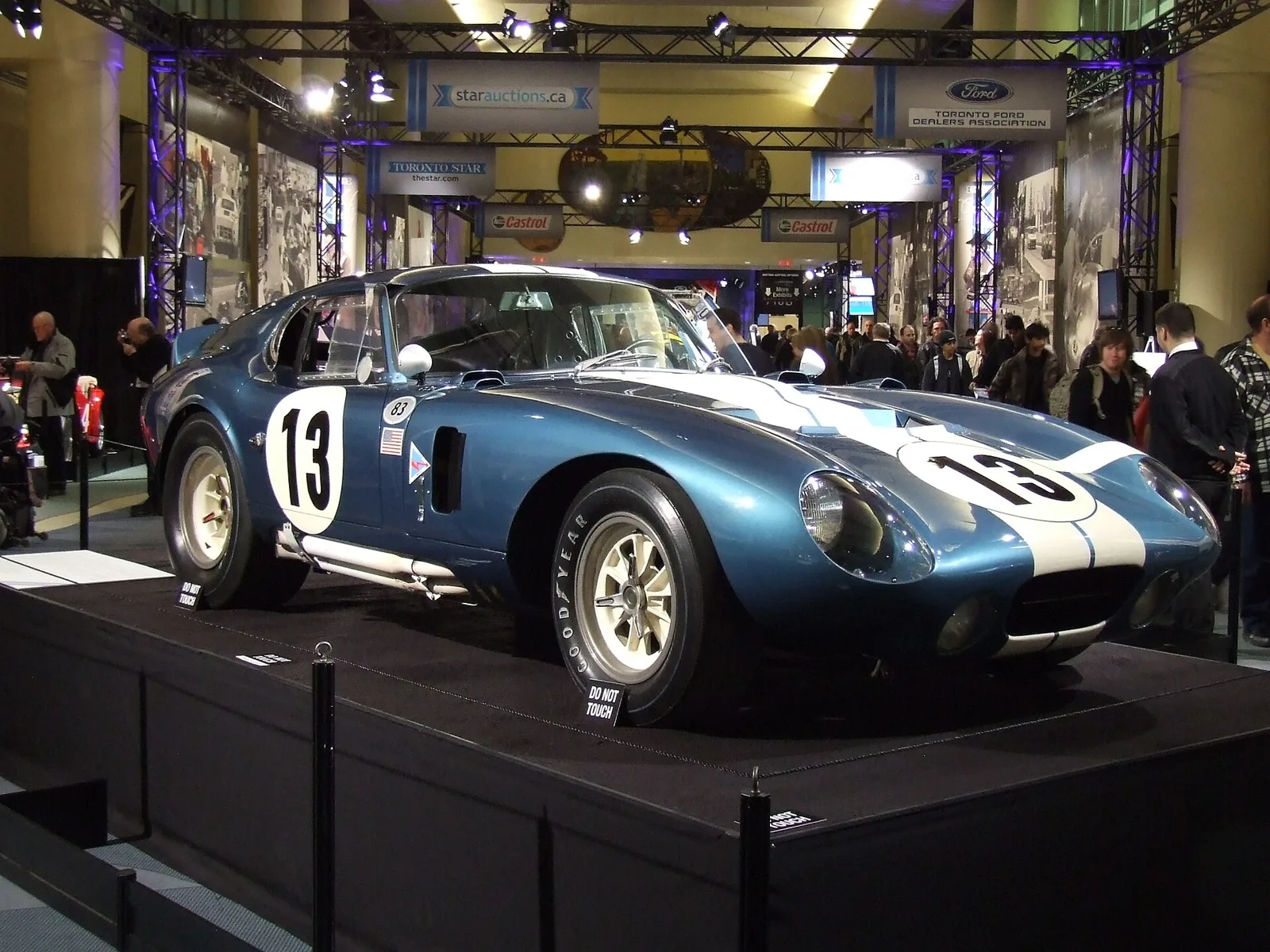
The Shelby Daytona Coupe was an American racing coupe built on an evolved Cobra chassis and drivetrain. Six cars were made in 1964 and 1965, and they won the 1965 International Championship for GT Manufacturers GT III class to beat Ferrari.
The Shelby Daytona Coupe was an American sports coupe related to the Shelby Cobra roadster, built on an evolved version of the Cobra chassis and drivetrain. It was engineered purely for racing, aimed squarely at the Ferrari 250 GTO in the GT class. Only six were built, between 1964 and 1965, and the car is now regarded as one of the most significant American race cars of its era.
Why was the Daytona Coupe built?
Carroll Shelby had won Le Mans in 1959 and wanted to beat Enzo Ferrari there with a car of his own. The open-cockpit Cobra's drag capped its Mulsanne Straight speed near 157 mph (253 km/h), while the Ferrari 250 GTO could hold roughly 186 mph (299 km/h), a gap of more than 10 seconds per lap.
That difference was enough to negate the Cobra's advantage in the slower sections. Shelby therefore set out to build a closed coupe with better aerodynamics on the same basic running gear, and the project was designed to take on the GT class directly.
Other builders had tried similar ideas. The Bill Thomas Cheetah of 1963 used Chevrolet V8 engines, while the AC Cobra A98 coupe ran a Ford 289 and raced at Le Mans in 1964.
A Cobra-derived coupe engineered to beat Ferrari on the Mulsanne Straight, and the first American car to win an international GT title.
Who designed the Daytona Coupe?
Brock was handed the aerodynamic bodywork, while Negstad handled the suspension and later worked on the GT40 and coil-spring Cobra chassis. Brock sketched the shape on the floor of the Shelby workshop, then placed a seat and wheel where he thought they should go.
Brock fixed the first component of the car, a windscreen made from scrap wood and gaffer tape, with Ken Miles seated inside to test the position. He then used wooden formers to guide the hand-made aluminium bodywork around the chassis that became CSX2287.
An aerodynamics consultant from Convair, Ben Howard, believed the tail needed 3 feet (0.91 m) more length. Brock stood by his design, and Shelby later admitted that the longer tail would have been awkward and made the car too long, and that Howard had been right.
How fast was the first Daytona coupe?
Miles took the car to Riverside Raceway and ran five laps on the one-mile main straight, reaching 186 mph (299 km/h). The car had almost flown at speeds above 160 mph (260 km/h), lightening the steering a great deal, so the team spent another 30 days on development.
Once Miles signed off the car, it was capable of more than 190 mph (310 km/h). CSX2287 was shipped to Daytona Speedway for its debut in the Daytona Continental 2000 km on 16 February 1964. Dave MacDonald started from pole at 2:08.200, an average of 106.464 mph (171.337 km/h).
Where were the Daytona coupes built?
The first coupe was assembled at Shelby American's workshop in Venice, California, while the other five came from Carrozzeria Gransport, a coachbuilder in Modena, Italy whose name meant Grand Sport Coachbuilders. Beyond the six, a 427 Type 65 Super Coupe prototype was developed but never finished.
What happened to the chassis numbers?
CSX2286 was built as a one-off for the 1964 Le Mans race but never reached the event. The plan was to lengthen the chassis and fit a big-block NASCAR-style engine. Ford reneged on a 427 aluminium block and supplied a 390 instead, and the build ran out of parts.
Another coupe, CSX2299, was used at the race instead, with Ohlsen as crew chief and drivers Bob Bondurant and Dan Gurney. That car finished fourth overall and won the GT class. CSX2286 was later returned to stock and raced at Le Mans the following year, failing with clutch trouble. It was crashed at Laguna Seca in 2012 and has since been restored.
CSX2287 was the very first coupe and the only one built entirely in Venice. Its drivers included Dave MacDonald, Bob Holbert, Phil Hill, Chris Amon and Innes Ireland, and it won the GT class at Sebring in March 1964, its first win for a Daytona coupe. Pete Brock used German engineering designs from the late 1930s, which he thought had been lost during the war, and copies of the originals were later found in the archives at Ford. Brock, Ken Miles and fabricator John Ohlsen formed the original team, which built the car in 90 days.
CSX2299 was the second coupe and the first finished at Carrozzeria Gransport. It took part in nine FIA races and won four of them, including Le Mans and the Tourist Trophy in 1964. Shelby's final sale of it came with paperwork calling it the number one Cobra Daytona coupe, and it now belongs to the Larry H. Miller Group.
What did the Daytona coupes achieve in racing?
In their first year the coupes finished second to Ferrari by six points in the GT III class of the International Championship for GT Manufacturers. In 1965 they won the class by 19 points, and that made Shelby the first American manufacturer to take an international title through the FIA World Championships.
In 1964 the coupes won the GT class at Sebring and at Le Mans, where Dan Gurney and Bob Bondurant took the class win in a Daytona that finished fourth overall, and the Tourist Trophy. In 1965 they added wins at the Daytona 24 Hours, the Sebring 12 Hours, Monza, the Nurburgring 1000 km, Reims and Enna-Pergusa, with the Reims win clinching the title.
Ford entered its six coupes through the British team Alan Mann Racing, and CSX2601 won four GT III class races in 1965 at Monza, the Nurburgring, Reims and Enna, and it also leased or sold cars to other teams. The Tri-Colore team in France and Scuderia Filipinetti in Switzerland both ran them, and the coupes raced in Division III, which covered engines over 2000 cc.
The coupes competed in numerous 500 km, 1000 km, 12 hour and 24 hour races, including events at Daytona, Sebring, Imola, Reims, Spa-Francorchamps, Goodwood, Oulton Park and the Tour de France Automobile. In November 1965 the car CSX2287 also set 25 land speed records at the Bonneville Salt Flats during a tyre test session.
How did Ford's Le Mans programme use the Daytona?
Shelby himself was pulled onto the Ford GT40 project, which was aimed at Le Mans and at beating Ferrari for the highest prototype class. The Daytona coupes became the GT-class program instead, with the racing work spread between Alan Mann Racing and privateer teams.
Earlier in 1965 CSX2602 had raced at Daytona, Sebring, Monza and the Nurburgring, with drivers including Phil Hill, Jack Sears and John Whitmore. It then ran at Le Mans in the red and white colours of Scuderia Filipinetti, with British drivers Peter Sutcliffe and Peter Harper. After Ford used up its own allocation of entries, the team bought the car from Alan Mann Racing. A blown engine ended its race in the tenth hour, and the car was then repainted in Shelby American colours and never raced again.
What happened to CSX2287 after racing?
After its Bonneville record run, CSX2287 was reconditioned and advertised for sale. Slot car magnate Jim Russell bought it from Shelby in 1966, and music producer Phil Spector later acquired it. The story goes that Spector collected so many speeding tickets on the road that his lawyer urged him to sell it.
The Monkees featured it in a 1968 episode, racing it against the Monkeemobile. All trace was lost by the mid-1970s, but it was rediscovered in 2001 in a California rental storage unit, where it had been for almost 30 years. A legal battle over the car followed, and it was eventually bought by Dr. Frederick A. Simeone.
The car is now restored and on display at the Simeone Foundation's museum in Philadelphia. In January 2014 the Historic Vehicle Association listed it on its National Historic Vehicle Register, the first vehicle so recorded, and that November it took top honours at the International Historic Motoring Awards, the first American car to do so.
What did individual Daytona coupes sell for?
CSX2300 was leased from Alan Mann Racing to Ford of France as the Tri-Colore entry at the 1965 Nurburgring 1000 km. RM Auctions later sold it for $4.4 million on 19 August 2000. CSX2601 sold for $7.25 million on 15 August 2009 and is now owned by the Perez Companc family from Argentina.
Are there modern versions of the Daytona?
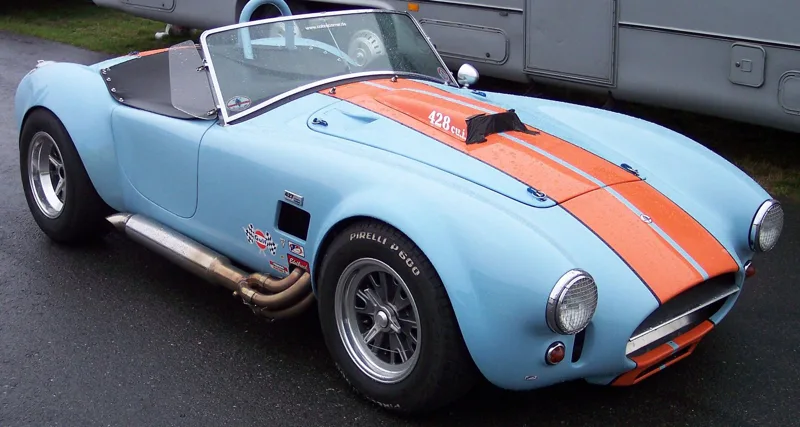
In July 2015 Shelby American said it would build 50 continuation Daytonas to mark the 50th anniversary of the car's title-winning year. In 2004 Ford and Shelby also created the GR-1, a coupe with a V10 that Carroll Shelby said he did not want called a Cobra.
Several reproductions followed over the years. Superformance built a Shelby-licensed Daytona Coupe, Factory Five Racing produced a Type 65 reproduction, and the Denmark-based Daytona-Coupe and Germany's AMMAS made replicas of the 1964 and 1965 cars.
What are the Shelby Daytona specifications?
| Specification | Detail |
|---|---|
| Type | American sports coupe, related to the Cobra roadster |
| Racing coupes built | Six, in 1964 and 1965 |
| Chassis builders | Shelby American, Venice; Carrozzeria Gransport, Modena |
| Engine | Ford 289 cu in V8 in the original racing cars |
| Debut | 16 February 1964, Daytona Continental 2000 km |
| Pole time, debut race | 2:08.200, 106.464 mph (171.337 km/h) average |
| Top speed reached | 186 mph (299 km/h) at Riverside; over 190 mph (310 km/h) after development |
| Title won | 1965 International Championship for GT Manufacturers |
| Continuation run | 50 cars announced July 2015 |