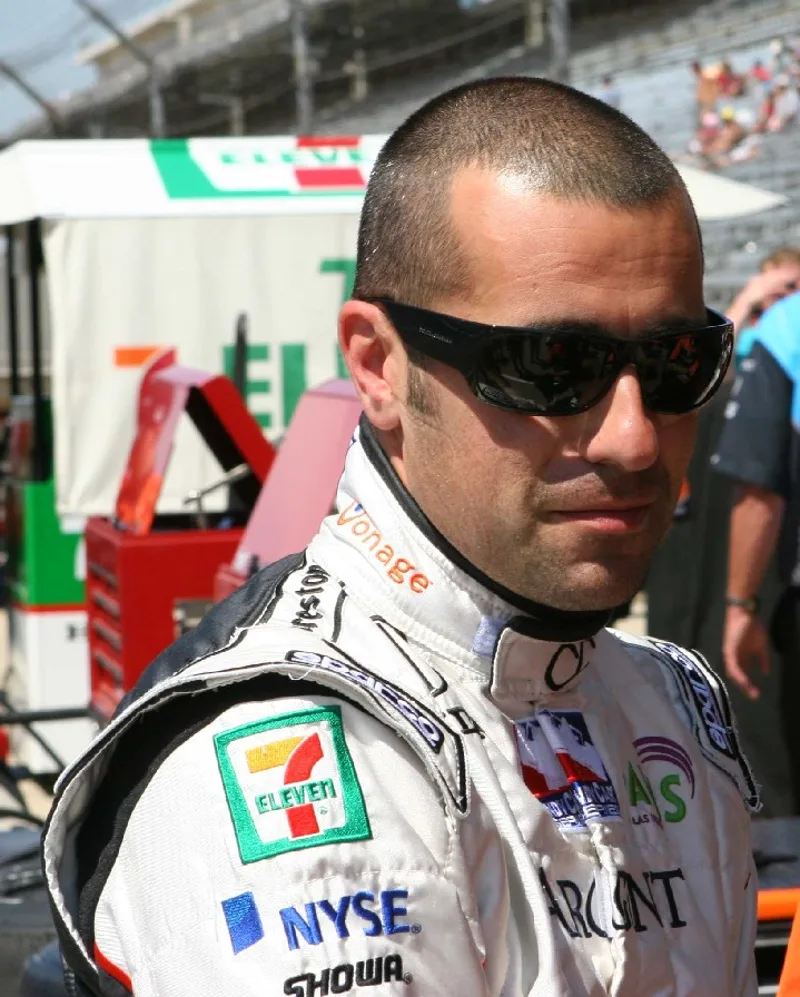
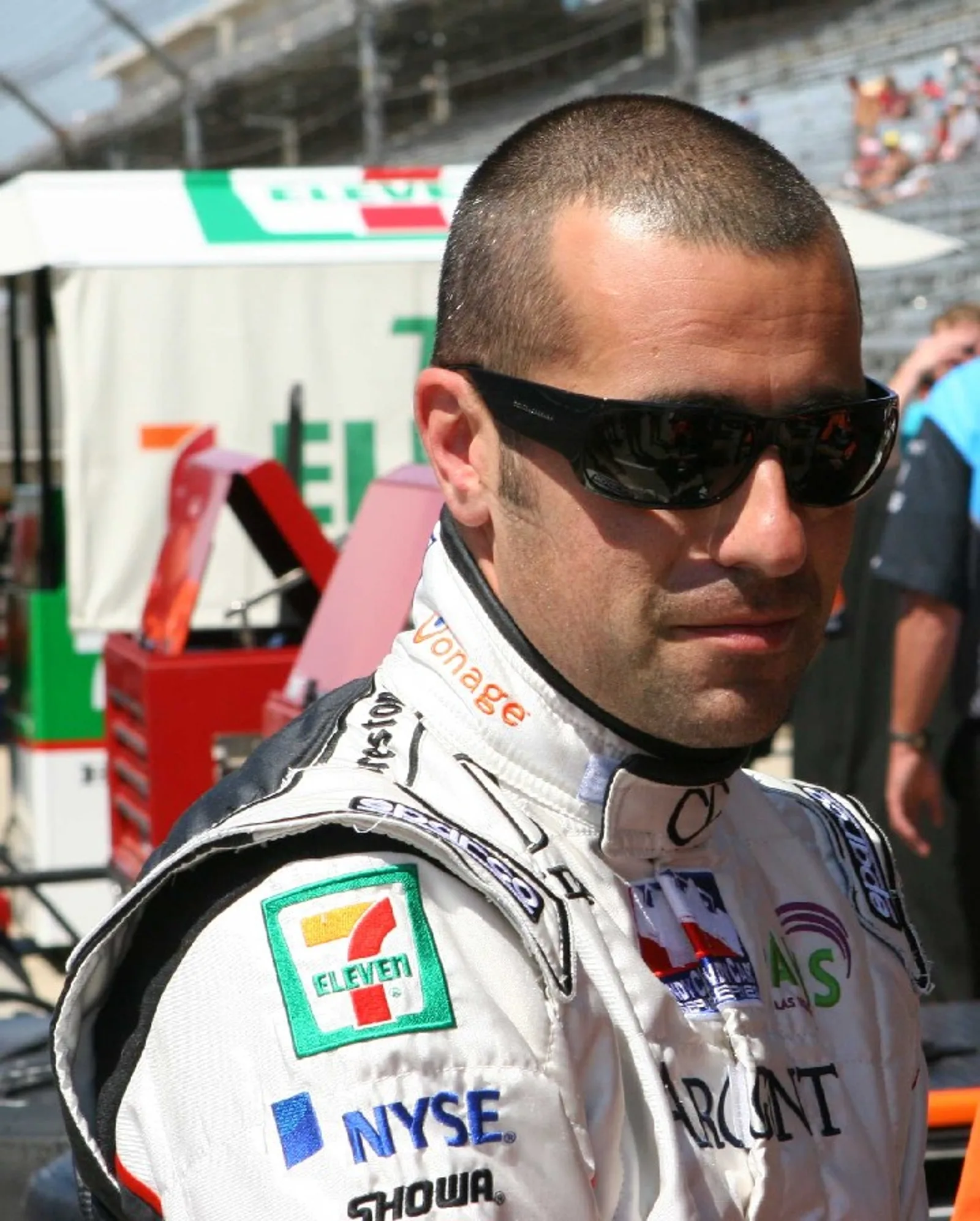
A fuel-driven finish at Chicagoland gave Dario Franchitti the 2007 IndyCar championship, as Scott Dixon ran dry on the final lap.
Dario Franchitti won the 2007 Peak Antifreeze Indy 300 from pole, finishing 1.8439 seconds ahead of Scott Dixon and clinching the IndyCar championship. Dixon ran out of fuel on the final lap, and Franchitti swerved past him to take the flag on September 9, 2007.
The 2007 Peak Antifreeze Indy 300 was the final round of the IndyCar Series season, held on September 9, 2007, at Chicagoland Speedway in Joliet, Illinois. Dario Franchitti won from pole and clinched the Drivers' Championship as Scott Dixon's car ran dry on the last lap.
What was the 2007 Indy 300 and why did it matter?
This was the last race of the 2007 IndyCar season, and the seventh time the event had been staged. It was the seventh consecutive year the race had appeared on the IndyCar calendar, dating back to 2001, and it was run over a scheduled 200 laps, or 300 miles (480 km).
The race also decided the title. Three drivers still had a mathematical chance of winning the championship going into the final round, which made the afternoon at Chicagoland one of the most closely watched races of the season.
Chicagoland is a 1.5 mi (2.4 km) D-shaped asphalt tri-oval in Joliet. Dan Wheldon had won the race in both 2005 and 2006, which made him the defending winner for the 2007 event.
A title settled by a fuel tank that ran dry one lap too soon, with 1.8439 seconds between the leaders.
What was at stake in the championship before the race?
Dario Franchitti led the Drivers' Championship with 587 points, three more than Scott Dixon and 39 more than Tony Kanaan. The race offered a maximum of 53 points, so only those three drivers could still take the title.
Franchitti and Dixon needed only to win the race to clinch the title. Kanaan had a harder path, since he had to win, lead the most laps, and see Franchitti finish no higher than thirteenth and Dixon no better than sixteenth.
Behind the leaders, Wheldon was fourth in the standings with 449 points, and Sam Hornish Jr. was fifth on 427. Neither had a mathematical route to the title, but both were in a position to make the top five secure.
How did the title fight build up during the season?
Franchitti had lost the 1999 CART FedEx Championship to Juan Pablo Montoya on a tiebreaker, so the 2007 title carried extra weight for him. Earlier in the year he held a 65-point advantage over Dixon after the June SunTrust Indy Challenge race.
That lead did not last. Dixon went on a three-race winning streak, and Franchitti's run of crashes let Dixon take the championship lead after the August Motorola Indy 300. Franchitti regained the lead at Detroit in the penultimate round, but only after a last-lap collision with Dixon.
The controversy from Detroit was still fresh when the teams went to Chicagoland. Franchitti's team owner, Michael Andretti, was unhappy with the collision, and both Franchitti and Dixon said they would race hard for the title. Kanaan had also stayed behind his teammate Franchitti in the Motorola race, which had been a controversial choice.
Who was in the field for the 2007 race?
A total of 22 cars were entered, all with Dallara IR-05 chassis, Honda Indy V8 engines and Firestone tyres.
Hideki Mutoh made his IndyCar debut in a third Panther Racing entry. He had completed a rookie test at Chicagoland on August 16, and he came into the event with a win in the Indy Pro Series race at Kentucky Speedway earlier that August, his first oval victory.
Marty Roth fielded two cars from Roth Racing. The second seat had originally been reserved for the 2007 Indy Pro Series champion, Alex Lloyd, but a scheduling conflict gave the car to P. J. Chesson, who was making his first start since the 2006 Indianapolis 500.
How did practice and qualifying set the grid?
Two practice sessions were held on the day before the race, the first lasting 105 minutes and the second 60 minutes. The second session was split into two groups with equal track time for each.
Dixon was fastest in the first session with a time of 25.1725 seconds, ahead of Hornish, Kanaan, Franchitti and Wheldon. Buddy Rice ran out of fuel in turn three, which briefly halted the session, and Castroneves had an engine change to repair a broken O-ring, which earned him an extra 10 minutes of track time in the second session.
Castroneves led the second session at 25.3097 seconds, followed by Dixon, Franchitti, Kanaan and Marco Andretti. Milka Duno missed most of the first session because her spotter was not at the stand.
Qualifying on Saturday afternoon used two timed laps for each driver, and the faster of the two set the grid. The field then sorted itself into the front rows with Franchitti on pole.
Who won the pole and how did the front row shape up?
Franchitti took pole at 25.4931 seconds. It was his third pole of 2007, his sixth in IndyCar and his 17th in Indy car racing overall, counting 11 CART poles.
Hornish joined him on the front row with a lap less than two hundredths of a second slower. Castroneves started third, with Kanaan fourth and Wheldon fifth. Dixon, Danica Patrick, Darren Manning, Tomas Scheckter and Marco Andretti filled the top ten.
Scott Sharp completed only one lap in his qualifying attempt. His team had hoped to gain an advantage by pulling him out of line so that he would qualify last on a cooling track, and he still started 11th. Duno, Roth and Chesson closed the grid, with Rice, Foyt IV and Fisher ahead of them, and Matsuura, Meira, Carpenter, Mutoh and Hunter-Reay further forward.
Franchitti said afterwards that the car had felt very fast from the first run, which he had not experienced at Chicagoland before. He credited the balance of the car as a major reason for running at the front.
How did the race start?
The weather was sunny and dry, with an air temperature of 81 degrees F (27 degrees C) and a track temperature between 107 and 115 degrees F (42 and 46 degrees C). The race began at 3:00 p.m. Central Daylight Time, after Jim Shea of AutoZone had called for the engines to start.
Hornish pulled alongside Franchitti on the back straight and led the opening lap by 0.0617 seconds. Castroneves quickly took second from Franchitti, and he stayed within under a tenth of a second of Hornish.
On the seventeenth lap Kanaan picked up a puncture to his right-rear tyre and had to pit. That stop effectively ended his championship hopes. Nine laps later Dixon passed Franchitti for fourth place.
The first caution came on lap 35, when Andretti lost control, backed into the outside wall at turn four and was out of the race. He complained of neck pain and was taken to Provena St. Joseph's Medical Center in Joliet for a CAT scan, which found no significant injury.
How did the pit cycles shape the middle of the race?
Scheckter lost his right-rear tyre the lap after Andretti's crash, and most of the field made its first stops on lap 38. Castroneves came out ahead of the others to take the lead ahead of Dixon, Hornish, Wheldon and Franchitti.
A bent mirror forced Chesson into a lengthy stop, and Carpenter had to drop to the back for speeding on pit road. Green-flag running resumed on lap 45, and Hornish overtook Dixon for second almost at once.
Manning pitted on lap 53 and later retired with handling problems. The second round of green-flag stops began on the seventieth lap with Kanaan and Carpenter, and Castroneves and Hornish pitted 16 laps later, handing the lead to Dixon. Dixon stopped on the eighty-ninth lap, and Franchitti made his stop on lap 93.
Hornish passed Castroneves in turn three nine laps after Franchitti's stop, which put the Team Penske pair near each other through the next cycle. The third round of stops began on the one hundred and twenty-sixth lap, and Dixon led for six laps once Castroneves and Hornish pitted on lap 130.
Dixon and Patrick pitted on the one hundred and thirty-sixth lap. The next lap a second caution came out after Meira hit the turn four wall, and by then Franchitti had moved to the front. He pitted on lap 140 for four new tyres and fuel, handing the lead back to Dixon.
The long caution let track officials repair the damaged SAFER barrier. Dixon and Franchitti used the time to fill their fuel tanks on lap 147, which put them on a separate fuel strategy from the rest of the field. The green flag came out again on lap 152.
Who had the upper hand on fuel late in the race?
Hornish worked his way through the field over the next eight laps and took the lead from Dixon in turn two on the one hundred and sixtieth lap. He kept about 0.2 seconds on Dixon until he pitted for the last round of stops on lap 184.
Dixon then led the next seven laps before his Chip Ganassi Racing teammate Wheldon passed him on lap 191. Wheldon held the lead until he ran out of fuel on the back straight three laps later, and the position passed to others.
Patrick spun while entering the pit road on lap 195. That caution, the third of the race, gave Franchitti and Dixon the chance to save fuel and pit once more. On the restart on lap 198 Franchitti went to the outside of Dixon, but he could not complete a pass.
How did the title come down to the final lap?
On the final lap Dixon's car sputtered and twitched as he entered turn three, with fuel running out. Franchitti swerved up the track to avoid the slowing Dixon and drove on to win. The margin was 1.8439 seconds, and they were the only two drivers on the lead lap.
| Finish | Driver | Note |
|---|---|---|
| 1 | Dario Franchitti, Andretti Green Racing | Pole; title-clinching win |
| 2 | Scott Dixon, Chip Ganassi Racing | Ran out of fuel on the final lap |
| 3 | Sam Hornish Jr., Team Penske | Led 90 laps, the most of any driver |
| 4 | Helio Castroneves, Team Penske | Started third |
| 5 | Scott Sharp | Started 11th |
Hornish finished third, with Castroneves fourth and Sharp fifth. Kanaan came sixth, ahead of Hunter-Reay, who finished seventh and secured the Rookie of the Year award. Mutoh, Rice and Foyt rounded out the top ten.
Thirteen lead changes were shared between five drivers. Hornish spent 90 laps in front, the largest total, and Franchitti's three spells at the front added up to ten laps.
How did the drivers react after the race?
Franchitti celebrated his first championship with his team in victory lane. He was stunned by the finish, and he said the car had come back stronger towards the end. He had been trying to set up a pass on Dixon on the last lap when Dixon slowed, and he nearly ran into the back of him.
Dixon was disappointed, and he said Franchitti's team had been saving fuel in the closing stint. He added that his own team had been on even terms at the last stop, but that they had not had enough fuel to match. He still congratulated Franchitti on the title and called him a deserving champion.
Hornish said his Team Penske car had been the fastest, and he expressed frustration that the team had not won and ended the season on a high. Castroneves was unhappy with race officials, who had put everyone except Franchitti and Dixon a lap down, and he argued that either he or Hornish would have won without that call.
Castroneves also praised his pit crew for executing flawless stops, so the criticism was aimed at the officiating rather than the team.
What did the title mean for the teams and the series?
The race win earned Franchitti $111,400. It was his fourth victory of 2007, and it lifted his career tally to eighteen Indy car wins, eight of them in IndyCar. He had also won ten CART races before the IndyCar era, and the title was his first Drivers' Championship in a 23-year racing career.
Franchitti finished the season with 637 points, which was the highest total any IndyCar Series champion had ever scored in a season. Dixon was 11 points behind him, and Kanaan finished third, a further 48 points back. Wheldon was fourth with 466 points, one more than Hornish in fifth.
The championship was also the third IndyCar title for Andretti Green Racing, a record for the series at that point. Franchitti did not defend the title in 2008, choosing instead to move to the NASCAR Sprint Cup Series with Chip Ganassi Racing, and he returned to the IndyCar Series in 2009.