A Talladega finish decided on the white flag lap, a first career win for Brad Keselowski and the safety changes that followed for the fall race.
The 2009 Aaron's 499 was the ninth race of the NASCAR Sprint Cup season, held at Talladega Superspeedway on 26 April 2009. Brad Keselowski won for Phoenix Racing, with Dale Earnhardt Jr. second and Ryan Newman third. The race is remembered for Carl Edwards' airborne crash into the catch fence.
Ninth on the 2009 Sprint Cup calendar, the Aaron's 499 was run at Talladega Superspeedway in Alabama. Brad Keselowski took the win in only his third start of the year, but most of the conversation afterwards centred on Carl Edwards, whose car went airborne into the catch fence on the white flag lap. The crash reshaped the rules for the fall race at the track.
When and where was the 2009 Aaron's 499 held?
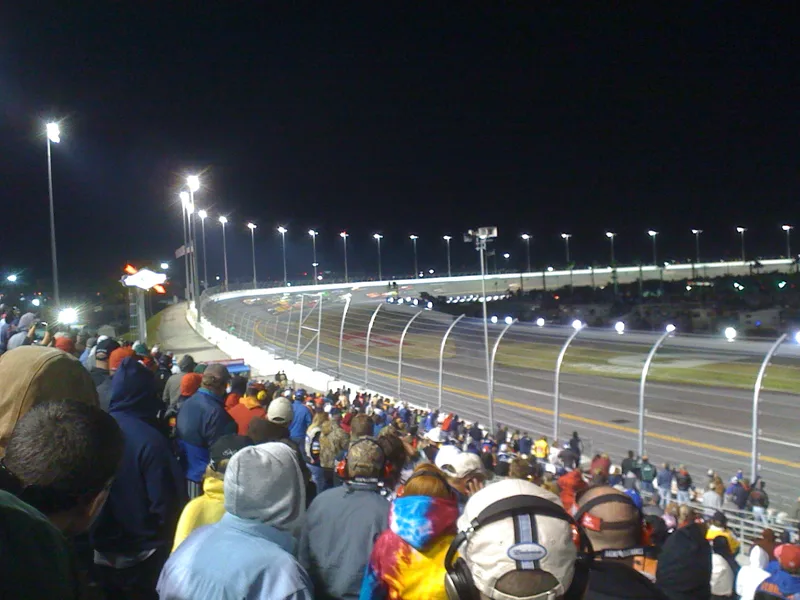
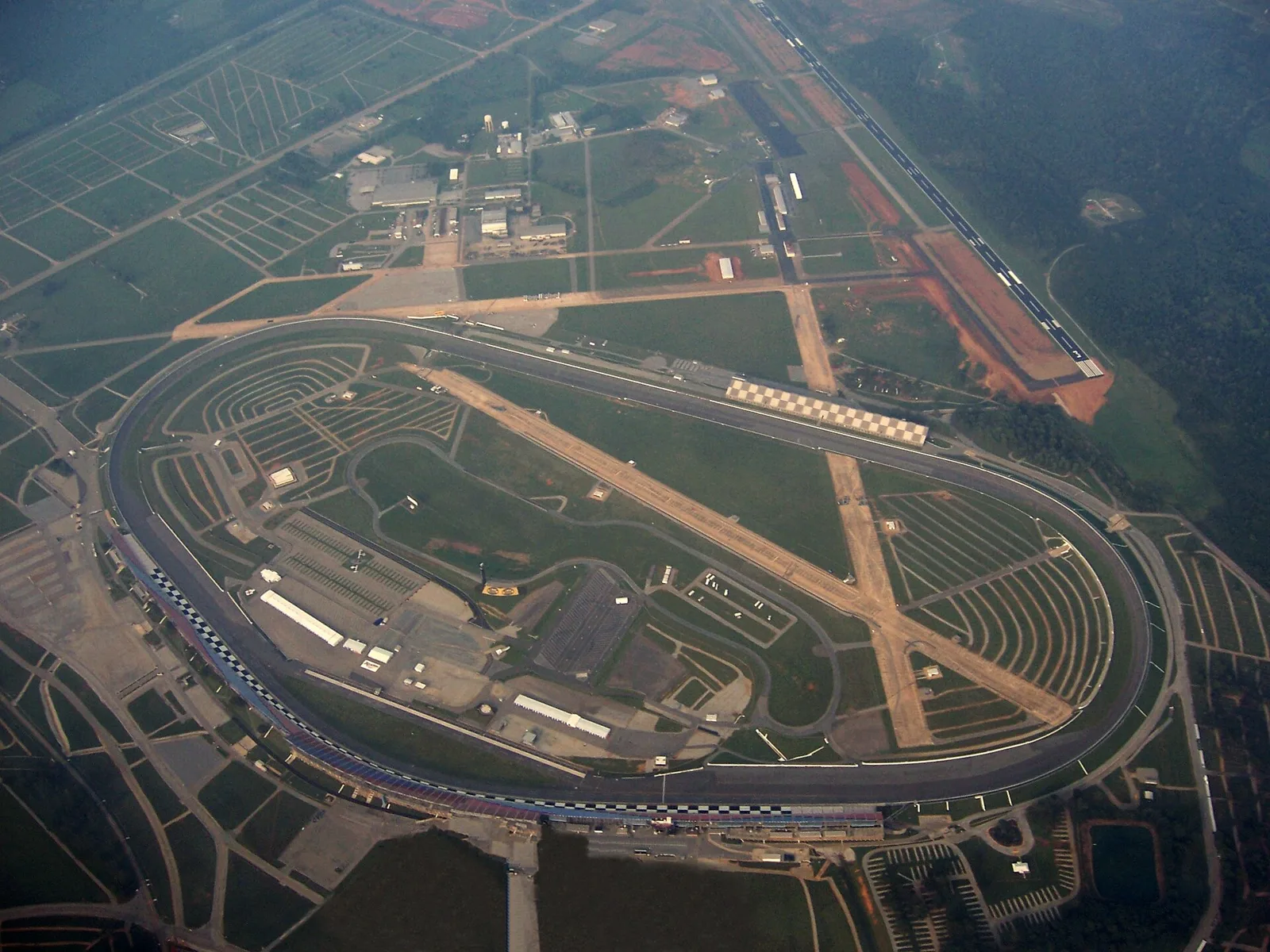
The race was held on 26 April 2009 at Talladega Superspeedway, a 4.28 km (2.66 mile) superspeedway in Alabama. It covered 806.0 km (500.8 miles), and Fox Sports carried the television coverage from 1 PM EDT. MRN and SiriusXM handled the radio broadcast.
Talladega is one of five superspeedways that host NASCAR races, and the others are Daytona, Indianapolis, Pocono and Michigan International Speedway. The four-turn layout is banked at thirty-three degrees in the turns, with the front stretch at 16.5 degrees and the back stretch at two degrees. The grandstands can seat up to 143,231 people, a figure that shows the scale of the event.
Superspeedway racing tends to keep cars in tight, fast packs for long stretches. That style of racing makes the lead change hands often, and it allows a single incident to gather many cars at once, which is exactly what this race would show.
The race also came while the title picture was still open. Jeff Gordon led the Drivers Championship with 1242 points, ahead of Jimmie Johnson on 1157 and Kurt Busch on 1144. Tony Stewart was fourth, six points behind Busch, so every finishing position on the day still mattered in the standings.
A last-lap contact at Talladega sent Carl Edwards into the fence and changed the track's rules for the fall race.
Who started at the front and who went to the back?
Juan Pablo Montoya began from pole position, but six drivers were sent to the rear after their teams changed engines. They were Keselowski, Kahne, Stremme, Sadler, Sorenson and Allmendinger. Robby Gordon also started at the back after his car failed post-qualifying inspection.
Scott Speed made an emergency pit stop during the pace laps, which dropped him a lap down before the green flag. The grid therefore had several problems on it before the race had even begun, and the drivers who started at the rear faced a long climb back through the field.
Katie Stam, Miss America 2009, sang the national anthem, and Nick Saban gave the starting command. The green flag came at 1:20 pm, and Montoya led the first four laps before Dale Earnhardt Jr. passed him on the 5th lap, helped by Denny Hamlin.
That early pass set the tone for the afternoon. Earnhardt Jr. and Hamlin worked together to make the move, which showed how much a drafting partner could matter to a driver's chances on a superspeedway.
The early laps and the first big crash
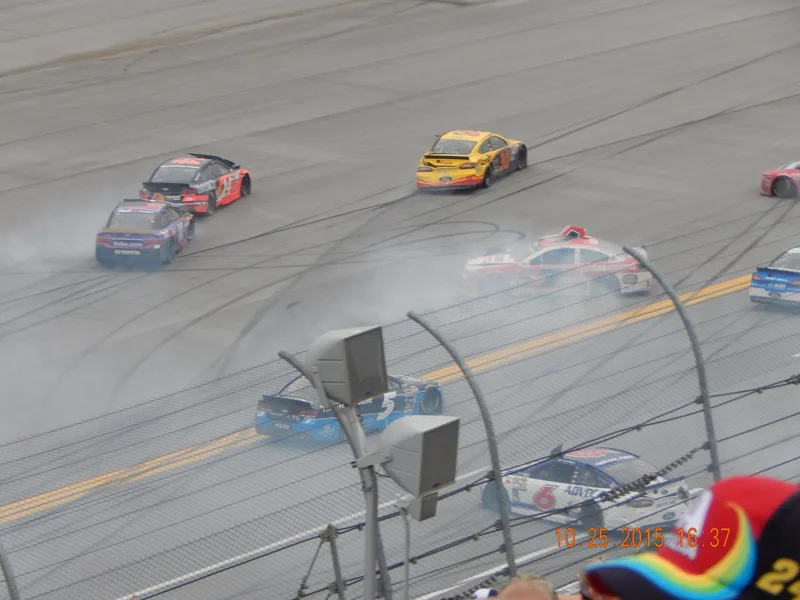
David Ragan took the lead on the 7th lap with help from Joey Logano, moments before a wreck in turn 3 brought out the first caution. Matt Kenseth made contact with Jeff Gordon, who was sent loose, and the chain reaction that followed collected 14 more cars.
Gordon then made contact with David Gilliland, which sent Gordon into a crowd of cars. Among the drivers collected were Allmendinger, Kahne, Sadler, Casey Mears and Kurt Busch, and the pile spread across the front of the field.
Among those caught up was Mark Martin, who had taken the Phoenix race a week earlier. Ragan had also taken the Nationwide Series event on the previous day, so his early lead carried extra meaning for his team. Most of the field pitted under the the 9th lap caution.
Gordon's car ran a retro Pepsi Challenge scheme last used by Darrell Waltrip in 1983, and it was Gordon who was sent loose in the first wreck. That detail made his car easy to follow in the early pack, even as the field began to spread out.
Logano led the the 13th lap restart, and the race settled into a pattern of pit cycles and yellow flags. The third caution came on the 42nd lap when Michael Waltrip spun, and the fourth on the 60th lap when Kurt Busch spun in the tri-oval. Each caution slowed the leaders and let the field bunch up again before the next restart.
The fifth caution came on the 85th lap for debris on the backstretch, followed by a sixth on the 122nd lap and a seventh on the 146th lap, both also for debris. Those interruptions kept the field close together for much of the afternoon.
Under that first caution Scott Speed took the free pass, which returned him to the lead lap. He had been a lap down since his pit stop during the pace laps, so the free pass gave him a chance to rejoin the leaders.
How the lead kept changing hands
The lead-change count was the headline number of the afternoon: 57 lead changes among 25 different leaders, the most of the season up to that point. Montoya, Ragan, Logano and Earnhardt Jr. were all among the drivers who held the top spot early on.
The eighth caution came on the 171st lap, when Kurt Busch and Martin Truex Jr. crashed in turn 3. With so many drivers taking a turn at the front, few could build a long run out front, so the race was decided by who could take the best position at each restart.
Sam Hornish Jr. took the lead on the 83rd lap, and the leadership changed again when Earnhardt Jr. and Jeff Burton hooked up on the 111th lap for a lead of about five seconds. Burton was trying to get back on the lead lap the hard way, and his run did not last. Truex took the lead on the 114th lap, and Earnhardt Jr. fell back to 11th.
Earlier, on the 82nd lap, Earnhardt Jr. and Keselowski got together on the back straightaway. Keselowski lost the draft and fell to the back of the lead pack, which was a costly moment for a driver who was then so close to the front.
The ninth caution came on the 180th lap for a large crash on the backstretch. Montoya spun after contact from Hamlin and collected seven more cars, and Gordon's car was caved in head-on into the inside wall. That wreck left the closing laps tense, and it was the last major incident before the finish.
Why did Carl Edwards end up in the catch fence?
Newman led the the 184th lap restart with Earnhardt Jr. drafting behind him, and the final sequence of the race was set from that point. Edwards then took the white flag lap, the 187th lap, with Keselowski pushing him from behind. Keselowski made contact with the left rear quarter panel of Edwards' car, which spun and went airborne. Newman then hit the airborne car head-on, and Edwards' car flew into the catch fence.
The impact came as the leaders ran toward the finish, and the car's path carried it into the fence rather than back onto the racing surface. Eight fans were injured by flying debris, and the fence exists to contain that kind of debris.
The most serious injury was to a woman whose jaw was broken, and she was airlifted to a nearby hospital. Mike Joy described Edwards' walk to the line as having shades of a famous film comedy, which the crowd seemed to enjoy. Edwards himself climbed out of the car, walked to the finish line and received a standing ovation from the crowd.
Keselowski crossed the line first with Earnhardt Jr. right behind him, while Newman, whose car had struck Edwards, finished third. Edwards was classified 24th as a DNF, so his race ended in the catch fence even though he reached the finish line on foot.
What changed after the 2009 race?
NASCAR raised the catch fence by 10 feet and strengthened it before the fall race at Talladega. The fall event also banned bump drafting in the corners, and the Car of Tomorrow's wing gave way to a spoiler in 2010.
Darrell Waltrip, the NASCAR on Fox analyst, compared Edwards' crash to a 1987 Bobby Allison crash. That earlier incident was the reason NASCAR mandated restrictor plates at Daytona and Talladega, devices that limit engine power so the cars run slower on the largest superspeedways.
The rule changes reflected concern about multicar crashes at these tracks. The higher fence and the drafting restriction addressed the two sides of that problem: debris and collisions between cars.
The spoiler that replaced the Car of Tomorrow wing in 2010 was one of the design changes that followed the crash.
Who was Brad Keselowski and why did the win matter?
Keselowski's fifth career start ended in victory, his third start of 2009. The win gave Phoenix Racing its only Cup Series victory. It was also the first major race since Casey Mears's 2007 Coca-Cola 600 triumph in which a driver collected his first career win.
His only lap led came on the final lap, a fact that made the result a matter of timing rather than sustained dominance. He dedicated the victory to Neil Bonnett.
The last first-time winner before him was Phil Parsons, who won the Aaron's 499 in 1988.
The feud between Edwards and Keselowski
Edwards congratulated Keselowski on the win, but the two drivers became rivals who clashed repeatedly. The rivalry began with incidents in the Nationwide Series in 2009, and it grew in the seasons that followed.
Almost a year later at Atlanta, Edwards intentionally turned Keselowski, and NASCAR black-flagged Edwards for the finish. Later at Gateway, Edwards spun Keselowski on the final lap of a Nationwide race, and NASCAR penalised both drivers in the Nationwide points and fined each $25,000.
The rivalry finally cooled in 2012, when the pair came first and second in a Nationwide race at Watkins Glen. The episode shows that the 2009 race is remembered not only for its finish but also for the drivers' later encounters on track.
Results at the front of the field
The finishing order was settled on the final lap. The table below lists the top finishers and the driver whose car was lost in the catch fence crash.
| Finish | Driver | Note |
|---|---|---|
| First | Brad Keselowski | Phoenix Racing, only lap led came on the final lap |
| Second | Dale Earnhardt Jr. | Right behind Keselowski at the finish |
| Third | Ryan Newman | Hit Edwards' airborne car head-on |
| 24th | Carl Edwards | DNF after the catch fence crash |
Keselowski dedicated the win to Neil Bonnett. It was a single Cup Series win for Phoenix Racing, and it was the first major win by a first-time winner since Casey Mears took his first career win at the 2007 Coca-Cola 600.
The race is remembered as much for its safety consequences as for the winner. It led directly to a higher catch fence and tighter drafting rules for the fall event at Talladega,.