Rain moved the race to a third day, Treadway finished 1-2 and a confused final lap drew sharp criticism from the paddock.
Arie Luyendyk won the 1997 Indianapolis 500 from pole, with rain moving the race to Monday and then halting it after fifteen laps. Treadway Racing finished first and second, with Scott Goodyear second, and the final lap drew sharp criticism after confused flag signals.
The 1997 Indianapolis 500 was the 81st running of the race, held from May 25 to 27, 1997, after rain forced it into a three-day schedule. Arie Luyendyk won from pole, but the finish drew sharp criticism because of a final lap that officials had handled badly.
Why did the 1997 race take three days?
Rain pushed the race from Sunday to Monday, May 26, and it was halted after fifteen laps. It was halted after only fifteen laps, and it was resumed on Tuesday, May 27 and run to completion. Many had expected the finish to be postponed until Saturday, May 31, but officials decided to finish as soon as possible because of the upcoming race at Texas and a good forecast for Tuesday.
The official distance was 101 laps, so the race had to go at least that far to count. With only fifteen laps completed, it had to be resumed rather than declared finished, and the arrangement was similar to the one used at the 1973 race.
A rain-hit race, a Treadway 1-2 and a final lap that officials handled badly, won from pole by Arie Luyendyk.
What changed in the cars for 1997?
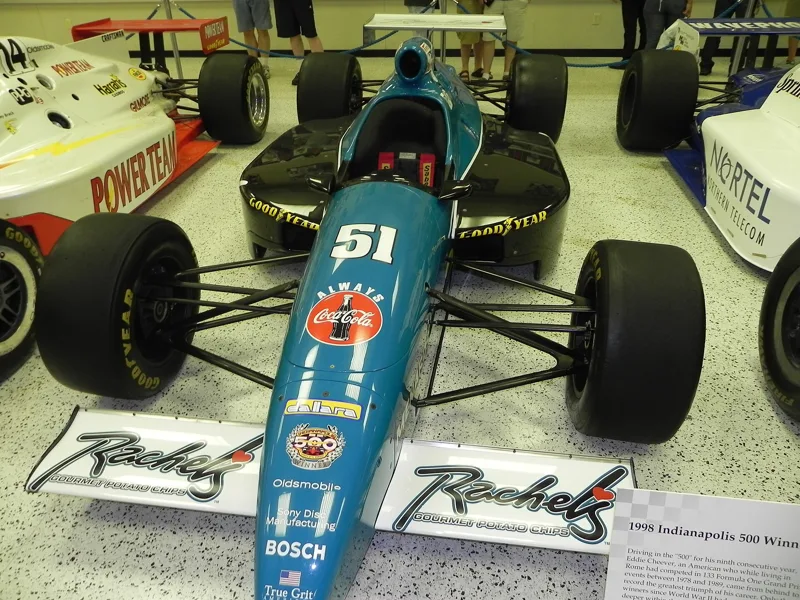
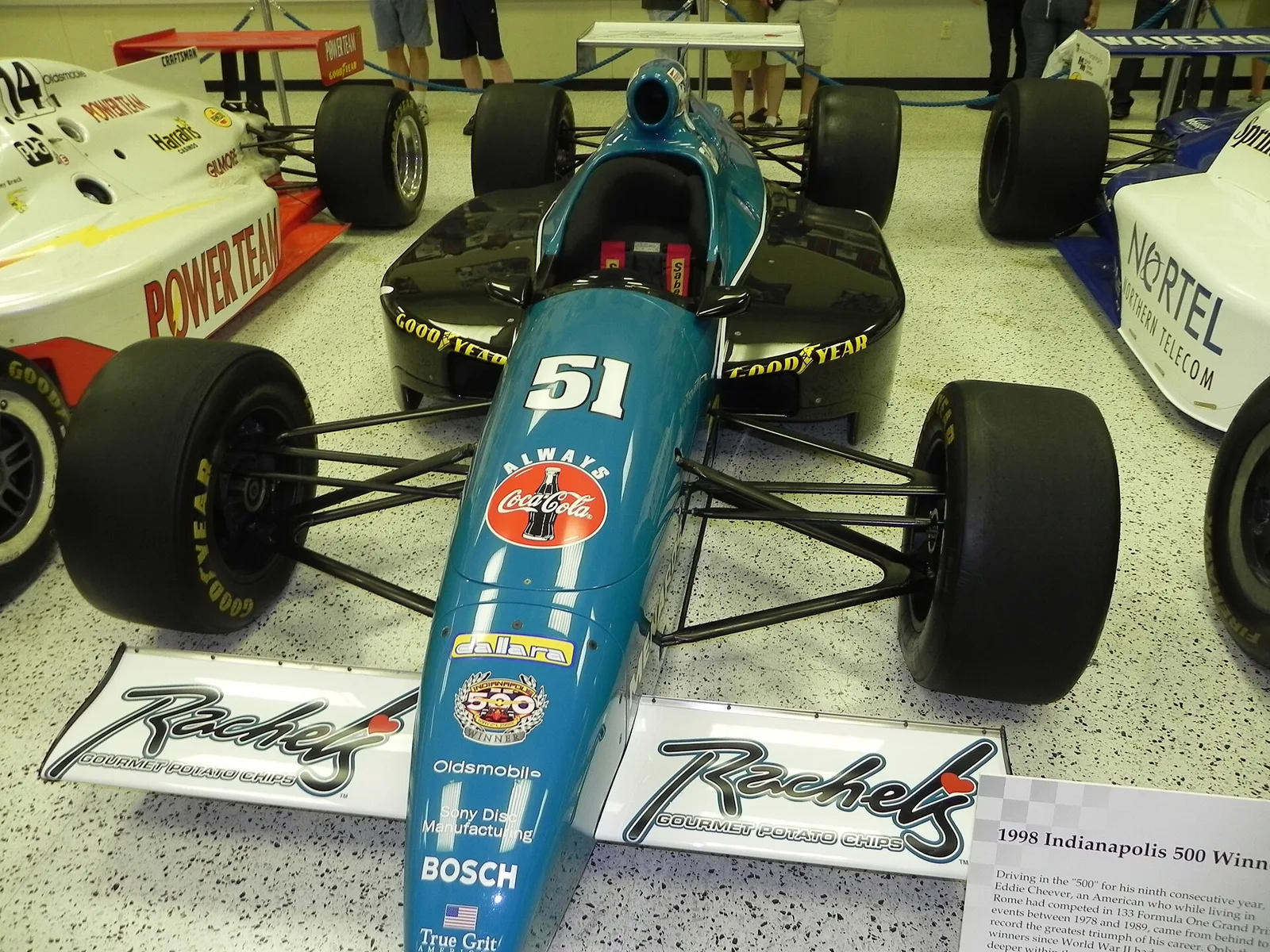
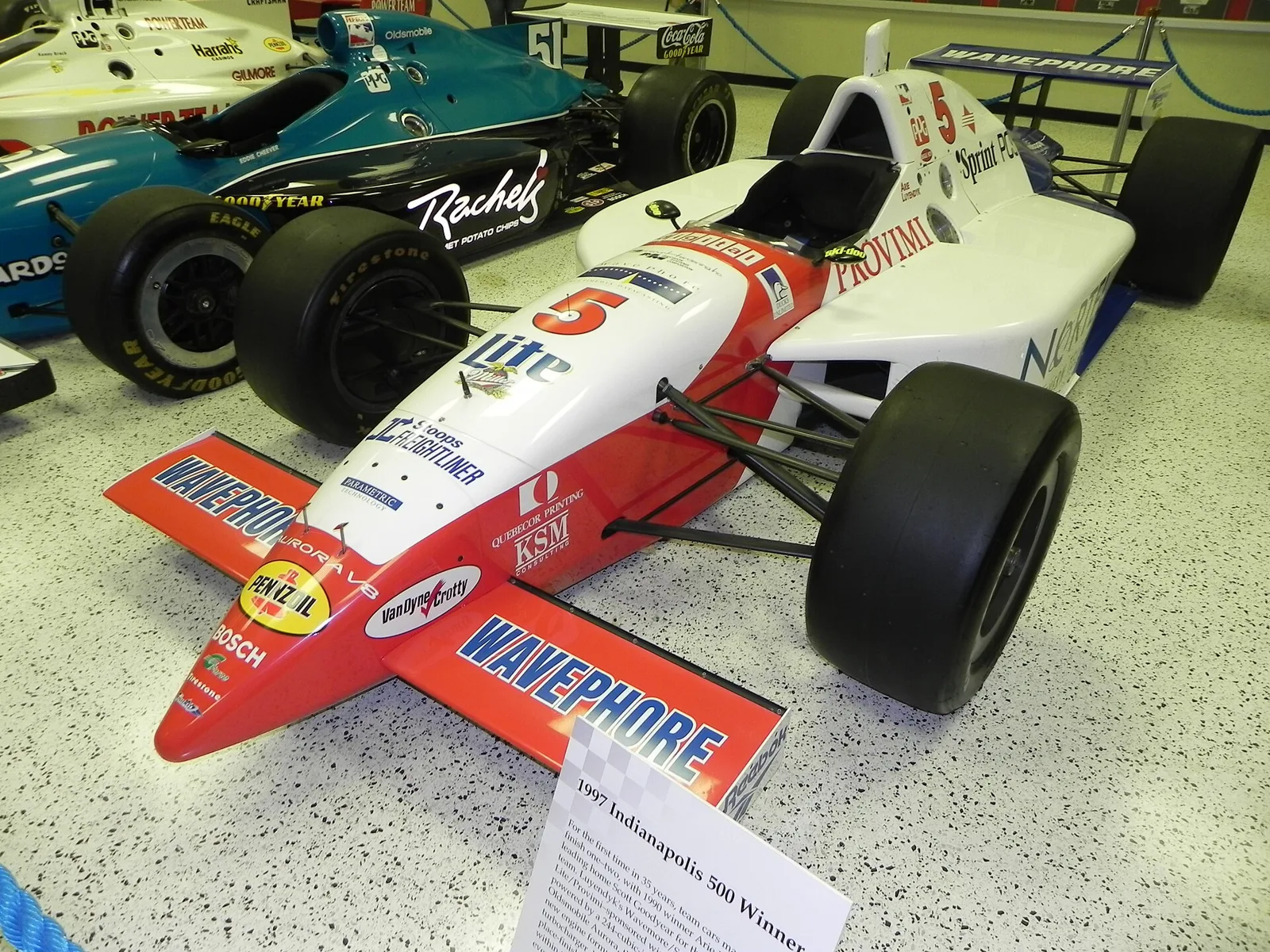
New engines and cars arrived in 1997, with the rule changes aimed at cheaper running, slower speeds and closer racing. The engines were production-based, normally aspirated 4.0 L, 32-valve units from Oldsmobile Aurora and Nissan Infiniti.
New chassis rules required parts from Dallara and G-Force, and the new cars produced more downforce than their predecessors. That changed the way they drove, and the cars looked noticeably different, with larger wings, taller sidepods and a bulkier overall appearance.
Turbochargers were banned, so for the first time since the early 1960s the whole field ran normally aspirated engines. The new crossplane engines were also much louder than the turbocharged engines they replaced.
Speeds fell as a result. Arie Luyendyk had set a track record of over 237 mph in 1996, but in his best 1997 qualifying lap he managed just 217 mph.
Why was the race split from CART?
The IRL-CART rift was in its second season, and no CART-ranked teams took part at Indianapolis. Equipment had diverged, so any CART squad wanting to enter would need brand-new cars and engines.
CART teams raced the Motorola 300 at the newly opened Gateway International Raceway on Saturday, May 24, rather than running a rival event on the same day. Galles Racing was the only CART-based team from 1996 to race at Indy, having switched to the IRL full time over the winter.
How was the field set under the 25/8 Rule?
For the second year in a row, 25 of the 33 starting positions were set aside for the top 25 cars in the points standings. Known as the 25/8 Rule, the arrangement had been a key reason that CART teams boycotted the 1996 race.
The locked-in cars had to complete a four-lap qualifying run above a minimum speed to keep their place. Eight spots were left for others, and bumping was limited to those entrants.
Two of the 25 eligible locked-in cars never showed up, so 23 accepted their berths. That left ten at-large starting positions open at the start of qualifying.
IRL officials argued that the rule had already served its purpose of guaranteeing a field for other races on the schedule, and it was eventually scrapped for 1998.
Who was on the entry list?
The list came out on April 21 with the 22 cars from the opening two rounds, plus eight more combinations registered in April. Among them were Eliseo Salazar and Lyn St. James, returning from injury.
How did pole day go?
Tony Stewart led the charts at 219.085 mph in the morning, but the day belonged to Arie Luyendyk. He took the pole at 218.263 mph, with Stewart close behind at 218.021 mph, and rookie Vincenzo Sospiri rounded out the front row at 216.822 mph.
Mike Groff was the first car out to qualify, and he was the first to post a qualifying run in a normally aspirated car since 1987. His average of 208.537 mph tentatively broke the normally aspirated track records.
Jeff Ward sat on the provisional pole at 214.517 mph, a speed that would eventually be good for seventh on the grid. At the end of the day 21 cars were in the field, with Roberto Guerrero the slowest at just over 207 mph.
Guerrero had qualified with his backup car, which left him without locked-in status. USAC later allowed the change to be considered, which secured his place on the grid.
How did bump day change the field?
On Bump Day, Johnny Unser and Greg Ray filled the field with at-large entries, and Paul Durant then qualified at 209.149 mph to bump Alessandro Zampedri. Claude Bourbonnais bumped Johnny Unser at 210.523 mph, and Zampedri came back with 211.757 mph to bump Lyn St. James.
Rain then closed the track for about an hour. Hemelgarn Racing, which fielded both Unser and St. James, made no effort to bring the cars back out to requalify, and St. James later said she had raised the matter with the IRL official Leo Mehl without success.
Rumours began circulating in the garage that USAC was considering reinstating bumped cars, and that afternoon officials ruled that bumped at-large entries among the fastest 33 cars could be reinstated.
St. James and Unser went back into the field in the 34th and 35th starting positions. It was the first time since 1979 that the field was larger than the traditional 33 cars.
Scott Harrington was the lone driver who failed to qualify. He went out late in the day, set a first lap of 214.061 mph, then lost control and crashed heavily in turn two. He was taken to hospital but was not seriously injured.
What happened on the pace laps?
On Monday, May 26 the start was delayed by a crash on the final pace lap. Kenny Brack, Affonso Giaffone and Stephan Gregoire came together in turn four, and five extra pace laps were run. Only 30 of the 35 cars on the grid started the race.
Tony Stewart slipstreamed past Luyendyk after turn four to lead the first lap. Team Menard later registered an official complaint about Luyendyk's start, after Stewart argued that Luyendyk had tried to push him towards the outside wall.
Claude Bourbonnais's engine failed on lap 10, and all three Blueprint Racing drivers had fallen by the wayside with mechanical issues. A light drizzle began moments after the caution.
On lap 15 the rain grew heavier and the race was red-flagged. The cars returned to the garage at 12:30 p.m., and the decision to resume was made at 2:15 p.m. after negotiations between the Speedway, the series and the television executives.
What happened when the race resumed?
The race restarted on Tuesday, May 27 at 11 a.m., with Mari Hulman George giving the command. Of the 35 qualifiers, 29 lined up single file for the restart, and the race had been held mid-week for the first time since 1973.
On lap 18, the green flag came out with Tony Stewart leading a bunched field. Robby Gordon's engine caught fire as he closed on Arie Luyendyk, and he veered into the warm-up lane. He jumped out and rolled in the grass to put out his burning suit, then retired with burns.
Gordon had flown to Charlotte on the Sunday to prepare for the Coca-Cola 600, where he finished 41st after wrecking on lap 186. His Indianapolis race was over, and the Double Duty plan had come apart.
On lap 23 Steve Kinser tagged Eliseo Salazar from behind in turn four, and Mark Dismore was rear-ended by Roberto Guerrero, who retired on the spot. The first significant green-flag racing came at lap 28, with Stewart leading Luyendyk and Robbie Buhl.
Who led the first half of the race?
Stewart held a two-second lead early on, but Luyendyk took control on the lap 62 restart and built a four-second lead over Stewart in thirteen laps. Robbie Buhl and Buddy Lazier ran nose to tail, within ten seconds of Luyendyk.
Luyendyk made his second pit stop on lap 79. A brief air jack problem dropped him behind Stewart, but he reclaimed the lead on the outside in turn one.
On lap 93 a loose brake caliper stopped Salazar in turn two and brought out the yellow. Vincenzo Sospiri was shown the black flag for passing Jeff Ward under caution, and he later stopped again with an electronic coil failure.
By the halfway point 13 cars had dropped out, and six remained on the lead lap. Billy Boat, Marco Greco, Paul Durant and Davey Hamilton were in the top ten.
What happened in the second half?
Luyendyk pitted on lap 111 but then had tyre trouble on the left front, and Stewart emerged ahead of him after his own stop. Paul Durant had climbed from 33rd on the grid to eighth, and he collided with Billy Roe, who was two laps down, in turn three.
Durant was taken to hospital with a fractured pelvis and a concussion. He became the third injured driver in A. J. Foyt's number 1 car during May, after Scott Sharp and Johnny O'Connell.
Luyendyk passed Stewart on lap 128 and inherited the lead when Robbie Buhl pitted four laps later. Jack Miller crashed out of 17th place on lap 138, and Mike Groff spun while trying to avoid him.
On the lap 143 restart Stewart passed Luyendyk and Lazier on the same lap. Stewart then suffered a push condition, lost ground to Ward and fell seven seconds back over five laps.
How did the closing stages play out?
With 11 laps to go, Steve Kinser crashed out of ninth place after his left rear tyre touched Buzz Calkins in turn four. Lyn St. James clipped the wall while avoiding him, and the caution brought leader Jeff Ward in for a splash of fuel, along with Stewart.
The green returned on lap 194, and Luyendyk passed Scott Goodyear in turn three to take the lead. Buddy Lazier lost a mirror two laps later, which caused another caution for debris, and the green came back out with three laps to go.
As Luyendyk and Goodyear crossed the line to complete lap 198, Stewart brushed the wall in turn four and bent his right front suspension. USAC immediately displayed the yellow, and the pace car did not enter the track to pick up the leader.
Why was the final lap controversial?
As the cars came out of turn four, USAC officials suddenly displayed the white and green flags together at the starter's stand. The field hesitated while the yellow lights around the track remained on, unsure whether the green was an error or whether conditions were safe.
Luyendyk accelerated down the front straight and got a jump on Goodyear. The yellow lights continued to flash for a while, and the procedure prevented any significant challenge from Goodyear, who had been in position to take the lead.
The officials' handling of the situation drew sharp criticism. The incident, followed by a scoring problem two weeks later at Texas, led the IRL to end USAC's role as sanctioning body in favour of in-house officiating.
Luyendyk said afterwards that he had seen the green and white flags and kept doing what he had been doing. Goodyear said the key lap was the one where the leader gets a draft out of the backstretch, and that he was disappointed not to win.
Who won the 1997 race?
Luyendyk won the race from pole, and it was his second Indianapolis 500 victory, following his win in 1990. He became the 16th driver to win from the pole position.
Luyendyk was the first winner since A. J. Foyt to use both a turbocharged and a normally aspirated engine in a win. He is the only driver to have won the race both before and after the open-wheel split.
The win gave Firestone its 50th Indianapolis 500 victory, and it was the company's second in a row. Starting in 2000, Firestone would become the lone tire supplier in the series.
How did Treadway Racing finish 1-2?
Treadway Racing, in only its second season of competition, finished first and second with Luyendyk and Scott Goodyear. It was the first team to sweep the top two places at Indianapolis since Leader Cards in 1962.
Goodyear posted his second runner-up finish, after 1992. It was the third time he had narrowly lost the 500 in the closing stages.
Who finished in the top five?
Jeff Ward finished third in only his second Indy car race and won Rookie of the Year honours. Buddy Lazier was fourth, and Tony Stewart was fifth, his best Indianapolis finish.
Stewart had led the most laps and held on to fifth as the last car on the lead lap. Mike Groff finished 12th as the highest-placed Infiniti driver, despite losing twelve laps, and he kept the IRL points lead.
Oldsmobile took the top 11 finishing positions, while Infiniti had no cars in contention for most of the race. The battle of the engine suppliers was one-sided.
What did the 1997 race lead to?
The 25/8 Rule was dropped permanently after the race. Two weeks later, at the inaugural True Value 500 at Texas Motor Speedway, a malfunction in the electronic scoring system briefly named Billy Boat the winner.
Luyendyk stormed into victory lane claiming he had been robbed, and an altercation followed between him and Boat's car owner, A. J. Foyt. The error was discovered the next day, and it was another mark against USAC's record.
Two weeks after Texas, USAC was officially relieved of its role in sanctioning the IRL, and the series moved to in-house officiating.
How was the 1997 race broadcast?
ABC Sports carried the race live, with Paul Page as host and play-by-play announcer and Tom Sneva as booth analyst. Bobby Unser and Danny Sullivan were turn reporters, and it was the final 500 on ABC for both of them.
What happened in the pre-race ceremonies?
Jim Nabors had left the grounds on Sunday night and was absent from the Monday ceremonies, so a recording of his traditional song from 1993 was played for the fans. The Purdue Band could not return, so Florence Henderson sang the national anthem a cappella.
How did the Pit Stop Challenge end?
The 21st annual Coors Pit Stop Challenge had eight teams competing for a $40,000 top prize. Galles Racing and driver Kenny Brack defeated Team Cheever, with Eddie Cheever in the final, which was Galles's second win in a row and its fifth overall in the event.
What were the key figures for the 1997 race?
| Item | Detail |
|---|---|
| Dates | May 25 to 27, 1997 |
| Venue | Indianapolis Motor Speedway |
| Winner | Arie Luyendyk, from pole |
| Second | Scott Goodyear, Treadway Racing |
| Pole speed | 218.263 mph |
| Field | 35 cars; 30 started on May 26 |
| Official distance | 101 laps |
| Laps completed before the rain halt | 15 |
| Oldsmobile finishers | Top 11 positions |