A split calendar that teams disliked, a new chassis and engine package and a title decided by six points.
Stewart took the 1996-97 title by six points over Davey Hamilton, in a championship that ran across seventeen months. Arie Luyendyk won the 1997 Indianapolis 500, and the series went back to a calendar-year schedule for 1998. Eliseo Salazar won the final race at Las Vegas.
Tony Stewart won the 1996-97 Indy Racing League championship over a seventeen-month season that ran from the end of 1996 into 1997. Arie Luyendyk won the Indianapolis 500 in the middle of it, and the series then changed its calendar because the split year had not suited teams, sponsors or drivers. The title came down to six points, with Davey Hamilton second.
Why was the season so long?
The 1996-97 season had been meant to start at New Hampshire in August 1996 and end with the Indianapolis 500 in May 1997. The plan was to end each season with the 500 and spread the championship over two calendar years. By the summer of 1996 that idea had proved unpopular, because it caused trouble with driver contracts, sponsor contracts and equipment purchasing, all of which followed the calendar year.
Few suitable warm-weather venues existed outside Orlando, so the winter gap was long and disjointed. Auto racing was traditionally on hiatus in those months anyway, which made the calendar look out of step with the rest of motorsport. On 9 October 1996 the series announced that it would revert to a calendar-based schedule for 1998. The two 1996 races at New Hampshire and Las Vegas were combined with every race held in 1997 to form a single 17-month championship, which was awarded in October 1997.
A split calendar that teams disliked gave the IRL a seventeen-month title fight decided by six points.
How did the schedule and equipment change?
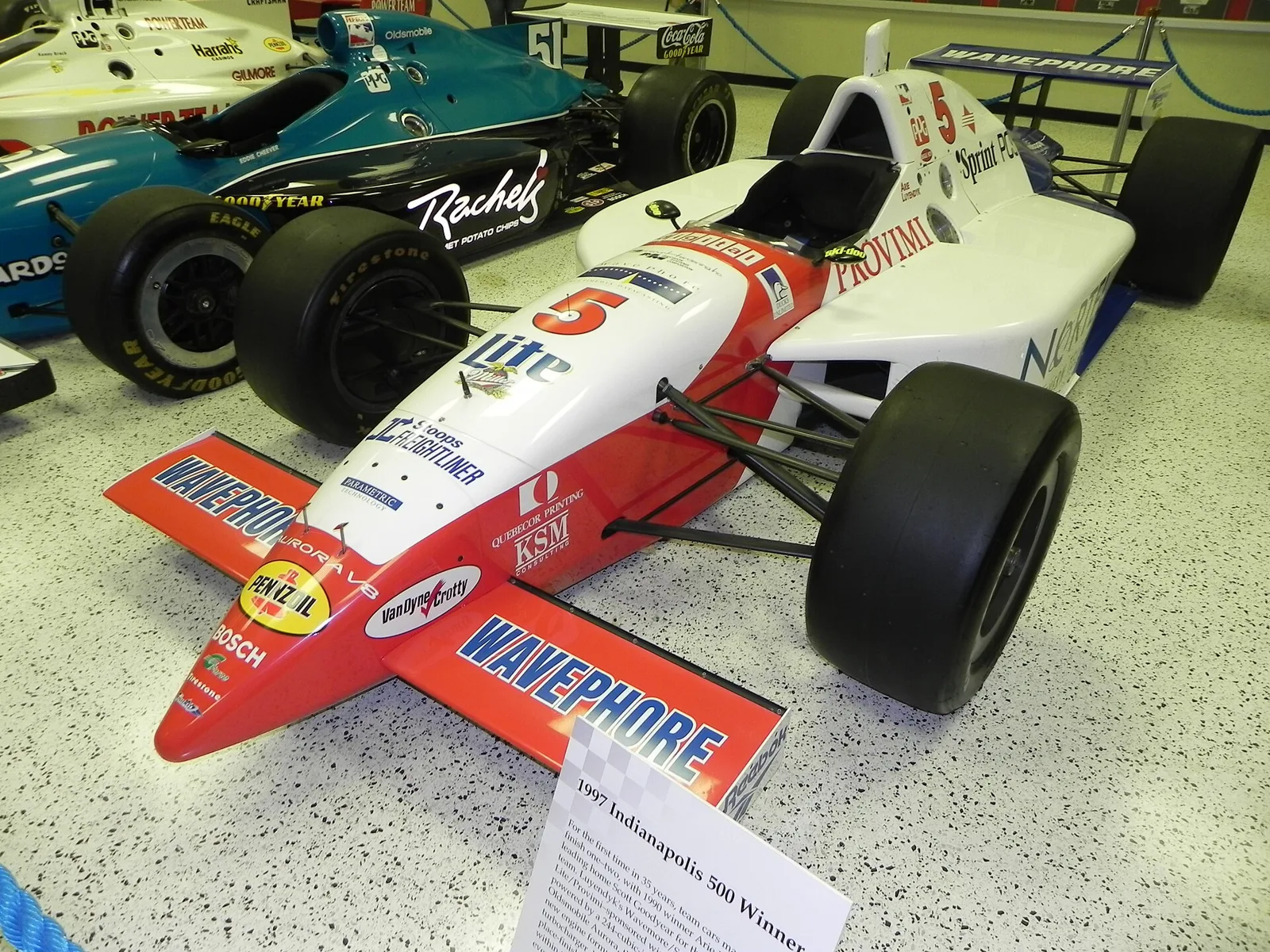
The two races left in 1996 used the same equipment as the earlier season, and the turbocharged machines were used for the last time at Las Vegas. Every 1997 race was contested with new purpose-built oval chassis from G-Force and Dallara, powered by naturally aspirated 4.0-litre stock-block V8s from Oldsmobile and Infiniti.
All five 1996 races were held again in 1997, alongside three new events. Texas Motor Speedway and Pikes Peak International Raceway were the new venues, followed by Charlotte Motor Speedway, the series' first foothold in NASCAR territory. Texas and Charlotte held the first night races in Indy-car history, and both were 1.5-mile banked ovals, the first such tracks on an Indy-car schedule since Atlanta in 1983.
How did the 1996 races open the season?
The True Value 200 at New Hampshire on August 18, 1996 was won by Scott Sharp, after Richie Hearn had qualified on pole. It was Sharp's first IndyCar win, and it was also the first win for A. J. Foyt Enterprises since the 1981 Van Scoy Diamond Mines 500 at Pocono.
Tony Stewart led 165 of the 200 laps and was about three laps clear of the second-place car, but his car suffered a complete electrical failure after 182 laps and he finished 12th. Sharp, Buzz Calkins, Michele Alboreto, Mike Groff, Davey Hamilton, Roberto Guerrero, Marco Greco, Stephan Gregoire, Eliseo Salazar and John Paul Jr. completed the top ten.
The Las Vegas 500K on September 15, 1996 was the last IRL race run with turbocharged machines. Hearn won it, and it was his only IndyCar win. The race was slow, with nine cautions, and ABC left the broadcast just past the halfway point.
Johnny O'Connell had a violent crash on lap 185 that slid him upside down on the main straight and brought a short red flag. Johnny Parsons crashed on lap nine and finished last, in what was his final IndyCar start. Hearn and his team, Della Penna Motorsports, then moved to CART for 1997, so he raced no more IRL events that year.
How did the 1997 season open?
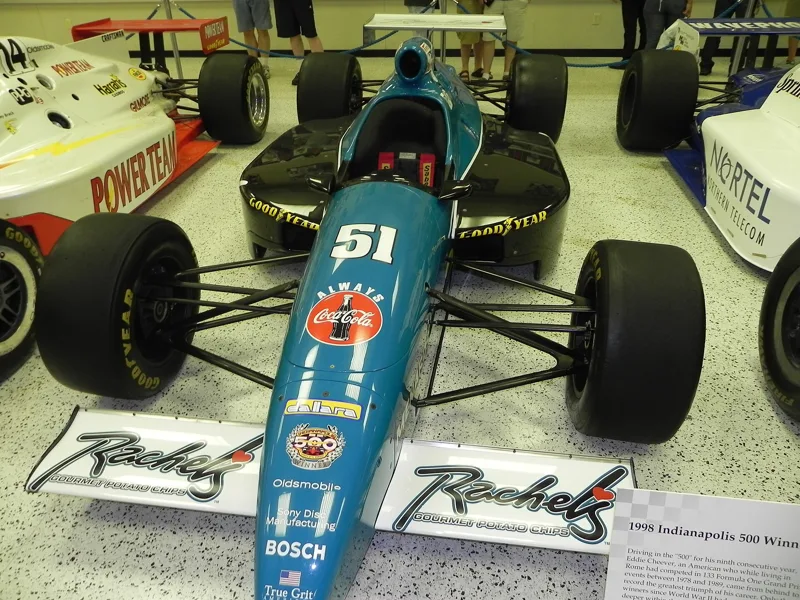
The Indy 200 at Walt Disney World on January 25, 1997 was the first IRL race contested with the normally aspirated engines and the new chassis. Tony Stewart took pole, but rain cut the race from 200 laps to 149. Eddie Cheever won, his first Indy car victory.
Calkins had been out front when his engine let go on lap 145. Stewart took the lead but crashed on the next lap, and Cheever inherited the lead before a downpour stopped the race three laps later. Danny Ongais finished thirteenth in his final IndyCar race, after a crash that ended his day after 94 laps.
At Phoenix on March 23 Jim Guthrie won, his only IndyCar victory. He had stretched his fuel over the final 82 laps, and the $170,100 payout helped him clear debts he had taken on through a second mortgage. Kenny Brack and Sam Schmidt made their IndyCar debuts there. Brack led 24 laps before crashing on lap 146, while Schmidt crashed on lap 176 and still finished tenth.
What happened at the 1997 Indianapolis 500?
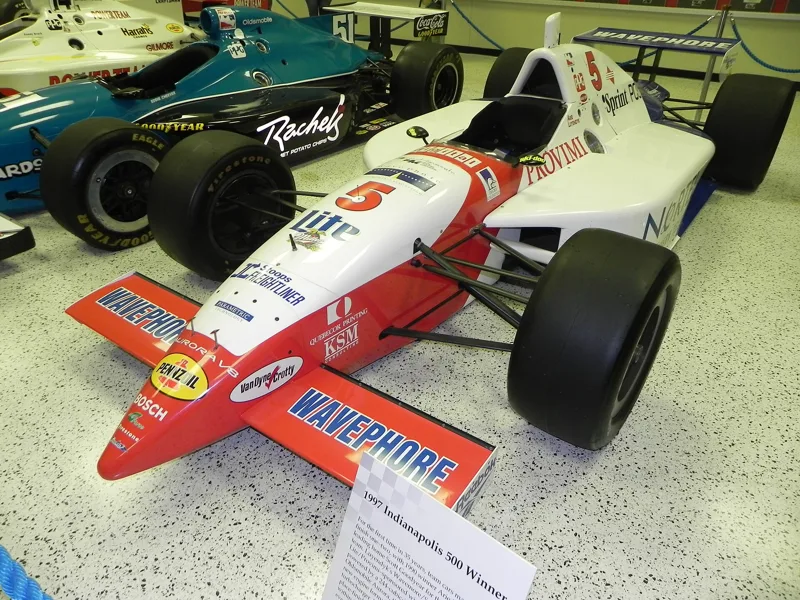
The race was scheduled for May 25, but rain postponed the start to the next day. After 15 laps on the Monday, rain stopped it again, and it was completed on Tuesday, May 27. Arie Luyendyk took pole and won. Treadway Racing's cars finished first and second, the first time since 1962, when Leader Card Racing did it, that one team had taken both top places.
The field was expanded from 33 to 35 cars under the 25/8 rule, which guaranteed the top 25 cars in the standings a starting place if they met the minimum speed. Lyn St. James and Johnny Unser were added to the back of the grid. A crash on the Monday pace lap retired the whole fifth row, including Stephan Gregoire, Affonso Giaffone and Kenny Brack.
Scott Sharp was injured in a practice crash and was replaced by Johnny O'Connell, who was also hurt in practice. Paul Durant qualified under the 25/8 rule and finished twenty-first.
Who won the Texas and Pikes Peak races?
The inaugural True Value 500 at Texas on June 7 was initially awarded to Billy Boat because of a scoring error. Arie Luyendyk came into victory lane to protest and was slapped by A. J. Foyt, but the error was then corrected and Luyendyk was declared the winner. The original trophy remains with Foyt. Stewart looked set for his first win until his engine blew and he crashed on lap 207.
In the aftermath, USAC was removed as the sanctioning body and the IRL went in-house. The inaugural Samsonite 200 at Pikes Peak on June 29 was won by Tony Stewart, his first IndyCar win. Sharp had won the pole, but he crashed on the opening lap, re-injured himself and missed the rest of the season. That race was also the first in which the IRL acted as sole sanctioning body and ran race control.
How did the title race finish?
The inaugural VisionAire 500 at Charlotte on July 26 was won by Buddy Lazier, with Billy Boat second. At New Hampshire on August 17 Marco Greco took pole and Robbie Buhl won the Pennzoil 200, his first IndyCar win. Mike Groff, injured in practice at Texas, was hurt again at New Hampshire and missed the rest of the season.
Entering the season finale at Las Vegas, Stewart led Hamilton by 10 points. On October 11 Eliseo Salazar won the Las Vegas 500K, his first and only IndyCar win, with Billy Boat on pole. Stewart finished eleventh and Hamilton seventh, and that difference gave Stewart the title by six points.
Scott Goodyear finished second at Las Vegas, which lifted him from ninth to fifth in the final standings.
Season summary
| Race | Date | Winner | Pole |
|---|---|---|---|
| True Value 200 | August 18, 1996 | Scott Sharp | Richie Hearn |
| Las Vegas 500K | September 15, 1996 | Richie Hearn | Arie Luyendyk |
| Indy 200 | January 25, 1997 | Eddie Cheever | Tony Stewart |
| Phoenix 200 | March 23, 1997 | Jim Guthrie | Tony Stewart |
| Indianapolis 500 | May 27, 1997 | Arie Luyendyk | Arie Luyendyk |
| True Value 500 | June 7, 1997 | Arie Luyendyk | Tony Stewart |
| Samsonite 200 | June 29, 1997 | Tony Stewart | Scott Sharp |
| VisionAire 500 | July 26, 1997 | Buddy Lazier | Tony Stewart |
| Pennzoil 200 | August 17, 1997 | Robbie Buhl | Marco Greco |
| Las Vegas 500K | October 11, 1997 | Eliseo Salazar | Billy Boat |