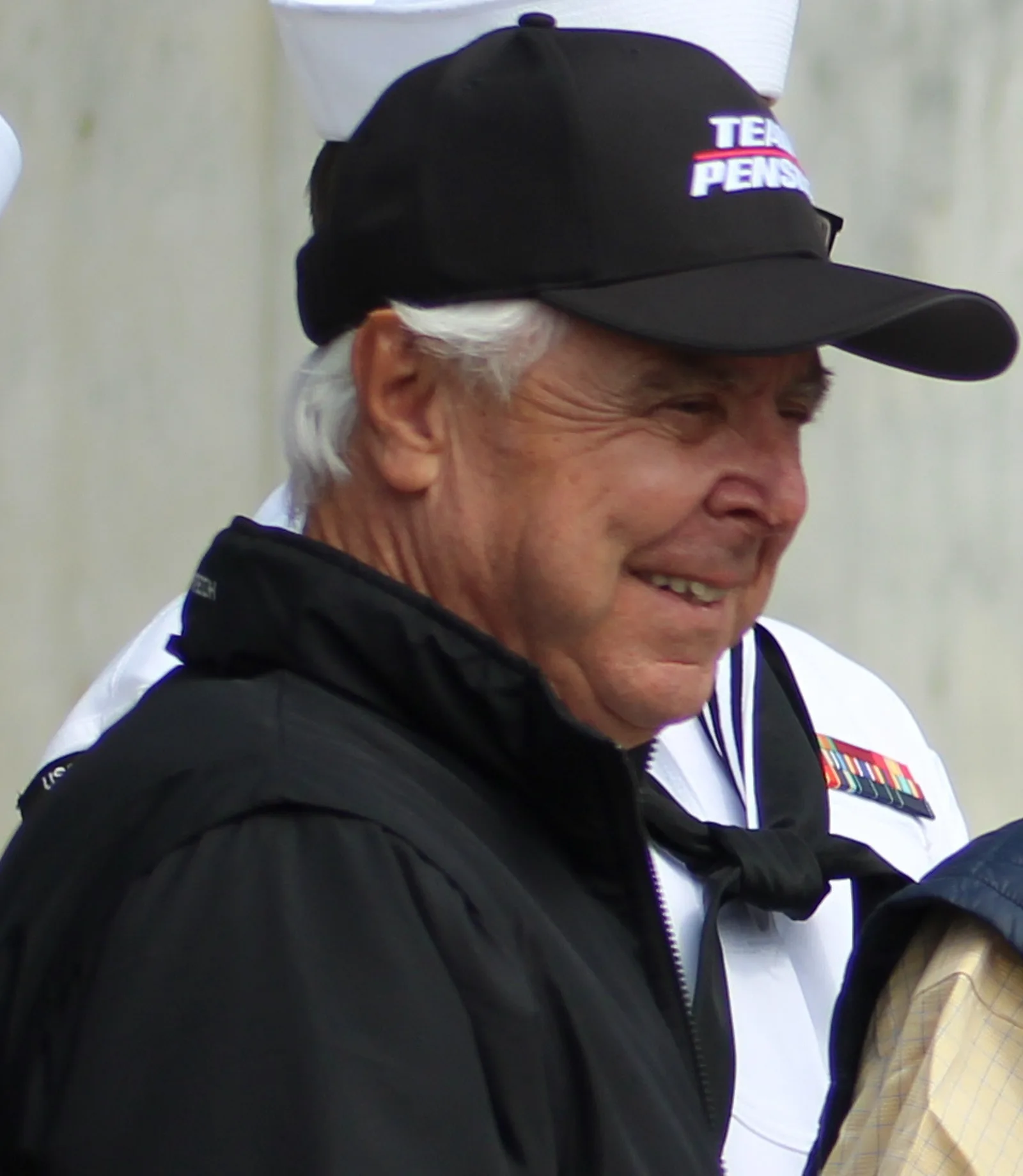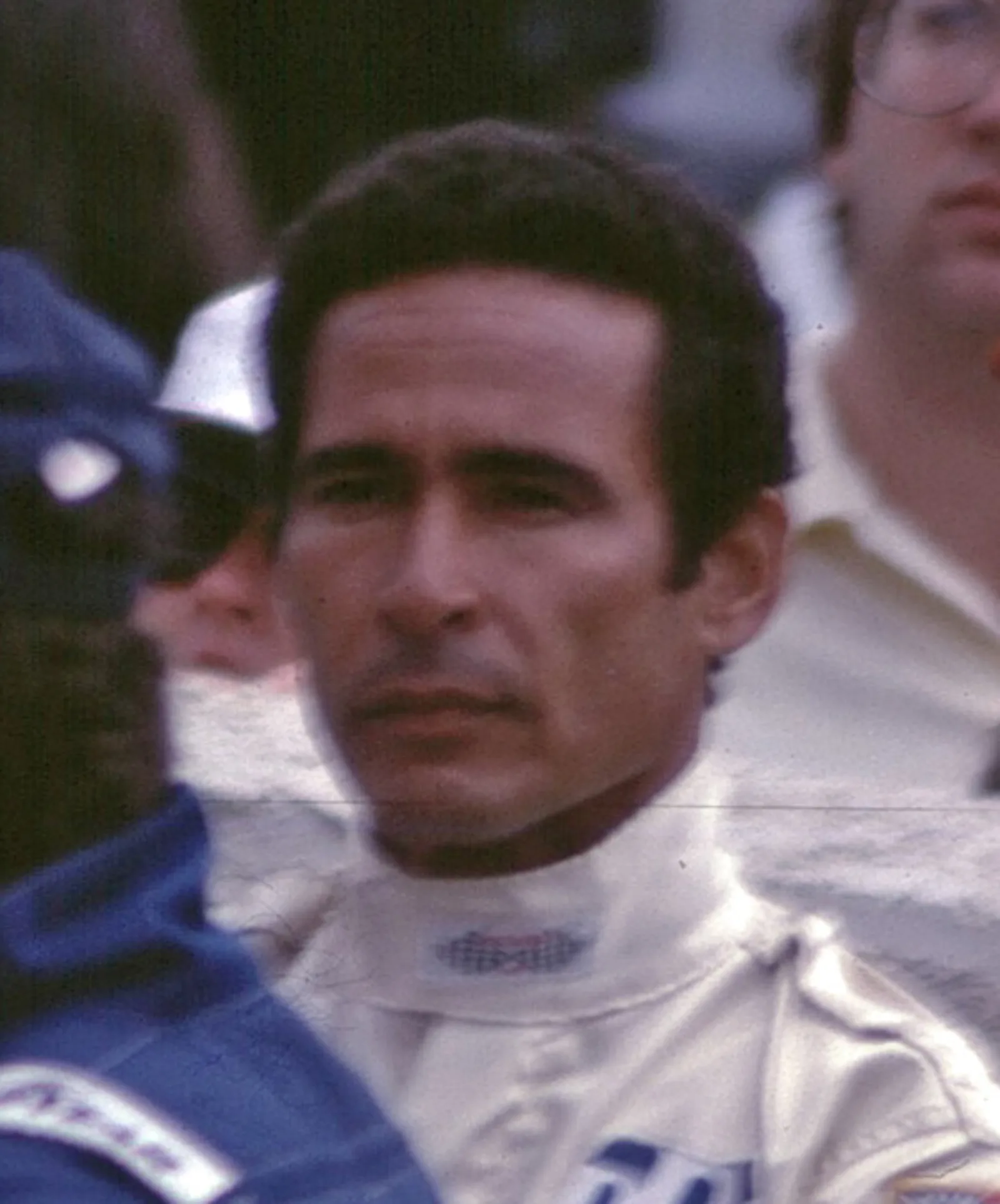
A drag racing champion who moved into sports cars and Indy cars, won the 1979 Daytona 24 Hours and came back from a near-fatal 1981 crash.
Danny Ongais was an American driver from Hawaii who raced motorcycles, drag cars, sports cars, Indy cars and Formula One. He won the 1979 Daytona 24 Hours, drove six Grands Prix in 1977 and 1978, and finished seventh at the 1996 Indianapolis 500 after a nine-year break.
Danny Ongais was an American racer from Hawaii who competed in motorcycles, drag racing, sports cars, Indy cars and Formula One between the early 1960s and 1998. He won the 24 Hours of Daytona in 1979, took five Indy car victories in 1978, and came back to the Indianapolis 500 after a long break to finish seventh in 1996. He died in February 2022 at the age of 79.
How did Ongais get into racing?
He began with motorcycles at about fourteen, then turned to drag racing in the early 1960s. He won American Hot Rod Association gas dragster titles in 1963 and 1964 and took the NHRA AA Dragster championship in 1965. Those titles made him one of the sport's notable figures before he switched to circuit racing.
Before his drag racing success he enlisted in the United States Army in the late 1950s and served as a paratrooper in Europe. Back in Hawaii he won the Hawaiian motorcycle title in 1960 and finished in the top three of the expert class over the next two seasons.
Three years after beating Don Prudhomme in the Top Fuel semifinals of the 1966 HHRA Nationals, Ongais won both the NHRA Spring Nationals and the NHRA U.S. Nationals in Funny Car competition. He was driving for Mickey Thompson in a Ford Mustang. The NHRA later placed him 39th on its list of top 50 drivers for 1951 to 2000.
From drag strip champion to Daytona winner, Ongais returned from a near-fatal crash to race Indianapolis again.
How successful was Ongais in his first Indy car seasons?
Ongais moved into circuit racing during the 1970s, working through SCCA road racing and Formula 5000 with help from Ted Field. The pair moved up into USAC and Indy cars in 1976 with Interscope Racing. By 1978 he was winning regularly, taking five victories and eight pole positions in a single season.
His first Indy car start came at the 1976 California 500 at Ontario, where he finished 28th following a crash. In 1977 he ran a full season, claimed his first Indy car win at Michigan International Speedway and finished twelfth in the standings after earning three poles.
The 1978 season was his strongest. He won at Ontario, Texas World, Mosport, Milwaukee and Michigan, but mechanical trouble and weak finishes elsewhere left him eighth in the USAC championship. At the Indianapolis 500 he led 71 laps before a blown engine ended his race on lap 145 while he was running second.
In 1979 he and Field shared an Interscope Porsche 935 with Hurley Haywood to win the 24 Hours of Daytona. That same year he made his CART debut in a Parnelli, finishing sixth in the championship and fourth at Indianapolis.
What was Ongais's Formula One record?
Ongais raced in six Formula One Grands Prix across 1977 and 1978, often in year-old machinery. His best finish was seventh in Canada in 1977, which came after a wet crash at Watkins Glen had ended his race there. In 1977 he drove a year-old Penske PC4 in the United States and Canadian rounds.
At Watkins Glen he moved up early on a wet track and crashed out, and he later recovered to take seventh in Canada.
In 1978 he raced an Ensign, a year-old N177 car, and retired in both Argentina and Brazil because of brake trouble. Interscope then purchased a new Shadow for him, but he could not qualify for races at Long Beach or later in the Netherlands.
What happened in Ongais's CART seasons after 1979?
Ongais continued on the CART circuit into the early 1980s. In 1980 he started sixteenth at the Indianapolis 500 and finished seventh, and he also finished third at Watkins Glen that year, ending the season fifteenth in points. In 1983 he stood in for an injured Johnny Rutherford at Patrick Racing for seven races.
Later that season he claimed a fifth-place finish at Mid-Ohio. For 1984 he became owner of Interscope Racing, finished third at Michigan and ended the year tenth in points.
The later 1980s were harder. In 1985 a barrel roll during the Michigan 500 followed contact with a slower car, and he finished 24th in the standings. In 1986 a mechanical failure ended his Indianapolis 500 attempt. In 1987 he was given a Penske car for Indianapolis, but a practice crash left him with a concussion, and Al Unser took the car to a record-tying fourth victory in the race.
What happened in the 1981 Indianapolis 500 crash?
Ongais was leading the 1981 Indianapolis 500 on lap 63 when a slow pit stop lasting 46 seconds cost him time. Leaving the pits, he tried a late pass on a slower car, lost the rear of his car in the third turn and hit the wall nearly head-on.
Officials had to cut the car open to reach him. He was knocked unconscious and taken to hospital in critical condition, though his condition was later described as stable.
The crash left him with a concussion, double compound fractures of the legs, a broken arm and a torn diaphragm measuring six inches. He missed the rest of the CART season while he recovered through rehabilitation.
How did Ongais return to the Indianapolis 500 in 1996?
After a nine-year break from racing, Ongais was invited by John Menard to replace Scott Brayton, who had been killed in a practice crash. Ongais drove the car Brayton had qualified on pole, and under the rules he had to start last, 33rd. At 54, he was the oldest driver in the field, and he finished seventh.
Ongais had the best car early in the race before finishing seventh. He ran one more Indy car race the following year, the Indy 200 at Walt Disney World, where he finished thirteenth with Chitwood Motorsports.
In 1998 he tried to make the Indianapolis 500 field with Team Pelfrey, but a concussion from a crash ended that attempt.
Career summary at a glance
| Period | Discipline | Key results |
|---|---|---|
| 1960-1962 | Motorcycles | Hawaiian champion in 1960; top three in the expert class to 1962 |
| 1963-1969 | Drag racing | AA Gas Dragster titles in 1963 and 1964; NHRA AA Dragster title in 1965; Spring and U.S. Nationals wins in 1969 |
| 1977-1978 | Formula One | Six Grands Prix; best finish seventh in Canada in 1977 |
| 1976-1998 | Indy cars (USAC and CART) | Five wins and eight poles in 1978; 1978 Indianapolis 500 retirement on lap 145 |
| 1979 | Sports cars | 24 Hours of Daytona win in a Porsche 935 |
| 1996 | Indianapolis 500 | Seventh place after starting 33rd, aged 54 |
Honours and nicknames
The Motorsports Hall of Fame of America honoured Ongais in 2000, while the Hawaii Sports Hall of Fame followed a year later. He was known as On-the-Gas and as The Flyin' Hawaiian, two names that reflected his reputation as a fearless driver.
He is widely noted for an unusual double. Ongais is the only driver to have won both the NHRA U.S. Nationals alongside the 24 Hours of Daytona, linking the drag strip with long-distance sports car racing.
Why is Ongais's birth year disputed?
Most listings give 1942, but the record is not certain. In a 1978 interview his father said his son was about to turn 39, and the 1940 census lists the young Ongais as one year old. The documentary On the Gas favours 1939, and the census evidence is consistent with 1938 or 1939.
A 1979 magazine profile raised the same doubt, noting that stretching the truth about age is common among race drivers. He rarely gave interviews and revealed little or no detail about his life outside racing.
How did Ongais die?
Ongais died in Anaheim Hills, California, on 26 February 2022, of congestive heart failure, at the age of 79. The Indianapolis Motor Speedway announced his death two days afterwards. He was survived by his partner Patricia Soldano, his three children and five grandchildren.
Former Indy car rivals remembered him well after his death. Mario Andretti called him that quiet lion, a phrase that summed up a driver who let his results speak for him.
What happened to the Interscope programme in 1980 and 1982?
In 1980 Interscope planned to run its own chassis with a Porsche V6 engine, but the car was disallowed, so the team used its Parnelli 6C-Cosworth instead. In 1982 Ongais qualified ninth for the Indianapolis 500 in a new Interscope IP-1 chassis, but he crashed out on lap 62 while running fifth.
His Indianapolis results were uneven. In 1980 he started sixteenth and finished seventh, and that season he also made one start for AMI Racing at the Michigan 400, finishing 11th. In 1983 he retired with mechanical problems after starting 21st, and in 1986 a mechanical failure ended his race.
Roger Penske, who ran him at Indianapolis in 1987, said his whole heart was in racing. Interscope's race director later said that few people knew much about him outside the car.
Sports car partnership after the 1970s
Ongais and Field kept racing sports cars throughout the decade and well beyond, mainly in the IMSA Camel GT series. The 1979 Daytona win was the highlight of that partnership.
In 1985 his best result in the Beatrice Indy Challenge at Tamiami Park was sixth, and that season he also survived a barrel roll at Michigan after running into a slower car on the backstretch.