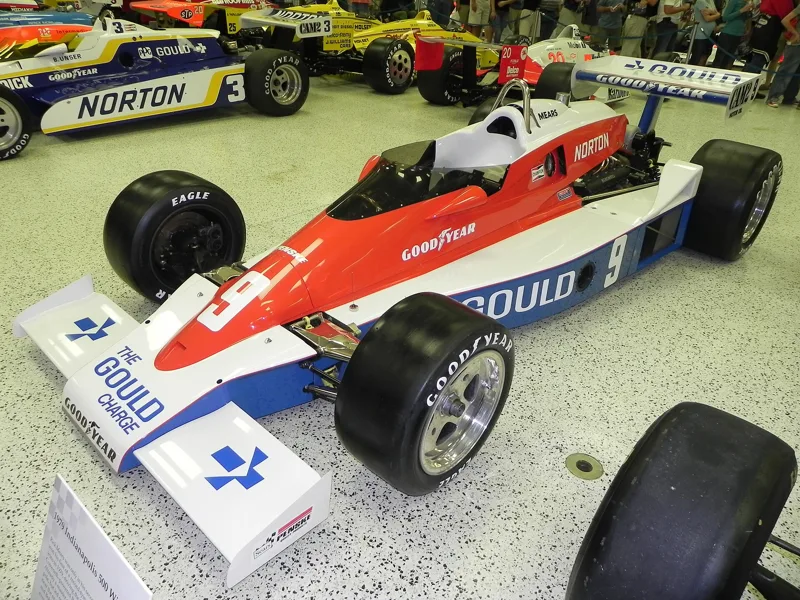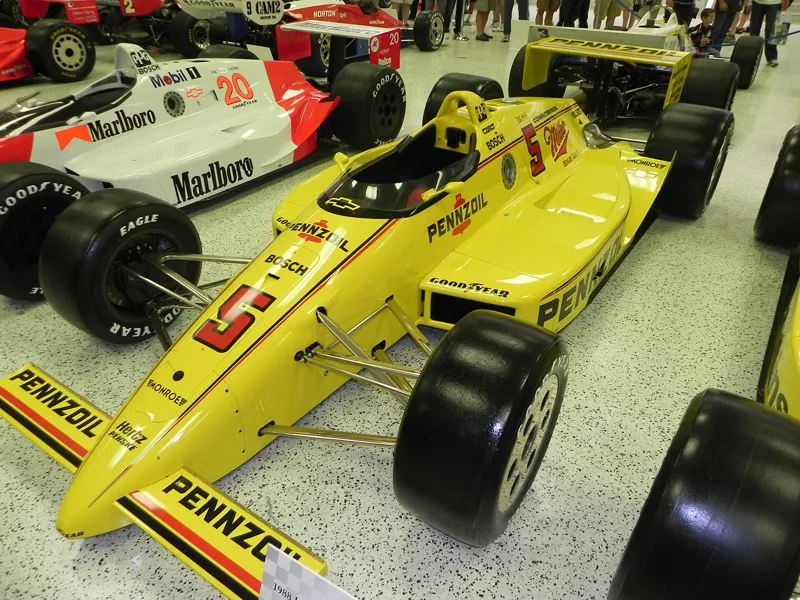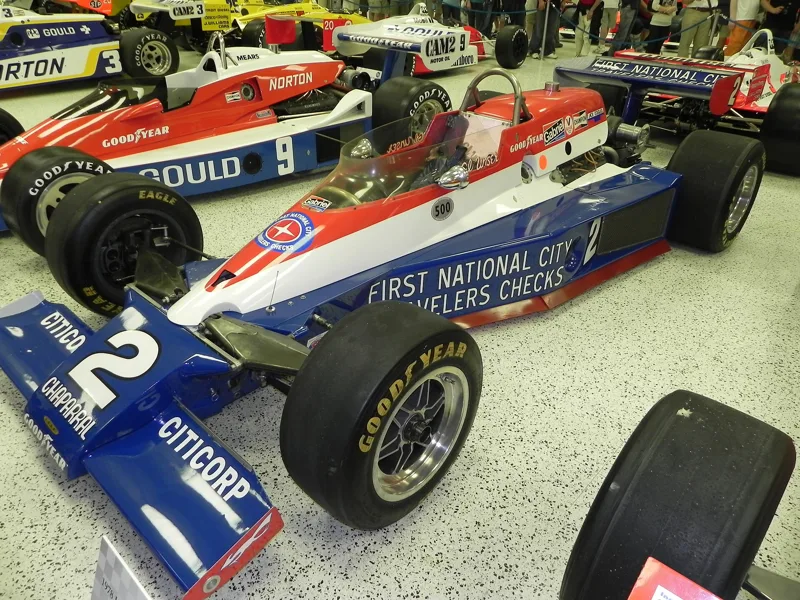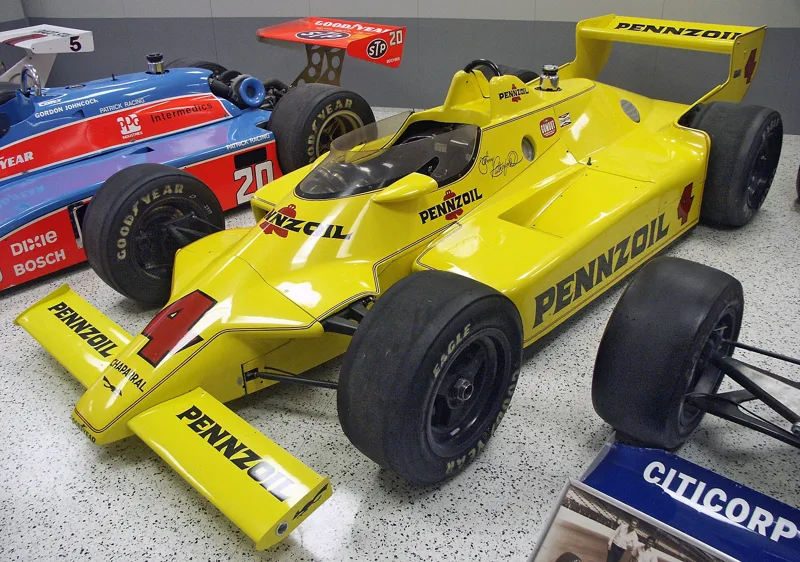
A lost victory, a rain-shortened win, a 0.16-second duel and a record six poles: four Indianapolis 500 winners and what set each apart.
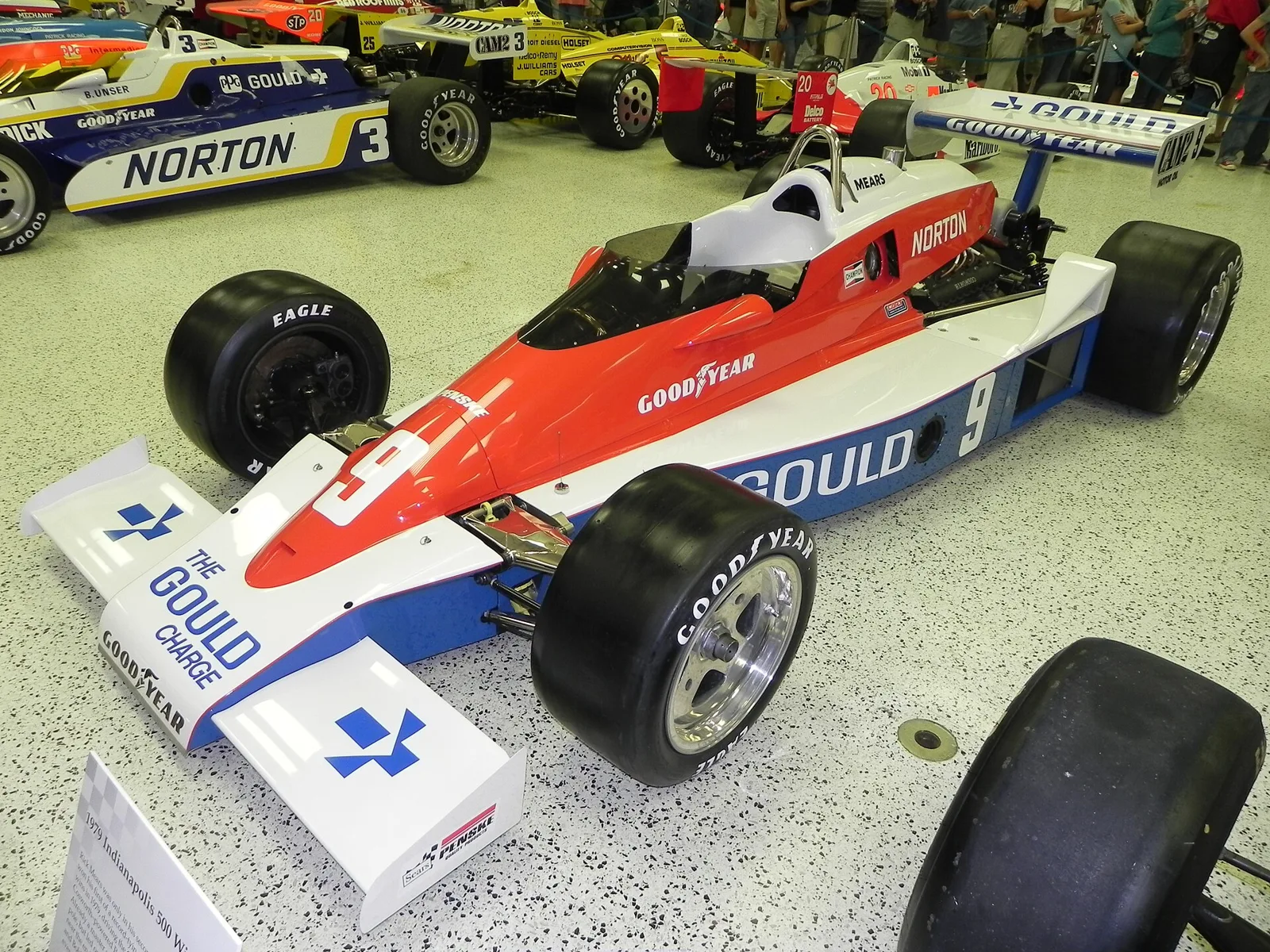
Bobby Unser won the Indy 500 in 1968, 1975 and 1981, Gordon Johncock in 1973 and 1982, Johnny Rutherford in 1974, 1976 and 1980, and Rick Mears in 1979, 1984, 1988 and 1991. Their races include the disputed 1981 result and the 0.16-second finish of 1982.
Bobby Unser crossed the line first at the 1981 Indianapolis 500, won by 5.18 seconds, and woke up the next morning to find the victory had been given to Mario Andretti. He did not get it back until October, after a five-month lawsuit and a protest by his team owner.
That one race says a lot about the four men who took the Indy 500 between 1968 and 1991 and are the subject here: Unser, Johnny Rutherford, Gordon Johncock and Rick Mears. Between them they won twelve of those runnings. They were a mixed crew: a rain-shortened winner who spent the evening at a hospital, a Kansas-born driver who raced as Lone Star JR, the son of a garage owner on Route 66, and the Californian who became the master of the speedway's pole position.
Indy 500 winners list: how the four compare
| Driver | Indy 500 wins | Winning years | Championships |
|---|---|---|---|
| Bobby Unser | 3 | 1968, 1975, 1981 | USAC champion 1968 and 1974 |
| Gordon Johncock | 2 | 1973, 1982 | USAC champion 1976 |
| Johnny Rutherford | 3 | 1974, 1976, 1980 | CART champion 1980 |
| Rick Mears | 4 | 1979, 1984, 1988, 1991 | Indycar champion 1979, 1981, 1982 |
Counting three-time winners is not as simple as it looks. Rutherford's biography puts him among six drivers with at least three victories, while Unser's puts the figure at ten. Unser was also the first of only two drivers, followed by Mears, to win in three different decades.
Unser crossed the line first in 1981 and woke up to find the win had been given to someone else.
Johnny Rutherford and the Lone Star JR years
Johnny Rutherford carried the Texas flag on his helmet and the nickname Lone Star JR, although he was born in Coffeyville, Kansas, and moved to Texas young. He began racing modified stock cars in Dallas in 1959, and he also ventured into NASCAR: he won his first Cup start at Daytona in a car run by Smokey Yunick, one of only a handful of drivers to win on debut.
His Indianapolis story begins in 1963, when he took his rookie test and met a nurse called Betty Hoyer, whom he married two months later. A year on he was right behind Eddie Sachs when Sachs hit the burning car of Dave MacDonald, and both men died. Rutherford squeezed through the gap between the wreck and the wall; the lemon Sachs kept on a cord at his throat was found in his engine bay afterwards. A crash at Eldora in April 1966 left him with broken arms and a head injury and ruled him out of that year's 500, and he spent several seasons without a competitive car. In 1970 he reminded everyone of his speed by qualifying second, a hundredth of a second off pole, and leading the field into Turn 1.
A top ride arrived when he joined McLaren in 1973. He took pole that year with a lap at 199.071 mph, just short of being the first man to break 200 mph at the Speedway, and won at Ontario for his second career victory. Indianapolis followed in 1974, with Betty watching from the pits, which helped to end an old superstition against women in the pit area. He won again in 1976 and in 1980.
The 1980 win came in a ground effect Chaparral that was more advanced than the other chassis in the field, and Rutherford dominated the season and took the CART title. From 1973 to 1981 he won in nine straight seasons, a streak shared in Indy Car history by only five others. His career totals are 27 wins and 23 poles in 314 starts. In 1984 he set an all-time Indy car qualifying lap record of 215.189 mph at Michigan, and in 1986 he won the Michigan 500 at 48, making him the oldest winner of a 500-mile race.
One of his stranger outings was the October 1977 Bathurst 1000 in Australia, where he shared a Holden Torana with Janet Guthrie. Facing a right-hand-drive touring car and a mountain circuit he had never seen, he qualified 26th out of sixty starters. On lap 8 he tried to lap Bob Holden's Escort, the cars touched, and the Torana ended up in an earth bank. It was disqualified, then reinstated, and he completed a few more laps before retiring.
His 24th and final Indy start came in 1988. He failed to qualify in 1989, 1990 and 1992, and retired in May 1994 without ever reaching a 25th start. He also worked as a television analyst, drove the pace car for CART and later the Indy Racing League until 2016, and coached rookies.
Gordon Johncock and the closest finish of its day
Gordon Johncock grew up on a farm near Hastings, Michigan, and left school in his teens to race at small tracks. He started in supermodifieds, took the inaugural National Open sprint race at Williams Grove in 1963, and began his USAC career in 1964. His first USAC victory came at the Milwaukee Mile in August 1965.
After a winless 1966 he formed his own team, Johncock Racing, backed by Gilmore Broadcasting. Only A. J. Foyt was the other owner-driver in IndyCar. The team won six races in three years, but when the sponsorship ended after 1970, the results dried up. From 1970 to 1973 Johncock did not win, the team closed and he found himself in bankruptcy court.
The 1973 race
Joining STP/Patrick Racing for 1973 turned things around, but his first Indy win came in grim circumstances. A major accident at the start, which involved Salt Walther, and two days of rain pushed the race back to a Wednesday afternoon. When it got going, Johncock's teammate Swede Savage crashed in a fire on lap 58 and was severely injured, and moments later Armando Teran, a crew member on the same team, was struck by a fire truck in the pits and fatally injured.
Johncock took the lead on lap 73 and kept it until rain returned on the 133rd lap. Close to 6 p.m. officials stopped the race for good. The victory lane party was brief and subdued, and Johncock went to see Savage in hospital. The victory banquet was cancelled; he and his crew ate hamburgers at a local restaurant instead. Savage died 33 days after the race. Years later Johncock insisted that his car had been the fastest on the track and had led easily.
Champion and 1982
He took the USAC national title in 1976, snatching it from Rutherford at the final race at Phoenix. He was third at Indianapolis in 1976 and 1978, and in 1977 he was leading Foyt when the crankshaft broke with 16 laps remaining. In 1979 he won the first race run under CART sanction, at Phoenix.
His second Indy win, in 1982, was the one people still talk about. Mears had fallen behind during the final pit stops but was catching quickly, and on the 197th and 198th laps he went from 3 seconds back to within a car length. Johncock's tyres were fading and the car understeered badly. Mears pulled alongside at the start of the last lap and tried to pass, but Johncock defended hard in Turn One and held on by 0.16 seconds. No Indianapolis 500 had ended tighter, though four later runnings have, in 1992, 2006, 2014 and 2026.
Mears later joked about watching the race again and again to see whether this time he gets around Gordy. Johncock, on ABC years later, said that if the duel had come two or three years later, when Mears was more experienced, the Californian would probably have found a way past. That season Johncock also won the Michigan 500, completing two legs of what was then called the Triple Crown (Indianapolis, Michigan and Pocono).
His last Indycar win came at Atlanta in the opening round of the 1983 CART series, in a Cosworth-powered Patrick Wildcat. A broken left leg and right ankle in a crash at Michigan later that year ended his season. He retired abruptly during practice for the 1985 Indy 500, came back to replace the injured Jim Crawford in 1987, finished sixth in 1991 despite flu-like symptoms, and made his last start in 1992, when his engine failed. A timber business and later a sawmill took over his working life, and he stayed active into his 80s. He chose not to attend the 2011 centennial 500 but returned in 2012. In 2023, for the 50th anniversary of his first win, he and his family were driven round the Speedway in a tour bus, and he took the wheel for an unplanned second lap.
Bobby Unser and the three-decade winner
Bobby Unser's father ran a garage on Route 66 in Albuquerque, and racing was the family trade. He began in 1949 and won his first title in Southwest modified stock cars aged 15. His brother Jerry died in a practice crash for the 1959 Indianapolis 500. Bobby, an early adopter of five-point harnesses borrowed from aviation, made his IndyCar debut in 1962.
Pikes Peak was his second home. He won six straight titles from 1958 to 1963 and ten overall, 13 counting class wins. In 1986, after a 12-year absence, he drove an Audi Quattro to his tenth overall win, beating Michele Mouton's time by 16 seconds.
At Indianapolis, he crashed early in 1963 and finished 33rd, and in 1964 he was out on lap two, when Eddie Sachs and Dave MacDonald died in a crash. His first IndyCar win came at Mosport in 1967, and in 1968 he won the 500 and became the first driver to lap the Speedway above 170 mph. The same year he took the first of two USAC titles, with the second in 1974.
In 1972 he joined Dan Gurney's All American Racers, and as teams were allowed to fit wings for the first time, he set a qualifying record of 195.940 mph, up from 178.696 mph. Unser challenged Gurney to improve the 1971 car, an exchange that led to the Gurney flap. His second 500, in 1975, was shortened by torrential rain on lap 174.
The 1981 dispute
From 1979 to 1981 he drove for Team Penske, which wanted a proven winner alongside young Mears. Unser won six times to Mears's three, though Mears took the title and the 500 in 1979. In 1980 Unser became the first man to win the California 500 four times.
The 1981 Indy is the race he is best known for. He started from pole in the No. 3 Penske car and led 89 laps. During a caution on lap 149 he passed eight cars and Andretti two. Unser won by 5.18 seconds but lost the win the following morning to second-placed Andretti, the only other car on the lead lap. After a lawsuit and a protest by Penske, he was re-awarded the win in October 1981 and fined $40,000. In his autobiography he argued that the affair was political and designed to split Penske from Patrick, Andretti's team owner, and destroy CART. He retired during off-season testing for Pat Patrick.
Unser finished with 35 IndyCar wins, the fourth highest total at the time of his 1994 Hall of Fame induction. He then spent 20 years as a broadcaster for NBC, ABC and ESPN, calling Al Unser's record-tying fourth win in 1987 and Al Unser Jr's wins in 1992 and 1994. He died on 2 May 2021, aged 87.
Rick Mears and the master of the pole position
Rick Mears was born in Wichita and raised in Bakersfield, California, and began in off-road racing. A rep for Bill Simpson's helmet company recommended him, and in 1976 Simpson gave him a drive in the California 500; he finished eighth in an old Eagle-Offenhauser. Roger Penske noticed his speed and in 1978 offered him a part-time ride whenever Andretti was away in Formula One, with an Indy start included.
His 1978 Indy debut was dramatic. He put the car on the front row and became the first rookie to qualify over 200 mph, but his helmet strap was loose, which forced a pit stop, and an engine failed on lap 104. He shared Rookie of the Year with Larry Rice and won his first race two weeks later at Milwaukee.
Four wins
In 1979 he won his first 500 when Bobby Unser dropped out with mechanical trouble. Three wins and four seconds in eleven CART-eligible races earned him the title as CART replaced USAC as sanctioning body. In 1980 Bernie Ecclestone offered him a place at Brabham after two tests, in which he matched and then beat Nelson Piquet's times. Mears declined, unsure about moving to Europe and still keen on oval racing.
He won the 1981 and 1982 titles with ten victories despite facial burns from a pit fire at the 1981 Indy. In 1982 his crew filled the whole fuel tank on the last stop, leaving him more than 11 seconds behind Johncock, and he lost by 0.16 seconds. That finish remained the tightest for a decade. It also quieted a row over his pace-lap crash with Kevin Cogan, which rivals had blamed on him.
The 1984 win came in a March chassis, but a crash at Sanair Super Speedway later that year seriously injured his legs. His driver position, far forward in the nose with little protection, was typical of open-wheel cars then. He recovered enough to win the 1985 and 1987 Pocono 500s and took pole at the 1986 500.
In 1988 Penske introduced the PC-17 with a Chevrolet engine and Mears won Indianapolis again. In 1989 he took a record fifth pole, retired, and watched Emerson Fittipaldi win the race and the title, even though Mears won the final round at Laguna Seca. That win left him the winningest Indycar driver of the decade.
In 1991 he hit the wall in practice, then took a record sixth pole the next day in his backup car. Twenty laps from the end Michael Andretti led by 15 seconds, but a yellow flag erased the gap and Mears took the lead when Andretti pitted for fuel. Andretti retook it around the outside of Turn One, Mears used the same move a lap later, and with extra turbo boost he won his fourth 500, joining only two other men. In August he won the Michigan 500, his last victory. In 1992 he broke a wrist in practice, then crashed out of the 500 avoiding Jim Crawford's spinning car, and announced his retirement at the team Christmas party; only Penske and his wife had known. He was 41.
What became of the four after racing
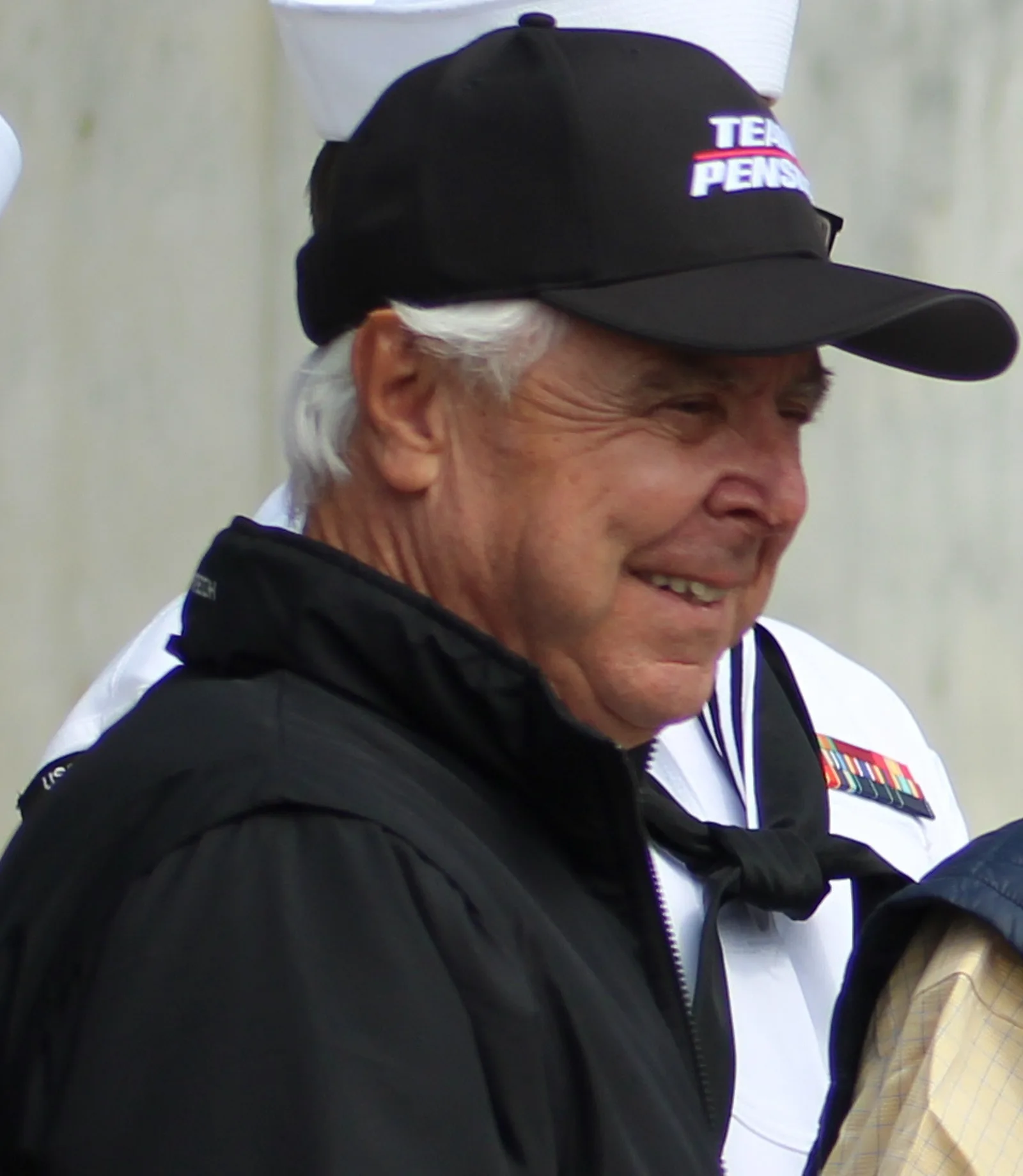
Mears remains a consultant and driver-mentor at Team Penske and, as of 2026, works with Scott McLaughlin, Josef Newgarden and David Malukas. Johncock died on 28 September 2026 at the age of 90, and Unser died in 2021. Rutherford, born in 1938, became a pace car driver and later an ambassador for Arrow McLaren.