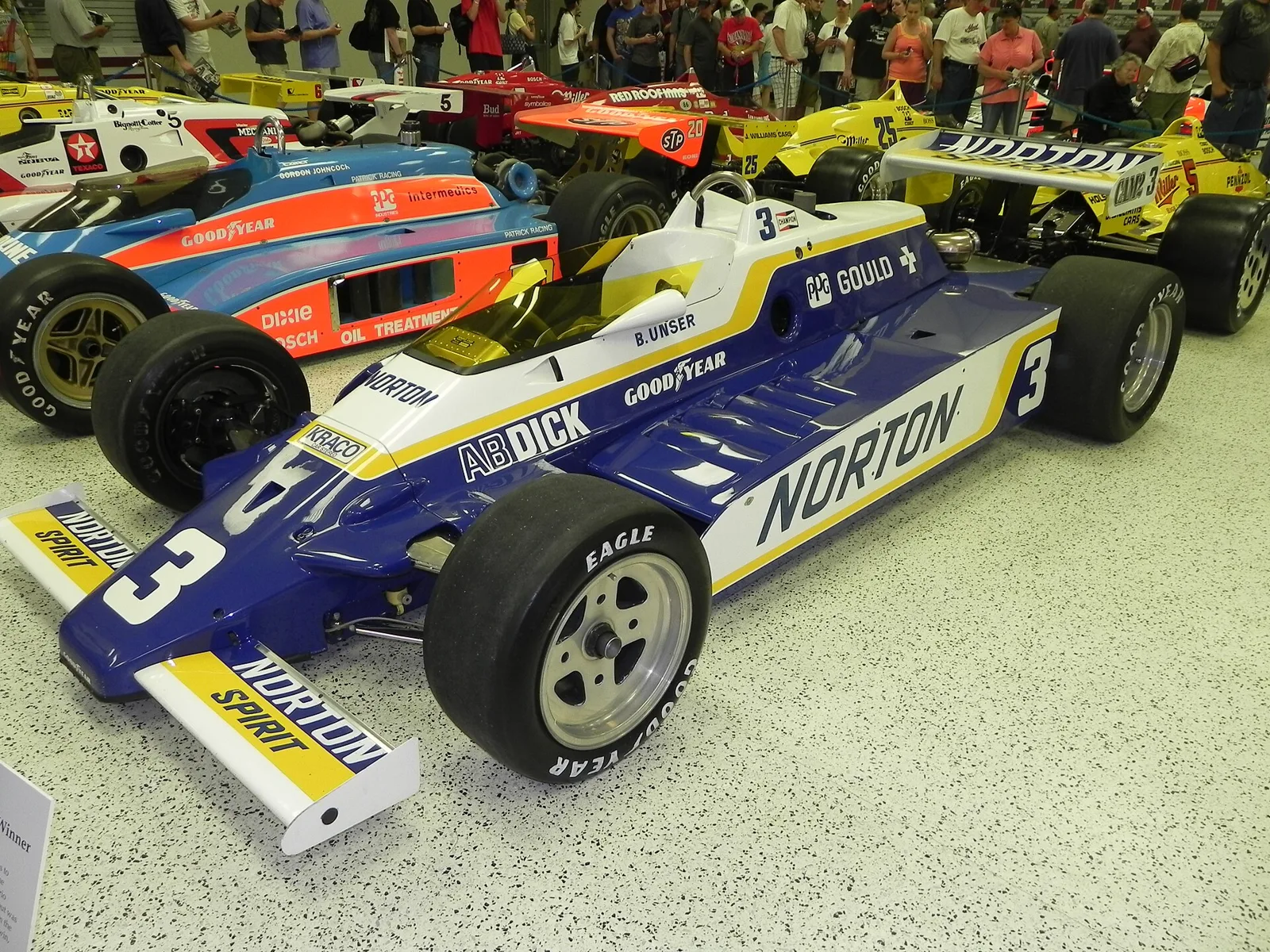
The 65th running of the Indy 500 was decided by a lap 149 pass under caution, a reversed result and an appeal that ran into October.
The 1981 Indianapolis 500 was held on 24 May 1981. Bobby Unser crossed the line first, but a penalty handed the win to Mario Andretti until an appeal board reinstated Unser in October 1981 by a two-to-one vote.
The 1981 Indianapolis 500 was the 65th running of the race, held on Sunday 24 May 1981 at the Indianapolis Motor Speedway, a track in Speedway, Indiana. Bobby Unser crossed the line first, but officials later penalised him for passing cars under a caution, and for several months Mario Andretti was the declared winner. An appeal returned the victory to Unser in October, and the race is still remembered as one of the most disputed in the event's history.
Who won the 1981 Indianapolis 500?
Bobby Unser was the official winner after an appeal board reinstated him on 8 October 1981. He had crossed the line first, but a one-position penalty dropped him to second, and Mario Andretti was declared the winner. The reinstated result gave Unser his third Indianapolis 500 victory, after earlier wins in 1968 and 1975.
The original result came from the official posting the morning after the race. USAC officials had ruled that Unser passed cars illegally while leaving the pits during a caution on lap 149 of the 200-lap event. That single ruling flipped the order on paper, and it set off a protest that would not be settled for almost five months.
Andretti finished second on the track, but he was credited with the win at first. His team, Patrick Racing, voiced complaints about the passes straight after the race, and Andretti said he had radioed his crew about them during the race itself.
A penalty, a reversed result and a two-to-one appeal vote made 1981 the most contested Indy 500 to that point.
Why was the 1981 race outside the main championship?
The 1981 Indianapolis 500 was run as an invitational event and paid no points towards the CART title, even though most of the leading teams took part. USAC sanctioned the race, which counted as part of its 1981-82 season. The race therefore sat outside the main national championship that year, and the result did not affect the title race.
Indy car racing had split in the early 1980s. The Championship Racing League, a joint sanctioning agreement, dissolved in mid-1980, and USAC and CART went their separate ways. Johnny Rutherford won both titles that season and is regarded as the consensus 1980 champion. From 1981, CART sanctioned the main championship, while USAC kept Indianapolis.
The field still included many CART-based teams alongside independent, Indy-only entries. Organisers expected a record 105 entries, and USAC banned ground-effects side skirts on the sidepods for the new season. Mario Andretti planned to race in the gap between his Formula One commitments, qualifying on pole weekend before flying to the Belgian Grand Prix on 17 May and returning for race day.
How did rain shape pole day and bump day?
Rain stretched pole qualifying across three days, and the first Saturday produced only nine completed runs. A. J. Foyt briefly held the provisional pole at 315.557 km/h (196.078 mph) before a downpour ended the session, and on the Sunday 27 cars were still eligible when steady rain cancelled all track activity. The final pole round was held the following Saturday.
Bobby Unser took pole with a four-lap average of 322.748 km/h (200.546 mph), about half an hour into the session. Tom Sneva then posted the fastest speed of the month at 322.981 km/h (200.691 mph), but his run came outside the pole round, so it did not count towards the front row. Rick Mears had been on a lap over 323.3 km/h (200.9 mph) before a vibration forced him to wave off, and he settled for a slower starting spot.
Bump day was just as busy. Drivers made 53 qualifying attempts on the Saturday, beating the previous single-day record of 45. Wally Dallenbach put Andretti's car into the field at more than 311 km/h (193 mph), and Andretti's car qualified 8th before it was moved to the back of the grid for race day. On the Sunday, ten cars were bumped from 25 attempts.
The most striking result came from Jerry Sneva. He was disqualified for using too much boost after a protest from Jerry Karl, and the ruling meant the Offenhauser engine missed the race for the first time since 1934. Herm Johnson was named first alternate, with Bill Engelhart second.
What happened in the pit fires?
Two fires in the pits highlighted fuel-handling dangers in 1981. Rick Mears was burned on lap 58 when methanol gushed from a refuelling hose before it was properly connected, and the fuel ignited against the engine. The same kind of fuel-rig problem later caused a serious incident at the Norton Michigan 500, which prompted new safety standards for fuelling equipment.
Mears was on fire from the waist up as he left the car. A safety worker tried to remove his helmet, and a crewman carrying an extinguisher fled before using it. Mears's father, Bill Mears, pulled Mears's wife Dina to safety and then put out the blaze with the extinguisher. Four Mears mechanics, including Derrick Walker, were sent to hospital, and Mears had plastic surgery on his face, missing the Milwaukee race the following week.
Eight weeks later, at Norton, a fuel rig failure at a lap 27 pit stop injured 14 people and caused a red flag of 1 hour 37 minutes. The incident led to a fuel nozzle with a safety valve that opened only when connected to the car. Pitside tanks had to be anchored to the ground and fitted with a dead man's valve, and later rules required everyone working in the pits to wear fire-resistant clothing.
How serious was Danny Ongais's crash?
Danny Ongais suffered a serious crash on lap 63 while leading the race. He had made a 46-second pit stop, then carried too much speed into turn three, and his car hooked into the wall. He had a concussion and broken feet and legs, but he made a full recovery and raced at Indianapolis again one year later.
Ongais had come in as the leader, and the stop dragged on for 46 seconds. Leaving the pits, he made a late pass on a slower car near the far end of the back straight and entered turn three too fast. The rear tyres lost grip, the car turned right and crashed nearly head-on. The front end was torn away, and the car came to rest pointing forward in the north short chute with a trail of burning oil behind it.
Crews used the Jaws of Life to free Ongais, and the caution stayed out for 15 laps while the wreckage was cleared. Spectators outside turn three were also hit by debris. The same spot claimed a life a year later, when Gordon Smiley lost control in a similar way and was killed in a head-on impact.
The lap 149 pass and the finish
Tom Sneva's race ended on lap 131 when his engine failed. He had been 35 laps down after a stall on lap 58, and he climbed out in the infield grass by turn one. Pete Halsmer crashed out on lap 135, and Josele Garza crashed later in the race, although his effort earned him the Rookie of the Year award. On lap 146, Tony Bettenhausen Jr. touched wheels with Smiley after a tyre went down, and Smiley spun into the wall backwards.
Three laps later, the two leaders, Andretti and Unser, went into the pits together. Unser finished his stop first and rejoined under caution. He stayed on the warm-up apron, below the painted line, and passed 14 cars while the pace car led the field through the first two turns. Andretti passed two cars himself before blending into the field. Andretti later said he radioed his crew at once, but no trackside observer reported the passes during the race.
After the restart on lap 152, Unser pulled away and was the fastest car on track. Andretti briefly took the lead on lap 166 before Unser passed him again. Gordon Johncock blew his engine with eight laps to go, which handed second place to Andretti. Unser slowed over the final laps and won by 5.180 seconds, among the tightest finishes at the track up to then. Andretti had charged from 32nd on the grid to finish second.
Unser made ten pit stops, the most by any race winner. In the broadcast, ABC's commentary on the passes was recorded in post-production, and the presenters had clearly been told about the protest. Unser did not mention the controversy in victory lane. The lap 149 pass was the story of the night, though, and it would be decided long after the chequered flag.
How was the result overturned?
The result was overturned on appeal. USAC posted the official results the morning after the race, penalising Unser one position for the lap 149 passes. Penske Racing protested, and an appeal board ruled two to one on 8 October 1981 that officials should have detected the move at the time, so the penalty was improper and Unser was reinstated.
The official posting handed Andretti the win, and the victory banquet that night was overshadowed by the controversy. Andretti received the official pace car, but not its keys, and the envelope for the winner's purse was empty. Andretti told the banquet he was glad officials had done the right thing, but that it was sad, because Unser had already celebrated in victory lane before the result changed.
A five-person panel led by chief steward Tom Binford denied Penske's protest. The appeal then went to the USAC Appeals Board. The hearing on 12 June 1981 resembled a court case, and it was adjourned midway because USAC members had to leave for Pocono. It resumed on 29 July, and the panel's 23-page opinion was written by Edwin Render.
| Date | Stage | Outcome |
|---|---|---|
| 24 May 1981 | Race finish | Unser first across the line, Andretti second on track |
| Morning after the race | Official results at 8 a.m. | Unser penalised one position, Andretti declared winner |
| 12 June 1981 | USAC appeals hearing opens | Adjourned midway, resumed 29 July |
| 8 October 1981 | Appeal board decision | Two to one, Unser reinstated and fined $40,000 |
| 9 October 1981 | Revised box score certified | Final 1981 order of finish |
The panel said the infraction could have been spotted when it happened, so the penalty imposed after the race was improper. It said officials were obliged to watch for and report illegal passing under yellow flags, and that they had not done so. Andretti then appealed to a higher USAC board, arguing he had not been given enough time, and that was denied. A final petition to ACCUS, the American body of the FIA, was also rejected.
What did the controversy cost Bobby Unser?
The controversy cost Bobby Unser heavily in money and reputation. The $40,000 fine, lost sponsorship, legal fees and the loss of endorsement income left his finances badly damaged. He missed the 1982 race and formally quit IndyCar in 1983, having blamed USAC politics for his treatment.
Unser also felt the ABC coverage had been unfair, and the broadcast focused on his infraction while not mentioning Andretti's passes. Unser was given the miniature Borg-Warner Trophy after the reinstatement, and months later his likeness was sculpted onto the full trophy. No official victory photographs were taken of him on race day, and a claim that Andretti had thrown his ring away is generally regarded as untrue.
Andretti has always maintained that the rulebook made him the winner, and Unser has said Andretti was a sore loser. The two men did not speak for upwards of 37 years, except when public appearances required it. They reconciled around 2017, when Andretti rang Unser during a period of illness. Andretti publicly praised Unser when he died in May 2021, and both men agreed later that USAC mishandled the matter from start to finish.