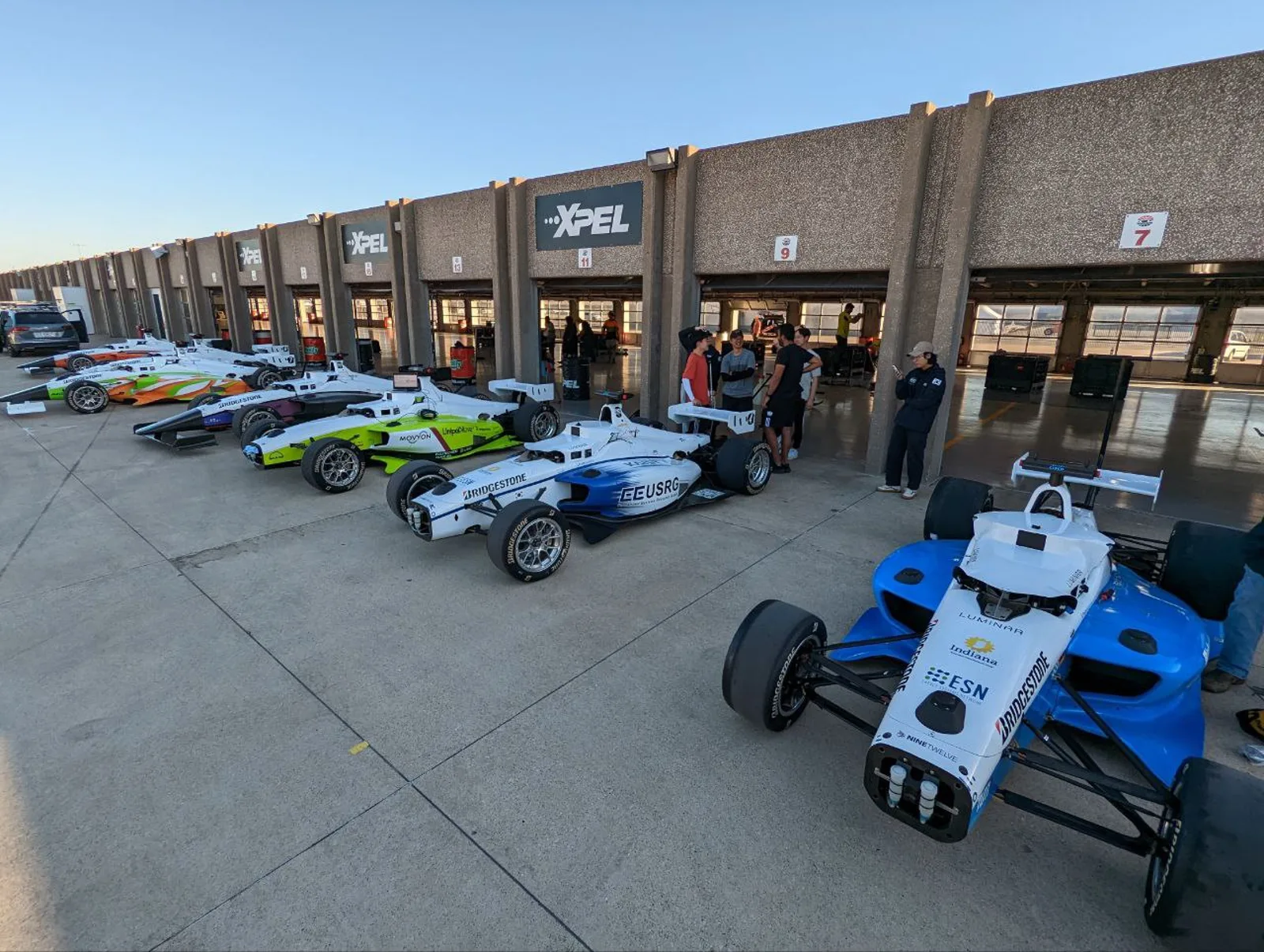
Student teams, identical Dallara chassis and no human driver at all: the Indy Autonomous Challenge pushed self-driving software to 275 km/h (171 mph) on ovals.
Run by student and university teams in identical Dallara chassis, the series reached 275 km/h (171 mph) on ovals in 2024 and set the autonomous land speed record. For part of 2023 and 2024 it stood alone as an active autonomous racing series.
The Indy Autonomous Challenge is a racing series in which every car drives itself. Student and university teams run identical Dallara single-seaters, and each car completes laps and overtakes without a human driver. Between 2021 and 2024 the series took its cars to ovals in Indianapolis, Las Vegas and Texas, and to a road course at Monza.
The series is small, but its results matter. Its speed and passing records are among the fastest ever set by autonomous vehicles, and its teams produced research on control, path planning and robotic perception. This article explains how the series started, what the cars can do and how each event unfolded.
What is the Indy Autonomous Challenge?
The Indy Autonomous Challenge is the main autonomous racing series, and for a stretch of 2023 and 2024 it was the sole active one. Every competing car is SAE level 4 autonomous, meaning it can complete laps and overtakes without human intervention. Every team is made up of students or university researchers using the same base car.
The series grew from the tradition of the DARPA Grand Challenge, which asked university teams to solve autonomous driving in demanding conditions. The Indy series carried that spirit onto racetracks. Its 2021 goals were to define and solve edge cases, catalyse new autonomous technologies and engage the public so that people would accept driverless cars.
Energy System Network, an Indianapolis nonprofit, led the early effort. Teams had to build a complete autonomous driving stack covering perception, planning and control, and the rules deliberately narrowed what the cars could sense: each car was limited to six camera sensors.
Track rules were tight too. Track occupancy was capped at one or two cars at a time, which kept multi-car interaction to a controlled set of scenarios.
A series of student-built cars with identical chassis showed that software alone could pass another car at 160 mph.
What cars do the teams race?
Every team races a Dallara AV, built on the chassis of Dallara's IL-15 Indy Lights car. The AV-21 used in the first races made 335 kW (449 hp) through a 6-speed sequential gearbox. The AV-24 that arrived by 2024 kept the chassis but replaced the compute hardware, sensors and software.
The AV-21 grew out of Dallara's IL-15 Indy Lights design and carried six monochrome cameras, four radars and three lidars. It also used RTK GPS for precise positioning. Clemson University's Deep Orange Project developed the first car, which was presented at CES 2021.
The platform had a weak spot in its wiring. The AV-21 wiring harnesses proved fragile in practice, and that fragility caused trouble for several teams. Reliability became as important as raw performance once cars were running at speed on ovals.
The AV-24 raised the stakes. It uses six Allied Vision Mako G-319C cameras, a Luminar Iris lidar with 275 m (902 ft) range, and a Continental ARS 548 radar that reaches 300 to 1,500 m. Steer-by-wire and brake-by-wire systems from New Eagle and IAC give the software direct control over steering and braking.
How did teams qualify through the simulator?
Before any car reached a track, teams had to prove themselves in a simulator built around a replica of Indianapolis Motor Speedway. The simulation race on 30 June 2021 ended with PoliMOVE winning a 10-lap final and taking US$100,000, while TUM Autonomous Motorsport finished second.
Qualification counted the fastest solo lap, with time penalties for violating the track limits. The top times set the running order for the final, so a clean lap mattered as much as raw pace. Teams had worked through a ladder of hackathon challenges, starting with a solo lap and simple obstacle avoidance.
The later stages were rougher. Two semifinals of eight vehicles each fed the 10-lap final, and many simulated vehicles were disqualified for collisions. That pattern would repeat in the physical events, where contact and spacing violations removed teams from races.
The simulation showed that teams could handle a virtual race. It did not show how their software would behave with real cars on real tarmac, and that was the step the series took next. Nine teams chose to buy a car, a commitment that shaped who could compete at all.
How did the 2021 Indianapolis race unfold?
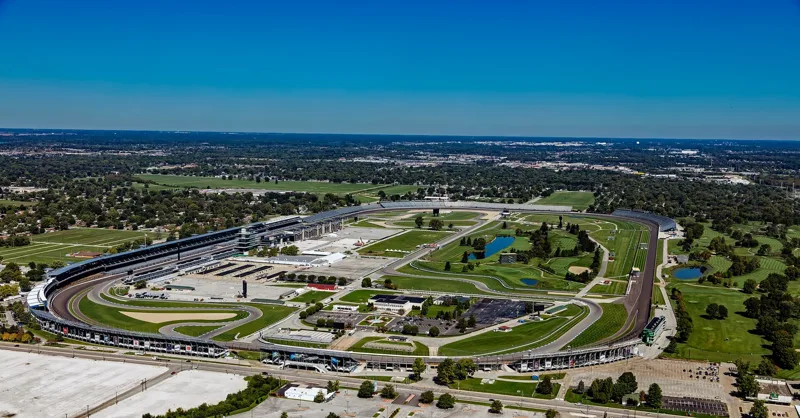
The first physical race was held on 23 October 2021 at Indianapolis Motor Speedway. The original plan for a full traditional race was cut to a time trial with an obstacle avoidance test, and TUM Autonomous Motorsport took the US$1,000,000 prize. The result showed that a single fast lap was not enough.
The reduced format still exposed the gap between a good lap and a reliable car, so the rest of the season leaned on dependable software as much as speed.
Euroracing finished second at Indianapolis in 2021. PoliMOVE hit the wall but kept third because it had already scored its time. A crash that would have ended a normal race still counted in the standings, which underlined how the event was scored.
What happened in Las Vegas in 2022?
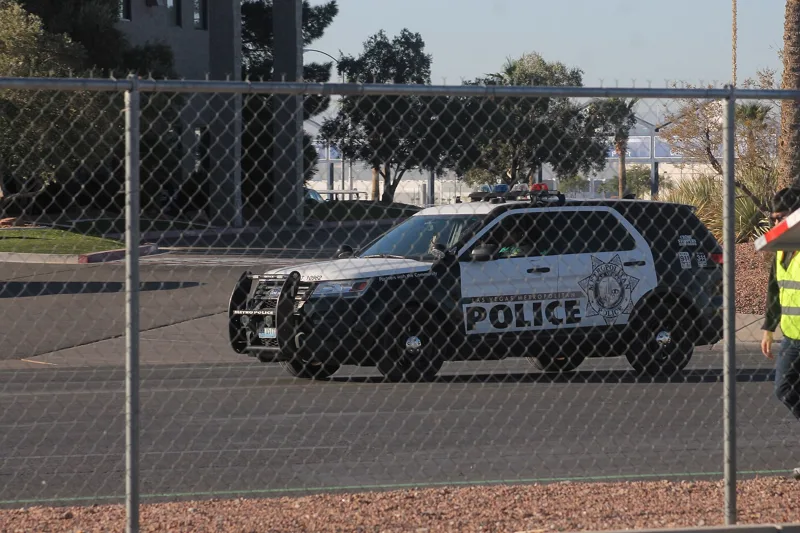
The 2022 race took place on 7 January 2022 at Las Vegas Motor Speedway, as the final event of that year's Consumer Electronics Show. The Overtaking Game pitted a defender against an attacker, and PoliMOVE beat TUM Autonomous Motorsport in the final with a pass completed at 240 km/h (150 mph).
The format was deliberately simplified. A defender held a constant speed while an attacker tried to complete an overtake before the end of the lap, and then the roles swapped with a higher defender speed. That kept the problem focused on passing, not on the full complexity of a race.
Teams had to complete a clean and safe overtake in test days to qualify for the knockout matches. PoliMOVE beat KAIST in the semifinal before meeting TUM in the final.
The final ended in controversy of a different kind. TUM spun out during an aggressive obstacle avoidance manoeuvre while PoliMOVE was completing its overtake. The moment showed how a sudden swerve by the defender could trigger a crash, which made the rules for defenders a central issue.
What changed in 2023 at Texas, Las Vegas and Monza?
The 2023 races brought in right-of-way and minimum separation rules and gave the defender more freedom over its line. Texas Motor Speedway hosted the first of those changes in November 2023, PoliMOVE won the final there, and the series returned to Las Vegas in January and held a single-car time trial at Monza in June.
The Texas race exposed the cost of that new freedom. Many teams were disqualified for collisions or for breaching minimum distance rules, because their algorithms could not yet handle a defender that was free to move.
Las Vegas followed on 7 January 2023. PoliMOVE won again and reached about 289.682 km/h (180 mph) during the event.
At Monza the series moved onto a road course. Road running and limited GPS coverage led organisers to choose time trials only. PoliMOVE scored the fastest lap, TUM Autonomous Motorsport took second, and TII Unimore Racing, formerly Euroracing, took third at the MIMO event.
What did the 2024 races show?
The AV-24 made its debut at CES 2024 in January, when PoliMOVE and TII Unimore Racing, plus AI Racing Tech, ran autonomous laps in January. At Indianapolis on 6 September 2024, Cavalier Autonomous Racing set the fastest time at 275 km/h (171 mph), and PoliMOVE-MSU won the passing competition.
The Las Vegas CES round also produced a dispute. The Cavalier car accelerated while acting as the defender, which the rules prohibit. The round ended with TUM declared the winner after that breach, a result that showed how much rule discipline mattered as the cars got faster.
The second Indianapolis race of the series was run on 6 September 2024, with ten teams from 19 engineering schools. The event kept two competitive formats: individual time trials, scored on the fastest lap, and a two-car scripted passing competition.
The passing round tested how well cars could overtake at fixed speeds. Organisers capped the lead car at 260 km/h (160 mph), and PoliMOVE-MSU passed it, showing that the software could make a clean pass at a demanding speed. The winning result came from that controlled test rather than an open race.
Results at a glance
| Event | Date | Format | Top result |
|---|---|---|---|
| Simulation race | 30 June 2021 | Qualifying plus 10-lap final | PoliMOVE |
| Indianapolis Motor Speedway | 23 October 2021 | Time trial with obstacle avoidance | TUM Autonomous Motorsport |
| Las Vegas Motor Speedway (CES) | 7 January 2022 | Overtaking Game knockout | PoliMOVE |
| Texas Motor Speedway | November 2023 | Overtaking with right-of-way rules | PoliMOVE |
| Las Vegas Motor Speedway | 7 January 2023 | Overtaking with the 2023 rules | PoliMOVE, about 289.682 km/h (180 mph) |
| Autodromo Nazionale di Monza (MIMO) | 16 to 18 June 2023 | Single-vehicle time trial | PoliMOVE |
| Las Vegas CES | January 2024 | AV-24 laps and passing rounds | TUM Autonomous Motorsport |
| Indianapolis Motor Speedway | 6 September 2024 | Time trial and two-car passing | Cavalier (time trial), PoliMOVE-MSU (passing) |
What did the series leave behind?
The series left a land speed record, set in April 2022 on a Kennedy Space Center runway by a Dallara AV-21. The teams' own research also produced academic work on control and robot perception. Those figures give the series a measurable legacy that later projects can compare against.
The speed records are only part of the legacy. Autonomous cars reached 171 mph (275 km/h) on ovals by 2024, and the two-car passing races showed that software could make clean passes at fixed speeds. Those are concrete results that other fields can measure against.
The cars were designed for up to 290 km/h (180 mph) on track, a demanding envelope for software that had to plan paths in traffic. Teams also leaned on simulation and cloud computing, which shortened the gap between a software change and a real test.