Dan Wheldon slipped past a crashing J. R. Hildebrand in the final 1,000 feet to win the 95th Indianapolis 500, his last victory before his death.
The 2011 Indianapolis 500 was the 95th running of the race, held on Sunday, 29 May 2011. Wheldon took the win from J. R. Hildebrand, who crashed on the last lap, and the result gave Wheldon his second Indy 500 title.
The 95th Indianapolis 500 was held on Sunday, 29 May 2011, and it closed the three-year Centennial era. Dan Wheldon won it in the final 1,000 feet, after J. R. Hildebrand crashed on the last turn while leading with two laps to go. It was Wheldon's second Indy 500 victory and the final win of his career.
Why was the 2011 race a special occasion?
The race was the culmination of the three-year Centennial era, which marked the 100th anniversary of the track's opening and of the first race in 1911. Throughout May the event was advertised as the centennial Indianapolis 500. Because the race had been suspended during both World Wars, the 100th running would wait until 2016.
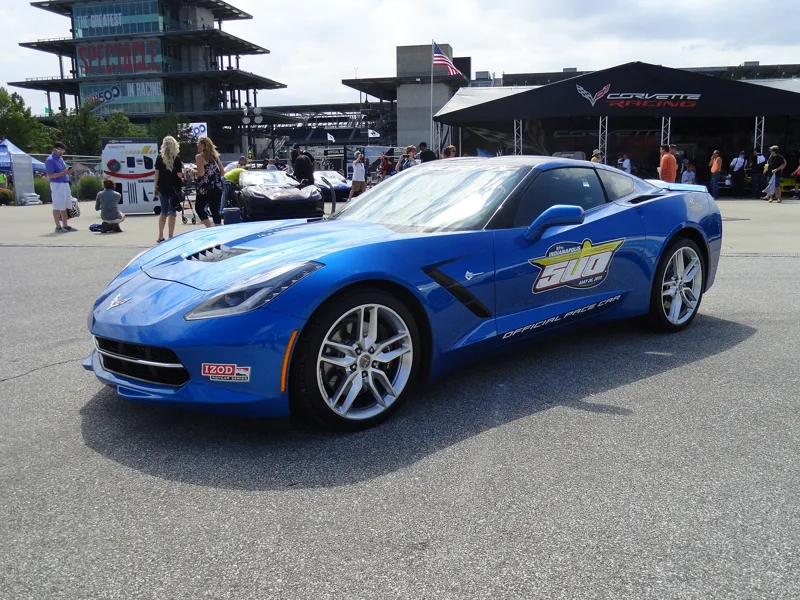
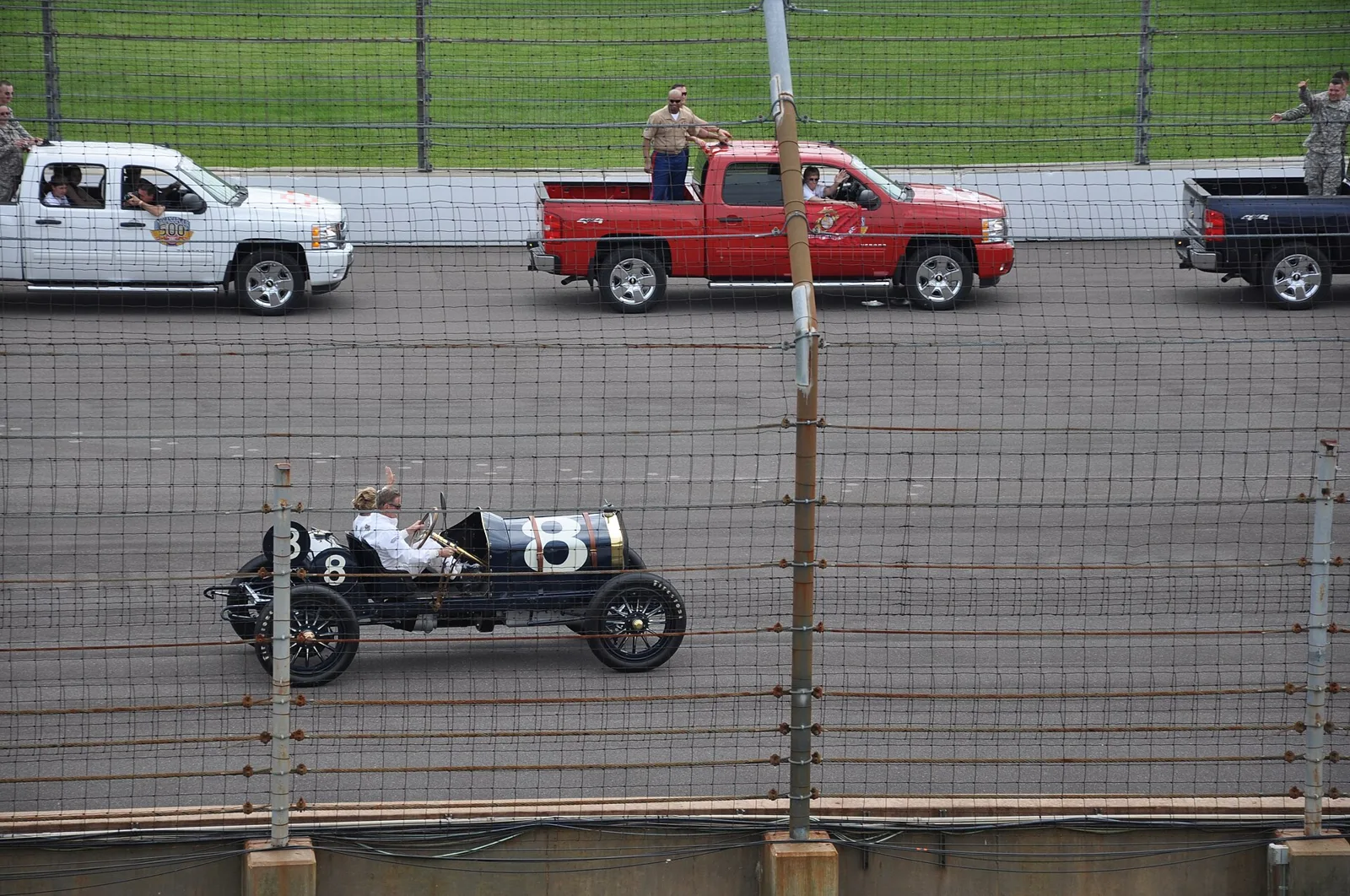
The start time was moved to 12 noon EDT, one hour earlier than it had been from 2006 to 2010. The pace car driver was originally Donald Trump, but after mounting criticism, including a campaign to oust him, Trump stepped down and A. J. Foyt took his place. The national anthem was performed by Seal and Kelly Clarkson, with David Foster on piano.
The event invited 269 living veterans, and at least 161 attended race weekend. A total of 21 of the 27 living winners came to the race, and Staind headlined the Carb Day concert with special guest Papa Roach.
One last lap, one wrecked leader and a centennial finish that Dan Wheldon claimed in the final 1,000 feet.
How did the entry list shape the field?
The official entry list was released on 15 April 2011, and it featured 83 cars for 42 entries. On 9 May a revised version was issued after the China Racing entry was withdrawn, leaving 79 cars for 41 entries. Confirmed former winners included Dario Franchitti, Helio Castroneves, Scott Dixon, Dan Wheldon and Buddy Rice.
Rookies had to clear a series of tests before they could race. Pre-Indy oval testing was held at Chicagoland Speedway on 9 May, because the Indy 500 was the season's first oval race. Seven rookies took part in orientation on 12 May, and J. R. Hildebrand set the fastest rookie lap at 221.533 mph (356.523 km/h).
The race also introduced double-file restarts for the first time. At the end of each caution the pace car pulled off in turn one, and the field lined up in rows of two down the backstretch. The Honda overtake assist, known as Push-to-pass, was used again with 15 presses of 18 seconds each.
What happened during the opening practice days?
Opening day on 14 May saw 32 cars complete 669 laps without incident, and Ed Carpenter topped the opening-day chart at 224.786 mph (361.758 km/h). Showers stopped the session, and the next day was lost entirely. Cold weather delayed practice on the next Tuesday.
Following two straight washouts, a full day of running resumed on 19 May. De Silvestro's car, leaking fluid, slid in the north chute and ended upside down in the catch fence. She climbed out with burns to her right hand, and practice then resumed uninterrupted, with Will Power taking the top spot at the fastest speed of the month to date.
Fast Friday saw the second consecutive day of full practice. Alex Tagliani led most of the day, but Helio Castroneves took the top spot later with a best of 228.611 mph (367.914 km/h). Castroneves held the top position for the rest of the day, and Scott Dixon was third with a speed over 228 mph.
How did pole day decide the front row?
On pole day the first segment ran from 11 a.m. until 4 p.m., and the top 24 cars made the provisional field. Tagliani was quickest early on, at 226.954 mph (365.247 km/h). Ed Carpenter qualified sixth fastest for Sarah Fisher Racing at 226.171 mph (363.987 km/h).
The Fast Nine shootout was delayed by rain, so each of the nine drivers received only one attempt. Oriol Servia set the pace early at 227.168 mph (365.591 km/h), and Dario Franchitti ran out of fuel on his final lap and dropped to ninth. Scott Dixon then ran out of fuel at the end of his run, and the pole was left to Tagliani.
Tagliani's final run of 227.472 mph (366.081 km/h) secured the pole for Sam Schmidt Motorsports. Simona de Silvestro, who had been burned in a crash earlier in the month, made three qualifying attempts before she qualified 24th. Ho-Pin Tung crashed on his final lap and suffered a concussion.
How did bump day change the field?
Bump day opened with Dragon Racing withdrawing, and Charlie Kimball topped the practice chart at 226.822 mph (365.035 km/h). Graham Rahal and Ana Beatriz were the only cars to make an early attempt before heavy rains fell, and the track was re-opened at 2:30 p.m. after the crews had dried the surface.
Paul Tracy got in with the day's quickest run, bringing the field to 33 cars. Danica Patrick was the only car yet to attempt on Sunday afternoon, and she bumped her way in comfortably. The rest of the Andretti team struggled, and Mike Conway was too slow to qualify.
In the final fifteen minutes Marco Andretti sat on the bubble until Alex Lloyd bumped him out in the final five minutes. Andretti then made a hurried attempt, and his run of 224.628 mph (361.504 km/h) pushed Ryan Hunter-Reay out with 55 seconds left before the 6 o'clock gun.
How did the race start and develop?
Under a hot, humid sky, the field was sent away at 12:00 PM EDT, following the invocation and anthem. Mari Hulman George gave the starting command, and A. J. Foyt led the field around the track in the pace car. Dixon passed Tagliani to take the early lead, and the first 20 laps passed without an accident.
The first caution came on lap 21, when Takuma Sato made contact with the wall. Will Power left the pits without a left-rear tyre and drove a lap that effectively ended his chance of the win. E. J. Viso was turned into the wall by James Hinchcliffe soon after the restart, and Simona de Silvestro was called to the pits on lap 44 because her back-up car could not keep pace.
Dixon and Franchitti combined to lead 124 laps. Hinchcliffe bounced off the wall at the halfway mark, and Tagliani made slight contact with the wall on lap 148, which ended his race. Briscoe and Bell collided on lap 158, which slowed the Penske team, and both Castroneves and Power had difficult pit stops.
Late in the race, a series of pit stops by most of the leaders left Bertrand Baguette at the front. He led the race for several laps and then pitted for fuel near the end. Rahal led six laps for the first time in his Indy career, and he finished third after losing ground at a late pit stop.
What were the final results?
| Place | Driver | Detail |
|---|---|---|
| 1 | Dan Wheldon | Passed in the final 1,000 feet, his second Indy 500 win |
| 2 | J. R. Hildebrand | Rookie who led with two laps to go, slid across the line |
| 3 | Graham Rahal | Led six laps for the first time in his Indy career |
| 5 | Scott Dixon | Reinstated to fifth after the official review |
| 6 | Oriol Servia | Initially fifth, dropped to sixth after the review |
Earlier in the week, Briscoe's crew had beaten Franchitti's team in the 34th annual Pit Stop Challenge, which gave Penske its 13th victory in the event.
How did the final lap decide the race?
Hildebrand had taken the lead with two laps to go while nursing a car low on fuel. On the final turn of the final lap he went high to pass the slower car of Charlie Kimball, drifted wide and hit the outside wall.
Wheldon's victory made him the 18th person to win two or more Indianapolis 500s. The 200th lap was the only one he led in the race, which broke Joe Dawson's record for the fewest laps led by an Indy winner. Dawson's mark had stood for 99 years, so the change was a notable one in the record books. Wheldon's average of 170.265 mph (274.015 km/h) ranks as the fourth-fastest race in the event's history, and it came in under three hours.
It was only the second Indy 500 since 2006 to end in a last-lap pass, and the winner led only the final lap. Four months later he was fatally injured in a crash at Las Vegas. His 2011 victory was the final win of his racing career.
What happened to the winning car and the trophies?
The winning car was a Dallara IR3007, the seventh chassis built to the 2003 specifications. It had started its life with Panther Racing before passing through several owners, including Adrian Fernandez and Marty Roth, and it was bought by FAZZT in 2010 before Sam Schmidt Motorsports used it to win the race.
The car was rebuilt and restored in 2011 race trim as part of a tribute to Wheldon. Andretti Autosport owns the other car that Wheldon won in, and it is being restored in its 2005 race-winning form.
Because the Borg-Warner Trophy replicas are normally presented in January in Detroit, the 2011 presentations came later. Car owners Bryan Herta and Steve Newey received their trophies in Detroit, together with Wheldon's widow Susie, after his death in October.
How did the broadcast and the audience respond?
ABC televised the race in high definition for the 47th consecutive year, with Marty Reid as anchor. The race received an overnight rating of 4.3, up 7% over 2010, and the top local market was Indianapolis, where the live broadcast was blacked out on WRTV.
The IMS Radio Network reached about 400 affiliates, and Kenny Brack returned as driver expert. The turn one reporting position was brought back for the broadcast because the league had adopted double-wide restarts that year.